

Jilian Group's IPO Prospectus: Helping Chinese Enterprises Navigate Global Expansion and Repatriation
In 2013, the Belt and Road Initiative (BRI) was proposed, ushering in a period of rapid growth in economic cooperation between China and participating countries along the routes. Leveraging this bridge connecting China with global markets, there was a surge in import and export activities, overseas expansion, and investment. An increasing number of Chinese enterprises began to go global, deeply integrating into the world economic system. However, a more pressing challenge remains: for Chinese companies facing language barriers, cultural and cognitive differences, and a lack of familiarity with local laws and regulations, venturing into uncharted territories poses a significant hurdle.
Wan Jun, who has nearly a decade of experience in overseas investment consulting, overseas company registration, and finance and tax services, seized this market opportunity and founded Jilian Group in 2014. Over the past ten years, Jilian Group has grown into a one-stop comprehensive service provider for global expansion, offering six core services: cross-border mergers and acquisitions, company registration, qualification and license applications, finance and tax services, equity structure design, and factory establishment and equipment installation.As of now, Jilian Group has completed its global business layout across 116 countries and regions worldwide, establishing directly operated offices in twenty countries and regions, including Mexico, Indonesia, Vietnam, Brazil, India, the Philippines, and the United States.
This has also been a decade of rapid progress in cooperation among countries participating in the joint construction of the Belt and Road Initiative. According to reports, from 2013 to 2022, the total volume of imports and exports between China and these partner countries reached $19.1 trillion, with an average annual growth rate of 6.4%; two-way investment between China and these countries exceeded $380 billion, of which China’s outward foreign direct investment surpassed $240 billion.
Over the past decade, having penetrated 116 countries and regions worldwide and served more than 10,000 Chinese enterprises, how did Jilian Group “conquer” unknown markets? And how has it helped Chinese-funded companies “go global” and “return home”? Founder Wan Jun shared the story behind these achievements with VCBeat.

Founder and Chairman of Jilian Group: Aliena Wan
M&A Transaction Specialist of the China Mergers and Acquisitions Association, Senior Corporate Compliance Officer, and Senior Financial Investment Expert, with nearly a decade of focus on overseas investment consulting.
Since its inception, Jilian Group has set the goal of building its own localized overseas teams. From 2014 to 2016, the Group pursued an aggressive expansion strategy, casting a wide net by launching initial overseas operations in more than 50 countries. During this phase, the team accumulated extensive experience in overseas registration, investment, and execution capabilities across multiple countries, while also developing deep insights into the cultural and social landscapes of these nations.
In 2017, Jilian Group established its first overseas subsidiary in India. Initially, elite personnel from China were dispatched to India to set up operations, recruit local staff, and deliver localized services, while also bringing local employees to China for training. This localized team model was continuously replicated, expanding the company’s business teams to 116 countries worldwide and establishing branch offices in Mexico, Indonesia, Vietnam, Brazil, Hungary, Singapore, and other locations.
Wan Jun mentioned, “The advantage of localized teams lies in their familiarity with local policies, regulations, taxation, and customs, enabling them to swiftly assist Chinese enterprises in establishing a presence and penetrating the market. More critically, localized teams must understand Chinese mindsets and practices to deliver the most efficient bilateral solutions for clients.”
Leveraging its overseas localization teams and domestic headquarters team, Jilian Group has established a "7x24" seamless cross-border business operation: Jilian’s domestic headquarters liaises with Chinese-funded clients and directly coordinates with its overseas in-house teams for implementation. In overseas markets, the proprietary local teams efficiently support the establishment of clients’ overseas subsidiaries, creating a service network characterized by "zero time difference" and multi-dimensional management.
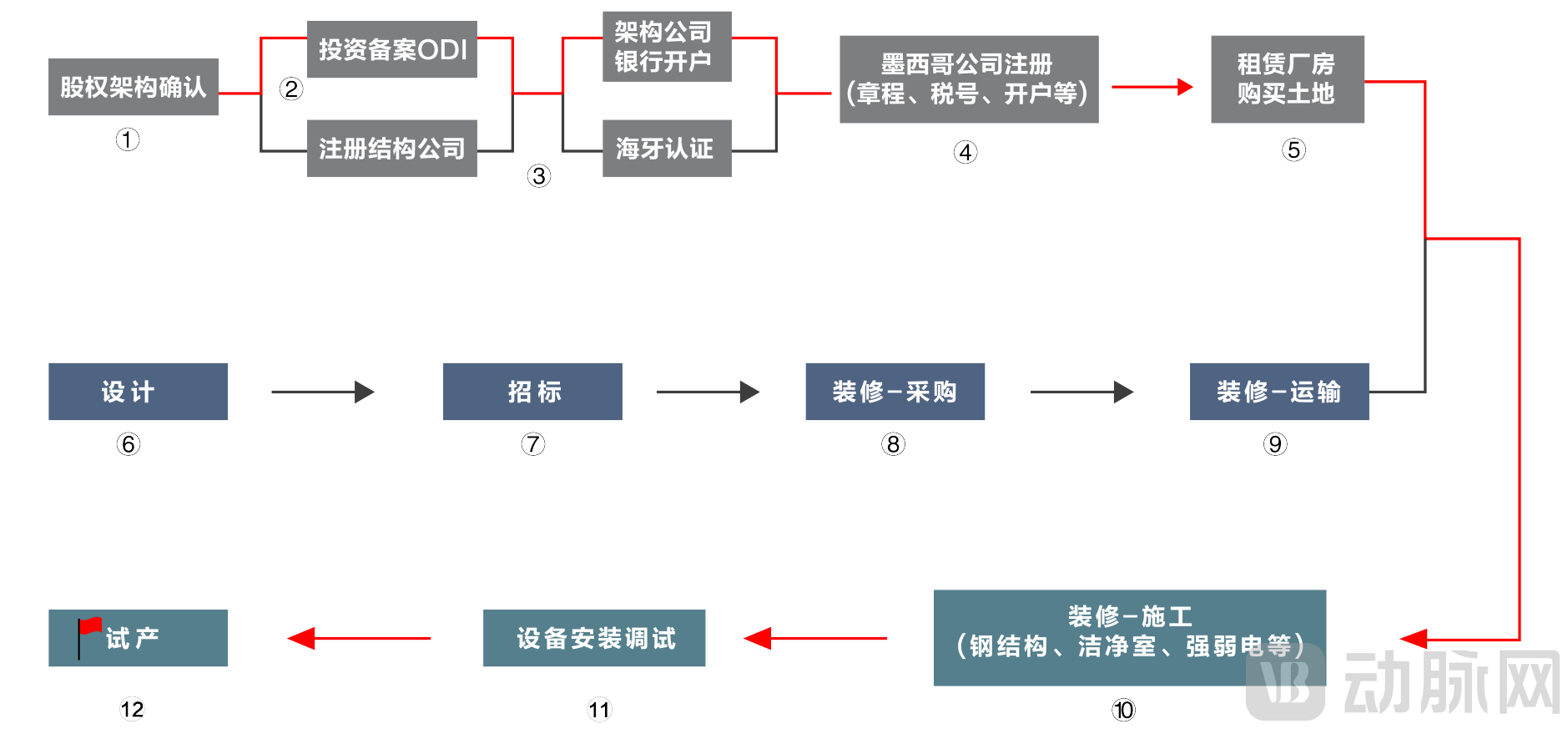
One-Stop Service Flowchart for Overseas Factory Establishment
“At its inception, Jilian primarily provided overseas company registration services for enterprises. As these registrations were completed, clients developed needs in areas such as finance and taxation, human resources, secretarial support, qualification licensing, and legal consultation. It can be said that Jilian’s business expansion has evolved gradually in response to customer demands,” said Wan Jun. During the pandemic, Chinese companies faced difficulties traveling abroad, yet they could not afford delays in engineering project costs. Leveraging the collaboration between its local and expatriate teams, Jilian seized the opportunity to expand into overseas engineering projects, including turnkey plant construction, cleanroom workshops, and automated立体 warehouse systems.
To date, Jilian Engineering, the Group’s integrated construction and installation enterprise, has expanded its business operations to 116 countries worldwide, including those in Southeast Asia, the Americas, and Europe.Having undertaken multiple engineering service projects in countries such as Mexico, Indonesia, Vietnam, Germany, and Serbia, we have become a construction engineering partner recognized by Fortune Global 500 companies. Meanwhile, Jilian Engineering is dedicated to providing smart factory construction services, striving to achieve global one-stop implementation solutions for smart factories.
“I believe the biggest pain points at present are, on the one hand, a lack of understanding of overseas markets, and on the other hand, insufficient comprehension of managing overseas personnel.“We are now encountering some enterprises that either go global at the invitation of their clients or decide to explore overseas markets after seeing their peers do so. They fail to recognize the significant gap in their understanding of international markets.”
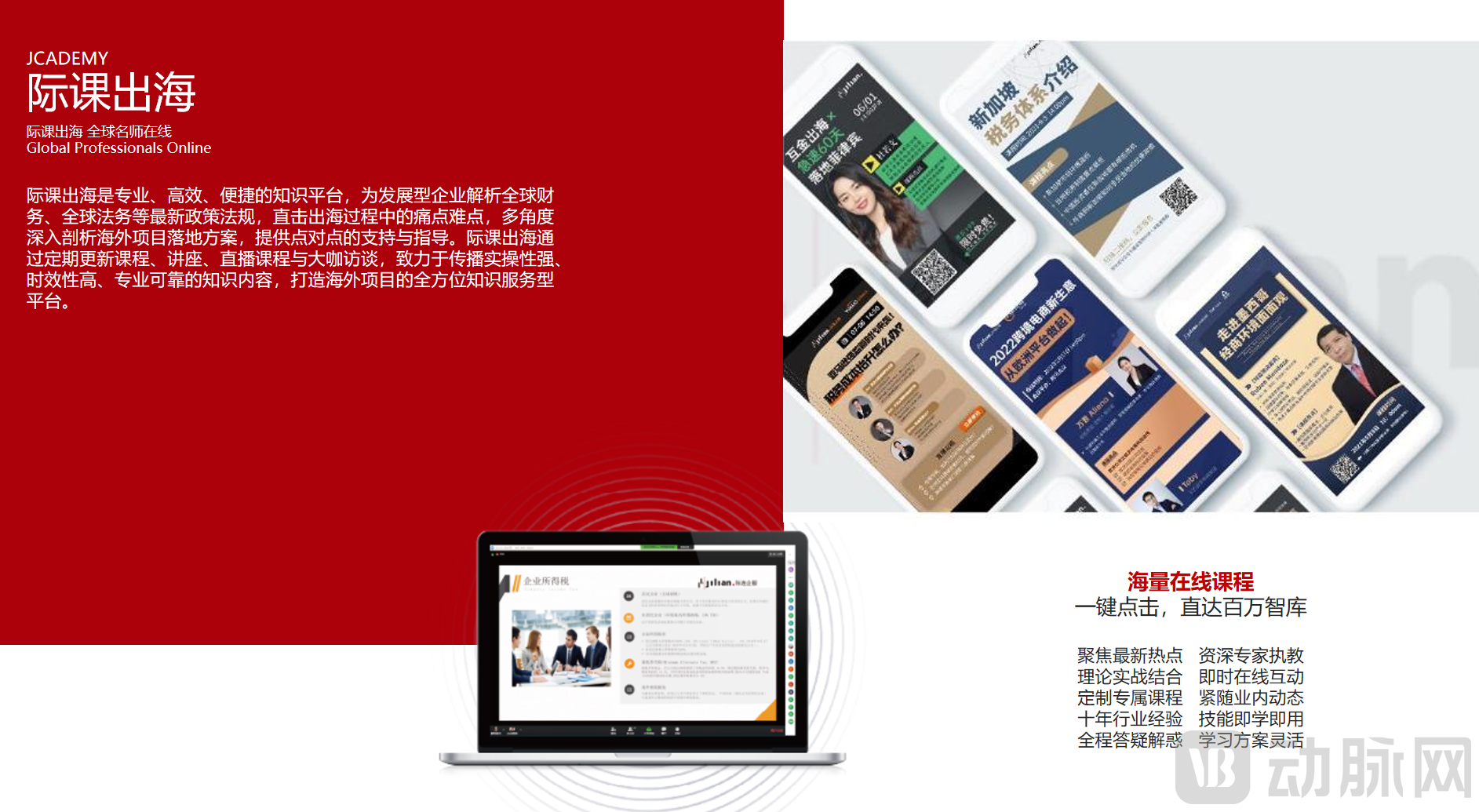
The most prominent manifestation is that mid-to-senior level executives in Chinese companies responsible for overseas expansion urgently need more overseas experience—particularly regarding local laws and regulations, cultural etiquette, customs, and taboos. Initially, Jilian conducted targeted, small-scale customer training sessions. Subsequently, Jilian aimed to systematically consolidate overseas expansion experiences and regulatory interpretations to benefit a broader audience. Since 2020, Jilian Group has launched the “Jike Chuhai” online course series, creating a professional, efficient, and convenient knowledge platform. By regularly updating courses, lectures, detailed case studies of overseas expansions, live-streamed classes, and interviews with industry experts, it disseminates highly practical and timely knowledge on global expansion.
Behind understanding and awareness lies deeper strategic thinking and temporal preparation for global expansion. “We often advise our clients to be mentally and temporally prepared when going global. Chinese efficiency ranks among the highest worldwide, with rapid execution across all tasks. However, in overseas markets, local residents and factories often exhibit low operational efficiency, weak time consciousness, and limited work enthusiasm, leading to significant maladjustment.” Furthermore, cultural and ethnic conflicts arising from differences in customs and traditions are critical issues that must be carefully avoided during international expansion.
“China’s journey of global expansion has not been long; a large number of enterprises have only just begun to venture overseas, and there is much to learn and prepare for in terms of understanding. By making adequate preparations before going global, companies can encounter fewer difficulties along the way. Whether through our localization teams or our courses and training programs on international expansion, our essential goal is to help Chinese enterprises acknowledge cultural and operational differences, adapt to local customs, advocate mutual respect and synchronized operational rhythms, and efficiently address challenges encountered during the process of going global.”
Specifically, Jilian Group is divided into multiple business segments, including consulting, projects, engineering, and mechanical and electrical services. It divides the world into five major regions: Asia-Pacific, Latin America, Indo-Pacific, Middle East, and Europe-Africa. Taking consulting services as an example, if a client requires Jilian to provide company registration services in Mexico, consultants will be responsible for answering basic inquiries and signing contracts. After the contract is signed, a project team will be established, with professional domestic project personnel from the Latin America region and the local Mexican team responsible for implementation. For engineering and plant construction services, the Engineering Department will be responsible for negotiating requirements and handling specific plant construction matters.
“The healthcare sector ranks among the top three business segments within Jilian Group. In recent years, the healthcare clients we have served have primarily expanded into Southeast Asia and Latin America, with a recent trend of extending their reach into the Middle East and Africa.”
Wan Jun noted that as companies follow the “Belt and Road Initiative,” Southeast Asia has become their preferred destination. The region’s advantages include short geographical distance, convenient transportation, and cultural similarities. Against this backdrop, factors such as market dividends stemming from demographic and economic foundations, industrial gaps, the political environment, and geopolitical considerations all serve as key coordinates for corporate decision-making. Moreover, often-overlooked aspects such as local customs, consumer habits, and religious beliefs can be critical to the success or failure of overseas expansion and may also influence a company’s choice of market entry and layout strategies.
“Going global requires not only thorough market and product research but also a long-term strategic perspective. Taking Mexico as an example, companies should consider: beyond securing a stable customer base, whether there are potential target customer segments; whether Mexico can serve as a hub for the Americas, providing access to northern markets in the U.S. and Canada and southern markets in Central and South America; and whether operations in a single country can radiate out to neighboring nations. Additionally, they must decide whether to pursue a capital-intensive manufacturing footprint to leverage tariff advantages under the USMCA, or to engage solely in international trade after factoring in costs for raw materials, labor, and ocean freight.”
Global fiscal and tax structuring is a key business segment of Jilian Group, distinguishing it from other overseas expansion service providers. When Chinese enterprises seek to invest abroad—whether through establishing new companies or projects, or acquiring equity via mergers and acquisitions—they must complete Overseas Direct Investment (ODI) registration if their activities involve directly or indirectly obtaining ownership, control, or operational management rights of overseas entities. The full ODI approval process typically takes two to three months and involves relatively complex procedures.Jilian can represent clients throughout the entire process to obtain approvals from relevant authorities, including the National Development and Reform Commission (NDRC), the Ministry of Commerce (MOFCOM), and the State Administration of Foreign Exchange (SAFE), and is responsible for full lifecycle project management during the project’s duration.A well-known domestic enterprise client commissioned Jilian to handle its ODI filing, which was completed in three days, setting a new record for the fastest processing time.
“For large enterprises and listed companies, compliance is crucial when expanding overseas, encompassing aspects such as outbound investment registration and international tax structuring. A well-designed tax structure can help businesses mitigate certain potential risks and facilitate the repatriation of funds.” In concluding the interview, Wan Jun stated, “Chinese companies’ global expansion is maturing. We must not only consider how to go out but also plan for how to bring profits back after ten years.”