

Writing Innovation into the Textbook: Jishuitan Hospital's Blueprint for Medical-Industrial Transformation
On April 17, 2022, at 8:30 a.m., the First Forum on Medical-Engineering Interdisciplinary Integration and Achievement Transformation opened at Beijing Jishuitan Hospital.
On-site, experts such as Zhang Liqun, Academician of the Chinese Academy of Engineering and Vice President of Beijing University of Chemical Technology, and Chen Hongsheng, Second-Level Inspector at the Department of Achievement Transformation and Regional Innovation of the Ministry of Science and Technology, were present, while many industry professionals also flocked to Jishuitan Hospital. Online, more than 8,000 viewers tuned into Jishuitan Hospital’s live stream.
Everyone wants to see,How Jishuitan Hospital, featured in “textbooks” (with its “reform on granting rights to scientific and technological achievements” and “medical-engineering-enterprise collaboration model” included in Beijing’s first Casebook of Typical Cases of Scientific and Technological Achievement Transformation), drives innovation and translation.
“A medical practitioner who has long focused on the translation of scientific research achievements stated that among the pilot units announced by the Ministry of Science and Technology, few have performed well, with Jishuitan Hospital being a notable example.”
Advancing Toward Research-Oriented Hospitals
In February 2022, Jishuitan Hospital initiated a clinical study on the “Interaction Between Azvudine Tablets and Tenofovir Alafenamide Fumarate Tablets.” This clinical trial was conducted by the Phase I Clinical Laboratory of the hospital’s newly built research wards.
At the project initiation stage, the research-oriented ward established a policy of deep integration with the hospital’s Department of Trauma and Orthopedics.Hailed as “China’s Best Orthopedic Hospital”, the Department of Traumatic Orthopedics at Jishuitan Hospital was designated as a National Key Clinical Specialty by the Ministry of Health in October 2010, treating tens of thousands of patients annually from across China with complex conditions, revision surgeries, and complication management.
Its orthopedic research has also advanced by leaps and bounds. Research projects such as “Clinical Application of Orthopedic Framework Navigation Technology,” “Development and Application Demonstration of Intelligent Minimally Invasive Surgical Equipment for Bone Trauma,” “Imaging Measurement and Diagnosis of Displacement in Unstable Pelvic Fractures,” and “Systematic Research on Elbow Joint Injuries” have received national, provincial, and municipal awards.
Specialty development involves not only addressing complex and refractory cases and generating research outputs, but also facilitating the rational translation of these achievements. Therefore, the hospital’s slogan also includes “leveraging the clinical spillover effects of orthopedics to accelerate collaborative translation among medical, engineering, and enterprise sectors.”
Jishuitan Hospital has placed great emphasis on establishing research-oriented wards. From the official launch of preparatory work to undertaking its first clinical trial project, Jishuitan Hospital took only eight months.“Not only is the speed fast, but Jiang Xieyuan, Head of the Research Ward and President of Jishuitan Hospital, has also repeatedly emphasized the need for synchronized guarantees in terms of personnel, funding, and materials.”
In terms of team building, Jishuitan Hospital has appointed Dr. Wang Meixia, Chief Physician, as the Head and Principal Investigator (PI) of its Phase I Clinical Trial Unit. With nearly 15 years of experience in Good Clinical Practice (GCP) for drug clinical trials, Professor Wang has served as PI for over 60 early-phase drug clinical trial projects. Among these, four innovative drugs have been marketed, all of which received support from the National Major New Drug Creation Program during the 12th and 13th Five-Year Plan periods.
Furthermore, Jishuitan Hospital rapidly deployed 13 staff members, including three research physicians, five research nurses, two pharmacy administrators, two sample managers, and one internal quality control specialist, thereby forming a specialized team.
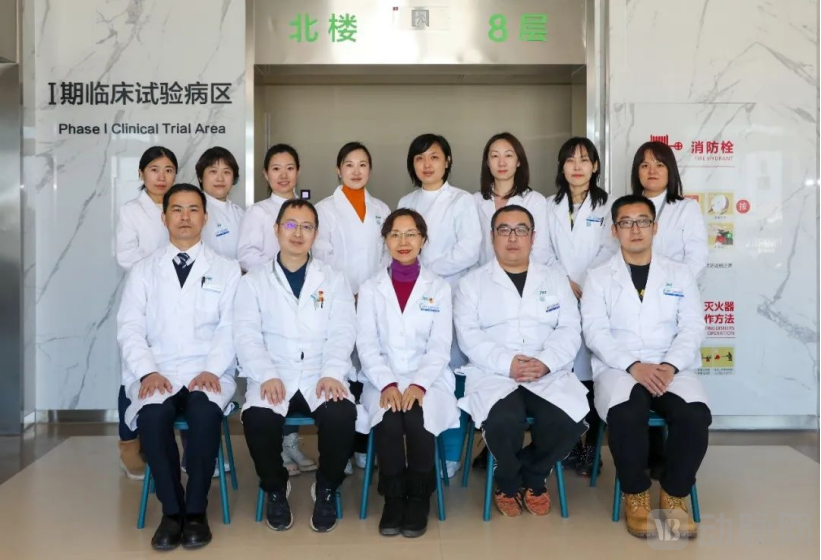 Phase I Team Group Photo, sourced from the official website of Beijing Jishuitan Hospital
In terms of fiscal support, the 2022 budget information for Jishuitan Hospital shows that the hospital’s projected expenditure for specific projects in 2022 was RMB 730.2757 million, an increase of RMB 211.1618 million, or 40.68%, from RMB 519.1139 million in 2021. The primary reason for this increase was the rise in start-up costs associated with the opening of the hospital’s new Longze Campus.
In terms of facilities and equipment, to meet the construction requirements specified in the Guiding Principles for the Management of Phase I Clinical Drug Trials (Trial), Jishuitan Hospital has designated the 8th-floor ward of the North Building at its Xinlongze Campus as the Phase I clinical trial ward. Covering an area of 1,500 square meters, the ward is equipped with 25 standardized research beds. The ward operates under 24-hour closed management and is outfitted with information management systems, including an access control system, high-definition surveillance system, a comprehensive biological sample management system, synchronized clocks, and a volunteer screening database system.
Upon completion of the Phase I clinical trial laboratory, it began to fulfill its most critical role:Collaborate with pharmaceutical companies to foster an innovation closed loop encompassing “clinical needs–product development–clinical validation–translational application.”
Externally, the Phase I Clinical Trial Laboratory provides end-to-end services, including project initiation, contract negotiation, contract signing, and project quality management. Professor Wang Meixia stated that she and her colleagues have made their personal mobile phone numbers publicly available to facilitate corporate liaison for project coordination and document submission.
After enterprises submit project initiation application materials, the Phase I Clinical Trial Team at Jishuitan Hospital accepts them promptly on working days and completes project initiation on the same day. For major projects or those led by Jishuitan Hospital, the team also provides expedited ethical review services, with ethical review opinions available within 48 hours after project initiation.
Internally, based on risk control for principal investigator (PI) projects within the hospital, the Phase I Clinical Trial Laboratory conducted training for the team addressing quality issues that arose during project implementation. The training covered topics such as drug-drug interaction (DDI) study design, key elements of ethical review for new drug clinical trials, and challenges in clinical trials and Good Clinical Practice (GCP).
Professor Wang Meixia recently stated publicly,As Jishuitan Hospital advances its comprehensive development, the scope of its clinical trials has expanded to encompass nearly all medical disciplines within the hospital. In the future, it will continue to accumulate more Principal Investigator (PI) qualifications to better serve enterprises.。
In May 2023, Jishuitan Hospital and Estun Medical signed the "Cooperation Agreement on the 'Attracting Enterprises with Beds' Project in the Field of Intelligent Orthopedics," to jointly develop shoulder and elbow orthopedic robots, focusing on technological breakthroughs and product development for robot-assisted treatment of complex trauma repair and rehabilitation of the shoulder and elbow joints.
The transition to a research-oriented hospital has also yielded unexpected benefits for Jishuitan Hospital: further stimulating collaboration between enterprises and the hospital on joint development projects.
Internal Empowerment Reform Drives Physicians’ Enthusiasm for Translation
According to the data from the “China Hospital Innovation and Transformation Ranking,” Jishuitan Hospital completed 22 achievements in transformation, received 168 patent grants, and realized nearly RMB 3–5 million in actual proceeds from technology transfer in 2022, ranking 35th nationwide. This success is inseparable from the reforms undertaken by Jishuitan Hospital in its internal model for transforming scientific and technological achievements.
In fact, Beijing Jishuitan Hospital began exploring technology transfer at an early stage. For instance, in 2013, the “Cartilage Repair Scaffold Material” developed by Sun Lei’s team at the Institute of Traumatic Orthopedics was licensed to Beijing Daqing Biological Co., Ltd., with a contract value of RMB 1 million. In 2015, the “Novel Artificial Cervical Disc Prosthesis,” jointly developed by the hospital and Beijing University of Chemical Technology, was transferred to Wuxi Baotong Medical Co., Ltd., for a contract amount of RMB 1.5 million.
However, the commercialization of achievements is not merely about sales; its core lies in genuine promotion.
Consequently, Jishuitan Hospital initiated reforms to its technology transfer model, with the aim of empowering researchers with the “motivation and authority” to commercialize their scientific achievements.
1“Momentum” Lies in Streamlining Processes and Clarifying Revenue Distribution
Beijing Jishuitan Hospital has established a Leadership Group for the Transformation of Scientific and Technological Achievements, with hospital executives serving as the group’s leader and deputy leaders. The group’s members include heads of departments such as Science and Technology, Finance, Audit, Discipline Inspection and Supervision, and Medical Engineering, as well as legal counsel and experts.
Most doctors and researchers are unfamiliar with sensitive aspects such as the disposition of proceeds. By incorporating departments such as finance, audit, and discipline inspection into the leadership group, physicians are relieved from the need to coordinate with these various departments individually. This approach ensures that physicians receive due benefits from the commercialization of their achievements while safeguarding their normal professional development.
Regarding the specific distribution of proceeds from commercialization, Jishuitan Hospital has stipulated that the net income generated from the transformation of scientific and technological achievements shall be distributed proportionally once the funds are secured, with 70% allocated as rewards and remuneration to the creators of such achievements and to individuals who have made significant contributions to their commercialization. Furthermore, the hospital not only links the commercialization of achievements to professional title promotions but has also implemented preferential tax policies, allowing 50% of the rewards to be included in the “wages and salaries” of scientific and technical personnel for the current month, subject to individual income tax in accordance with the law.
2“Rights” Lie in Empowerment Reform
In the second half of 2020, Jishuitan Hospital organized a valuation exercise for its internal repository of scientific and technological achievements. The technology transfer team screened 89 projects with potential commercialization value from a pool of 424 achievements for further assessment. Based on criteria including clear ownership, promising application prospects, well-defined recipients for technology adoption, and strong willingness among researchers to pursue commercialization, 15 high-value projects were selected for site visits and surveys.
The underlying purpose of this visit and survey is to launch empowerment reforms, granting researchers the “authority” to drive reform.
Following a comprehensive evaluation, Dr. Zhang Wuhua from the Department of Orthopedics became the “first to dare,” with his technological achievement, the “Mobile Intelligent Motion Monitoring Device for Orthopedic Rehabilitation Guidance,” selected as the pilot project for the empowerment reform.
In accordance with the “Implementation Plan for the Reform of Empowering Scientific and Technological Achievements at Beijing Jishuitan Hospital (Trial)”, partial ownership rights are granted to service-related scientific and technological achievements during the execution of empowerment contracts. With reference to the hospital’s distribution ratio for conversion incentives, the hospital and the R&D team are allocated 30% and 70% ownership, respectively. Upon signing the empowerment agreement, the R&D team and the hospital become co-patent holders. The transferee simultaneously issues a letter of intent for transformation, followed by the execution of the final technology transfer contract.
Pursuant to the agreement, Zhang Haohua has become a co-owner of the service invention titled “Mobile Intelligent Motion Monitoring Orthopedic Rehabilitation Guidance Device,” with Zhang Haohua entitled to 70% of the proceeds from the subsequent commercialization of the invention.This is also the first successful case of rights empowerment in Beijing.
Building a "Medical-Engineering-Enterprise" Collaboration Platform
In September 2019, the orthopedic team at Jishuitan Hospital successfully commercialized the “Orthopedic Surgical Robot” project, with a total transaction value of RMB 102.3 million. This project was achieved through a model combining “technology transfer and collaborative R&D with an enterprise,” involving the research team and TINAVI Medical Technologies Co., Ltd.
After experiencing initial success, Jishuitan Hospital began exploring a “medical-engineering-enterprise” collaborative translation model, summarized as the “Three Elements–Three Cycles.” This approach starts from clinical medicine and is demand-driven to achieve market-oriented promotion of product technologies and services, encompassing the medical-engineering R&D cycle, the engineering-enterprise regulatory cycle, and the medical-enterprise mutual promotion cycle.
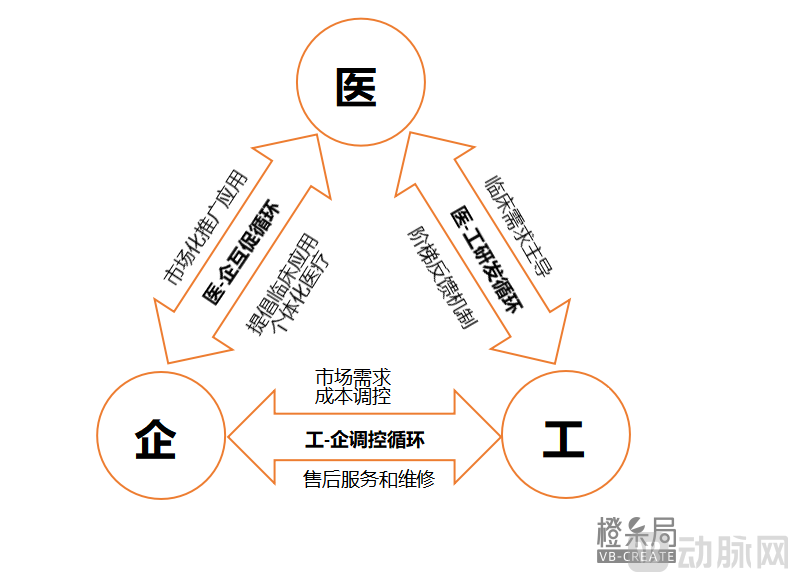 Schematic of the “Three Elements–Three Cycles” Mechanism
In the tripartite collaboration, physicians must frequently communicate with engineers and corporate staff to update prototypes, ensuring that clinical environments and surgeons’ operational preferences are taken into account during product design.
Jishuitan Hospital has demonstrated through concrete evidence that the collaborative translation model involving hospitals, universities, and enterprises is characterized by sustainability and high translational efficacy. In particular, the participation of universities and enterprises complements physicians’ technical perspectives with commercial acumen. Once the alliance is established, a closed-loop system for outcome translation is formed, with dedicated teams closely following the process from clinical practice and laboratory research to market commercialization.
Once established, a sustainable model can become self-reinforcing and continuously expand.
Jishuitan Hospital has expanded its external collaboration network by establishing a strategic alliance for medical-engineering integration with Beijing Institute of Technology to develop nerve block robots; founding the CAS-Jishuitan Orthopedics Research Center with the Chinese Academy of Sciences to develop next-generation intelligent orthopedic surgical robots; collaborating with Tsinghua University and Yimai Medical to develop intelligent artificial joint trial molds; and signing a strategic cooperation agreement with Beijing University of Chemical Technology to accelerate the import substitution and industrialization of biomaterials and medical devices.
Whether it is the establishment of research-oriented wards, internal empowerment reforms, or the “medical-engineering-enterprise” platform, their more significant implication is to make physicians realize that hospitals are an indispensable player in the translation of scientific achievements, and that physicians themselves hold the initiative.