

Exclusive Interview with Lumina Founder Yaqi Li: Deeply Connecting with Over 100 Hospitals in Indonesia as a Long-Term Partner for Chinese MedTech Companies Going Global

Lumina Procare Meditech
Medical Products and Services Provider
According to data from the General Administration of Customs,2023Year, China's Total Medical Device Export Value2491.359hundred million yuan, of whichTotal Exports from China to ASEAN320.733100 million yuan, accounting for approximately % of the total amount12.87%, although compared to2022total export volume declined in the year, but from12In terms of monthly data, China's total exports to ASEAN amounted to32.93100 million yuan, year-on-year11Monthly Growth13.73%。
Indonesia is a key pioneer in the joint development of the “Belt and Road Initiative.” As strategic alignment between the two countries continues to deepen, this figure and proportion are expected to rise further, with the Southeast Asian medical device market, led by Indonesia, becoming a new growth point for exports.
Although targeting the global market will expand a company’s addressable space several fold, the path to overseas expansion is fraught with challenges, including differences in policies and regulations, limited market understanding, and a growing number of competitors. In particular, going global is not merely about completing specific milestones such as product registration or hospital listing; rather, it is an end-to-end process of identifying new growth curves and extending the product lifecycle—a journey that is inevitably long and demands steadfast commitment.
How can Chinese brands truly penetrate the local market? How can they gain recognition from Indonesian doctors and patients? Furthermore, how can they closely align with Indonesian needs to expand, strengthen, and optimize their market presence, thereby turning the Indonesian medical device market into a sustained growth engine for their business?With many questions in mind, VCBeat interviewed Lumina, a service provider specializing in helping medical device companies expand into the Indonesian market. We spoke with its founder and president, Li Yaqi, to discuss these issues.
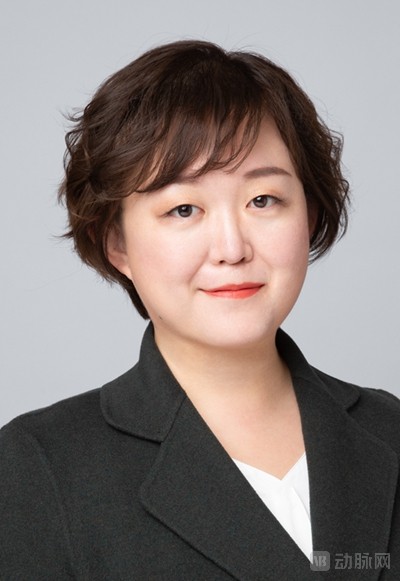
Li Yaqi, Founder and President of Lumina
As a provider of “direct selling systems” rooted in the local Indonesian market, Li Yaqi had already spent fifteen years cultivating her expertise in the market consulting industry before committing to this venture, accumulating extensive experience in cutting-edge fields such as internet research and artificial intelligence (AI).
Reflecting on her previous work experience, Li Yaqi stated, “The allure of the consulting industry lies in its ‘uncertainty’ and ‘challenges.’ This means constantly starting from scratch to engage with different markets, industries, and clients. By providing valuable and keen insights, we help companies formulate effective market strategies that meet their needs and expectations, while simultaneously enriching our own expertise across the entire consulting sector.”
In fact, judging from Li Yaqi’s academic background, working in market consulting is itself a form of “cross-disciplinary transition.” VCBeat has learned that Li Yaqi’s undergraduate major wascan be said to beAlthough it had nothing to do with market consulting, since graduating in 2006, she has relied on her interest and ability to become one of the first people in China determined to deeply cultivate the market consulting industry.
Over the following decade, Li Yaqi not only earned an MBA from Renmin University of China but also stayed attuned to the industry’s evolving trends, transitioning from traditional consulting to internet-based consulting and research. During this period, she held key executive roles such as Vice President, gained hands-on experience managing projects worth tens of millions of yuan, and successfully implemented strategic initiatives for over 100 brand consulting projects. She directly managed business performance exceeding RMB 100 million and served numerous Fortune Global 500 companies, including a top-three global 3C electronics manufacturer, a major multinational chain restaurant group, and a leading global skincare brand.
"Resetting to zero is not the same as clearing to zero." The "zero-reset capability" honed by Li Yaqi enables her to maintain vitality and curiosity when entering any field or industry, allowing her to rapidly grasp the essence through acute awareness, an accepting attitude, and strong learning motivation.
When discussing the motivations behind becoming a service provider for the global expansion of Chinese medical device companies, Li Yaqi cited a range of policy, economic, and social factors. These include Indonesia’s population of over 270 million, making it the fourth most populous country in the world; the Indonesian government’s continuous increase in healthcare spending; and the strengthening trade and investment ties between China and Indonesia.
However, when confronting the healthcare sector—characterized by high investment, high risk, high returns, and long development cycles—Li Yaqi stated, “Every industry experiences periods of intense competition. This is akin to how domestic medical device manufacturers have chosen to expand overseas amid the pressures of centralized procurement and fierce domestic rivalry. Therefore, when once again faced with diverse and uncertain life choices, I draw upon the experience I accumulated in the consulting industry: only by accurately assessing the risks and opportunities in new markets and aligning strategies accordingly can one avoid being constrained by the new environment and proactively embrace the broader global market.”
Amid the global trend of economic structural transformation, Li Yaqi conducted thorough research on Indonesia’s medical device market and the key challenges faced by Chinese manufacturers in their expansion into Indonesia. Recognizing the critical value of an innovative “direct sales system” for both domestic and international operations, she firmly boarded the flight to Indonesia and has since established her roots there.
Capitalizing on the lingering momentum of overseas expansion accelerated by the pandemic, Li Yaqi promptly registered and founded Lumina after completing the necessary preparations for market exploration and team building in Jakarta, the capital of Indonesia.
“Lumina means ‘light’ in Indonesian, which aligns with our company’s founding vision: to Create a better future. This not only helps Chinese manufacturers expand into the Indonesian market and seek new growth opportunities by illuminating their path forward, but also brings higher-quality medical resources and more cost-effective medical devices to local patients and healthcare providers in Indonesia, jointly creating a better future,” said Li Yaqi.
Building a suitable localized team in Indonesia was the second challenge Li Yaqi had to address while living abroad. With her family’s support for her entrepreneurial venture, Li Yaqi relocated her entire household to Indonesia, and the vanguard of the company’s core team also took deep root there. Since then, Lumina has truly achieved localized management and operations in Indonesia.
Certainly, when enterprises seek to expand their operations in Indonesia, selecting suitable local employees is equally important. This is a key step for Lumina Procare Meditech to gain recognition from Chinese manufacturers and local hospitals.
It is well known that entrepreneurs from various countries often hold negative stereotypes about local Indonesians, such as regarding hygiene habits and work ethic. However, Li Yaqi, who has extensive management experience in China, is not overly concerned about this.
“Lumina’s ability to gain recognition from employees of diverse faiths and cultural backgrounds lies in the establishment and continuous promotion of its corporate vision. It first uses ‘Create a better future’ to initially screen for employees whose alignment with this philosophy exceeds 50%, and then cultivates and retains more talent through corporate culture and a competitive compensation system. Belief stems from visibility; this process is essentially about screening for like-minded comrades who share the same values,” stated Li Yaqi.
Under the leadership of Chinese managers,As the size of Lumina’s local Indonesian workforce continues to expand, the company has gained more timely and effective control over the comprehensive demands and market dynamics of Indonesia’s medical device market. Through professional solutions, product demonstrations, and trial use, Lumina is gradually enhancing the recognition of Chinese brands among Indonesian hospitals.
Expanding overseas is not a short-term endeavor that can be tackled alone. Therefore, when faced with the opportunities of global expansion, and specifically with the challenges of devising localized operational strategies and truly integrating into the Indonesian market, selecting a “reliable” partner has become a critical and mandatory consideration.
“The birth of Lumina is for this very purpose.”
To summarize from the interview, Lumina has been able to establish a firm foothold in Indonesia and gain recognition from Chinese manufacturers mainly due to the following advantages.
First, the strategic execution of expanding into Indonesia actually begins before a company establishes its presence in the country. Li Yaqi stated, “Not every product with the intention to go global is suitable for international expansion at the current stage. The feasibility of local market entry is influenced by multiple factors, including Indonesia’s healthcare standards, patient needs, the level of support from health insurance and policies, as well as competitive products.”Lumina addresses the most critical pain points by providing Chinese medical device manufacturers with feasibility studies for brand localization in Indonesia. This enables enterprises to determine whether and when to expand into the Indonesian market, as well as to formulate appropriate product selection, pricing, and competitive strategies, thereby ensuring a precise and stable initial entry and maximizing efficiency.”
Secondly, in contrast to the bold approach of establishing overseas subsidiaries in Indonesia, most domestic medical device manufacturers tend to appoint local Indonesian distributors as the “authorized license holders” for their products. Traditional Indonesian distributors often adopt a passive strategy, unilaterally accepting licensing partnerships with various Chinese manufacturers and expanding the breadth of their product portfolio to meet hospital demands.
These “authorized license holders,” acting as intermediaries, often serve merely the single function of slow-moving sales. For domestic manufacturers, this fragmented distribution model means that, aside from product sales volume, they remain completely unaware of key information necessary for strategic adjustments, such as market intelligence, user needs, and clinical outcomes, andcan onlyAt Your Own RiskCorresponding after-sales service for the product.
“More importantly, for Chinese manufacturers, expanding overseas is an inevitable choice to break through growth bottlenecks and tap into incremental markets. However, traditional local distributors in Indonesia charge ‘bridge fees’ of up to 45% per sale, which severely squeezes product profit margins,” Li Yaqi continued.
In response, Lumina adopts an innovative direct sales system and a flexible cooperation model.
“Only those on the front lines can hear the gunfire. Lumina’s direct sales model resembles a bespoke service; by leveraging deep collaborations with numerous Indonesian hospitals and gaining in-depth product insights during preliminary research, it acts as a liaison between Indonesian hospitals and Chinese manufacturers, enabling domestic manufacturers to sell their products directly to hospitals.”
Furthermore, Lumina’s in-house engineering team provides healthcare professional training, as well as product installation, repair, and maintenance services to hospitals and domestic manufacturers, backed by 24/7 service support.
Although Lumina also serves as the license holder, this does not constitute a “monopoly.”
Flexible Collaboration Model refers to Lumina establishing direct sales partnerships on the basis of a flexible two-tier distribution model. This means that while Lumina helps Chinese manufacturers break into market gaps and gain recognition for their products and brands in Indonesia, it further assists enterprises in expanding their sales channels and increasing market share through secondary distributors. From 0 to 1, we serve as a sincere companion for enterprises going global.
Li Yaqi stated, “Currently,Lumina and its team have established in-depth collaborations with over 130 hospitals at various levels across Indonesia, maintaining close communication on a monthly basis. The scope of services covers urology, cardiology, ICU & emergency departments, and clinical laboratories, as well as the development of information systems and supporting facilities for newly built or expanded hospitals. While helping local doctors and patients in Indonesia access higher-quality, more cost-effective medical resources, Lumina also assists Chinese manufacturers in obtaining timely clinical feedback to develop medical devices better suited to Indonesia’s specific needs. This ultimately creates a positive cycle driven by the strong reputation of “Made in China,” extending its reach to more hospitals and patients across Indonesia and even Southeast Asia.
Reflecting on 2024, Li Yaqi stated, “In recent years, Chinese medical device manufacturers have completed technological upgrades and achieved domestic substitution in most niche segments, ushering in an era of expansive global exploration. Lumina will also participate in the Future Healthcare Top 100 Conference hosted by VCBeat this May to connect with more outstanding innovative enterprises in China’s healthcare industry. By leveraging our specialized direct sales system and flexible cooperation models, we aim to empower Chinese manufacturing to confidently expand overseas and access larger, more diverse international markets.””