

How Blockbuster Pipeline BD Deals Get Done: Insights from Industry Veterans
Over the past two years, there has been growing attention to the potential impact of business development (BD) for pipeline assets on biotech companies.
In 2023, more than 100 innovative pharmaceutical companies completed 124 deals, with a total value of $50.6 billion. Amid the capital winter, business development (BD) transactions have become an indispensable source of funding for biotech firms.
At its core, business development (BD) is a highly specialized, systematic endeavor that encompasses preparatory work, frequent communication and interaction during the process, and collaboration in R&D partnerships after deal closure. A failure in any single link can compromise the overall effectiveness of BD.
In practical operations, the role of BD is crucial. Typically, a company'sWhile the scale of BD capabilities does not directly determine whether a transaction can be closed, it does influence the pricing of assets in the deal.Of course, the essence of business development (BD) work lies in efficient execution. While BD professionals may provide input for decision-making, the final authority rests with the company’s management and board of directors.
The views expressed in this article are from Dr. Yang Dazhou, Vice President of Business Development at Rxilient. Prior to joining Rxilient, Dr. Yang held comprehensive responsibility for business development at Everest Medicine, ArkBio, and Terns Pharmaceuticals. In late 2023, Dr. Yang’s “BD Trilogy” series, published on his personal WeChat official account, sparked extensive discussion within the industry. In this article, VCBeat has edited the content without altering its original meaning.
I. How to Find Suitable Buyers?
After the launch of a business development (BD) project, a substantial amount of critical preparatory work must be completed before both parties formally enter into negotiations. Typically, once the external collaboration strategy for the product is defined, efforts should immediately begin to organize various professional documents and screen potential target buyers.
The first step in preparation is to manage expectations and clarify the starting point and ultimate objective for a company’s business development (BD) initiatives.Typically, BD styles vary significantly depending on a company’s vision, objectives, strengths, and strategies. For platform-based R&D enterprises that leverage proprietary technology platforms to consistently develop high-quality products, out-licensing assets becomes an inevitable step once they reach a certain stage of development. In contrast, if a company positions itself as a niche, high-quality biopharma, its core products are invariably intended to be carried through to market approval and commercialization. In such cases, offering a product for sale would signal a major strategic shift in the company’s development trajectory.
The second step is to gain a thorough understanding of your own products in order to define BD objectives.
On the one hand, accurately graspBasic Product Profile and Core Differentiators.Among these, the core differentiators are faster R&D or superior quality. However, the argument of “faster R&D” is difficult to sustain as a standalone claim in overseas markets. In terms of “superior quality,” this generally encompasses three key aspects: greater efficacy, improved safety, and enhanced convenience of use. These correspond directly to the indications, adverse reactions, and dosage and administration sections in future product labeling, all of which constitute critical information. Such advantages must be substantiated by robust data, including head-to-head clinical trial results, strong patient efficacy data, pharmacodynamic (PD) biomarker data from Phase I multiple ascending dose (MAD) studies, repeat-dose safety data (from dose-escalation studies), exceptionally promising preclinical animal study data, and pharmacokinetic (PK) data.
It is worth noting that companies must have a clear understanding of the red flags and potential deal breakers associated with their own products, such as production costs, patent freedom to operate (FTO), chemistry, manufacturing, and controls (CMC) details, and the overall robustness of preclinical data packages. This awareness is crucial to avoid being undermined by unexpected risk factors during in-depth due diligence, which could severely damage the external image of both the product and the company.
On the other hand, identify the core advantages of your own products in light of the global competitive landscape.Globally, who are the competing manufacturers? What are the primary competitors’ current development stages? What are their respective characteristics? How do regulatory authorities and clinical practitioners perceive the value of these products? These insights must be supported by raw data, including therapeutic area-specific drug development guidance issued by the FDA, CDE, and other agencies; clinical practice guidelines for diseases; expert consensus statements; epidemiological literature; review articles; presentations or posters delivered at academic conferences; data disclosed in corporate financial reports; slides from investor meetings; and company press releases.
This section is highly demanding in terms of mental energy and professional expertise, requiring one week to one month to complete.On this basis, it is possible toProduct Target PositioningBased on the actual circumstances, clarify whether the objective is to strive for first place among comparable transactions, secure a top-three position, or take an all-or-nothing gamble regardless of the outcome.
Step 3 involves formally preparing materials for external presentation, ensuring close coordination with other functional business departments. Typically, this results in a suite of Microsoft Office documents and a continuously updated data room.
Specifically, the Office suite comprises three PowerPoint presentations, two Excel spreadsheets, and two Word documents. Among these, the three PowerPoint presentations are the most frequently used.
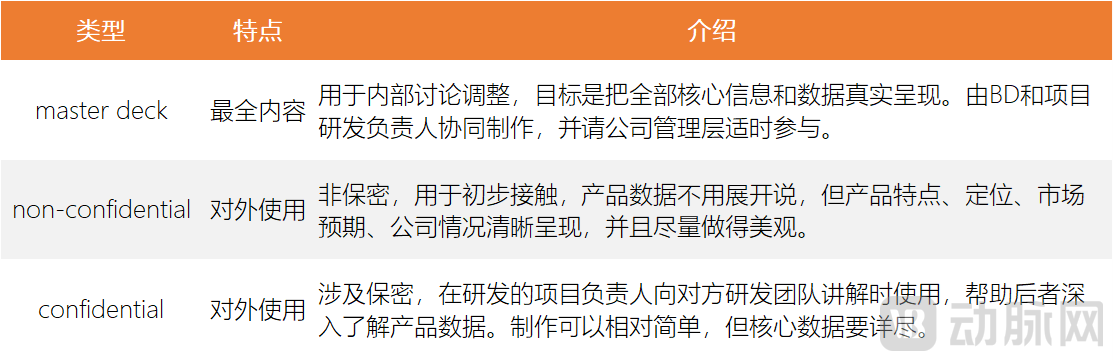
Note: After the production of the following two films is completed, management approval must be obtained before external release. Any subsequent adjustments require confirmation from leadership after each revision to ensure rigorous attention to detail.
Two Excel files: one containing the forecast (projected cash flow) and NPV (net present value) models, and the other containing deal comps (comparable transactions).For late-stage products with clear market positioning, sales forecasts should be developed based on factors such as epidemiology, expected pricing, product positioning, market share, peak sales, and time to peak. These forecasts are then combined with product costs, marketing expenses, R&D costs, stage-specific R&D success rates, and working capital adjustments to calculate risk-adjusted free cash flow. Finally, the product’s net present value (NPV) is determined, which serves as the basis for structuring the financial terms of collaboration.
Of course, such calculations may not be accurate, but the model itself can serve as a tool for subsequent business negotiations, which is important.
Two Word document templates, namely the CDA (Confidential Disclosure Agreement) and the term sheet (TS, Term Sheet).Templates are typically available. For the CDA, key clauses to focus on include the place of arbitration, voluntary disclosure, and record destruction. The overarching principle for drafting the TS is to keep it concise and focused on critical elements, such as the scope of collaboration, financial terms, decision-making mechanisms, information sharing and supply chain arrangements, termination clauses, and the place of arbitration.
Next is the data room.Throughout this process, close collaboration with the R&D team is essential, as the documents in the data room are predominantly final reports generated by R&D, including Clinical Study Reports (CSRs), Investigator’s Brochures (IBs), Tables, Figures, and Listings (TFLs), and various study reports. Here are a few practical tips: First, upload documents in batches while avoiding CMC-related materials and overly detailed clinical content. Second, monitor the counterparty’s internal progress by reviewing data room access logs and follow up promptly.
The Final Step in Preparation, it is time to start reaching out to potential buyers externally, with the scope of contact being as broad as possible.
As a potential buyer, one shouldIt requires both the financial capacity and R&D capabilities, as well as the willingness to purchase.In terms of payment and R&D capabilities, multinational corporations (MNCs), domestic pharmaceutical companies, large private equity (PE) firms, and their portfolio companies typically meet the criteria. In terms of willingness to purchase, multiple factors need to be considered. Specifically, to assess the willingness to collaborate, four aspects should be evaluated: first, product type (e.g., large molecules, small molecules, ADCs, CGTs); second, therapeutic area (e.g., oncology, immunology, infectious diseases, CNS, metabolic disorders); third, development stage (e.g., technology platform, PCC, IND, POC); and fourth, scope of collaboration (e.g., global, Asia-Pacific, China, ex-China).
Capable but Unwilling, it is advisable to first establish rapport and maintain regular communication. This is because such pharmaceutical companies may undergo subsequent strategic adjustments, creating new opportunities for collaboration. Of course, for pharmaceutical companies that have the willingness but lack the capability, it is also appropriate to maintain contact, as their current contacts may bring about collaboration opportunities after changing jobs.
Once potential buyers are identified, thorough due diligence must be conducted to fully grasp their relevant information, including R&D focus, pipeline portfolio, internal decision-making mechanisms, business development (BD) track record, and even past pitfalls. Furthermore, every effort should be made toReach key stakeholders or decision-makers to establish direct contact. Access can be achieved through one’s own resource network or via third-party channels. It is important to note that even with third-party facilitation, data are still required to open the door to collaboration; the role of third parties is largely strategic and behind-the-scenes.
II. Securing a Favorable Price for the Product
The BD transaction phase serves as a stage where seasoned industry veterans engage in strategic maneuvering, rich with compelling narratives. Of course, the majority of BD negotiations remain relatively conventional.
To elaborate on BD deal-making skills, it is necessary to mention an industry consensus: the fundamental premise of business development is that the product itself must be competitive.However, this point should be understood dialectically, as practical implementation is highly complex. In most transactions, it is difficult to sell exceptionally attractive products to particularly discerning buyers; more often, the deals proceed on a “willing buyer, willing seller” basis. Typically, the preferences and judgments of R&D heads are influenced by subjective factors, which ultimately shape their evaluation of the product.
Next are the details of the BD transaction. Essentially, BD is a strong buyer's market., most products remain unsold, and most collaborations fail to materialize.
In a strong buyer’s market, there is a trading technique, namelyA phone appointment must be scheduled.In the initial email, minimize company introductions; be concise and get straight to the point by highlighting product features. However, do not expect to generate sufficient interest solely through product feature descriptions and non-confidential materials attached to the email. Securing a phone call is a crucial step in establishing contact.
During the conference call, provide incremental information to the greatest extent possible while maintaining appropriate discretion.This means that the presentation slides shared during the meeting should contain slightly more substantive content than the non-confidential slides distributed via email, such as more detailed data, ideally giving the recipient a sense of having gained some new insights.
If things proceed smoothly and pass the counterparty’s preliminary assessment, the process will move to the stage of signing a non-disclosure agreement (NDA) approximately two weeks after the initial conference call. At this point, it is advisable to maintain a flexible stance and preferably use the multinational corporation’s (MNC) template directly. The only key consideration is that the arbitration venue should ideally be located in a neutral country.Meanwhile, the other party may send a list of questions.. It is advisable to have the R&D team address this list, preferably via a conference call, which allows for flexible questioning while enhancing interaction and building trust.
At this point, the prospects for closing the deal are quite promising.
At this stage,Potential buyers often present a relatively formal list of detailed questions, facilitating direct dialogue between the R&D teams on both sides. In such scenarios, business development (BD) professionals should refrain from interrupting, actively participate in numerous conference calls, and step in only when necessary. If the product has significant flaws, maintain absolute transparency internally; externally, while full disclosure is not required, under no circumstances should you lie.
Some companies require,Early-stage assets undergo MTA studies before and after TS. In this process, unless under special circumstances, BD must ensure that if the counterparty does not proceed with the purchase, our company retains ownership of the generated data.
At this stage, the likelihood of closing the transaction is relatively high. It is advisable to seek appropriate opportunities for face-to-face meetings between the core business development teams of both parties, while also sharing the positive news with company leadership and engaging with other potential buyers to exert additional pressure on the target buyer.The core of the TS consists of high-level financial terms, such as the scope of cooperation and the investment amount.Note,A Term Sheet (TS) is a non-binding framework agreement—a gentleman’s agreement—that sets the tone for contract negotiations. In contrast, the definitive contract marks the commencement of formal collaboration, carries legal force, and serves as the foundational governance framework for the future partnership.TS is about the marriage, agreement is about divorce。Often, even after the term sheet (TS) has been largely agreed upon but not yet signed, parties proceed directly to contract negotiations.
After receiving the first TS, it was the investment bank’s turn to step in and start working on driving up the price.Following a round of discussions, several term sheets (TS) may be secured, allowing the process to move into the negotiation phase. On one hand, engage the investment bank to negotiate for a higher valuation. On the other hand, conduct reverse due diligence on potential buyers to further assess their capabilities and commitment.
There are also techniques for raising prices during negotiations, and expectation management should be done well. In the first communication, you can be more aggressive by increasing all lines based on the other party's TS price.ReferenceThe NPV model and comparable transactions developed internally must be approved by leadership before release; this serves as the first anchor placed on the negotiation table.
It is best to adopt a balanced approach of both concessions and demands; avoid trying to secure every possible benefit, as the business development (BD) landscape is firmly a buyer’s market. During negotiations, provide precise figures rather than price ranges, since commercial terms reflect your priorities—whether they lie in upfront payments, mid-term milestones, or back-end royalties.
The specific signing of contracts falls under routine commercial activities.However, note that a media promotion plan should be prepared before signing the contract.Once the press release is drafted, both parties should jointly review and confirm the wording before distributing it through official channels. Where feasible, arrange investor meetings or management interviews to clarify key messages in advance. After the announcement, be sure to express gratitude to leadership and colleagues for their continued support.
In fact, the transactionThe process involves few gimmicks and consists mostly of routine procedures. However, it is important to note that negotiation skills and the like are merely “tactics,” mutual recognition between the two collaborating parties is the “principle,” and the inherent quality of the product itself is the “foundation.” One must not put the cart before the horse.
III. The Ultimate Goal of BD: Synergize Efforts to Bring Drugs to Market
The deal is done; the real work has just begun.After years in business development, one realizes that the transaction process is not always exhilarating; with proficient skills, each collaboration follows a similar pattern. What is truly engaging is the search for and screening of buyers, which constantly involves exposure to new things and information. The most grounding aspect, however, is alliance management after the deal is closed—this is tangible, substantive work.
Alliance management requires frontline project management experience. The goal of alliance management is long-term prosperity.
CertainlyIf the global rights to a product are sold outright to a single buyer, alliance management need only conduct periodic follow-ups on progress or revenue once the handover is complete. However, if only the rights outside China are licensed, more intricate details come into play. First, it is essential to review the contractual terms to determine whether independent R&D can be conducted within China or whether consensus with the buyer on R&D specifics must be reached beforehand.
As R&D efforts advance simultaneously in China and overseas, alliance management plays a pivotal role. Equally critical is the decision-making mechanism of the Joint Steering Committee (JSC) stipulated in the transaction agreements, particularlyDevelopment Plan During the Clinical Development Phase and Pricing and Access Strategies After Product Commercialization。
The composition and decision-making mechanism of the JSC are quite similar to those of a company’s board of directors,Following the collaboration between the two parties,The Highest Authority Capable of Joint Decision-MakingFurther escalation would involve direct communication with the CEO or initiating arbitration proceedings. Matters discussed by the JSC are all significant decision-making items.
The core issues of the meeting primarily concern data publication, particularly the presentation of new data at academic conferences or in journals. Additionally, it includes transactions related to collaborative products conducted with other enterprises and government agencies. If the partnership involves mechanisms for cost-sharing or benefit-sharing, these will also be confirmed at the Joint Steering Committee (JSC) level. Furthermore, topics such as corporate development plans, capital market strategies, product R&D roadmaps, and marketing plans may be discussed during JSC meetings to provide the counterpart with relevant background information.
JSC’s decisions can hardly satisfy both parties every time. Generally, provided that neither party is harmed, the party who bears primary responsibility for the consequences of a decision holds greater decision-making authority.
In daily operations, alliance management is conducted based on a series of specialized sub-agreements, specifically including regulatory agency agreements, clinical sample supply agreements, and commercial product supply agreements, covering all aspects of new drug commercialization.
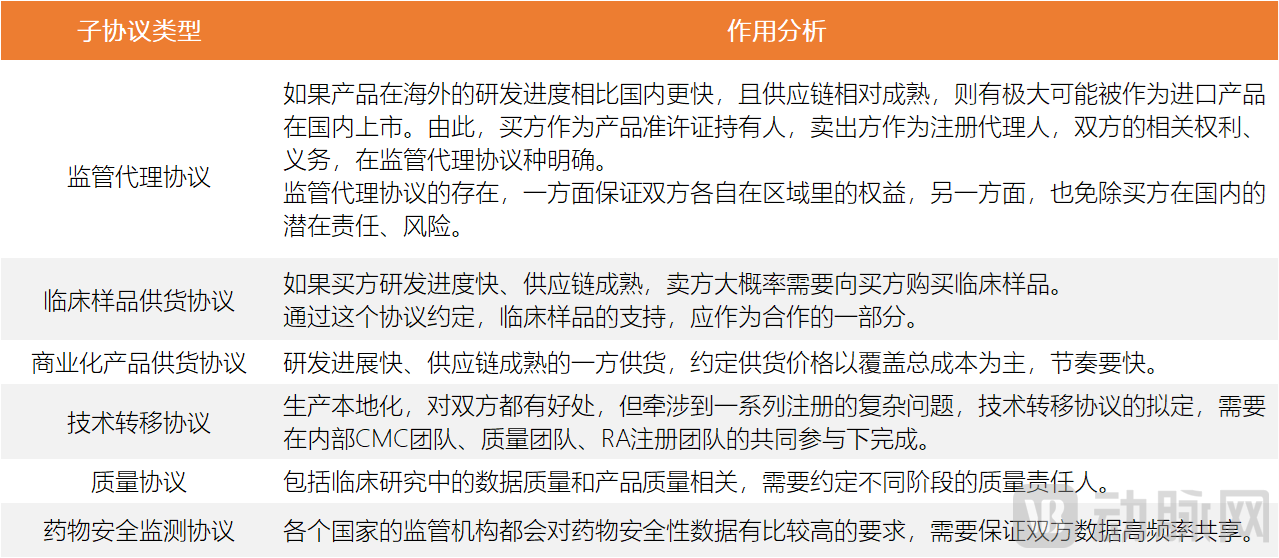
Furthermore, it is necessary to explicitly stipulate in the master contract that the counterparty’s cooperation with professional contracts constitutes an obligation incumbent upon them as a partner, thereby precluding the possibility of subsequent hourly billing and ensuring proper expectation management.Internally, management processes should be established as early as possible, and every colleague involved in partner communications should understand the core terms therein.
Clinical Research Phase, involving extensive data sharing, clinical supply chain arrangements, and the submission of documents and supplementary materials to regulatory authorities in various regions. These cumbersome tasks require frequent communication between both teams, and it is advisable to establish a regular communication mechanism.
Market Sales Phase, product supply chain management, timely payment of goods, and meticulous handling of milestone, payment, and profit-sharing disbursements are particularly critical. During this phase, while the frequency of communication may decrease compared to the clinical research stage, particular attention must be paid to data accuracy.
Product Transition to Production Phase, with the most frequent communication between both parties, it is essential to manage each other’s expectations effectively. Such communication should ideally involve, to a certain extent, finance, legal, supply chain, and regulatory affairs teams from both sides.
Beyond BD-driven co-development, one aspect that may be overlooked is that deep collaboration with multinational corporations (MNCs) offers biotech companies a rare learning opportunity. Such partnerships may increase R&D expenditures and reduce upfront cash inflows, but from a long-term perspective, biotechs stand to gain: they can fully establish their operational systems in accordance with the highest international standards, thereby securing greater future returns.
From this perspective, the significance of business development (BD) for biotech companies is not limited to substantial cash flow, but also represents new opportunities for organic growth.