

"Proximity Breeds Advantage": Innovation and Translation at Peking University Third Hospital
In Haidian District, northwest of Beijing, there is a nearly 6-kilometer-long north-south arterial road:Xueyuan Road.
As its name suggests, the streets within this jurisdiction are home to the historic “Eight Major Colleges” and numerous national-level research institutes, with direct proximity to top-tier universities such as Tsinghua University, Peking University, and Renmin University of China.
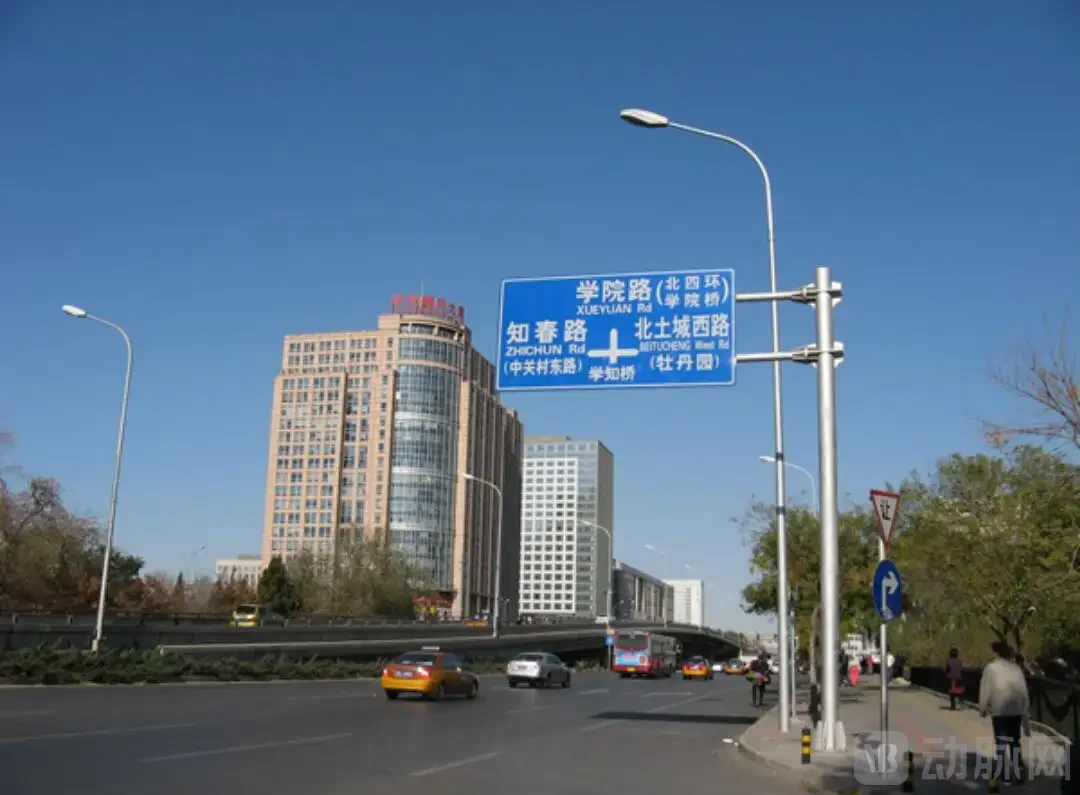
Image source: personal
Within this area of less than 9 square kilometers, more than 260 academicians of the Chinese Academy of Sciences and the Chinese Academy of Engineering have emerged over the past 70-plus years, and over one million high-level professionals with bachelor’s degrees or higher have been trained, constituting a core force for China in fields such as aerospace, medicine, steel, petroleum, geology, and agriculture and forestry.
If you enter “Xueyuan Road” into a mapping application and zoom out slightly, you will be surprised to discover just how close it is to Zhongguancun Innovation Street. This geographical proximity also seems to clarifyZhongguancun’s 40-Year Entrepreneurial Journey and a Major Chapter in China’s History of Scientific and Technological Innovation。
Located immediately to the east of Xueyuan Road,Peking University Third Hospital, it inevitably sparks endless speculation about the ripple effects triggered by its unique geographical location.
In 1958, Peking University Third Hospital was officially established along Xueyuan Road to meet the medical needs of the surrounding community and fulfill the clinical teaching requirements of the Peking University Health Science Center system.
Over the subsequent half-century of development, Peking University Third Hospital has continuously expanded and strengthened its core competencies by leveraging multiple leading disciplines. Today, Peking University Third Hospital has advanced27 National Key Clinical Specialtiesconstruction, possessing1 National Clinical Medical Research Center for Diseasesand2 National Quality Control Centers, and approved to becomeNational Pilot Hospitals for High-Quality Development of Public Hospitals。
Under the governance of several deans, the three hospitals boastChina's Leading Spine Surgery Department; led by Academician Qiao JieCenter for Reproductive Medicinein terms of scale and treatment methodsInternationally Leading(The first test-tube baby in China was born here, with the center handling 500,000 outpatient visits annually); itsInstitute of Sports MedicineEven more soFounded in the early days of New ChinaIt is also the only athlete injury prevention and treatment center designated by the Chinese Olympic Committee in China.
Moreover, the Department of Ophthalmology at Peking University Third Hospital is a national leader in the diagnosis and treatment of ocular trauma and complex, severe ophthalmic conditions. The Department of Gastroenterology ranks among the top in China in research on the pathogenesis and treatment of peptic ulcer disease, as well as in the diagnosis and management of early gastric cancer. The Department of Cardiology maintains a first-class standing nationwide in interventional therapy for coronary heart disease, the “green channel” for acute myocardial infarction, and the coordinated development of clinical practice and basic research. Additionally, the Department of Plastic Surgery and the Department of Occupational Diseases are among the earliest established clinical specialty disciplines in China.
Relying on numerous advantageous disciplines and comprehensive in-hospital management, Peking University Third Hospital has an average of more than 2,300 open beds.Annual outpatient and emergency visits exceed 4.5 million, discharged patients exceed 150,000, and surgeries performed exceed 80,000.。
Driven by the vast patient population attracted by Peking University Third Hospital’s multiple leading specialties, its clinical practitioners are able to effectively conduct clinical research.
In 2022,Peking University Third Hospital’s Total Research Funding Surpasses 400 Million Yuan. Among them,More than 100 projects funded by the National Natural Science Foundation of China, with direct funding for the design exceeding RMB 100 million.
byAcademician Qiao JieThe Basic Science Center Project of the National Natural Science Foundation of China, led by our institution, marks a historic breakthrough for the Third Hospital. The hospital has undertaken four National Key R&D Program projects and 15 sub-projects, with total funding amounting to RMB 114 million. In terms of research outputs, clinical staff at the Third Hospital have published more than 700 English-language papers (articles and reviews) as first or corresponding authors, including 67 high-impact papers with an Impact Factor (IF) ≥ 10.
According to the latest data, Peking University Third Hospital in 2022China Hospital Science and Technology Evaluation Metrics (STEM)Ranked sixth nationwide in the comprehensive ranking;Total Scientific and Technological Volume (ASTEM) for the Five-Year Period 2018–2022Ranked 7th overall in the list;In the "China Hospital Innovation and Transformation Ranking (2022)"In China, Peking University Third Hospital ranks fourth overall.
These research achievements, largely derived from real-world clinical issues, have begun to take root and shine at Peking University Third Hospital.
From 2020 to 2023, Peking University Third Hospital filed a total of 980 intellectual property applications and obtained 1,160 independent intellectual property rights. Since completing its first case of scientific and technological achievement transformation in October 2015, the hospital has leveraged its cumulative portfolio of 230 patented achievements over the years.Achieved a conversion value of RMB 260 million, and obtained 16 clinical registration certificates for medical devices as well as U.S. FDA clearance。
Such high-quality, clinically relevant translation of research into practice would not be possible without a robust innovation ecosystem.
In 2014, Peking University Third Hospital began to promote the translation of clinical research achievements for the first time. By October of the following year, it had successfully implemented this initiative.First Case of Scientific and Technological Achievement Transformation。
In 2018, the hospitalEstablishment of the Technology Transfer Office, comprehensively promote the development of an in-hospital value chain for research translation.
In 2019, the hospital took the lead in establishing"Beijing Xueyuan Road Clinical Medicine Collaborative Innovation Alliance", including 18 institutions such as Peking University, Tsinghua University, and the Chinese Academy of Sciences, which have jointly joined. The alliance brings together scientific research strengths from multiple universities and research institutions, focusing on exploring and solving problems identified in clinical practice.
2019, Hospital EstablishedInstitute for Medical Innovation, aimed at coordinating and advancing the hospital-wide research platforms—including the Basic Research Center, Clinical Research Center, and Innovation Translation Center—to leverage their integrated benefits, under the management and operation of the Hospital’s Research Office.
In 2022, the hospital was jointly established with Zhongguancun Science City in Haidian District, Beijing.“Zhongguancun Science City-Peking University Third Hospital Clinical Medicine Concept Verification Center”, further improving the construction of the innovation chain for medical science and technology, it is the first concept verification center in China based on hospital infrastructure.
ByEstablish a comprehensive in-house translation mechanism, mobilize multi-center scientific research and innovation within the institution, revitalize the research network of surrounding universities and institutes, and build a concept validation center, Peking University Third Hospital has gradually established a complete pathway for the translation of scientific and technological achievements from inception to initial implementation.
After completing the top-level design and platform construction at Peking University Third Hospital, only“Medical Industry, Academia, Research, and Enterprise”The Final Step in a Virtuous Cycle Ecosystem“Qi”。
In 2021, Peking University Third Hospital innovatively launched"Peking University Third Hospital-Enterprise Joint Research and Development Center"construction, enabling earlier collaboration between clinical practice and the market to jointly identify and resolve issues.
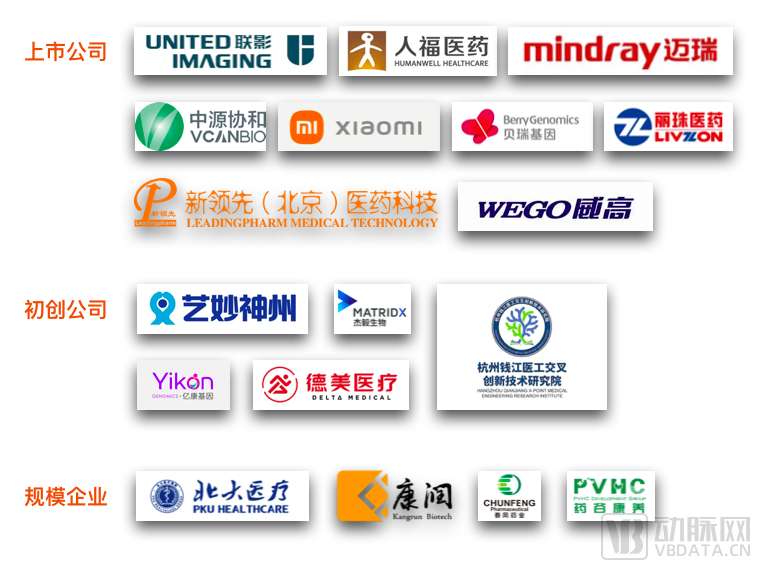
As of the end of 2023, 18 joint R&D centers have been established under signed agreements, with total committed research funding reaching RMB 340 million; half of the partner enterprises are leading listed companies at the forefront of the industry.
Leveraging the joint R&D mechanism, clinical talent maintains close, frequent, and effective communication with industry professionals.Addressing the Latest Clinical Challenges and Seeking the Most Practical Solutions.
With such high sensitivity to solutions for clinical issues,Peking University Third Hospital Has Achieved a Series of Outstanding Translational Results.
Academician Qiao Jie and TeamThe “Intelligent Assessment System for Female Endocrine Health” and the “Health Guidance System for Polycystic Ovary Syndrome (PCOS)” have respectively signed technology transfer agreements with Guangzhou Kangrun Biotechnology Co., Ltd. and Zhejiang Medick Medical Technology Co., Ltd.
Department of Orthopedics, Director Li Weishi's TeamThe spinal laminectomy surgical robot, co-developed with Zhuozheng Robotics, isChina Possesses Independent Intellectual Property Rights、The World's FirstA Spinal Laminectomy Robot Capable of Autonomous Lamina Milling.
Team of Professor Ao Yingfang, Department of Sports Medicineof the invention patent for the "Acellular Bone Matrix Scaffold for Articular Cartilage Repair" project, asRMB 10 million in conversion value; collaboration completed with Beijing Wanjie Tianyuan Medical Device Co., Ltd., received RMB 8 million in funding in 2019 under the Zhongguancun High-Precision and Advanced Technology Achievement Transformation Program.
Professor Yu Jiakuo’s Team, Department of Knee Surgery, Sports Medicine“Semi-personalized and Fully Personalized Artificial Joints for Total Knee Arthroplasty and Their Minimally Invasive Precision Surgical Instruments” Project,A total of 21 patents were successfully transferred for a transfer amount of RMB 50 million.Naton Technology.
Researcher Yang Liping’s Team, Department of OphthalmologyThe research on common pathogenic genes and mutation sites in Chinese patients with hereditary retinal degeneration, as well as drug development with independent intellectual property rights, was commercialized in 2021 by Beijing Zhongyin Technology Co., Ltd.Conversion Amount: RMB 10 Million。
If we look back at the past decade of Peking University Third Hospital’s experience in translating scientific achievements into practical applications, success seems to hinge on two factors“Near”。
A recent close-up on scientific research. Peking University Third Hospital’s unique geographic advantage on Xueyuan Road has enabled it to gain a hidden acceleration unavailable to other clinical centers, amidst the close encirclement of engineering universities and the dominant theme of innovation and entrepreneurship in Zhongguancun.
Another close is close enterprisePeking University Third Hospital demonstrates a higher level of acceptance and exploratory spirit in collaborating with external enterprises. Through frequent communication and exchanges, as well as joint research and development efforts formalized in contracts and backed by substantial financial investment, the hospital’s clinical teams have gained ample experience in industrialization, while partner companies are able to continuously identify genuine clinical challenges.
The two “proximities” have made the innovation and translation efforts at Peking University Third Hospital a natural outcome, enabling the broad patient population to benefit early on.