

Middle East Emerges as the Next Gold Rush for Chinese MedTech Firms—Building Fundamentals Remains Key
Going Global—More Than Just an External Manifestation of Intensifying Domestic CompetitionGoing global is not merely an outward reflection of increasingly fierce domestic competition; it also signifies our capability to strategize for the global market and compete on equal footing with international peers. As a growing number of medical and health enterprises expand overseas, selecting the appropriate destination has become a primary consideration: Should we target the Southeast Asian market, which is geopolitically closer? The developed markets of Europe and the United States? Or other regions that Chinese companies have rarely entered?
Different markets face different competitive landscapes. In this issue, we interviewed“Jianshang Chuhai”: A Third-Party Agency Facilitating Medical and Health Enterprises’ Expansion into the Middle EastofExecutive Director Shawn Choi, we discussed expanding into the Middle East. For ease of reading, some responses have been edited and condensed without altering their original meaning.
VCBeat: How do you view the current wave of Chinese innovative pharmaceutical and medical device companies expanding overseas, and what factors have driven this international expansion?
Shawn Choi:First, in developed markets such as Europe and the United States, regulatory frameworks are relatively more robust, and factors including drug R&D capabilities, product design expertise, and subsequent pricing strategies for market launch are all favorable to the development of pharmaceutical and medical device companies.Taking drug pricing as an example, prices in the United States are generally four to five times higher than those in China. This is a striking figure. We have also observed that at the ACRO International Oncology Conference, Chinese companies accounted for approximately 10% of presentations in 2021; this figure doubled to 20% in 2022. In terms of FDA submissions, Chinese enterprises appear almost every one to two months. Companies such as Junshi Biosciences and Legend Biotech have leveraged the FDA’s Breakthrough Therapy designation—a fast-track pathway—to significantly shorten the time required for drug development and market approval.
Secondly, from the perspective of the domestic environment, after being included in the national centralized volume-based procurement for medical insurance, the prices of pharmaceutical and medical device products have dropped significantly. For innovative pharmaceutical and medical device companies, developing products requires long-term investment, and they also expect to generate profits after product launch, butInfluenced by factors such as policy, innovative pharmaceutical and medical device companies are under pressure, forcing those seeking to maximize expected profits to consider overseas markets.Taking PD-1 as an example, the annual sales of a PD-1 drug from a domestic Chinese manufacturer are around $600 million, representing the peak performance for that product pipeline. In contrast, Merck’s Keytruda (K-drug) achieved annual sales of $14 billion. The gap between the two is more than 20-fold, a figure that is truly staggering. This reality has, in fact, provided strategic insights for Chinese enterprises. In the past two years, there has been a rapid increase in overseas licensing deals by Chinese pharmaceutical companies. Firms such as BeiGene have achieved rapid cash recovery and revenue growth by divesting rights to their own pipelines.Furthermore, the severe homogenization of domestic innovative drug pipelines has also compelled companies to expand overseas to break through the impasse.
VCBeat: Compared with expanding into Europe, the United States, and Southeast Asia, what advantageous factors support healthcare companies in entering the Middle East market?
Shawn Choi: The European and American markets feature well-established regulatory frameworks and high drug pricing, but competition is intense. For nearly all global pharmaceutical and medical device companies, launching products in these markets serves as a critical milestone, making them a “paradise for top-tier players.” Southeast Asia, with a population of 600 million, is home to numerous pharmaceutical companies—each country has hundreds of such enterprises—but the sector is dominated by generic drugs and urgently requires industrial upgrading. Local pharmaceutical industries in these countries are generally underdeveloped. Although regulatory policies and payment systems are flexible, their drug regulatory frameworks remain relatively weak. Whether it involves GCP or GMP inspections or marketing authorization approvals, these countries tend to reference or rely on regulatory decisions made by other nations.
Specifically, in the Middle East region,On one hand, influenced by geopolitical factors, the Middle East region seeks to decouple from Western countries such as the United States and build its own complete pharmaceutical industry chain.The Middle East not only demands the commercialization of products but also seeks to introduce technologies to upgrade its local industrial chain, thereby creating opportunities for Chinese medical and healthcare enterprises.On the other hand, the abundant oil resources in the Middle East have enabled the region to achieve primitive capital accumulation, resulting in a strong willingness and ability to pay in sectors such as the pharmaceutical industry and new energy.
VCBeat: Most Chinese companies expanding into the Middle East have set their sights on Saudi Arabia. What makes it unique?
Shawn Choi:Saudi Arabia is the largest economy in the Arab world and holds absolute dominance in the Gulf region. Its overall economic size and per capita income rank among the highest globally, which is why many companies choose Saudi Arabia as their preferred destination for establishment.On one hand, from the perspective of the pharmaceutical industry, Saudi Arabia’s domestic pharmaceutical and medical device sectors are currently underdeveloped, with a relatively small number of local enterprises. The country relies heavily on imports from nations such as the United States, Germany, and Japan. Hospitals predominantly use equipment from international brands like GE. This situation represents a significant “market gap.” On the other hand, from a demographic standpoint, the median age in Saudi Arabia is approximately 35 years, indicating a relatively young population structure. In response to this demographic profile, the government is actively promoting the development of basic healthcare services. For instance, in the field of public health, initiatives include vigorous disease screening and diagnosis programs, as well as the construction of medical infrastructure. Furthermore, the government’s strong emphasis on the healthcare sector provides policy conveniences for companies entering the market. We predict that the pharmaceutical and medical device markets in the Middle East, represented by Saudi Arabia, will continue to experience rapid growth, with further market expansion anticipated.
VCBeat: You were previously an investor. From your perspective, how did this wave of expansion into the Middle East emerge?
Shawn Choi: From a personal perspective, if we consider local factory establishment, joint venture formation, and the scale and volume of product market access as reference points, the presence of Chinese pharmaceutical and medical device companies is not particularly strong. According to my observations, Chinese healthcare enterprises began expanding into the Middle East in 2020 and 2021. A notable representative is BGI Genomics. At that time, under the impact of the pandemic and led by government departments, BGI Genomics helped establish numerous nucleic acid testing facilities and related laboratories locally, assisting the Middle East region through difficult times. Subsequently, in early 2023, Middle Eastern sovereign wealth funds successively established offices in China, providing new channels for engagement with the Middle East. Starting in the second half of 2023, Chinese capital also further ventured into the Middle East for fundraising, albeit with limited success. Meanwhile, influenced by domestic centralized procurement policies and pipeline homogenization, private enterprises are also accelerating their overseas expansion. Furthermore, the pragmatic and high-efficiency impression China has left on the Middle East region has, to some extent, facilitated better overseas expansion for domestic companies.
VCBeat: From your observations, what are the distinctive characteristics of healthcare companies that choose to expand overseas?
Shawn Choi: Among our clients, companies at Series A or B funding stages account for one-third to one-half. Healthcare enterprises from Series B through pre-IPO stages make up one-quarter, while post-IPO companies constitute another quarter. It is primarily relatively early-stage healthcare companies that are actively expanding overseas. In terms of product types offered by these partner companies, there is a predominance of home-use medical devices and in vitro diagnostics (IVD) products.
VCBeat: One of the prerequisites for going global is obtaining market access approval. What is the current landscape for the regulatory approval of pharmaceutical and medical device products in the Middle East?
Shawn Choi: The Middle East covers a vast area; for now, let’s take Saudi Arabia as an example. Its regulatory authority, abbreviated in English as SFDA, is primarily responsible for overseeing and enforcing regulations concerning food, pharmaceuticals, medical devices, and other related products. In terms of the approval process, if applying through a third party, companies must sign an authorization agreement with a local representative, who then completes the SFDA registration to obtain an Authorized Representative (AR) license. Subsequently, in accordance with regulatory requirements, applicants must prepare documentation covering product technical specifications, quality standards, clinical trial data, manufacturing processes, and other relevant materials. They must also complete certification application forms detailing product information, manufacturer details, and quality management systems. The application undergoes review and evaluation, including submission of revised materials as needed. Upon successful completion, the SFDA issues the corresponding certificate. For medical devices, the certification process typically takes approximately 7–8 months.
VCBeat: What does the healthcare ecosystem in the Middle East look like, and what are the characteristics of its niche markets?
Shawn Choi:Given the substantial demand in the Middle East, the primary objective is likely to address local healthcare needs—specifically, conditions such as obesity, diabetes, and male pattern hair loss, which are prevalent among residents due to factors including dietary habits.Due to the local disease spectrum, companies in the IVD and diabetes sectors hold a competitive advantage in international expansion. Furthermore, as the local government promotes medical tourism, attracting tens of thousands of visitors annually from the Middle East, there is also significant market potential for aesthetic medicine and orthodontics.
VCBeat: In your view, what are the competitive advantages of Chinese healthcare companies expanding into the Middle East?
Shawn Choi: China’s innovative pharmaceuticals and medical devices are currently transitioning from “Fast Follow” to “First-in-Class,” with products demonstrating strong intrinsic competitiveness. From the perspective of corporate input-output ratios, although the payback period for many product pipelines is lengthy, domestic production costs in China remain lower compared to those in the Middle East. Islamic countries face more stringent ethical and regulatory challenges, leading to higher costs for local multicenter clinical trials. In my assessment, there are significant opportunities for generic drugs and blood products in the Middle Eastern market. Furthermore, the comprehensive upstream and downstream industrial chains, fostered by intense domestic competition in China, enable products to effectively meet local demands when entering the Middle Eastern market. Additionally, geopolitical factors constitute an important consideration.
VCBeat: Companies from developed countries in Europe and the United States are also expanding into the Middle East market. Compared with these companies, what are our unique advantages?
Shawn Choi: Whether in terms of market entry timing or local market share, Chinese pharmaceutical and medical device companies generally lack a first-mover advantage. This is a common challenge facing many Chinese enterprises today. However, our strength lies in the fact that all participants must establish collaborations under government leadership, which inherently ensures equal opportunities. Taking Saudi Arabia as an example, private-sector activities must align with national development strategies. We hold greater advantages in international relations and are implementing ecosystem partnerships through major pharmaceutical industry players. In contrast, while Indian generic drug manufacturers have established a presence in the region, their efforts are often privately driven and fragmented. The Middle East market favors established brands; therefore, it is advisable for companies to partner with multinational pharmaceutical corporations or engage in initiatives led by governments and chambers of commerce when establishing local operations.
VCBeat: With overseas expansion becoming a prevailing trend, what factors should Chinese healthcare companies consider when going global?
Shawn Choi:First, it is essential to adopt a broad perspective, focusing not only on the domestic market but also on the demands and trends of the global market. It is necessary to gain an in-depth understanding of the development trends, competitive landscape, and policies of the target overseas markets, and then formulate strategies accordingly. Second, appropriate markets must be selected, and suitable marketing strategies should be developed based on one’s own product positioning.For instance, in developed markets such as Europe and the United States, it is essential to consider whether strong collaborative relationships can be established with local healthcare institutions, physicians, and commercial insurance providers.Once again, global expansion ultimately hinges on a company’s core proprietary technologies; the underlying logic remains that the product must be “robust.”This necessitates a return to innovation. Companies must continuously increase R&D investment to establish efficient R&D systems, maintain market acuity, and develop products that align with market demands. Enterprises may consider maintaining close collaborations with multinational pharmaceutical companies and biotech firms, thereby leveraging their technological expertise, experience, and sales capabilities.Finally, compliance with laws and regulations in different regions is also a key area of focus.
VCBeat: What advice do you have for healthcare enterprises expanding into the Middle East?
Shawn Choi: It is essential to have a solid understanding of local markets rather than blindly expanding overseas. One should not assume, based merely on perception, that friendly relations with the Middle East automatically grant pricing power for our products in the region; the reality may be less favorable. The Middle Eastern market imposes stringent requirements on products themselves. Simply selling products will inevitably encounter various restrictions. There is a stronger preference for technology localization to address challenges within their own industrial chains. Furthermore, early-stage companies are advised against taking the risk of entering these markets prematurely. It is preferable for companies to already possess some experience in successful international expansion and local implementation in other markets.
VCBeat: Some argue that companies expanding overseas should be prepared to operate at a loss for two to three years, adhere to long-termism, and only turn a profit after three to five years. What is your view on this?
Shawn Choi: To some extent, that is correct. Expanding overseas does not guarantee immediate, significant results. The success of international expansion ultimately hinges on the ability to address local needs, which is the essence of adapting strategies to local conditions. Companies must adhere to a long-term orientation, engage in sustained efforts, maintain close communication, gain a deep understanding of counterpart needs, and adjust strategies as appropriate. This is a subtle process requiring prolonged negotiation and adjustment, and enterprises must be prepared for a long-haul endeavor.
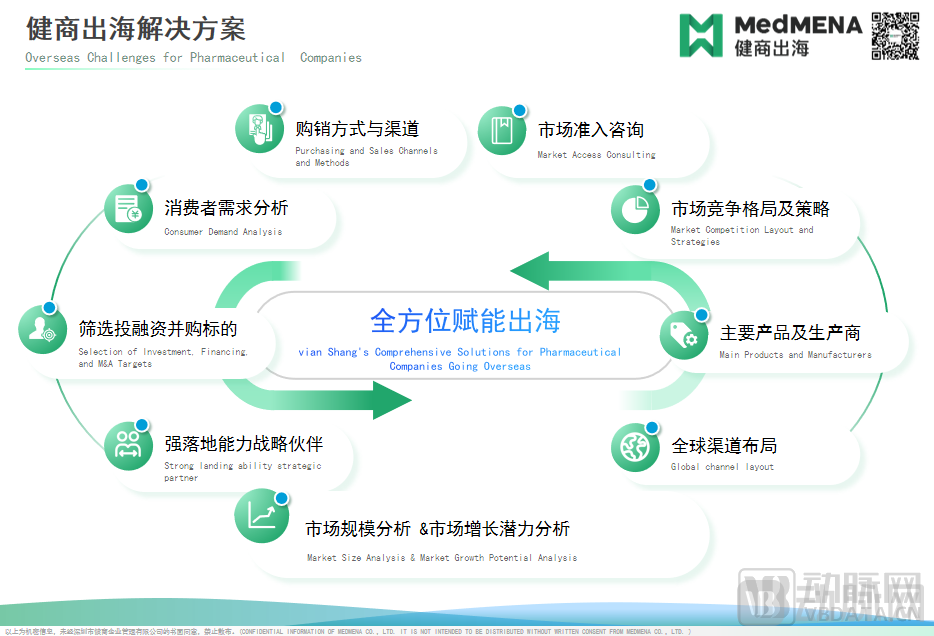
VCBeat: Corporate global expansion primarily follows two main pathways. One involves companies with substantial resources choosing to leverage their own capabilities to penetrate local markets; the other relies on third-party enterprises, such as Jianshang Chuhai, to integrate resources and facilitate overseas implementation. How do you view the differences between these two models?
Shawn Choi: Existence is rational. For enterprises that already possess substantial resources, their resource endowments cannot cover all regions; they likewise require third-party service providers to deliver specialized services commensurate with their needs. In selecting third-party service providers, companies should look beyond factors such as company size and years in operation, and also consider the providers’ core competencies and areas of expertise. For instance, some firms primarily serve Europe and the United States, whereas we focus on the Middle East. Some organizations may claim coverage across many countries, but in certain regions they rely on ad hoc teams. These are all critical considerations for enterprises when vetting third-party partners.
VCBeat: The Middle East is also an evolving market. Where do you see future growth opportunities in the healthcare sector in this region?
Shawn Choi: We need to have a clear understanding of the local market. On one hand, the infrastructure costs for building factories locally are extremely high; on the other hand, it is incorrect to draw an analogy with China in the 1980s and 1990s. The Middle East is not poor; its per capita GDP is very high. To understand the Middle Eastern market, we must understand their religious culture. Furthermore, overseas companies establishing operations locally are required to maintain a certain proportion of local employees. As countries such as Saudi Arabia loosen their policies, the secularization process in the region is accelerating, and the importance of women’s role in consumption is becoming increasingly prominent.
From the perspective of female consumers, on one hand, local families typically have three to four children, resulting in overall maternal and infant expenditures that are relatively higher than those in neighboring developed countries; on the other hand, women’s desire to present their beauty to their families also drives demand for “beauty” products and services within home settings. From a broader market perspective, with a median resident age of 35, the market may be more conducive to the development of body contouring pharmaceuticals and medical devices.
VCBeat: Amid the wave of Chinese enterprises expanding overseas, what are the mainstream trends likely to emerge in the future?
Shawn Choi:On a macro level, overseas licensing of innovative drugs is a major trend.In 2023, Hengrui Medicine licensed its SHR-1905 injection project to One Bio on a paid basis. Under the agreement, One Bio will pay Hengrui Medicine an upfront payment and near-term milestone payments totaling $25 million, cumulative R&D and sales milestone payments of up to $1.025 billion, as well as sales royalties at a double-digit percentage of annual net sales. The internationalization of innovative drugs or overseas licensing represents a favorable entry point.. Selling product rights enables complementary advantages in R&D, thereby reducing the risks associated with innovative drug development. Additionally, it allows leveraging the sales networks of international pharmaceutical companies.China has seen a significant number of overseas licensing deals for innovative drugs, with more than 50 transactions recorded in 2022 alone. Such outbound licensing arrangements are expected to become increasingly common in the future.