Institutional and Technological Dual Drivers Propel First-Mover Advantage into Industrial Leadership: Bonray Medical's Breakthrough in Implantable Brain-Computer Interface

Neuracle
Developer and Manufacturer of Brain-Computer Interface Systems and Related Equipment

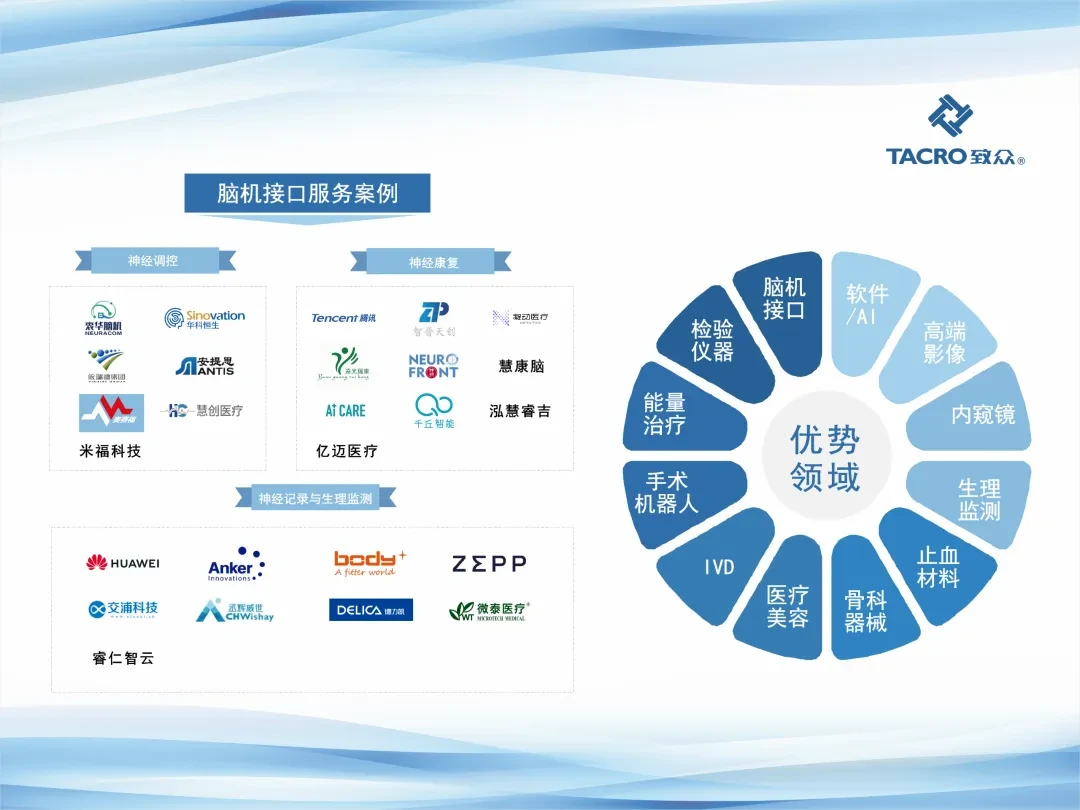
To the MultitudeInBrain Science Product FieldWith outstanding professional strength and profound project service experience, including implantable sacral nerve stimulators, implantable rechargeable deep brain stimulation systems, transcranial magnetic stimulators, intracranial deep thermal coagulation electrodes, electroencephalographs, non-invasive EEG electrodes, cerebral blood flow regulation function data processing software, and near-infrared spectroscopy brain function imaging systemsProvide high-quality products such asRegistration Regulations, System Guidance, and Clinical Trial Services, covering the entire process of medical device product listing.

On March 13, the National Medical Products Administration approved the innovative product registration application of Neuracle Technology (Shanghai) Co., Ltd. (hereinafter referred to as Neuracle) for its implantable brain-computer interface hand motor function compensation system, marking the world's first market launch of a brain-computer interface medical device. The approval of this product represents a landmark event in which invasive brain-computer interface medical devices in China have officially transitioned from the technical exploration phase to the commercial implementation phase.
As a strategic high ground for global technological competition, brain-computer interface (BCI) technology is undergoing profound transformations. With policy innovation and the collaborative efforts of industry, academia, research, and medicine, China has achieved breakthrough progress in this field. However, the large-scale industrial development still faces multiple constraints such as technology, clinical application, and supply chain. In the future, it will be necessary to rely on data-driven approaches, multimodal integration, commercial expansion in stages, and whole-industry chain collaboration to address development challenges, strengthen first-mover advantages, and promote the high-quality growth of the BCI industry.
First Breakthrough
The industry is showing a vigorous development trend.
Brain-computer interface, as a disruptive technology that establishes a direct communication channel between the brain and external devices, is leading to profound transformations in the field of human-computer interaction. Medical devices adopting brain-computer interface technology refer to active medical devices that measure neural signals produced by the central nervous system through invasive or non-invasive methods and decode them in real time, enabling real-time bidirectional interaction or closed-loop feedback between patients and external assistive or diagnostic devices, achieving clinical outcomes such as improvement, restoration, or substitution of central nervous system functions.
The implantable brain-computer interface (BCI) system for hand motor function compensation, developed jointly by Neuracle and Tsinghua University among other institutions, has been recently approved. This system is designed for patients with quadriplegia caused by cervical spinal cord injury and can assist in achieving hand grasp functionality through a pneumatic glove device. Traditional rehabilitation methods have very limited effectiveness in restoring human functionality via physical therapy for quadriplegia caused by cervical spinal cord injury. In contrast, invasive BCI technology bypasses the injured area of the body, directly establishing a communication link between the brain and external devices to help patients control assistive devices, opening up an entirely new pathway for patient rehabilitation.
The approval of this product marks the entry of the world's first invasive brain-computer interface medical device into clinical application. At the same time, more brain-computer interface clinical research projects in China are advancing at a faster pace, with the industry as a whole showing a thriving development trend.
From the perspective of application scenarios, current brain-computer interface technologies are mainly applied in two major fields: rehabilitation compensation and neuromodulation. In the field of rehabilitation compensation, apart from applications for spinal cord injuries, products targeting motor function rehabilitation compensation, such as post-stroke limb rehabilitation and communication and control for ALS patients, have either initiated or are preparing for clinical trials; products related to visual function reconstruction are still in the early exploration stage. In the field of neuromodulation, deep brain stimulation technology has become relatively mature and is gradually incorporating closed-loop feedback mechanisms, evolving towards precise, closed-loop, and real-time regulation, with applications covering treatment-resistant Parkinson's disease, refractory epilepsy, and chronic disorders of consciousness.
From the perspective of technical pathways, China's brain-computer interface technology is developing in a pattern characterized by "invasive methods taking the lead, with multiple technical pathways advancing simultaneously." Currently, brain-computer interface technology mainly includes two major technical pathways: non-invasive and invasive. The non-invasive pathway primarily focuses on electroencephalogram (EEG) acquisition and can be combined with transcranial electrical stimulation and transcranial magnetic stimulation to achieve rehabilitation goals. It has relatively lower safety risks but is limited by signal quality and treatment effectiveness. The invasive pathway requires surgically implanting electrodes into the skull. Although this method involves more complex surgical procedures and presents higher technical barriers, it offers greater signal accuracy.
The invasive technology pathway has formed a development pattern of "three methods coexisting, with scenario differentiation." One implantation method is the epidural implantation approach adopted by Neuracle's approved product, which places microelectrode arrays outside the dura mater of the brain, opening up a new feasible path for balancing clinical benefits and risks. The second method is intracortical implantation, where electrodes are directly inserted into the cerebral cortex. Although this method can easily trigger foreign body reactions, affecting implant stability, it provides higher signal quality and holds advantages in high degrees-of-freedom motion control and visual reconstruction applications. It is expected to achieve breakthroughs in more complex clinical indications. The third method is endovascular implantation, which uses vascular interventional techniques to deliver stents that collect brain electrical signals into intracranial blood vessels. While the precision of signal acquisition is limited, the risk of trauma and nerve damage is lower, making it suitable for application in frail patient populations and further expanding the applicable demographic. Currently, teams in China are working on all three approaches. The multi-route parallel strategy effectively mitigates strategic risks associated with single-route planning, forming a complementary and synergistic development trend.
Collaborative Safeguarding
The Advantages of Systematic Training Pathways Are Becoming Evident
The breakthrough progress of brain-computer interface medical device products developed by Chinese companies is not only due to technological breakthroughs at the enterprise level, but also because China has explored and established a systematic cultivation path that integrates regulatory empowerment with the deep collaboration of industry, academia, research, and medicine, providing comprehensive support for innovative products from development to market entry.
On the policy front, in recent years, the National Medical Products Administration (NMPA) has resolutely implemented the major decisions and plans of the CPC Central Committee and the State Council regarding the establishment of mechanisms to support innovative medical devices. It has introduced detailed measures, strengthened inter-departmental cooperation, encouraged the integration of medicine and engineering as well as scientific research transformation, and fully supported significant innovations in high-end medical devices. This promotes the application of more new technologies, materials, processes, and methods in the healthcare field. As a future industry identified in the "15th Five-Year Plan" outline, brain-computer interfaces have received great attention from the NMPA. During product review and approval, resources are allocated with preference, following the principles of "early intervention, one policy per enterprise, full-process guidance, and simultaneous research and review." The administration provides pre-review evaluation services for innovative products, effectively accelerating their market entry process. Notably, in 2019, the Artificial Intelligence Medical Device Innovation Cooperation Platform was officially established, initiated by the NMPA's Center for Medical Device Evaluation in collaboration with 14 organizations including the National Computer Network and Information Security Management Center and the China Academy of Information and Communications Technology. In September 2023, a Brain-Computer Interface Research Working Group was formed to carry out regulatory science research in related fields, accumulating regulatory experience for registration reviews; in September 2025, the NMPA successively issued...YY/T 1987—2025 "Medical Devices Using Brain-Computer Interface Technology - Terminology"、YY/T 1996—2025 "Medical Devices Using Brain-Computer Interface Technology — Implanted Neurostimulators with Closed-Loop Function — Test Methods for Sensing and Response Performance"Two medical device industry standards systematically establish a terminology system for brain-computer interface medical devices and unify performance evaluation criteria.
Moreover, since 2021, the Ministry of Industry and Information Technology and the National Medical Products Administration have jointly organized two batchesAI Medical Device Innovation Task Leader BoardWork, solicit and select units with strong innovation capabilities to focus on key research. For the "open competition" projects, relevant departments of the National Medical Products Administration (NMPA) implement pre-review services, exploring the integration of medical device regulatory logic into the entire lifecycle of technical research, breaking the traditional linear model of "research first, approval later," achieving synchronization between the R&D process and review requirements. The recently approved implantable brain-computer interface system for hand motor function compensation is one of the first supported projects under the AI medical device innovation tasks. During the R&D and market entry process of this product, relevant departments of the NMPA have strengthened the cultivation of key products, providing guidance, evaluation, testing, and inspection at all stages. Under the premise of not lowering standards, these departments have assisted enterprises in each step.
At the industrial level, the deep integration and collaboration of industry, academia, research, and medicine are crucial supports for accelerating the implementation of innovative medical device technologies. Taking the recently approved implantable brain-computer interface system for hand motor function compensation as an example, Tsinghua University has provided core algorithm support, such as neural signal decoding, based on its long-term accumulation of fundamental research results; Neuracle, as the industrialization entity, has undertaken the full-chain engineering transformation work from electrode arrays to signal processing systems; more than 10 top-tier tertiary hospitals, including Xuanwu Hospital of Capital Medical University and Huashan Hospital Affiliated with Fudan University, have collaboratively conducted multi-center clinical trials, providing clinical data support for product optimization and approval. This collaborative mechanism, guided by clinical needs, effectively promotes the efficient transformation of basic theories from laboratories into products that meet clinical practical requirements, demonstrating China's unique advantages in fostering future industries.
Challenges Remain
Multiple Factors Impact Scalable Applications
Although China has achieved the approval and market launch of invasive brain-computer interface medical devices, as a highly cutting-edge and disruptive technology, it still faces practical challenges in technology, clinical application, supply chain, and ethics, from the approval of a single product to large-scale industry-wide adoption.
At the core technology research level, long-term biocompatibility, product usability, and algorithm generalization ability still require further exploration and breakthroughs.
On the one hand, long-term issues such as brain tissue inflammatory response, electrode impedance drift, and material degradation with invasive brain-computer interface medical devices after implantation still require more than two years of follow-up data for continuous validation. This directly affects the safety and effectiveness throughout the product's lifecycle. Non-invasive brain-computer interface medical device electrodes also face challenges in terms of comfort and long-term wearing stability. Traditional wet electrodes require the application of conductive gel before use, which is not only inconvenient but also prone to signal interference from the environment, making it difficult to meet the needs of daily continuous monitoring. Dry electrodes are relatively easier to use, but achieving a balance between prolonged signal acquisition quality and scalp contact impedance remains a challenge, thus limiting their widespread application.
On the other hand, neural electrical signals such as electroencephalogram (EEG) and local field potentials are typical non-stationary random signals. Current brain-computer interface (BCI) neural decoding algorithms exhibit strong adaptability for specific patients and tasks, but their generalization ability across patients and scenarios needs improvement. Even the signal characteristics of the same patient under different physiological states can drift. How to construct robust adaptive or transfer learning decoding algorithms is key to enhancing the clinical practicality of the product. Moreover, as BCI applications extend to complex scenarios such as high degrees-of-freedom motion control and language decoding, algorithm complexity and real-time requirements will significantly increase, posing higher demands on data transmission, chip computing power, and energy consumption management.
At the levels of clinical application and market promotion, the dual barriers of a long indication expansion cycle and the difficulty of scaling up at the clinical end determine that the industry's in-depth development requires adherence to long-term thinking. Taking the recently approved product as an example, its indications are limited to patients with quadriplegia caused by cervical spinal cord injury, with a relatively small target population base. Expanding to more indications such as post-stroke hemiplegia and ALS would require re-collecting data, optimizing algorithm models, and conducting large-scale clinical trials—a process that is lengthy and resource-intensive. At the same time, the training system for brain-computer interface-related surgeries and the application promotion network are not yet fully established. Implantation surgery and postoperative rehabilitation not only require professional medical teams such as neurosurgery and rehabilitation specialists but also dedicated engineers who understand algorithms and device debugging. The demand for interdisciplinary talent is significant, making large-scale application difficult at this stage. Currently, the clinical application of brain-computer interface products is still limited to a few top-tier tertiary hospitals in China, and large-scale clinical application is still in its infancy, unlikely to be achieved quickly. This requires all parties in the industry to abandon the mindset of quick success and maintain sufficient patience for product iteration and market cultivation.
In addition, supply chain shortcomings and high implementation costs have constrained the rapid development of the industry in its early stages. In the long term, the sensitivity of neural data and deep ethical controversies could further limit the expansion of application scenarios. At the supply chain level, key components such as invasive ultra-thin flexible electrodes and chips, as well as critical processes like micro-nano fabrication and packaging technology, are relatively weak in China’s industrial support capabilities, making it difficult to meet the demands of rapid industry growth. Meanwhile, current brain-computer interface (BCI) products are in the early stages of commercialization with a high degree of system customization. Standardized mass production lines, from electrode preparation to external device processing, are still in the exploratory phase, leading to persistently high manufacturing costs for single-unit equipment and making it difficult to achieve marginal cost reductions through economies of scale in the short term. On the ethical front, neural data involves the most sensitive cognitive and intent information, and its collection, storage, and potential commercial use present entirely new challenges that traditional privacy protection legal frameworks struggle to address. As brain-computer interface technology extends into broader cognitive enhancement fields, deep ethical issues such as human-machine boundaries and subjectivity will become increasingly prominent. This means that the BCI industry will face certain compliance risks and trial-and-error costs as it seeks to break through the serious medical market and pursue scaled expansion.
A Promising Future
Three Major Trends Lead High-Quality Development
Looking to the future, China's brain-computer interface industry is in a critical transition period from single-point breakthroughs to comprehensive advancement. Three major trends—data-driven multi-modal fusion, commercial tiered expansion, and whole-industry chain collaboration—will drive the industry toward high-quality development.
First, data-driven approaches and multimodal fusion are expected to significantly enhance the decoding capabilities of brain-computer interfaces (BCIs). The approval and market entry of invasive BCI medical devices represent years of academic research accumulation on motor imagery paradigms. This advancement also marks the transition of neural signal acquisition from short-term observation to a new phase of long-term, continuous clinical acquisition. This means that clinicians now have tools capable of continuously and stably collecting high-quality neural signals, greatly expanding the ability to observe dynamic changes in a broader range of neural activities and providing foundational support for exploring the pathogenesis of more diseases. This breakthrough will lay the groundwork for building larger-scale, richer-dimensional, and more precisely annotated neural datasets. The continuous feedback of high-quality data will help overcome the limitations of existing small-sample learning, significantly improving the decoding accuracy and cross-individual generalization capabilities of algorithmic models, forming a bidirectional driving closed loop of data accumulation and algorithm iteration. At the same time, the upper limit of single-electrical-signal decoding capability is gradually becoming apparent, making multimodal signal fusion an inevitable path. By integrating multi-source information such as electrophysiology, blood oxygen levels, and imaging, the robustness of BCI medical devices in parsing complex mixed neural signals will be greatly enhanced. Furthermore, BCI technology is expected to deeply integrate with cutting-edge technologies such as embodied intelligence and physical intelligence, endowing BCI medical devices with environmental perception, interaction, and adaptive feedback capabilities under physical constraints, driving their evolution from simple mind-command outputs to closed-loop intelligent systems encompassing cognition, motion, and physical feedback.
Second, commercial applications are expanding in a tiered manner from serious medical fields to broader health areas. In the short term, the commercialization of brain-computer interface (BCI) medical devices will still focus on serious medical fields, advancing along dual application pathways of rehabilitation compensation and neuromodulation, gradually expanding indications from cervical spinal cord injuries to post-stroke hemiplegia, ALS, refractory epilepsy, treatment-resistant Parkinson’s disease, depression, and other disease areas. As the long-term safety verification of BCI medical devices progresses and core costs decrease, their commercial boundaries will significantly broaden. In the medium to long term, with the deepening market understanding and continuous breakthroughs in core technologies, non-invasive BCI medical devices, leveraging their safety and ease of use, will deeply penetrate into broader healthcare scenarios such as sleep monitoring and intervention, mood regulation, and attention training. Moreover, by relying on interactive platforms like VR/AR, exoskeletons, and robots, they are expected to redefine the dimensions and depth of human-computer interaction, ultimately achieving a leap from functional compensation to neural repair, and even neural enhancement.
Third, the industrial landscape is evolving from single-point breakthroughs to full-chain collaboration, and the first-mover advantage in regulation is expected to accelerate the transformation into dominance over international rules. In the future, key areas such as invasive flexible electrodes and high-throughput specialized chips will drive accelerated vertical integration of the industry chain, forming a collaborative body of industry, academia, research, and medicine driven by clinical needs and supported by fundamental hard technologies, thus building an independently controllable closed-loop industrial ecosystem. As the "open competition" initiative for innovative tasks in artificial intelligence medical devices continues to advance, it will guide the efficient allocation of innovation resources according to national strategic needs, playing an orienting and catalytic role in promoting more cutting-edge seed projects to grow into strategically competitive products with global influence. More crucially, China has taken the lead in completing the market approval process for invasive brain-computer interface (BCI) medical devices, filling the global regulatory gap in this field. This achievement provides a practical foundation for proposing Chinese solutions on international platforms such as the International Telecommunication Union (ITU) and the World Health Organization (WHO), contributing Chinese wisdom to the standardized development of global BCI technology.
Currently, China's brain-computer interface industry is at a critical juncture of upgrading. Facing multiple challenges in industrial development, it is necessary to continuously explore and optimize regulatory pathways, strengthen the evidence base after product launch, enhance the autonomous control of core components, improve ethical and data security standards, and promote the perfection of the payment system. Only by adhering to the dual drivers of technological innovation and institutional innovation can the first-mover advantage be transformed into an industrial winning edge, accelerating the cultivation of new productivity and leading a new round of technological revolution.
Compiled by: TACRO
[Statement] Some articles and information are sourced from the Internet, and do not represent the views or opinions endorsed by this subscription account, nor do we assume responsibility for their authenticity. If the content involves copyright issues or other problems, please contact us immediately (Lin 18571579167), and we will take appropriate measures promptly. Recent Activities
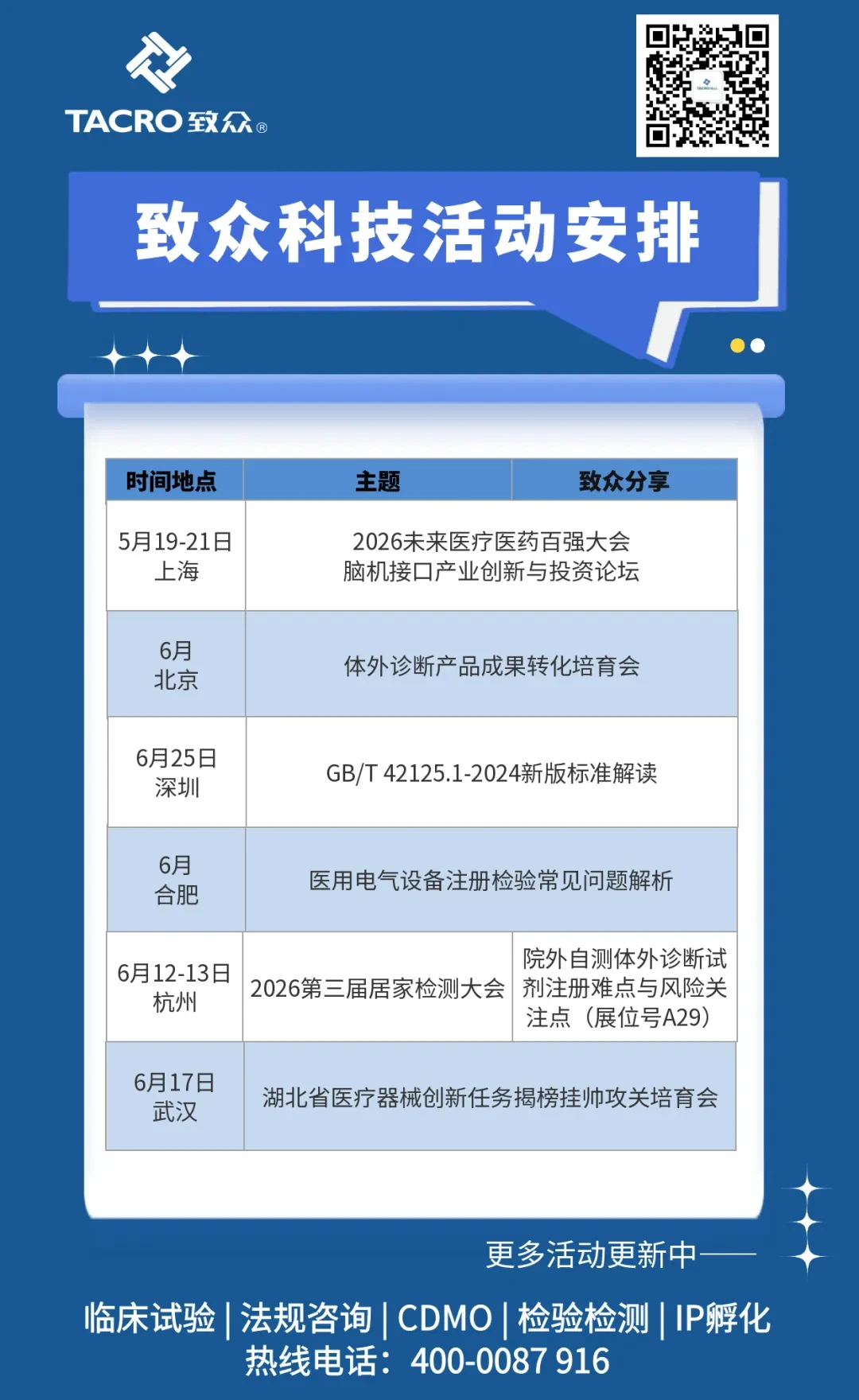
2026 Top 100 Conference | More Than 50 Guests, Brain-Computer Interface Forum Also Features Many Underwater Projects Waiting for You [Hefei] 19th "Active Medical Device Regulations Public Welfare Training Course" [Shenzhen] Interpretation of the New Standard 'GB/T 42125.1-2024 Safety Requirements for Electrical Equipment Used in Measurement, Control, and Laboratory - Part 1: General Requirements'