

Quantum Magnetic Sensing Meets Brain Science: Professor Ding Ming's Team Develops a Novel Non-Invasive Functional Brain Imaging System
From microscopic neuronal activity to macroscopic cognitive behaviors, brain science explores one of the most mysterious and complex domains of humanity. In this process, researchers, clinicians, and entrepreneurs play pivotal roles. They are not only dedicated to unraveling the mysteries of the brain but also translating scientific findings into practical applications, thereby driving progress and development in the field of neuroscience.
To gain deeper insights into scientific innovation, translation, clinical application, and future prospects in the field of brain science, as well as entrepreneurial trends and development bottlenecks within the industry, VCBeat has launched the “Brain Talk Relay” interview series. Through dialogues with researchers, physicians, and entrepreneurs, we aim to present a comprehensive and in-depth view of the world of brain science, enabling more people to understand the latest advances and future trends in this field.
The expert for this edition of “Brain Talk Relay” is fromProf. Ding Ming, School of Instrumentation Science and Opto-electronics Engineering, Beihang University, she will bringCombining Quantum Magnetometry for the Measurement of Brain DiseasesResearch Story.

When quantum magnetic field measurement technology intersects with brain science, Professor Ding Ming from the School of Instrumentation Science and Opto-electronics Engineering at Beihang University has been receiving feedback almost daily from neurologists at major hospitals after successfully developing a liquid-helium-free magnetoencephalography (MEG) system:“This product is excellent; it is much needed in our clinical practice.”
Accurate diagnosis of brain disorders remains a thorny challenge for physicians. Although functional genomics and neuroimaging techniques have been widely adopted in clinical practice, the pathological mechanisms underlying many major brain diseases remain elusive. This sentiment is deeply shared by Ding Ming. During breaks at academic conferences of various scales, numerous clinicians proactively approach Ding Ming’s team to seek collaboration, hoping to jointly advance technologies for the precise diagnosis of major brain diseases.
“It is because the pain points are too prominent, and there is a lack of precise diagnostic tools for certain issues.”During the interview, Ding Ming repeatedly mentioned this phrase, expressing her strong agreement with using “long-awaited and finally unveiled” to describe the emergence of helium-free magnetoencephalography (MEG) products.
Next-Generation Bioimaging Technology
Around 2015, Ding Ming came across several papers on using quantum magnetic field measurements for the detection of brain diseases. In 2017, he learned that the Sir Peter Mansfield Imaging Centre at the University of Nottingham in the UK had developed the world’s first wearable, non-superconducting magnetoencephalography (MEG) system based on atomic magnetometers, allowing patients to move during scanning—even drinking water or playing table tennis. “I found it quite intriguing at the time,” Ding recalled.
This also opened up Ding Ming’s approach to applying quantum magnetic field measurement technology to the study of brain diseases. Ding Ming said,At that time, few teams in China were dedicated to research in this field; most were primarily focused on the development of underlying magnetic field measurement technologies.. As an engineering professor, she has always hoped to combine existing technologies to develop biomagnetic measurement instruments that can be practically used in clinical settings.
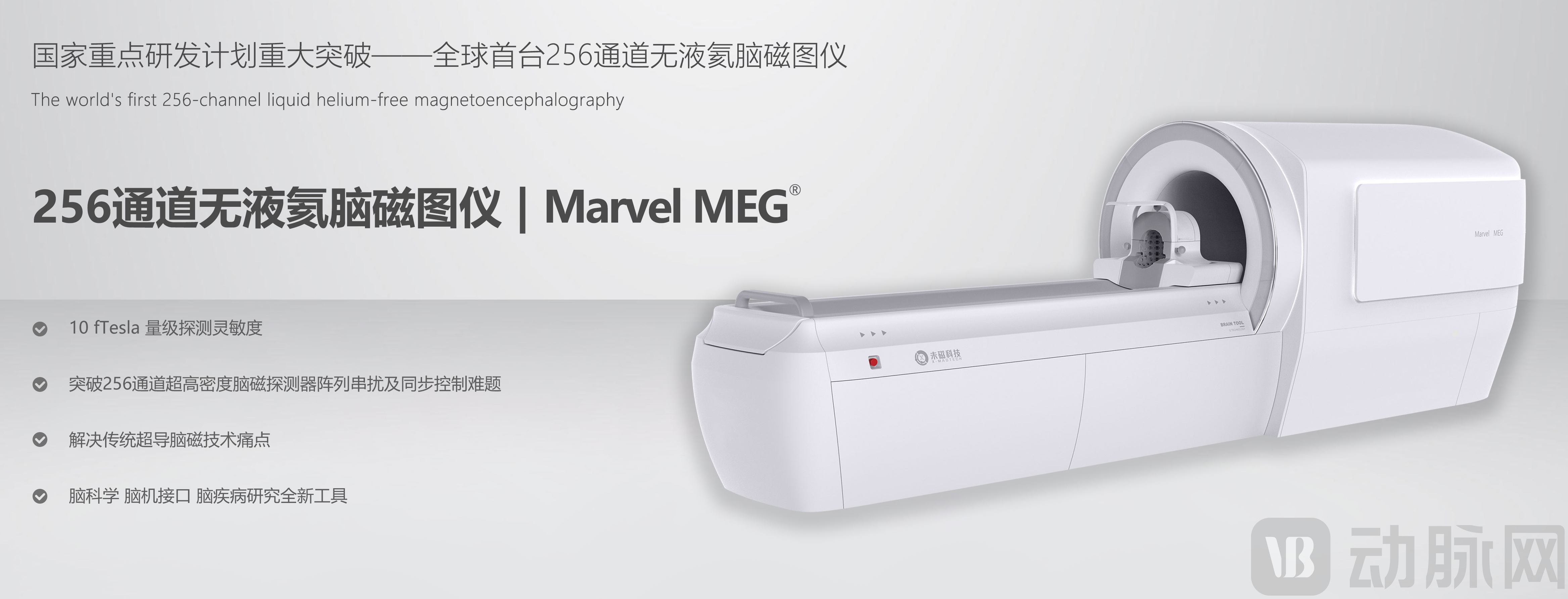 Cryogen-free magnetoencephalography system, from the official website of Weimagnet Technology
In this direction, Ding Ming began conducting research on atomic magnetometer technology, and after achieving breakthroughs in this field, he further successfully developed a new generation of room-temperature-operatingCryogen-Free Magnetoencephalography SystemThis magnetoencephalography (MEG) system can integrate up to 256-channel atomic magnetometers, enabling effective detection of cerebral magnetic field signals to assist physicians in the diagnosis and research of brain disorders.
Specifically, the magnetoencephalographic (MEG) signals acquired by the instrument originate from pyramidal cells, which serve as the primary projection neurons in the cerebral cortex. During conscious brain activity, subtle electrical changes occur within these pyramidal cells, thereby generating MEG signals. At the outset of research and development, Ding Ming recognized that this approach differed significantly from other measurement techniques.
“Most of the currently common methods for brain functional imaging make judgments based on changes in oxygenation or metabolism, which are all indirect measurements of neuronal activity in the brain,” said Ding Ming.
Magnetoencephalography (MEG) is a direct measurement of the brain's electrical activity, enabling precise functional brain imaging.Compared with electroencephalogram (EEG) signals, magnetoencephalography (MEG) signals are not affected by the impedance of human tissues such as scalp soft tissue and skull. They exhibit low attenuation rates and are less prone to distortion, thereby enabling the acquisition of more subtle and accurate information on brain activity, with high temporal and spatial resolution.
This is also defined as"Next-Generation Bioimaging Technology"。
Focusing on high-potential sectors such as brain-computer interfaces, brain tumors, epilepsy, and Alzheimer’s disease
Medical technologies and instruments are always designed to address clinical challenges. Ding Ming told VCBeat,The helium-free magnetoencephalography (MEG) system developed by the team can assist physicians in localization and assessment prior to critical brain surgeries.
In early February 2024, Professor Zhao Guoguang’s team from Xuanwu Hospital of Capital Medical University and Professor Hong Bo’s team from the School of Medicine at Tsinghua University announced the successful implementation of an implantable epidural electrode-based brain-computer interface (BCI). This technology enabled Mr. Yang, a 54-year-old patient with quadriplegia, to regain brain-controlled functions such as drinking water independently, achieving a grasping accuracy rate of over 90%.
Among these, cryogen-free magnetoencephalography (MEG) plays a key role in acquiring brain magnetic signals and interpreting the data. In an interview, Dr. Cai Bin, founder of Weici Technology, stated that cryogen-free MEG systems can achieve precise, non-invasive localization in approximately 10 minutes, identifying cerebral functional areas requiring surgical intervention and thereby providing preoperative planning for subsequent invasive procedures.
This is merely one application direction of cryogen-free magnetoencephalography systems.In a broader range of neurological disorders, such as epilepsy, brain tumors, and Alzheimer’s disease, the liquid-helium-free magnetoencephalography (MEG) system developed by Ding Ming’s team also plays a significant role.
Taking preoperative localization and assessment of functional brain areas in patients with brain tumors as an example, in November 2023, Professor Ji Nan’s team at Beijing Tiantan Hospital, Capital Medical University, performed the world’s first glioma resection surgery assisted by motor functional area localization using cryogen-free magnetoencephalography (MEG). Preoperatively, the surgical team localized the upper-limb motor functional areas using a cryogen-free MEG system and functional magnetic resonance imaging (fMRI), and verified the localization results using intraoperative cortical electrical stimulation, the “gold standard.” The results demonstrated that cryogen-free MEG provided more accurate localization than fMRI and showed high consistency with the findings from cortical electrical stimulation.
Following successful tumor resection, the patient’s motor function was fully preserved, enabling a return to normal social life. “Locate the tumor, then remove it,” says Ding Ming. “Tumor resection is aimed at survival, while maximal preservation of functional brain areas is intended to enhance the patient’s quality of life.” Among the research cases currently conducted at Beijing Tiantan Hospital, the success rate of functional brain area localization in patients with brain tumors using cryogen-free magnetoencephalography (MEG) has reached 100%.
In the localization of epileptic foci, cryogen-free magnetoencephalography (MEG) also offers a novel approach. In February 2024, media outlets reported on the “world’s first case of surgery for drug-resistant epilepsy with negative MRI findings guided by cryogen-free MEG localization.” It is well recognized that drug-resistant epilepsy with negative MRI findings constitutes a significant challenge in epilepsy surgery. Since conventional imaging modalities fail to localize the epileptogenic focus, many such patients lose the opportunity for curative surgical intervention.
A team led by Professor Shu Kai from the Department of Neurosurgery at Tongji Hospital, affiliated with Tongji Medical College of Huazhong University of Science and Technology, conducted a non-invasive magnetoencephalography (MEG) examination using a cryogen-free MEG system. The approximately one-hour resting-state MEG scan of an epilepsy patient revealed dipole localization in the right superior frontal gyrus and superior frontal sulcus, which was consistent with other diagnostic findings yet more precise.
“This is vastly different from the invasive techniques previously used to detect epileptic foci,” said Ding Ming. “Conventional methods require implanting electrode rods into the patient’s brain, whereas localization using magnetoencephalographic signals is completely non-invasive and does not involve any implantation.”
Regarding Alzheimer’s disease, Ding Ming’s team places greater emphasis on early diagnosis. “Alzheimer’s disease is a progressive neurodegenerative disorder with an insidious onset; pathological changes accumulate slowly until clinical symptoms of dementia manifest. The later the disease progresses, the lower the success rate of pharmacological treatment.” In Ding Ming’s view, magnetoencephalography (MEG) holds promise as a key non-invasive tool for the early detection of Alzheimer’s disease.
Non-invasiveness, high spatial resolution, and high temporal resolution are unique advantages of liquid-helium-free magnetoencephalography (MEG) systems, and they are also key reasons why the product can be rapidly applied to various major brain diseases.Ding Ming believes that their work is to provide a tool for doctors, helping them and scientists solve the challenges in detecting brain diseases and conducting brain science research.
Industry Rising Star
“From the germination of the idea to the project’s formal initiation, Ding Ming said that everything went relatively smoothly.”
On May 21, 2023, the kick-off meeting was held for the project “Development of a Novel Liquid-Helium-Free Magnetoencephalography System,” under the National Key R&D Program’s Key Special Project on “Diagnostic and Therapeutic Equipment and Biomedical Materials.” Led by Beijing Weici Technology Co., Ltd., the project involves collaborative research with Beijing Tiantan Hospital, Capital Medical University; Beihang University; Instrumentation Comprehensive Technology and Economics Research Institute of the Ministry of Machine Building Industry; National Institutes for Food and Drug Control; Tongji Hospital, Tongji Medical College, Huazhong University of Science and Technology; Dongzhimen Hospital, Beijing University of Chinese Medicine; Beijing Jiaotong University; and Beijing Shuimu Eastern Medical Robot Technology Innovation Center Co., Ltd.Supported by national projects, the team was able to rapidly establish a magnetoencephalography (MEG) laboratory to facilitate efficient R&D and product iteration.
Ding Ming's greatest challenge lies in how to further improve the product.Ding Ming told Chengguo Bureau that many difficulties still exist in the actual R&D process of magnetoencephalography (MEG) products.
First, how to accurately collect weak magnetoencephalographic (MEG) signals. The intensity of MEG signals outside the skull is only on the order of 10–100 fT, approximately one billionth of the Earth's magnetic field, making them extremely weak and thus difficult to detect.
“Measuring weak magnetoencephalographic signals requires highly sensitive sensors. Although there is extensive research on sensors both domestically and internationally, only two or three companies have successfully commercialized them.” Ding Ming also lamented that integrating high sensitivity and miniaturization into a single sensor is a considerable challenge.
Second, the high-density array structure can affect sensor performance. Brain magnetic field measurements require simultaneous operation of numerous channels, which means that sensors can interfere with one another, causing crosstalk and thereby compromising the accuracy of magnetoencephalographic (MEG) signal measurements. Third, MEG measurements impose stringent requirements on the site and environment. A magnetic shielding system is needed to isolate external magnetic fields; however, the magnetically shielded rooms used in traditional MEG systems are costly, occupy a large footprint, and have long construction lead times, hindering the practical clinical deployment of MEG in hospitals.
To this end, Ding Ming’s team first focused on improving the sensors. Ding Ming stated,The sensors used by the team are independently developed, fully domestically produced sensors. It is understood that this is one of the few commercially available products globally to have entered mass production.Quantum Magnetic Field Sensing Technology.
Ding Ming stated, “Our newly developed sensors not only match the performance metrics of their U.S. competitors but also surpass foreign counterparts in integration and reliability. Notably, regarding volume—a critical factor for magnetoencephalography (MEG) detection—the sensor’s size has been further reduced by 15% compared to earlier Quspin atomic magnetometer products from the United States.”
In terms of magnetic field shielding, Ding Ming’s team has achieved high-performance active and passive magnetic shielding by utilizing an integrated shielding enclosure weighing less than one ton, coupled with a dynamic magnetic field tracking system. This solution can be easily and rapidly deployed in nearly all medical environments, significantly reducing the cost and complexity associated with equipment procurement, installation, and maintenance.
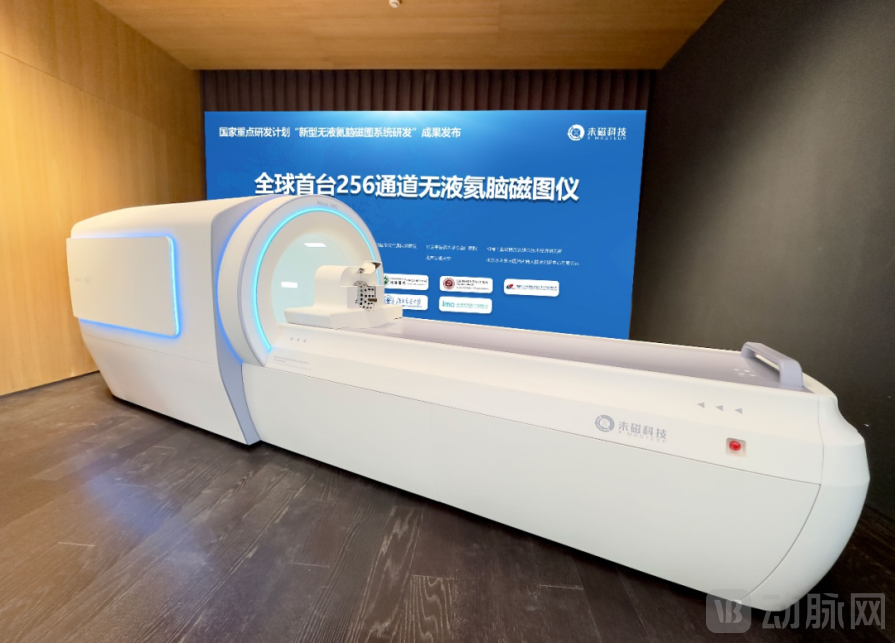 The World's First 256-Channel Cryogen-Free Magnetoencephalography System, from the Official Website of Weici Technology
On February 3, 2024, Weici Technology releasedWorld's First 256-Channel Cryogen-Free Magnetoencephalography SystemIt is reported that this product utilizes a new atomic magnetometer with a cross-sectional dimension of only 11.4 mm × 15 mm, representing a further 15% reduction in volume compared to previous U.S.-made Quspin atomic magnetometers, making it the most miniaturized commercial atomic magnetometer currently available worldwide.
Furthermore, this magnetoencephalography (MEG) system maintains a measurement sensitivity for extremely weak magnetic fields at the 10 fT level. It also overcomes the challenges of crosstalk and synchronous control in ultra-high-density 256-channel MEG detector arrays, marking the first time that the number of channels in a cryogen-free optically pumped magnetometer MEG (OPM-MEG) system has reached parity with traditional superconducting quantum interference device MEG (SQUID-MEG) systems.
Regarding the R&D of magnetoencephalography (MEG) technology and product development, Ding Ming believes:“The industry is developing rapidly, and product performance is quickly maturing. Many clinical experts have already begun using our equipment for research. However, market cultivation may still require some time.”Conversely, as a sci-tech innovator, she is also eager to collaborate with clinical experts to jointly promote the commercialization of the technology.