

ZhenTai Bio Leads the Active Regeneration 3.0 Era with Collagen and Citric Acid-Based Aesthetic Materials Platform
Huang Jianguo is very active on WeChat Moments, with new posts appearing almost every other day.
The content he shares is largely filled with joyful insights and reflections. For instance, he discusses cutting-edge research findings on materials such as collagen with the company’s foreign advisor, Professor Joachim Loos (former Chief Scientist of the Dutch DSM Group); reviews project progress with investors; visits emerging brands to learn from their experiences; and collaborates on innovative initiatives with colleagues from the Chinese Academy of Sciences’ “Hundred Talents Program.”
In his latest WeChat Moments post, he showcased the high-end, rare instrument used in the company’s R&D—the cryo-transmission electron microscope—captioning it, “A single unit costs 50 million yuan—indeed so expensive it makes one question life.” But he quickly shifted tone, adding, “Empowering Zhentai researchers to explore the ‘no-man’s-land’ of protein research!”
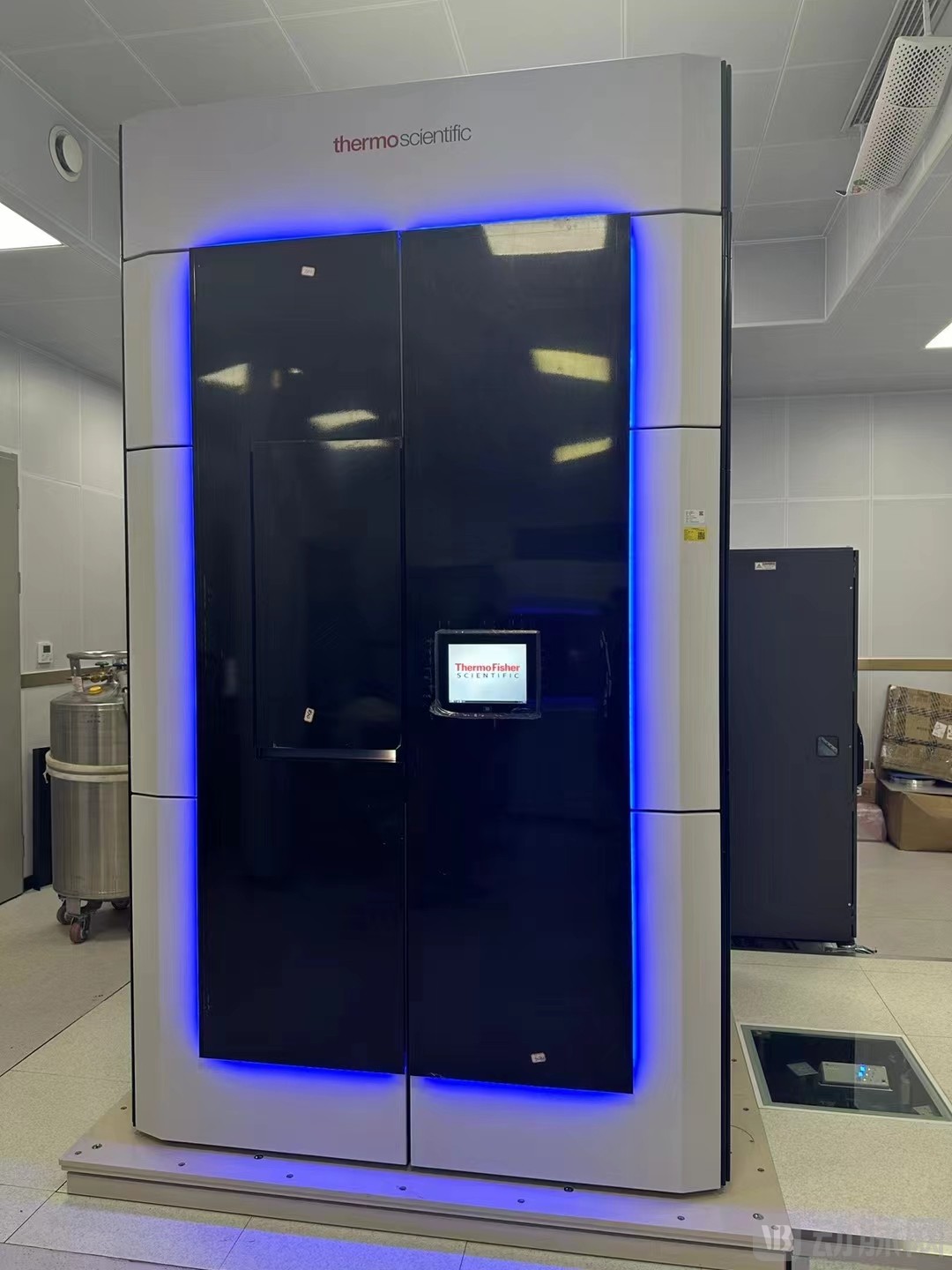
Cryo-Transmission Electron Microscopy,Image from Huang Jianguo’s WeChat Moments
Even through the cold glass screen of a mobile phone, we can still deeply feel his firm belief, boundless hope, and passionate love for his career. Every subtle detail portrays this entrepreneur as positive, active, optimistic, and enterprising.
Dreams in the heart, light in the eyes, and a path beneath the feet. Entrepreneurship is arduous; success is achieved through perseverance.
Perhaps this passion for and commitment to their career is one of the reasons why Guangdong Zhentai Biotechnology Co., Ltd. secured tens of millions of yuan in angel financing just two months after its establishment.
Huang Jianguo believes that “he is an entrepreneur at heart,” “always has many good ideas,” “dislikes doing simple, repetitive tasks,” and “enjoys challenging himself.”
At that time, while still majoring in Chemical Engineering and Technology at Tianjin University, he had already begun “tinkering with things.” Later, he joined the Fortune 500 company Danaher Group as a management trainee and rose through the ranks to become a professional manager. However, his youthful ambitions were not satisfied with this path. Keenly perceiving the immense potential of China’s burgeoning internet sector, he decided to dive into this wave of innovation.
Surprisingly, he has not only successfully founded multiple companies but also played a deep role as an angel investor, co-founder, and in other capacities in the establishment of several companies valued at over $1 billion.
In 2023, this “restless” man decided to embark on a new journey and return to his original profession.
In October 2023, he founded Guangdong Zhentai Biotechnology Co., Ltd. (“Zhentai Biotech”), and two months later secured tens of millions of RMB in angel financing from investors including the Guangdong-Hong Kong-Macao Greater Bay Area Huangpu Materials Research Institute, top-tier institutional investors, and executives of listed companies.
“The best way to understand an industry is to invest in it.” In an interview with VCBeat, Huang Jianguo revealed that his return to the main battlefield was not a spur-of-the-moment decision. Although his career path had briefly deviated from the materials sector, he, with his background in chemical engineering, has always kept a close finger on the pulse of the industry. As an angel investor, he personally witnessed the rise of Botao New Materials, a magnetic, electric, and thermal new material project in which he invested, and participated in investments in multiple cosmetics projects. These experiences gave him profound insights that “new materials offer limitless opportunities” and that “it is essential to establish core technological barriers.”
In 2020, Huang Jianguo delved deeply into the beauty industry, building his own brand on the foundation of products manufactured by OEM factories. During this process, he discovered that innovation in cosmetics is inseparable from innovation in raw materials at their source. Leveraging his acute industry sensitivity, he traced the supply chain upstream from downstream to the very source, which ultimately led to the establishment of today’s Zhentai Biotechnology.
Zhentai Biotechnology focuses on the development and industrial application of collagen and biomedical materials, striving to build a leading R&D and manufacturing platform for medical aesthetic materials in China, providing the industry with multi-dimensional, all-encompassing one-stop comprehensive solutions.At present, its R&D pipeline mainly includes citrate-based materials, traditional biodegradable polyesters, cosmetic and pharmaceutical peptides, bovine Achilles tendon-derived collagen, and recombinant collagen.。
As a startup that has been in operation for only four months,Zhentai BiotechnologyHow Was Such a Rich Pipeline Rapidly Launched?
This is inextricably linked to the strong R&D team background of Zhentai Biotechnology. Zhentai Biotechnology was founded byGuangdong Greater Bay Area Huangpu Materials Research Institute Incubates and Establishes R&D Platform for Medical and Aesthetic MaterialsThe company’s R&D team brings together top-tier scientists who have graduated from or worked at prestigious domestic and international research institutions such as Harvard University, the University of Cambridge, and the Chinese Academy of Sciences. With years of deep expertise in their respective fields, these experts had already accumulated substantial R&D reserves prior to the initiation of industrialization.
Meanwhile, leveraging the academic strengths of these leading material platforms, Zhentai Biotechnology has successfully attracted internationally renowned experts to provide guidance, including the former Chief Scientist of Royal DSM and a professor at Heidelberg University in Germany.
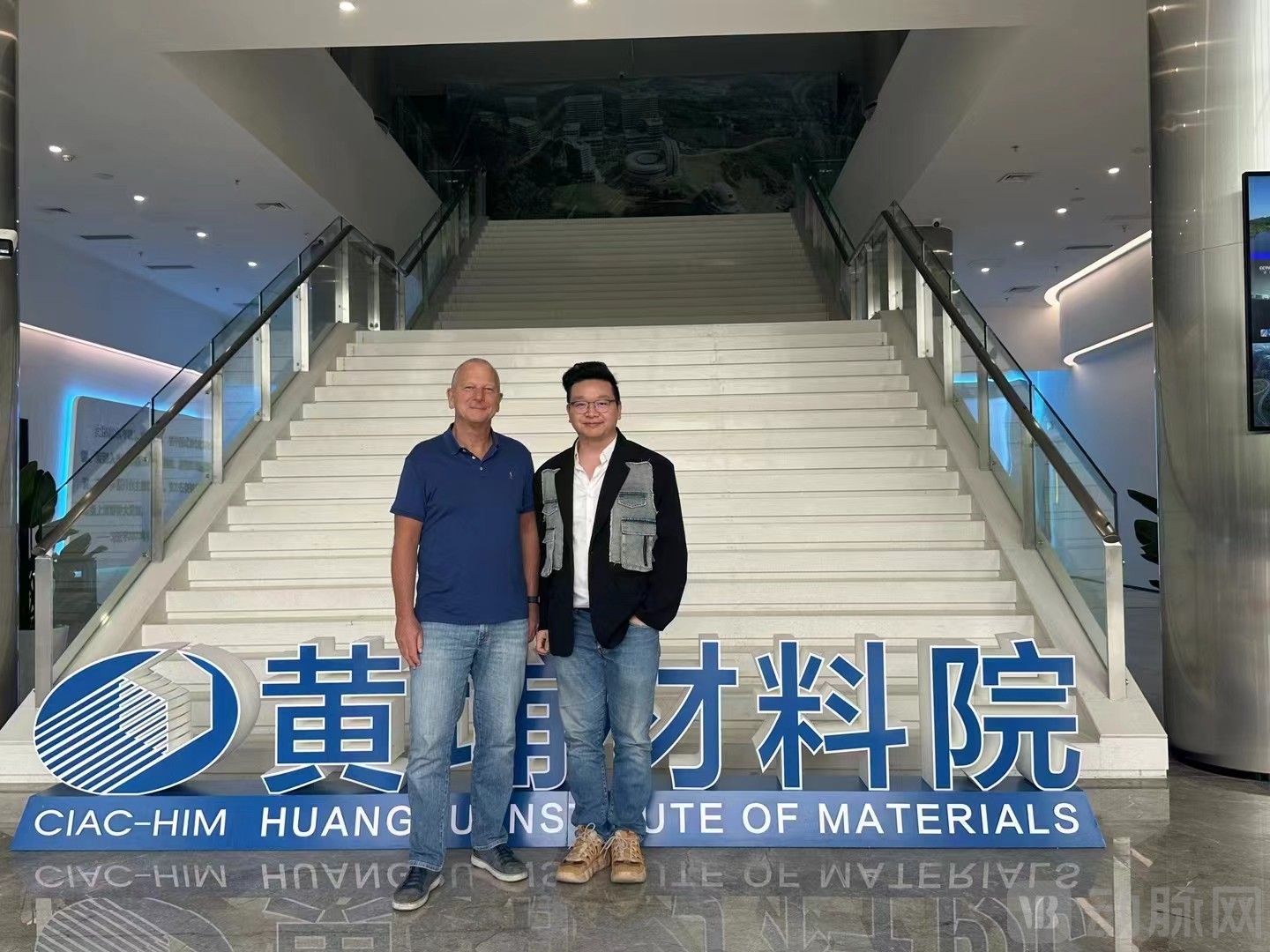
Professor Joachim Loos (left), former Principal Scientist at DSM, the Netherlands, and Huang Jianguo (right). Image source: Huang Jianguo’s WeChat Moments
Huang Jianguo vividly likened their approach to a “fish pond”: “Our technical team is like a ‘fish pond,’ our R&D efforts are akin to ‘raising fish,’ and the outcomes of our R&D are the ‘fingerlings.’ When the market’s ‘fishery’ demands a specific type of fish, we can readily draw from our ‘pond.’ The battle-tested team at Zhentai possesses the capability to scale these R&D achievements into large-scale industrial production.”
Therefore, Zhentai Biotechnology’s robust pipeline is not a “castle in the air,” but rather a stride toward industrialization built on the shoulders of “giants.”
Huang Jianguo pointed out that many raw material companies in the current market often rely on a single star ingredient to break into the market. In contrast, Zhentai Biotechnology was co-incubated by the Guangdong-Hong Kong-Macao Greater Bay Area Huangpu Material Research Institute since its inception,The R&D team is actively pursuing the platformization of its technologies, possessing three major technical platforms: natural extraction, biosynthesis, and chemical synthesis.Therefore, the company can respond rapidly to market demands and identify key areas for swift market entry.Follow-up。
After more than a decade of market education, the general public has become quite familiar with the concept of collagen. Therefore, Zhentai Biotechnology has chosen to enter the market by focusing on Type I animal-derived collagen.
Animal-derived collagen is obtained from natural biological sources, primarily bovine hide, porcine skin, and fish scales/collagen, and is produced through acid extraction and enzymatic extraction methods. Animal-derived collagen retains its intact triple-helix structure and biological properties, exhibiting high bioactivity and mechanical strength. It is suitable for applications in aesthetic medicine (injectables), medical repair, and the food industry.
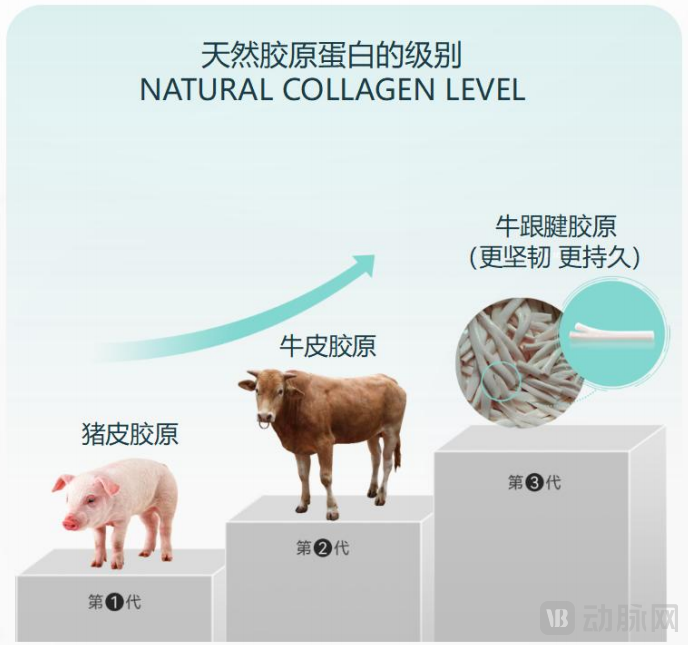
Image from Zhentai Biotechnology
Zhentai Biotech’s Type I animal-derived collagen, sourced from bovine Achilles tendon, offers high safety and low allergenicity. Utilizing a novel third-generation extraction process from bovine Achilles tendon, it effectively avoids contamination by impurities such as hair, hair follicles, sebaceous glands, and blood vessels, resulting in lower levels of non-collagenous proteins, absence of pathogens, and complete biodegradability.
Animal-derived collagen extraction faces two major challenges: immunogenicity and viral contamination. Guangdong Zhentai Biotechnology Co., Ltd. has successfully overcome these two issues by ensuring the health of raw materials and employing advanced enzymatic hydrolysis technology.
To ensure the health and safety of raw materials, Zhentai Biotechnology selects Achilles tendons from calves under 24 months of age raised in natural pastures. This approach maximizes the preservation of the non-cross-linked triple helix structure. The company implements a three-generation traceability system with comprehensive monitoring of all indicators throughout the process. To prevent bovine spongiform encephalopathy (BSE), the animal feed is free from animal proteins and genetically modified organisms (GMOs), resulting in higher-quality extracted collagen.
Supplemented by advanced enzymatic cleavage technology, it can completely remove the native structure of allergens by excising the highly allergenic telopeptides, thereby achieving high biocompatibility. Cold-chain storage and transportation fully preserve the activity of the raw materials, effectively reducing the risk of post-injection infection.
Addressing market concerns that “animal-derived collagen may trigger rejection reactions,” Huang Jianguo stated that specific cases must be evaluated in light of the application scenario and the maturity of product technology. In the skincare sector, particularly for topical products, both animal-derived collagen and recombinant collagen are primarily added in modified forms to enhance skin absorption. While traditional views hold that animal collagen, being a macromolecule, is poorly absorbed by the skin, modern techniques—through modification and formulation optimization—can effectively promote its absorption. For medical aesthetic injectable products, the key lies in the maturity of extraction and production technologies. Advanced purification processes and enzymatic cleavage techniques can effectively remove impurity proteins, ensuring high product purity and preserving the intact triple-helix quaternary structure of animal-derived collagen, thereby offering incomparable advantages over recombinant proteins in the field of injectable fillers. Meanwhile, rejection reactions are not inevitable; their occurrence is closely related to the specific product and application technology employed.
In addition to type I animal collagen,Zhentai Biotechnology has also successfully commercialized recombinant collagen and biodegradable polyester materials, and has secured orders.
Adhering to the “three-generation development” philosophy of commercializing one generation, developing the next, and reserving a third, Zhentai Biotechnology is also continuously exploring the “uncharted territory” of upstream raw materials.
Huang Jianguo believes that although medical aesthetic materials are constantly evolving, they can generally be categorized into three types. The first type is inert fillers, represented by hyaluronic acid, which require cross-linking agents for formulation and belong to Regeneration 1.0 materials. Subsequently, Regeneration 2.0 materials emerged, such as traditional biodegradable polyester-based materials. These achieve anti-aging effects through the inflammatory response of macrophages engulfing microspheres, representing passive regeneration via exogenous substance injection. However, post-injection reactions such as swelling and inflammation may occur, indicating room for improvement. In contrast, active regeneration, represented by citrate- and malate-based materials, serves as a paradigm for Regeneration 3.0 materials.
Taking citric acid as an example, it is naturally present in the human body as an intermediate metabolite. Supplementing citric acid to human skin offers three key benefits: first, it induces cell adhesion, proliferation, and migration; second, its degradation cycle can be engineered, and its degradation products can be directly absorbed by cells as an energy source to enhance metabolic activity, thereby avoiding sequelae caused by material retention in the body; third, it promotes collagen secretion without requiring inflammatory stimulation and essentially does not induce chronic inflammation. In contrast, most conventional biodegradable polymer products tend to trigger immune rejection responses in human tissues. Supplementing with citric acid is akin to “refueling” and “recharging” skin fibroblasts and other cells, promoting the biosynthesis of various proteins, including collagen, which constitutes active regeneration. Products based on malic acid follow a similar logic.
The development strategy for citric acid-based materials has, to some extent, drawn on the successful experience of traditional biodegradable polyesters. Initially, traditional biodegradable polyesters such as polylactic acid (PLA) were primarily used in orthopedic consumables like bone screws. After rigorous clinical validation confirmed their safety and efficacy, these materials received market approval from the U.S. Food and Drug Administration (FDA) and China’s National Medical Products Administration (NMPA). To further expand their application scope, leading domestic companies have developed facial fillers for use in medical aesthetics, driving a significant increase in sales volume.
Returning to citric acid, its development trajectory is quite similar. In 2020 and 2021, the U.S. FDA approved three orthopedic implant devices made from citric acid-based biodegradable materials. Drawing on the successful experience with polylactic acid-based materials, we anticipate that citric acid-based materials will also hold significant application potential in the medical aesthetics field.
“Citric acid itself is a small molecule; through polymerization, it can be transformed into macromolecules and developed into microsphere materials to provide structural support. The characteristics of this material, along with its performance in animal and human studies, lead us to believe that it has the potential to become a next-generation medical aesthetic material, helping people achieve beauty safely and healthily,” added Huang Jianguo. He further noted that beyond facial filling achieved via subcutaneous injection, citric acid-based microspheres or combination products may also demonstrate excellent efficacy in bone structure augmentation.
Despite the broad application prospects of citric acid and malic acid, there are currently few domestic research enterprises in China, and their potential efficacy remains to be further explored.
In terms of commercialization, Zhentai Biotechnology currently provides not only raw materials and semi-finished product services but also OEM/ODM development.
In terms of production capacity, the company has achieved CS-level and pilot-scale capabilities.
Huang Jianguo revealed to VCBeat that, starting with collagen, Zhentai Biotechnology plans to gradually launch multiple Class III medical device dermal filler products for medical aesthetics over the next three years.
“Our team possesses expertise in both the R&D of medical aesthetics materials and product promotion, which constitutes our competitive advantage.” Huang Jianguo emphasized that, in addition to supplying raw materials for medical aesthetics, Zhentai Biotechnology is committed to providing one-stop services to brand manufacturers in the future, including product formulation design, OEM, brand building, and empowerment through new traffic channels.
Meanwhile, Zhentai Biotechnology also looks forward to forging closer collaborations with more pharmaceutical companies and medical aesthetics material teams to jointly drive innovative R&D and advance the entire medical aesthetics industry.
Reference: “Zhentai Biotechnology” Secures Tens of Millions in Angel Funding to Develop Medical Aesthetic Raw Materials Such as Citric Acid and Collagen