

Cytokinetics Ends $10B Acquisition Talks as Aficamten Advances in HCM Trials
Cytokinetics
Developer of Muscle Activators and Muscle Inhibitors
Amid the capital winter, business development (BD) deals and mergers and acquisitions (M&A) have become the primary means for pharmaceutical companies to secure cash flow and sustain operations. According to the VCBeat Orange Database, global biopharmaceutical companies have completed 34 M&A transactions since 2024.
Recently, following rumors late last year that biotechnology company Cytokinetics might be acquired by multinational corporations (MNCs) such as Novartis, CEO Robert Blum stated during the fourth-quarter earnings conference call that no sale process was underway. The potential deal, which would have valued Cytokinetics at over $10 billion, ultimately fell through.
Rumors suggest that potential buyers for Cytokinetics include 11 multinational corporations (MNCs) such as Novartis, AstraZeneca, Amgen, and Johnson & Johnson. Cytokinetics has become a highly sought-after target for these MNCs not only due to the significant potential demonstrated by its core pipeline asset, aficamten, but also because of the scarcity of novel cardiovascular drugs and their blockbuster potential.
Aficamten Succeeds in Phase III Clinical Trial for HCM; Jixing Pharmaceutical Holds Rights in Greater China
In late December 2023, Cytokinetics announced the latest data from the Phase III SEQUOIA-HCM clinical trial evaluating aficamten for the treatment of symptomatic obstructive hypertrophic cardiomyopathy (oHCM). The study demonstrated that aficamten significantly improved exercise capacity, meeting the primary endpoint of peak oxygen consumption (pVO2) as measured by cardiopulmonary exercise testing (CPET), as well as all 10 secondary endpoints. Following this announcement, Cytokinetics’ stock price surged by 82% on the same day, bringing its market capitalization to $8.2 billion.
Aficamten is an allosteric inhibitor of cardiac myosin that suppresses excessive formation of myosin-actin cross-bridges, thereby inhibiting myocardial hypercontractility, left ventricular hypertrophy, and reduced compliance, and ultimately improving myocardial diastolic function. In December 2021, the FDA granted Breakthrough Therapy Designation to this drug.
The results of the SEQUOIA-HCM study are as follows: peak oxygen uptake (pVO2) measured by cardiopulmonary exercise testing (CPET) increased, with a least squares mean difference of 1.74 (95% CI, 1.04–2.44) mL/kg/min (p=0.000002). The treatment effect of aficamten was consistent across all prespecified subgroups, which reflected patients’ baseline characteristics and treatment strategies, including those receiving or not receiving beta-blockers as background therapy.
Among all 10 prespecified secondary endpoints, statistically significant (p<0.0001) and clinically meaningful improvements were also observed, including:
· Kansas City Cardiomyopathy Questionnaire Clinical Summary Score (KCCQ-CSS) at Weeks 12 and 24;
· Proportion of patients with an improvement of ≥1 grade in New York Heart Association (NYHA) functional class at Week 12 and Week 24;
· Changes in the left ventricular outflow tract pressure gradient (LVOT-G) elicited at Week 12 and Week 24, and the proportion of patients with LVOT-G <30 mmHg;
· Surgical indications for exercise stress testing and septal reduction therapy.
Aficamten was well tolerated in this study, with an overall adverse event profile comparable to that of placebo.
SEQUOIA-HCM is one of three ongoing Phase III trials of aficamten conducted by Cytokinetics. The other two are ACACIA-HCM (NCT06081894) and MAPLE-HCM (NCT05767346). ACACIA-HCM aims to compare aficamten with placebo in terms of quality of life, exercise capacity, and clinical outcomes in patients with non-obstructive hypertrophic cardiomyopathy, with an estimated primary completion date of June 2026. MAPLE-HCM aims to compare the efficacy and safety of this drug versus metoprolol succinate in adult patients with symptomatic hypertrophic cardiomyopathy and left ventricular outflow tract obstruction, with an estimated primary completion date of July 2025.
In July 2020, Jixing Pharmaceuticals licensed the Greater China rights to aficamten, initiated clinical trials of the new drug in China in the same year, and received Breakthrough Therapy Designation from the Center for Drug Evaluation (CDE) of the National Medical Products Administration (NMPA) in 2022. The drug is currently in Phase III clinical trials in China.
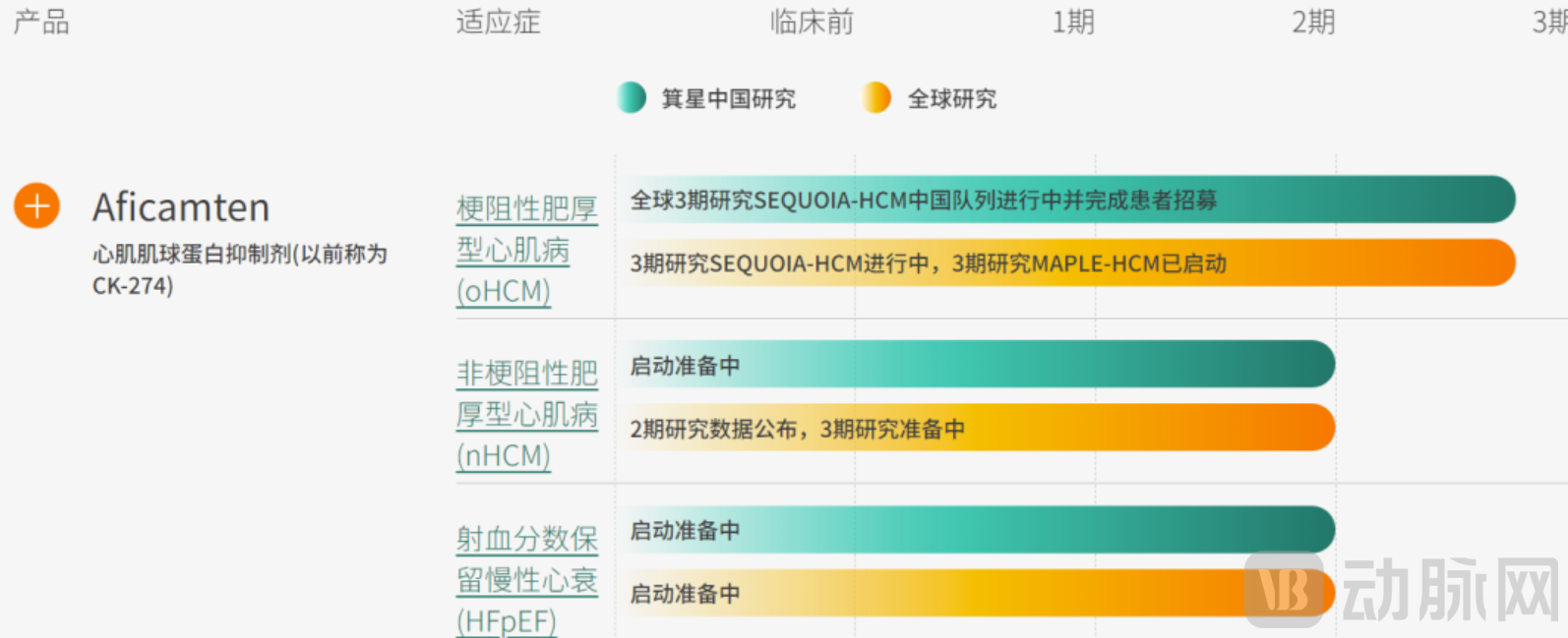
In addition, in the field of cardiology, Cytokinetics has also developed two other products, CK-136 and CK-586, both of which are currently in Phase I clinical trials.
11 MNCs as Potential Bidders, “In-Depth Talks” with Novartis
The origin of Robert Blum’s response to questions about “M&A” during the conference call dates back to October 2023. At that time, Bloomberg reported, citing unnamed sources, that Cytokinetics was exploring potential acquisition options after receiving expressions of interest from prospective buyers. Following the release of this news, Cytokinetics’ stock price rose by 9%.
During the JPM Conference, The Wall Street Journal reported that Cytokinetics was in advanced negotiations to be acquired by Novartis, with the deal “potentially closing as early as this week.” Subsequent reports from Dealreporter, Reuters, and other sources indicated that AstraZeneca and Johnson & Johnson had also emerged as potential buyers, noting that Novartis likely submitted the highest bid. At that time, Cytokinetics’ market capitalization was approximately $8.4 billion.
Generally, when multiple potential acquirers are involved, buyers tend to pay a premium above the market capitalization for the acquisition target. In other words, if this merger and acquisition deal is completed, the transaction value could approach nearly RMB 10 billion.
Four days later, Novartis CEO Vasant Narasimhan denied acquisition rumors at the JPM Conference, pointing out that Novartis’s M&A strategy is “actually focused on assets under $5 billion.” He defined “bolt-on acquisitions” within its key strategic priorities as the acquisition of small and mid-sized companies in new high-growth areas or fields adjacent to its existing core product portfolio, with deal sizes not exceeding $1 billion and no more than 25% of the acquirer’s market capitalization.
Shortly after Novartis delayed its acquisition of Cytokinetics, Betaville reported that Amgen had emerged as another potential buyer. Amgen and Cytokinetics began collaborating in 2006 to develop two novel small-molecule therapies designed to activate cardiac muscle, including omecamtiv mecarbil and CK-136. The partnership was terminated in 2020 after clinical trial results for omecamtiv mecarbil fell short of expectations.
Interestingly, in 2021, Kinetic Therapeutics acquired the Greater China rights to omecamtiv mecarbil for $400 million. This deal included a $50 million upfront and short-term payment, proceeds from RTW Investments (an investor in Kinetic Therapeutics) purchasing an additional $20 million worth of Cytokinetics stock, up to $330 million in potential milestone payments, and sales royalties based on net sales of omecamtiv mecarbil in the Greater China region. Currently, omecamtiv mecarbil is under review by the European Medicines Agency (EMA). Last March, the U.S. Food and Drug Administration (FDA) rejected the New Drug Application (NDA) for this drug, citing a lack of substantial evidence.
Shortly thereafter, Mayank Mamtani, Managing Director and Head of Healthcare Equity Research at B. Riley Securities, told Bloomberg that Amgen, AstraZeneca, Johnson & Johnson, and Novartis were among the 11 potential acquirers of Cytokinetics, but expressed skepticism about an imminent M&A deal.
Now, Cytokinetics CEO Robert Blum has put an end to the rumors of a potential acquisition that might have been finalized in early 2024. “Since sharing the positive results from SEQUOIA-HCM, Cytokinetics has been the subject of acquisition rumors. While we will not and cannot comment on specific speculation, allow me to clarify one thing—we have not initiated a sale process, nor is there any merger or acquisition transaction underway,” Robert Blum stated during the conference call.
However, according to Robert Blum, Cytokinetics is seeking to execute a transaction with a Japanese company.
Why Do New Cardiovascular Drugs Become “Blockbusters”?
Cardiovascular Disease (CVD) refers to diseases caused by disorders of the heart and blood vessels, including coronary heart disease, cerebrovascular disease, hypertension, peripheral arterial disease, rheumatic heart disease, congenital heart disease, and heart failure.
The "Report on Cardiovascular Health and Diseases in China 2022" shows that the prevalence of cardiovascular disease (CVD) in China is in a continuous rising stage, with 330 million current CVD patients, including 13 million stroke cases, 11.39 million coronary heart disease cases, 8.9 million heart failure cases, 5 million cor pulmonale cases, 4.87 million atrial fibrillation cases, 2.5 million rheumatic heart disease cases, 2 million congenital heart disease cases, 45.3 million peripheral artery disease cases, and 245 million hypertension cases. The large number of patients has led to an urgent clinical demand for cardiovascular diseases in China.
Despite some progress in the development of cardiovascular drugs, many patients still fail to achieve satisfactory therapeutic outcomes, with a particular scarcity of innovative cardiovascular medications that offer superior efficacy and safety.
Upon closer examination, the development of innovative cardiovascular drugs is by no means easy. In recent years, Investigational New Drug (IND) applications for therapeutic agents in China have been predominantly focused on oncology, anti-infectives, respiratory, and digestive systems. Few pharmaceutical companies have addressed the urgent clinical need for cardiovascular diseases, resulting in a very low number of approved innovative drugs in this field on an annual basis.
On the one hand, the development of innovative drugs in the cardiovascular field faces numerous challenges, including high costs, technical difficulties, stringent trial registration requirements, and the hurdle of demonstrating superiority over existing therapies. Furthermore, it is difficult to prove clinical benefit through surrogate endpoints in this area. Given the high safety standards, these drugs rarely qualify for priority review or accelerated assessment, necessitating longer clinical trials with larger patient populations.
On the other hand, the clinical development of innovative drugs in the cardiovascular field is extremely challenging. According to the PharmaDJ database, among innovative drugs under development across various therapeutic areas (including anti-infectives, oncology, endocrine and metabolic disorders, respiratory diseases, and musculoskeletal conditions), those for cardiovascular diseases rank second-to-last in success rates for Phase I, II, and III clinical trials, with the success rate for Phase I development being only 4%.
Given the significant challenges and scarcity in the development of novel therapies for cardiovascular diseases, it is hardly surprising that Cytokinetics, with its asset aficamten, has emerged as a prime candidate for acquisition. Taking antihypertensive drugs, which serve a large patient population, as an example: according to statistics from Zhiyan Consulting, the market size of antihypertensive drugs in China reached RMB 111 billion in 2022, maintaining a robust growth rate of over 7%.
Regarding the indication of aficamten for hypertrophic cardiomyopathy (HCM), there are currently no approved drugs in China specifically targeting HCM. Guideline-recommended pharmacotherapies are based on empirical treatment and primarily include beta-blockers, verapamil, diltiazem, and disopyramide. However, these agents were originally developed for other conditions and do not target the underlying pathophysiology of HCM, namely hypercontractility of the myocardium. They generally fail to halt disease progression and are associated with significant adverse effects; furthermore, disopyramide has not yet been marketed in China. For patients with obstructive HCM (oHCM) who exhibit severe symptoms refractory to medical therapy and have a left ventricular outflow tract gradient (LVOT-G) ≥ 50 mmHg at rest or during provocation, septal reduction therapies—specifically surgical septal myectomy and percutaneous alcohol septal ablation—may be effective. Nevertheless, these procedures are not widely accessible and carry risks, including mortality.
According to Truist Securities, aficamten is projected to achieve peak annual sales of $3.6 billion in the United States and approximately $1.8 billion in the European Union.
References:
1. genengnews.StockWatch: M&A Talk Fuels Cytokinetics Stock Roller Coaster
2. Gazelle Community: The Next Major Pharmaceutical Sector for M&A