

Transformative Technologies for Neuroengineering International Conference Co-Hosted with Nature Portfolio to Convene 24 Global Experts from 9 Countries
According to Deloitte’s “Market Insights into the Diagnosis and Treatment of Neurological Disorders,” neurological diseases are one of the leading causes of disability worldwide and the second leading cause of death after cardiovascular diseases, imposing significant suffering and a heavy burden on patients and society. As such, they have long received considerable attention from governments around the world. Dozens of countries globally have identified brain science as a key focus area in their national science and technology strategies. China has also introduced multiple policies and special initiatives to promote the advancement and development of frontier technologies, including neurotechnology.
In December 2023, the Central Economic Work Conference emphasized that “industrial innovation should be driven by scientific and technological innovation, particularly by leveraging disruptive and frontier technologies to foster new industries, new models, and new growth drivers, thereby developing new quality productive forces.”As a vital new form of productive force in the new era, neurotechnology not only holds significant clinical value for the effective diagnosis and treatment of neurological disorders and profound scientific significance for humanity’s self-understanding, but also drives the development of next-generation artificial intelligence technologies and emerging information industries.
Against this backdrop, the international conference “Transformative Technologies for Neuroengineering,” which focuses on the latest advances in neurotechnology to address challenges in neurological health and disease, will be held in Shenzhen from April 10 to 12, 2024.
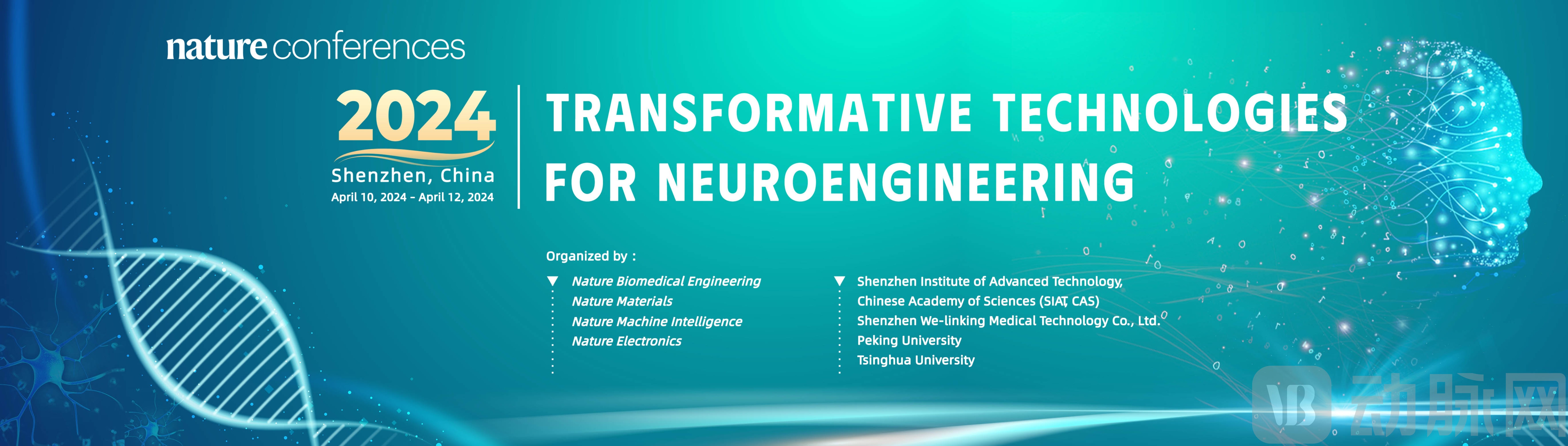
This global high-end technology conference isShenzhen Institute of Advanced Technology, Chinese Academy of Sciences; Shenzhen Weiling Medical Technology Co., Ltd.; Peking University; Tsinghua University; Nature Biomedical Engineering; Nature Materials; Nature Machine Intelligence; Nature ElectronicsCo-hosted, inviting participants from around the world24 renowned professors and entrepreneurs from 18 institutions across 9 countriesInvited Speaker at the Conference.
The conference topics coveredBioelectronic Interfaces and Devices, Brain Imaging Modeling and Brain Organoids, Neuromodulation and Neural Prosthetics, Brain-Inspired Intelligence and Robotics, Brain-Computer Interfaces and ExoskeletonsAt the technological forefront of these popular fields, it gathers high-quality resources from academia, clinical practice, industry, and investment. It will establish an open platform for cooperation to facilitate academic exchange, industrial innovation and integration, technology transfer, and clinical applications in neurotechnology, thereby accelerating theoretical innovation and industrial translation in China and worldwide.
In recent decades, humanity has achieved remarkable new breakthroughs, concepts, and heights in the field of neurotechnology. However, it is undeniable that as the industry advances, the neurotechnology sector still faces significant challenges in further breaking through the bottlenecks of existing theories and technologies, as well as in translating scientific achievements into commercial applications.
The collective advancement and prosperity of the industry are inseparable from the collaborative symbiosis of all stakeholders. To this end, this conference focuses on academic and clinical experts as well as the industrial ecosystem community, establishing a platform that gathers“Industry, Academia, Research, Healthcare, Capital, and Business”a cross-sector collaboration and exchange platform that fosters innovation and translational applications in the neurotechnology industry by stimulating intellectual exchange among diverse stakeholders.
Organizers often play a pivotal role in the successful hosting of high-quality academic conferences. The organizers of this international conference include China’s leading research institutes, universities, and innovative industry enterprises, as well as four major international top-tier academic journals—representing key forces across the industry with outstanding capabilities in resource integration and significant industry influence.
Specifically, the Chinese sponsor isLi Xiaojian and Deng Chunshan from the Shenzhen Institute of Advanced Technology, Chinese Academy of Sciences, and Shenzhen Weiling Medical Technology Co., Ltd.; Duan Xiaojie from Peking University; and Sheng Xing from Tsinghua University. The initiator from Nature isPep Pamies, Editor-in-Chief of Nature Biomedical Engineering; Valeria Caprettini, Editor at Nature Biomedical Engineering; Liqian Wang, Editor at Nature; Bruno Castro, Editor at Nature Materials; Trenton Jerde, Editor at Nature Machine Intelligence; and Katharina Zeissler, Editor at Nature Electronics。
As a premier global conference in the field of neurotechnology, this year’s event has invited 24 renowned professors and entrepreneurs from 18 institutions across nine countries—including China, the United States, Austria, Germany, South Korea, Canada, Switzerland, the United Kingdom, and Italy—to serve as distinguished keynote speakers.
Specific Guest List Includes, But Is Not Limited ToHarvard University, Massachusetts Institute of Technology, and Yale University in the United States; Heidelberg University in Germany; the University of Cambridge in the United Kingdom; École Polytechnique Fédérale de Lausanne in Switzerland; Seoul National University in South Korea; Tsinghua University; and Peking Universityand other invited experts from top international universities.
By leveraging data fromNeuroscience, Materials Science and Engineering, and Biomedical EngineeringExperts have gathered to facilitate in-depth interdisciplinary discussions, debates, and collaborations, thereby advancing the continuous development of neurotechnology research. The conference also enables attendees to stay abreast of the latest research findings and trends across various fields, helping them identify new research directions while exploring translational pathways for leveraging these research outcomes.
Neuroscience stands as one of the most cutting-edge, complex, and profound disciplines within the medical field and the broader natural sciences, characterized by its deep interdisciplinary integration. Aligning closely with global academic hotspots, this year’s conference features six specialized forums over a three-day period. Each topic will be addressed by 3–4 leading experts in their respective fields, who will share their latest academic achievements, complemented by interactive sessions including Q&A, poster presentations, and panel discussions.
◆ April 10
Thematic Conference I: Bioelectronic Interfaces and Devices
Thematic Session II: Microphysiological Systems for Disease Modeling
◆ April 11
Thematic Session III: Machine Learning in Neuroscience
Thematic Conference 4: Brain Imaging
Theme Session 5: Robotics, Artificial Intelligence, and Exoskeletons
◆ April 12
Theme Conference VI: Brain-Computer Interface
Guided by the academic leadership of invited keynote speakers and driven by diverse, specialized forum themes, this conference will also attract participants from across the industry, including scholars, enterprises, technical experts, physicians, and professional investors. Its aim is to promote the integration of frontier scientific research, technological innovation, and translational applications in the field of neurotechnology.
Meanwhile, to further leverage the integrated innovation ecosystem encompassing industry, academia, research, healthcare, capital, and commerce, this year’s conference also featured an Industry Forum on the afternoon of April 12,Six exclusive speaking slots are provided for corporate sponsor representatives., further bridging the gap between innovative enterprises and academic frontiers, and promoting the integration and alignment of high-quality resources.
According to publicly available research by Chinese scholars on the burden of neurological diseases in Asia, as global population aging deepens and accelerates, the incidence, prevalence, and disability-adjusted life years (DALYs) of neurological diseases in China are projected to increase, further exacerbating the burden on healthcare expenditures, economic growth, and industrial structural adjustment.
Each generation of scientists must confront the unique backdrop of its time, as different eras present distinct conditions and missions. As the “vital force” of technological innovation, early- and mid-career scientists are not only a prerequisite for the future development of any discipline or industry, but also key to enhancing a nation’s scientific and technological competitiveness and innovative capacity.
The scientific technologies, processes, and methodologies focused on at the International Conference on “Transformative Technologies in Neural Engineering,” such as artificial intelligence, robotics, and brain-computer interfaces, will serve as new-quality productive forces that continuously influence and reshape industrial structures, enhance production efficiency, and drive industrial leapfrogging by creating new models, products, and services.
Therefore, to provide more platforms for presentation and greater room for development for early- and mid-career scientists, this conference offers, to outstanding early- and mid-career scientists who have registered and submitted abstracts,Several Competitive Short Report Presentation Slots, will be reviewed by the expert committee; high-quality abstracts will be selected for poster presentation at this conference, and those of exceptional merit will be invited to deliver short oral presentations.
Leveraging the influence of this international conference, outstanding early- and mid-career scientists can engage in direct communication with domestic and international experts as well as editors from the Nature portfolio through open platforms such as short oral presentations and roundtable discussions, thereby broadening their professional development pathways and academic horizons. In addition to competing for slots for short oral presentations, registered attendees who submit abstracts will also have access to poster presentation spaces; high-quality abstracts will be selected for poster display, facilitating exchanges among participants during breaks between sessions.
◆ Abstract Submission Topics: Bioelectronic Interfaces and Devices; Microphysiological Systems for Disease Modeling; Machine Learning in Neuroscience; Brain Imaging; Robotics, Artificial Intelligence, and Exoskeletons; Brain-Computer Interfaces.
◆ Abstract Submission Deadline: March 17, 2024
(*Professionals from academia, industry, research institutions, healthcare, and investment sectors in relevant fields are welcome to register and attend. To submit an abstract, please register first; abstracts submitted by unregistered individuals will not be considered.)
The timeliness and practical relevance of academic research evolve in close correlation with industrial development. In its report “Market Insights into the Diagnosis and Treatment of Neurological Disorders,” Deloitte noted that the global neuroscience market was valued at $612 billion in 2022 and is projected to reach $721 billion by 2026, with an overall compound annual growth rate (CAGR) of 4.2% across various segments—ranging from 3.5% for behavioral therapy services to 27.8% for digital health—as each segment approaches its respective industry inflection point.
Taking brain-computer interfaces (BCIs) as an example, after half a century of development, BCIs have gradually moved from the laboratory to practical applications, achieving a breakthrough from science fiction concepts to industrial implementation and accelerating onto the fast track.
As the host of this conference and a leader in China’s fully implantable brain-computer interface (BCI) industry, Weiling Medical has pioneered the “non-genetic opto-nano neural remote control technology” on the global stage. This breakthrough has enabled the miniaturization of BCI device components, allowing for flexible and minimally invasive implantation, thereby accelerating the research, development, and clinical application of fully implantable, medical-grade BCI systems.
The International Conference on “Neuroengineering Disruptive Technologies” is imminent. As a high-level, multidimensional academic and industrial conference on neurotechnology in China, it will bring together stakeholders from across the industry to build a broad platform for exchange and collaboration. By introducing cutting-edge academic innovations and industrial solutions, the conference aims to foster interconnectedness among academia, industry, research institutions, healthcare providers, investors, and businesses, thereby empowering high-quality, rapid development of the global neurotechnology industry.
This international conference will serve as a vital window into the future of neurotechnology and its related industries. April 10–12, Shenzhen. Stay tuned for more exciting highlights!
Conference Registration:
Long-press to scan the QR code below to register for the conference & submit your abstract

Click the link below to visit the official website and learn more about the conference details.
https://conferences.nature.com/Neuroengineering24
Conference Organizing Committee: Zhong Peishan 13510743286