

NVIDIA Empowers Airdoc's Ophthalmic AI Large Model Development and Application
NVIDIA
Artificial Intelligence Computing Service Provider

Airdoc
Retinal Imaging Artificial Intelligence Field Product Developer
Airdoc is the first artificial intelligence healthcare company listed on the Hong Kong Stock Exchange and a global pioneer in the field of ophthalmic AI. It is committed to providing comprehensive, multi-faceted AI solutions for the early screening and management of chronic diseases, as well as myopia prevention and control in children and adolescents.
To address unmet healthcare needs, Airdoc has developed a robust pipeline of AI-powered retinal imaging products, which have been widely deployed in community clinics, health examination centers, insurance companies, optometry centers, and pharmacies to provide users with auxiliary disease diagnosis and health risk assessment.
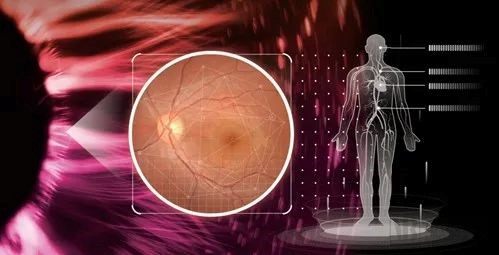
NVIDIA Empowers Ophthalmic AI to Achieve Efficient Large Model Training and Inference
The development of AI products in ophthalmology requires extensive annotated image data and model training. By leveraging NVIDIA Tensor Core GPUs, Airdoc has achieved large-scale model training for medical imaging data. Through the adoption of MONAI Label, rapid annotation of vast amounts of medical imaging data was accomplished more quickly and efficiently. This approach not only enabled ultra-fast processing and report generation for fundus images but also significantly accelerated the analysis and recognition of diseases in more complex three-dimensional ocular OCT images.
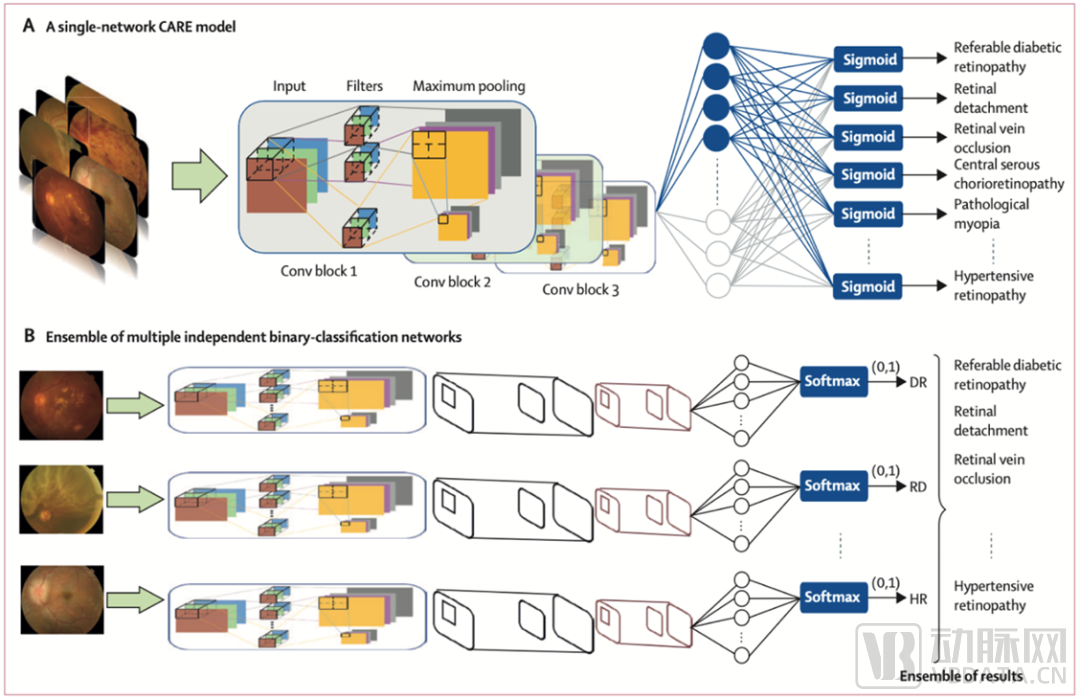
Figure 1. Multi-disease recognition network based on multi-label classification
During product deployment, the cost per AI inference is a critical consideration for commercialization. Airdoc utilizes NVIDIA T4 GPUs on the cloud as its inference platform, achieving a 40-fold speed increase compared to CPU-based inference. This approach reduces costs while enhancing product usability and accessibility. Furthermore, Airdoc employs the NVIDIA TensorRT inference framework for computation. By simply converting network models, it doubles the inference speed, with a remarkably straightforward transition process.
Airdoc has secured national patents for its technologies and products that leverage large language models to simulate vascular and neural changes, thereby predicting disease progression. This enables rapid prediction and visualization of disease lesion evolution. In actual deployment, multiple requests and applications are invoked. By utilizing NVIDIA Triton to schedule multiple AI applications, Airdoc has achieved efficient load balancing, reducing computational costs compared to traditional solutions.
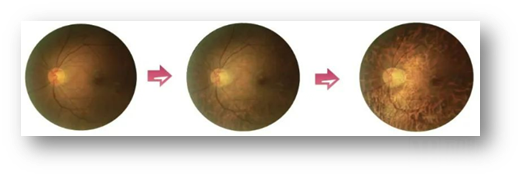
Figure 2. Simulating vascular and neural changes via large language models to predict disease progression
Leverage NVIDIA AI to Expand into More Application Scenarios
The wave of large AI models is transforming all industries. While building its ophthalmic large AI model, Airdoc is expanding into more AI application scenarios and exploring the development of additional medical AI use cases in ophthalmology by leveraging NVIDIA’s diverse AI technology stack.
•Build large models and services for the specialized field of ophthalmology using the NeMo framework. Explore innovative combined applications of digital human audio-to-video automatic generation (Audio2Face), the NeMo Framework conversational model, and MONAI medical imaging technology.
•Leverage NVIDIA Jetson embedded AI computing products to explore innovative approaches for implementing and accelerating edge- and device-side medical applications.