

Shukun Technology Showcases AI-Powered Clinical Solutions at ECR 2024, Accelerating Global Expansion

SHUKUN
Provider of Intelligent Products and Innovative Solutions
1895,European ScientistsDiscovery of X-rays.X-ray,Pioneered the Field of Medical Imaging。Today, with the rise of artificial intelligence technology, medical imaging, which has a century-long history, is“AI+” has also injected new vitality.
From February 28 to March 3, 2024, the European Congress of Radiology (ECR), one of the most influential global academic and scientific conferences in the field of radiology, was successfully held in Vienna, Austria. Themed “Next Generation Radiology,” this year’s congress placed artificial intelligence (AI) at the forefront of its focus.
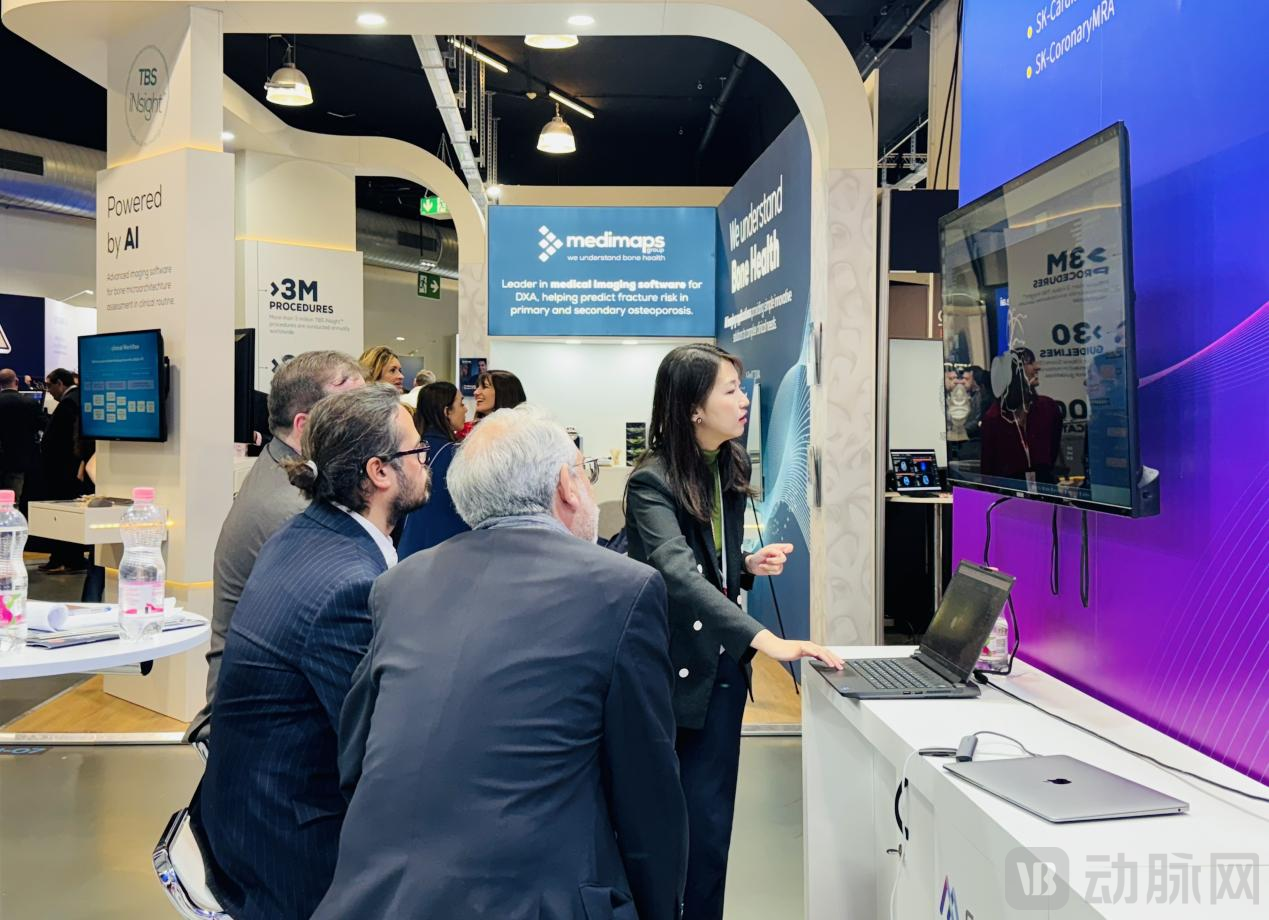
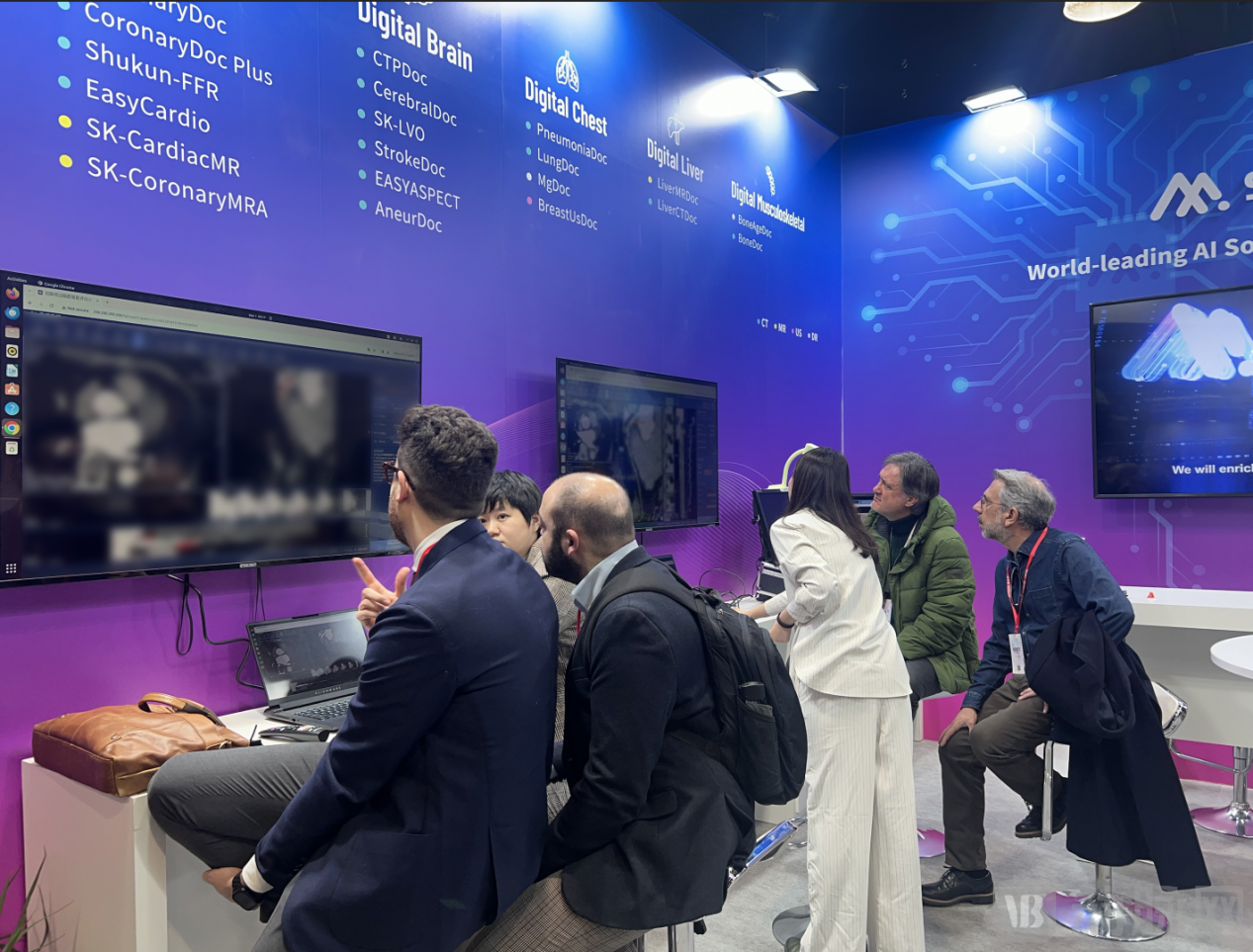
As a global leader in medical AI, SHUKUN was invited to exhibit and made a stunning debut with its multimodal solutions covering the entire clinical workflow. Throughout the multi-day conference, SHUKUN’s booth remained bustling with visitors, making Chinese medical AI practices one of the most captivating highlights of ECR 2024.
Cañellas, head of the Neuroradiology Group at a renowned hospital in Spain, expressed his enthusiasm after visiting SHUKUN’s booth: “Our hospital is pursuing an integrated imaging-and-intervention operating room model to minimize the time from imaging diagnosis to surgery for stroke patients. SHUKUN’s AI can deliver imaging conclusions within 2–3 minutes, encompassing all information from CTA, CTP, and NCCT, which is highly valuable for confirming treatment plans. I am eager to implement your AI in our hospital as soon as possible.”
Artificial Intelligence: The Definitive Future of Radiology
“What will ‘next-generation radiology’ comprise?”
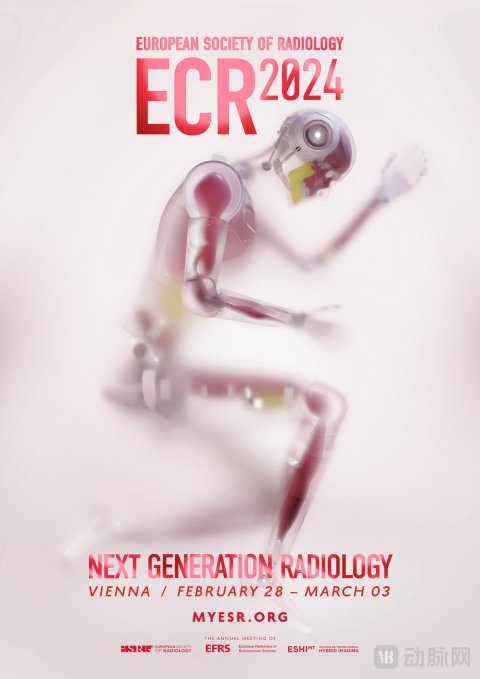
The posters at ECR 2024 revealed the answer. The poster design features a robot in a fetal position, symbolizing the equal importance of humans and technology in next-generation radiology, while the fetal posture signifies that the true potential of artificial intelligence, machine learning, and other advances in imaging technology remains largely untapped.
Professor Carlo Catalano, Chair of the current conference, also emphasized the importance of artificial intelligence (AI) in pre-conference interviews. He stated that AI has achieved significant improvements in speed and accuracy, which translates to greater patient comfort and enhanced capabilities for imaging and data analysis. This technology can help reduce radiation doses delivered to patients. Furthermore, AI can help alleviate the shortage of healthcare professionals, streamline workflows, and foster closer engagement with patients.
The rapid advancement of artificial intelligence is driving constant changes in the global healthcare industry. As an industry leader, SHUKUN boasts robust core AI technologies and strong innovation capabilities. In its product development strategy, SHUKUN initially focuses on addressing the primary needs of hospital radiology departments, empowering physicians with novel diagnostic parameters and methods to enhance work efficiency and precision. Meanwhile, SHUKUN facilitates collaboration between radiologists and clinical departments, accumulating foundational technologies while developing new products. This provides the underlying technological support necessary for promoting high-quality development in hospitals and advancing the modernization of the healthcare industry.
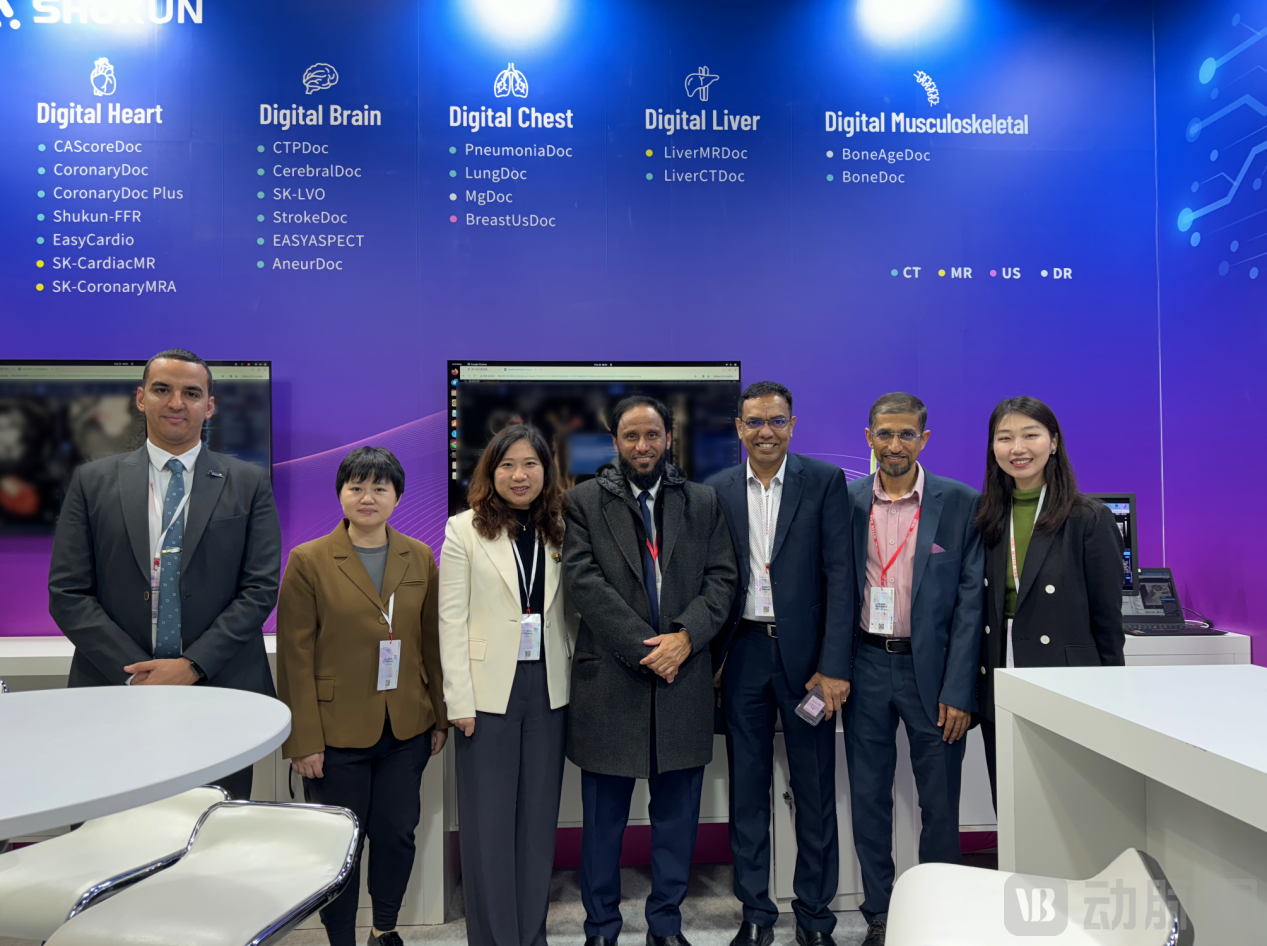
Over the seven years since its founding, SHUKUN has integrated into hospitals through a model combining medicine and engineering, collaborating and co-creating with physicians and healthcare institutions. Its products have been adopted with high stickiness by nearly 4,000 medical and health organizations worldwide, earning significant attention and recognition from clinical experts both in China and abroad, as well as from international clients.
Europe is not only the birthplace of medical imaging but also a global technological stronghold in the medical equipment industry, where market access requirements are extremely stringent. In the European region, SHUKUN has currently obtained MDR CE certification for three key areas—cardiac, neurological, and thoracic imaging—and has established extensive collaborations with leading medical institutions and research universities across Europe. As Chinese original innovations accelerate their global expansion, SHUKUN will continue to introduce more medical AI products to the international market, aiming to jointly explore the future of medical imaging.
Stunning the Audience: SHUKUN’s Booth Becomes the Most Eye-Catching Highlight
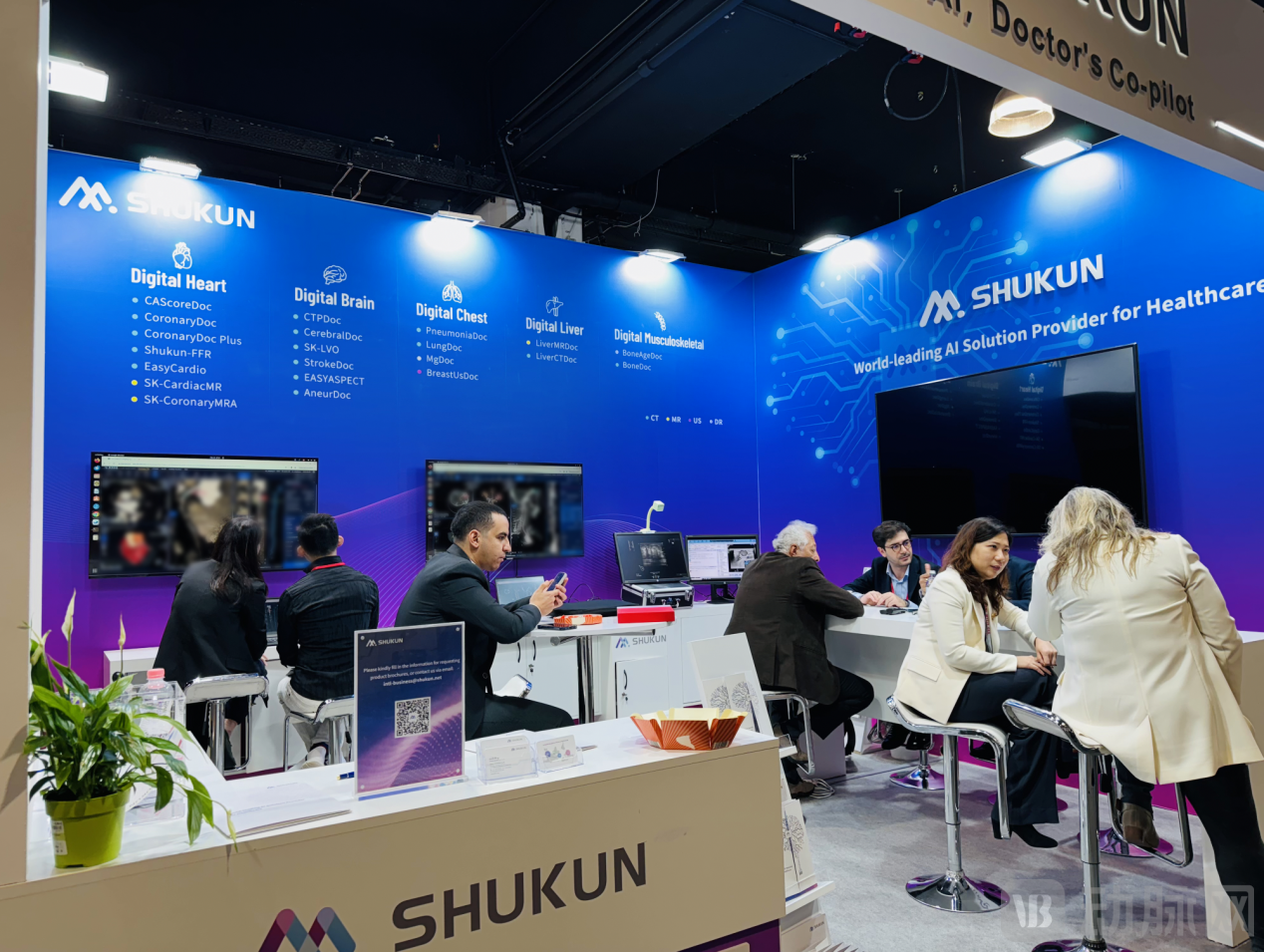
At this exhibition, SHUKUN showcased its AI-powered clinical workflow solutions across multiple modalities under the theme “SHUKUN AI, Doctor’s Co-pilot,” demonstrating a future paradigm for physicians that integrates medical engineering with human-AI collaborative intelligence, thereby substantiating the vision of smart healthcare.
Taking SHUKUN’s one-stop intelligent stroke solution as an example, its non-contrast CT AI can rapidly identify hemorrhagic regions and perform pixel-level precise measurements; the ASPECTS AI can automatically delineate the brain, calculate the mean CT value of the brain, assign an ASPECTS score, and generate a structured report with a single click; the head and neck CTA AI can automatically process cerebral vasculature within minutes, directly marking sites of vascular occlusion or ischemia and analyzing the severity of occlusion; and the CTP AI can assess the extent of brain injury, quantitatively evaluate the core infarct and ischemic penumbra, and estimate the potential for salvaging brain tissue.
Empowered by SHUKUN’s AI technology, the stroke green channel at Xuanwu Hospital of Capital Medical University completes multimodal imaging examinations and diagnosis in just 15 minutes, securing precious time for the treatment of stroke patients. Xuanwu Hospital has been designated as a National Demonstration Advanced Stroke Center, and its “Xuanwu Green Channel” serves as a national training base for thrombolysis and thrombectomy techniques. Professor Ma Qingfeng, Director of the Stroke Rescue Center in the Department of Neurology at Xuanwu Hospital, stated in an interview with Xinhua News Agency that AI can enhance efficiency, with the ultimate goal of saving more treatment time to reduce the likelihood of patient disability and even save lives.
At ECR 2024, SHUKUN presented over 40 products and innovative solutions covering key anatomical regions—including the heart, brain, chest, abdomen, and musculoskeletal system—and incorporating multiple imaging modalities such as CT, MR, DR, DSA, and US. These offerings comprehensively address major common diseases, including cardiovascular and cerebrovascular disorders and tumors, achieving comprehensive breakthroughs from single-scenario applications to full-process workflows, from single-disease detection to multi-disease analysis, from single-modality to multi-modality integration, and from assisted diagnosis to precision treatment support.
Meanwhile, collaborative research papers between SHUKUN and several top-tier hospitals were accepted for the academic call at this year’s ECR. A total of five submissions were selected as electronic posters, covering multiple modalities and diseases such as head and neck CTA, coronary CTA, bone age assessment, and pulmonary nodule screening. Participating partner institutions include Huadong Hospital Affiliated to Fudan University, The First Affiliated Hospital of Soochow University, Shenzhen Fuyong People’s Hospital, and Jinhua Central Hospital.
The multiple papers accepted in this issue all demonstrate the immense potential of radiomics and artificial intelligence technologies in frontier exploration and clinical guidance. A paper from Huadong Hospital Affiliated to Fudan University points out that deep learning methods can effectively predict the progression status of pulmonary ground-glass nodules. A paper from Jinhua Central Hospital indicates that the CCTA radiomics model exhibits strong clinical predictive performance for myocarditis, holding promise for potential clinical application in the future.
At the European Congress of Radiology (ECR), a premier international radiology conference, SHUKUN and its partner hospitals achieved remarkable success in abstract submissions. This accomplishment showcases the company’s robust capabilities in integrating medicine with engineering and its unwavering commitment to advancing healthcare innovation, while also underscoring the immense potential of AI-led next-generation radiology. Looking ahead, SHUKUN will continue to leverage AI as its core driver, deepen collaboration across industry, academia, research, and clinical practice, and sustainably inject strong momentum into high-quality scientific research and clinical implementation, thereby delivering superior products and services to physicians and patients alike.
Digital Twins: The Ultimate Vision for Medical AI
Professor Carlo Catalano also mentioned in a pre-conference interview: “In the future, we will advance the concept of digital twins by integrating various tools with artificial intelligence to obtain optimal data from diverse sources. To guide treatment responses, digital twins will be applied through learning on simulators, much like they have already been implemented in the aerospace industry. We hope that each of us can leverage all available information to create a digital twin or avatar, aiming to accurately understand the patient’s disease.”
In this regard, SHUKUN has conducted in-depth exploration.
In the treatment of lung cancer, precise and minimally invasive thoracic surgery is a critical component, requiring accurate preoperative diagnosis and surgical planning. Anatomical variations in organs and tissues, along with the limited field of view in endoscopic surgery, pose challenges for surgeons in assessing the relationship between lesions and surrounding blood vessels. Therefore, preoperative 3D reconstruction is essential to identify pulmonary nodules and their associated vascular structures. SHUKUN’s intelligent surgical planning solution can automatically complete the digital 3D reconstruction of the lungs within three minutes, integrating the entire workflow from pulmonary nodule detection and vascular structure segmentation/classification to pulmonary segment watershed segmentation. This solution effectively addresses anatomical variations, supports precise surgical planning for subsegmentectomy, facilitates the development of personalized preoperative surgical plans, and upgrades traditional “experience-based” surgeries to “data-navigated” precision procedures.
From the perspective of health management, SHUKUN also aims to create a “Digital Human” profile for every individual. Specifically, by leveraging technologies such as artificial intelligence, the Internet of Things (IoT), big data, and cloud computing, SHUKUN customizes “Digital Human” smart health records for non-risk populations (covering screening, assessment, and health promotion) and for patients requiring diagnosis and treatment (covering diagnosis, therapy, and rehabilitation). This approach enables digital health management across the entire lifecycle, facilitates interoperability within and outside hospitals, and supports dynamic disease tracking, monitoring, maintenance, and intervention throughout the pre-diagnosis, intra-diagnosis, and post-diagnosis phases. Currently, this “Healthcare-Medical Collaboration” smart health management system is being piloted in Changping District, Beijing, and Wuzhong District, Suzhou, among other locations.
While witnessing the rapid advancement of AI technology, SHUKUN has never ceased its exploration of a smart future for the healthcare industry. As a global leader in medical AI, SHUKUN is joining forces with more partners to build a collaborative intelligent ecosystem, aiming to better serve doctors and patients worldwide and ensure ubiquitous access to smart healthcare services.