

Globally First Eye-Tracking-Based Innovative Medical Device Approved: Paving the Way for Objective Brain Function Assessment
Recently, China has achieved a major breakthrough in the field of brain science.
The “Brain Physiology and Cognitive Function Auxiliary Assessment System,” independently developed by Chengdu Jisi Mingzhi Technology Co., Ltd. (hereinafter referred to as “Jisi Mingzhi”), has obtained the NMPA medical device registration certificate. The product is capable of assessing brain physiology and cognitive functions and providing objective, early auxiliary diagnosis for mild cognitive impairment (MCI), thereby offering a convenient medical device for early screening and auxiliary diagnosis of cognitive impairments. This product was recognized through the Sichuan Province Green Channel for Innovative Medical Devices in 2021.
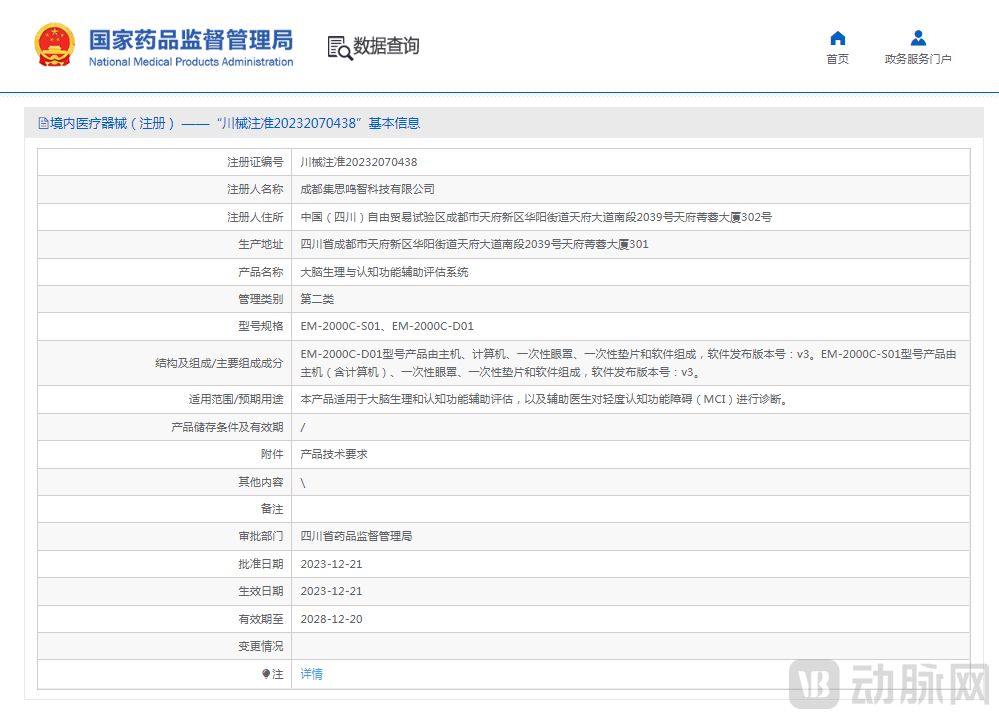
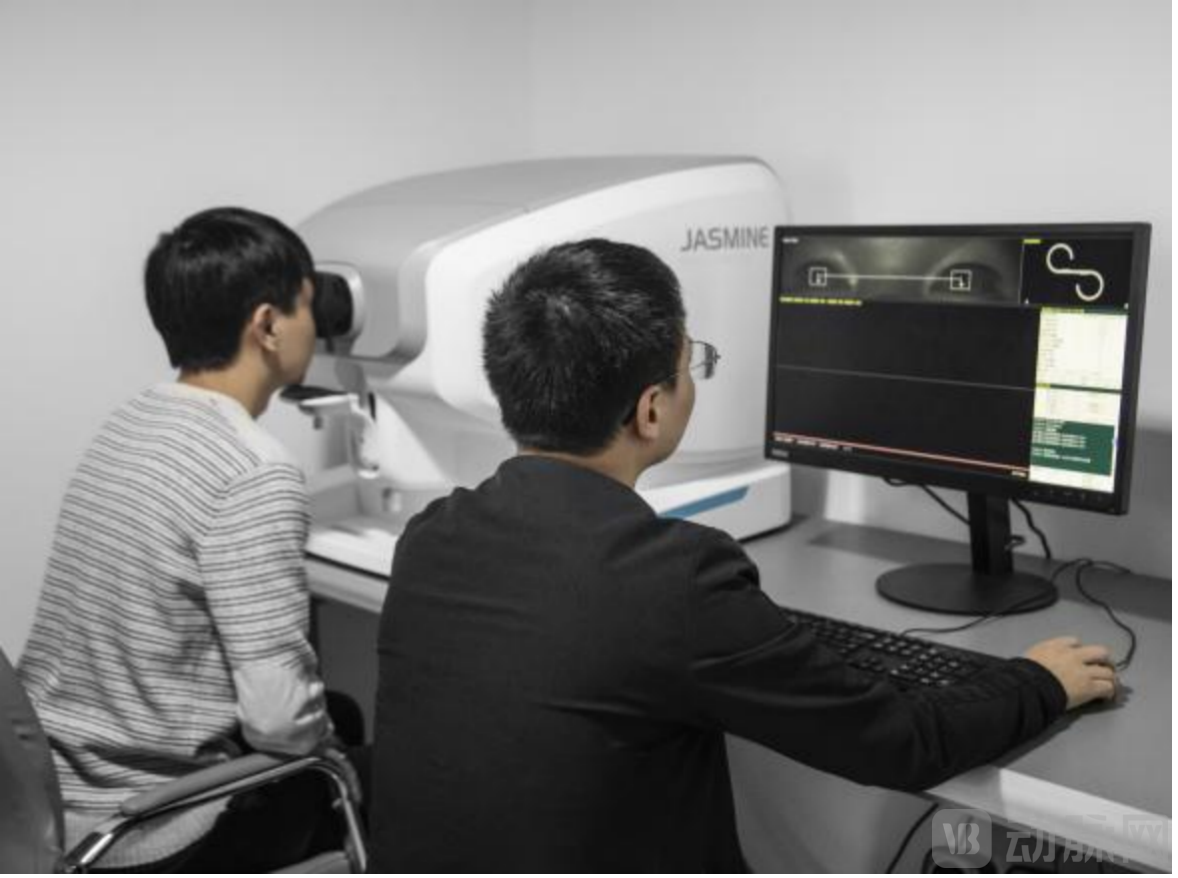
It is reported that this is the only internationally approved product capable of providing objective, early auxiliary diagnosis for Mild Cognitive Impairment (MCI). Currently, clinical diagnosis of MCI typically relies on cognitive scales, which are limited by lengthy administration times and high subjectivity.
As a key enterprise incubated by the Shenzhen Brain Science and Technology Industry Innovation Center, Jisi Mingzhi provides“Brain Physiology and Cognitive Function Auxiliary Assessment System” features high-speed (sampling frequency exceeding 1000 Hz) and high-precision (spatial error below 0.15°)Collect eye-tracking data from subjects based on multiple specific eye-movement behavioral paradigms, and comprehensively analyze and process the eye-tracking parameters across these paradigms to derive assessments of brain physiological and cognitive functions. This product offers advantages such as safety with no side effects, objectivity, high efficiency, and ease of operation.
Data show that there are nearly 10 million patients with Alzheimer's disease (AD, commonly known as senile dementia) in China, which has plunged countless families into hardship. Its clinical manifestation is progressive cognitive impairment.Mild cognitive impairment that emerges during this process represents the earliest stage with clinical symptoms and constitutes the most critical window for early detection, diagnosis, prevention, and treatment of Alzheimer's disease.“The World Alzheimer Report (2015)” points out that the global economic burden of this disease is projected to reach $2.11 trillion by 2030 and soar to $7.45 trillion by 2050. Therefore, confronting Alzheimer’s disease through early detection and early treatment has become an urgent clinical and social issue, as well as a pressing need in the field of public health in China.
Mild cognitive impairment (MCI) is a state of cognitive dysfunction that lies between normal aging and dementia, representing the earliest clinical stage of Alzheimer’s disease (AD). Chengdu Jisi Mingzhi Technology Co., Ltd.’s recently approved “Auxiliary Assessment System for Brain Physiology and Cognitive Function” has achieved breakthrough results in this field. The product has been classified as an innovative medical device by the National Medical Products Administration (NMPA) and completed Good Clinical Practice (GCP) clinical validation at West China Hospital of Sichuan University and the Affiliated Hospital of Chengdu University, demonstrating an accuracy rate of up to 85%. It enables early and objective auxiliary diagnosis of mild cognitive impairment, providing robust support for future clinical diagnoses by physicians.
High-Precision Infrared Eye-Tracking Technology + Oculomotor Behavioral Paradigm Database,
Multiple Product Pipelines Successfully Launched
In addition to the “Auxiliary Assessment System for Brain Physiology and Cognitive Functions,” Chengdu Jisi Mingzhi Technology Co., Ltd. has obtained medical device registration certificates for multiple independently developed products, including a digital therapeutic for cognitive impairment and an auxiliary diagnostic tool for schizophrenia. The company plans to further expand its applications in the diagnosis and intervention of neuropsychiatric and cognitive disorders.
It is understood that the company's technological approach is based on the most precise saccadic eye movements for behavioral cognitive assessment.
Saccades refer to the rapid movement of the eyes from one point to another, with a maximum velocity reaching 1,000 degrees of visual angle per second. A single saccade lasts approximately 40–60 ms, while the transmission of retinal visual information to the brain requires 50–60 ms; thus, the time required for visual information transmission is similar to the duration of a saccade. Consequently, before a saccade occurs, the brain has already formulated a saccadic plan, including whether to initiate a saccade, its direction, and its timing. However, once the decision to execute a saccade is made, it cannot be adjusted based on visual feedback, nor can its parameters (such as velocity, duration, and trajectory) be controlled; only the pre-planned motor trajectory is executed. Therefore, precise acquisition of saccadic data can objectively reflect brain function and status in a reverse manner.
Control of saccades involves multiple brain regions, such as the frontal eye fields and supplementary eye fields in the prefrontal cortex, the dorsolateral prefrontal cortex, the posterior parietal cortex, the superior colliculus, the cerebellum, and the brainstem. These brain regions form multiple neural circuits that participate in saccade control during different behavioral tasks. Therefore, detecting and analyzing saccade parameters under various behavioral tasks can help monitor the functions of different brain regions and circuits.
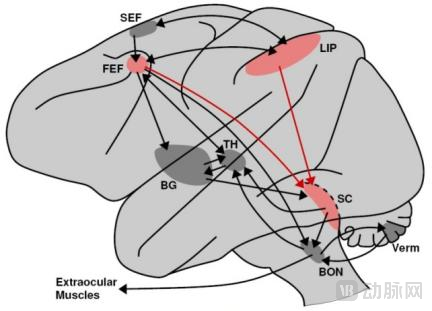
Neural Control of Rapid Eye Movement—Neural Information Processing Circuits
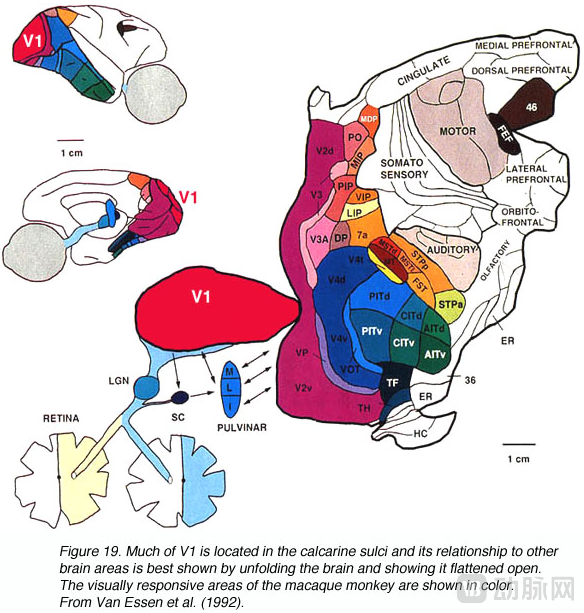
Brain Regions Involved in Visual Information Processing
Numerous domestic and international studies have demonstrated that eye-tracking technology, as an objective, safe, accurate, low-cost, and user-friendly technique, holds significant potential for the clinical diagnosis and treatment of neuropsychiatric disorders. For instance, it is used for screening and aiding in the early diagnosis of mild cognitive impairment (MCI), a precursor stage of Alzheimer’s disease; for screening and assisting in the diagnosis of various neuropsychiatric conditions such as Parkinson’s disease (PD), schizophrenia, and depression; and for rehabilitative training of cognitive impairments. With the continuous development and refinement of eye-tracking technology and its clinical applications, it is poised to become an essential clinical tool, providing greater support and assistance in the diagnosis, treatment, and rehabilitation of neuropsychiatric disorders.
To continuously optimize our products, expand their application scope, and enhance their practicality and competitiveness, thereby fully unleashing the value of eye-tracking technology, Chengdu Jisi Mingzhi Technology Co., Ltd. has been consistently collecting and analyzing eye-tracking data from patients with various diseases for many years. We have established China’s largest eye-tracking behavior database related to neurological and psychiatric/psychological disorders, with data from over 10,000 participants across all age groups, providing robust data support for product optimization and expansion.
Co-founded by renowned scientists in the fields of cognitive neuroscience, brain-inspired computing, and neurobiology,
Backed by Renowned Investors
“Rome was not built in a day,” and neither were the technological breakthroughs achieved by Jisi Mingzhi. Behind these achievements lies not only the team’s persistent commitment to research and development since the company’s inception, but also the founder’s years of accumulated expertise in cognitive neuroscience, brain-inspired computing, and neurobiology.
Company Founder Zhang MingshaProfessor and Chief Scientist, primarily researching the neural mechanisms of cognitive brain functions. Relevant research findings have been published in top international academic journals such as Nature, Nature Neuroscience, Neuron, eLife, and PNAS. Recipient of the Chinese Academy of Sciences “Hundred Talents Program” and the Shanghai “Pujiang Talent Program.”
Company Founder Shu YoushengProfessor, whose primary research interests focus on neural circuit function and neuromodulation, has published relevant findings in prestigious academic journals such as Nature, Nature Neuroscience, Neuron, PNAS, and PLoS Biology. He serves as an Executive Council Member of the Chinese Society for Neuroscience and has been honored with the National Science Fund for Distinguished Young Scholars, the Chinese Academy of Sciences’ “Hundred Talents Program,” and the Chinese Academy of Sciences’ “Young Scientist Award.”
Company Founder Wu SiProfessor, a leading academic in the field of computational neuroscience in China, primarily conducts research in computational neuroscience and machine learning. His related research findings have been published in top international academic journals such as Neuron and Nature Neuroscience. He has received honors including the Chinese Academy of Sciences “Hundred Talents Program” and Fellow of the Chinese Association of Automation.
During its development, the company has also received strong support from the Zhongke Angel Fund, with Mr. Gong Hongjia, a renowned angel investor, serving as the Chairman of its Investment Committee. This investment represents a significant strategic move by the Shenzhen Brain Innovation Center in the field of brain science. It exemplifies the Center’s commitment to advancing frontier areas in brain science by establishing and refining a new model for innovation-driven development characterized by “intellectual co-location and seamless integration of industry and research,” underpinned by the principles of “nurturing technological talent and empowering efficiency enhancement.” This initiative aims to accelerate the translation of scientific and technological achievements in the brain and health sectors, thereby fostering robust industrial growth.
Since its establishment, Chengdu Jisi Mingzhi Technology Co., Ltd. has actively responded to the requirements of the Healthy China strategy, provided advanced technologies to improve the medical and healthcare service system, and undertaken multiple national and provincial key research and development programs.
Currently undertaking research on two sub-projects under the National Key R&D Program’s special initiative on “Active Health and Technological Responses to Population Aging,” specifically titled “Research on Frontier Technologies for Intelligent Assessment, Early Warning, and Personalized Intervention of Motor and Cognitive Impairments in the Elderly.” In alignment with the national overarching requirements to accelerate the development of China’s health governance capabilities and enhance the modernization level of health services, this work conducts in-depth research on novel active health assessment and cross-disciplinary active health service technologies.
As the lead institution, it also undertook the first batch of key R&D projects in Chengdu in 2024, collaborating with West China Hospital of Sichuan University on the research and practice of the project “Development of Brain-Computer Interface Integration Systems and Their Application in Rehabilitation for Individuals with Mild Cognitive Impairment,” thereby providing new rehabilitation approaches for this population in the future.
On the track of innovative healthcare, Chengdu Jisi Mingzhi Technology Co., Ltd. has won numerous honors thanks to its outstanding R&D capabilities, forward-looking technologies, and relentless spirit of innovation.
To thoroughly implement the national strategies of "Healthy China" and actively responding to population aging, the "3rd Medical Science and Technology Innovation Competition," hosted by the Medical and Health Science and Technology Development Research Center of the National Health Commission, attracted more than 200 projects. Amidst fierce competition, Chengdu Jisi Mingzhi Technology Co., Ltd. successfully passed the preliminary, semi-final, and final rounds, ultimately winning the First Prize.
To fully showcase the most innovative cutting-edge technologies, ideas, and entrepreneurial concepts, the “Maker Beijing 2023” Innovation and Entrepreneurship Competition was held in Beijing. Chengdu Jisi Mingzhi Technology Co., Ltd. gained recognition from experts and judges among nearly 900 projects with its “Early Objective Assessment Technology for the Brain Based on Eye-Tracking Platforms,” winning the Third Prize in the Enterprise Category.
......
These awards fully demonstrate Jisi Mingzhi’s leading position in the field of innovative medical technology, as well as its recognition by the government and experts, while also reflecting experts’ strong expectation for an urgent solution to the objective evaluation of brain function.
Since 2021, China has officially entered an “aged society.” It is projected that by 2030, the proportion of the population aged 65 and above will exceed 20%, marking the transition to a “super-aged society.” Neurodegenerative diseases are highly prevalent among the elderly population, and the rapidly advancing aging trend has naturally accelerated the demand for diagnosis and treatment of neurodegenerative diseases, as well as the expansion of their market share.
Driven by insights into the pain points of screening for neurodegenerative diseases, early, objective, and efficient non-invasive screening is poised to become a key focus for future development in this field. For the early screening of widespread conditions, it is particularly crucial to resolve an “impossible” contradiction: achieving both high accuracy and low cost. With continuous advancements in industrial and artificial intelligence (AI) technologies, Chengdu Jisi Mingzhi Technology Co., Ltd. has independently developed a non-invasive, contactless eye tracker that enables low-cost, non-invasive monitoring of eye movements. Furthermore, leveraging the ongoing progress in AI technology, AI algorithms can be employed to accurately assess diseases. This has culminated in the successful development of the “Brain Physiology and Cognitive Function Auxiliary Assessment System,” which provides an objective solution for evaluating brain function and meets the urgent clinical need for objective auxiliary diagnosis of mild cognitive impairment. We look forward to Chengdu Jisi Mingzhi bringing new methods and technologies to the diagnosis and intervention of neuropsychiatric disorders.
Shenzhen Brain Science and Technology Industry Innovation Center (hereinafter referred to as the “Brain Innovation Center”) is a specialized incubation platform established with strong support from the Shenzhen Municipal Government and the Guangming District Government. It receives technical support and operational management from the Institute of Brain Cognition and Brain Diseases, Shenzhen Institutes of Advanced Technology, Chinese Academy of Sciences, and the Shenzhen-Hong Kong Institute of Brain Science–Shenzhen Fundamental Research Institutions. The Brain Innovation Center is committed to building China’s first “plug-and-play” specialized incubation and empowerment platform, striving to become a demonstration highland for brain science and technology industry innovation that serves the entire country and radiates globally. Since commencing trial operations in October 2022, the Center has developed over 220,000 square meters of phased incubation and industrial space, attracting nearly 50 enterprises to its incubator and industrial park. Notably, both the incubator and the China Merchants Group Brain and Brain-like Intelligence Industrial Park are fully leased. The cumulative historical financing of resident enterprises exceeds RMB 1 billion, with a total valuation surpassing RMB 10 billion. The Center has facilitated additional financing of over RMB 200 million for these enterprises. Furthermore, it has established China’s first venture capital fund in the fields of brain science and brain-like intelligence entirely funded by social capital, with a scale of RMB 100 million, focusing on investing in high-quality early-stage projects within the Brain Innovation Center. The Brain Innovation Center warmly invites enterprises, institutions, and research teams in the fields of brain science, brain-computer engineering, and brain health to visit and exchange ideas!