

Chinese University Endowment Funds Surge into Healthcare as LPs

UC Investments
Early-Stage Investment Firms
On January 4, 2023, a large-scale fundraising round quickly attracted the attention of the entire investment community—Global Private Equity Giant Blackstone Announces Completion of $4 Billion Fundraising. However, money is not the sole focus of this transaction,The LP behind it—UC Investments—is even more noteworthy. It is the investment arm of the University of California and one of the largest university endowments in the United States.。
Certainly, it is not only overseas universities; in 2023, Chinese university endowment funds also began to aggressively “bet” on the LP sector. According to statistics from FOFWEEKLY,In 2023, a total of seven new funds were established by Chinese universities, with an aggregate scale of nearly RMB 5 billion., including Shanghai Jiao Tong University, Fudan University, Zhejiang University, Wuhan University, Central South University, and many other universities.
As we entered 2024, this momentum continued. On January 15, Dongguan Qingshuiwan Phase II Venture Capital Partnership (Limited Partnership) added several new shareholders, includingThe University of Hong Kong, following the capital increase, the fund’s registered capital reached RMB 727.5 million. One week later, the Tiankai Jiuan Haihe Haitang Science and Technology Innovation Fund of Funds, with a capital commitment of RMB 5 billion, was also officially established.Tianjin University Beiyang Education Development Foundationis one of the initiators and will balance investments in sub-funds with direct investments in the future.
Looking Beyond the Surface: VCBeat Notes Commonalities Among This Batch of University Endowment FundsFirst, the scale of capital investment is unprecedented., with each transaction reaching the scale of billions or even tens of billions; second, they have basically all targeted frontier fields,Among these, healthcare is the top priority.; thirdly, in terms of capital contribution strategies, particular emphasis has been placed onMarket-Oriented OperationandLong-Termism, and their vision has begun to extend beyond their own institutions to embrace a global perspective.
However, beyond the hype, an undeniable fact is that compared to overseas markets,University endowment funds in China started relatively late., and for a long time in the past, they mainly remained behind the scenes. However, in the last year or two, with changes in the industry, university endowment funds in China have become increasingly active in the capital markets, with many choosing to step into the spotlight and compete to serve as limited partners (LPs).
So, this kind of"From Behind the Scenes to the Forefront"Where do these changes stem from? As a large number of university endowment funds step in as limited partners (LPs), what significant transformations will they bring to the entire capital market and the healthcare industry? Amid the current fundraising winter, resolving these questions has become particularly crucial for healthcare professionals.
University Endowments Flock to Become LPs: Jumping on the Bandwagon or Proactively Seeking Change?
In the recently concluded year of 2023, many Chinese universities celebrated their anniversaries, leading to several instances of substantial donations.
Among these, a particularly significant event occurred in November 2023, coinciding with the 130th anniversary of Wuhan University.Xiaomi Group Founder Lei Jun Donates 1.3 Billion Yuan to Wuhan University, Setting a New Record for the Largest Single Donation in the University's History. In a similar vein, this past September, Shenzhen University celebrated its 40th anniversary, receiving total donations exceeding RMB 1 billion through two donation campaigns; by year-end, Duan Yongping, a Zhejiang University alumnus and founder of BBK Electronics, also donated to the Zhejiang University Education Foundation, with the total amounting to RMB 1 billion as well.
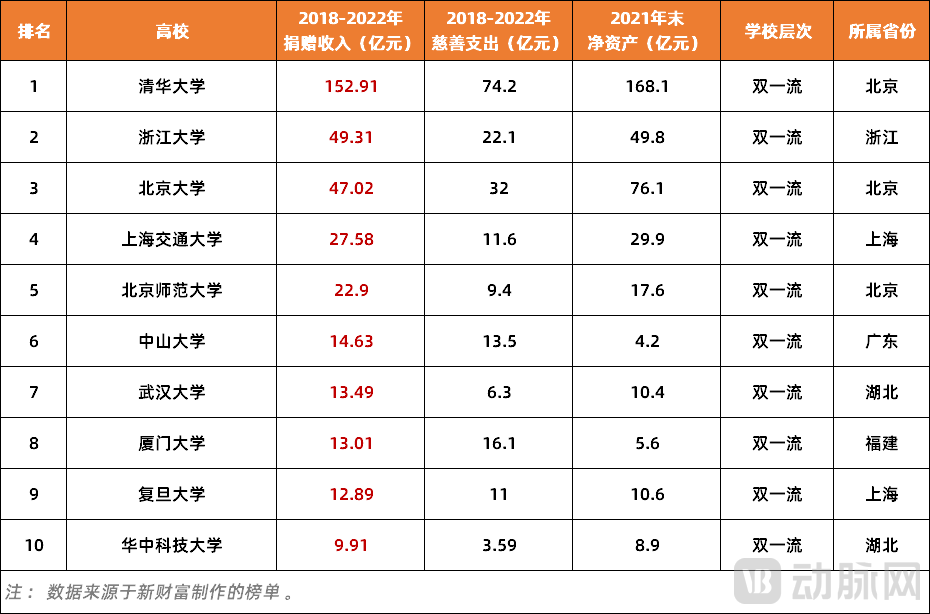 Figure 1. Top 10 Chinese Universities by Donation Income, 2018–2022 (Data Source: New Fortune)
In the past, alumni donations were primarily used for campus infrastructure development and talent cultivation.Not particularly eye-catching on the investment front, this is because their scale is generally small, and most donations are restricted. Therefore, the limited portion of investments is primarily composed of short-term and debt investments, with minimal involvement in low-liquidity, high-risk long-term investments and equity investments.
However, this trend is changing. In recent years, university endowment funds have increasingly participated in the equity investment industry, with diverse forms of involvement,including becoming a venture capitalist (VC) by directly investing as a general partner (GP), and initiating the establishment of fund-of-funds, among others.. Among them, the GP’s capital contribution has drawn significant attention, as it has become a trend for university endowment funds to act as LPs. According to data recorded by the Foundation Center Network,Currently, 27% of universities and colleges in China have established foundations, with the total number reaching 747; nearly 200 of these were founded in the past year and a half.。
So, what is the reason?
Start by looking from the inside,Primarily the “profitability requirements” of university endowment funds themselves. Taking UC Investments’ $4 billion commitment to Blackstone as an example, the two parties agreed on a “waterfall” structure for profit distribution. Blackstone guaranteed UC Investments a minimum annualized net return of 11.25% over the six-year holding period, with Blackstone covering any shortfall if this target was not met.
The same holds true in China. Although it is not as overt as overseas, there are also hidden metrics. Xu Yongming, founder of the Tongji Alumni Fund, once stated,Most university endowment funds in China prioritize stability and focus on financial returns.. Therefore, with regard to the Fund’s three major missions, Xu Yongming will also“Revitalize the existing assets of the alumni donation fund to achieve long-term preservation and appreciation of wealth”placed first.
From an external perspective, the reasons are relatively diverse. First, in terms of the broader macro environment, technological innovation has become the core theme of China’s venture capital and private equity sector, a trend that is even more pronounced in the healthcare field. In recent years, as the industry has progressed toward greater depth, there has been growing emphasis on original innovative technologies and the commercialization of research outcomes. As primary sources of innovation, universities possess inherent advantages in talent resources and scientific R&D projects. Therefore, within the sweeping tide of technology transfer and commercialization, university-affiliated funds are inevitably poised to play a significant role.
From the perspective of the capital market, fundraising has become increasingly difficult in recent years due to the exit of a batch of US dollar funds, share reductions by numerous listed companies, and the overall cooling of the capital industry. Against this backdrop, university endowment funds, much like government state-owned assets, are stepping forward first during the market downturn for strategic considerations, becoming major limited partners for a portion of social capital.
Finally, from the perspective of the industrial ecosystem chain, universities themselves constitute a vast resource pool. This pool includes listed companies and leading capital firms, which, combined with the universities’ inherent R&D strengths, can effectively foster industry-academia-research collaboration. Leveraging university-affiliated funds, this model ultimately generates synergistic effects where “1+1>2.” Such an approach is particularly crucial in the current market downturn, as it not only enables more precise target identification and project empowerment but also reduces due diligence costs, thereby offering a more cost-effective means to achieve the strategic objective of “investing early, investing small, and investing in technology.”
Therefore, in retrospect,University endowment funds currently aim to establish a closed-loop ecosystem. In this cycle, capital flows from alumni donations to university-affiliated limited partners (LPs), which then commit capital to general partners (GPs) to support alumni-led startups. The resulting returns generate cash flow, which is subsequently reinvested into new alumni projects.Through this comprehensive process, university endowment funds have not only revitalized assets and supported a greater number of alumni-led startups, but also effectively connected diverse alumni networks, thereby facilitating smoother market-oriented collaboration among research experts, entrepreneurs, and high-quality social capital.
No longer insisting on the triumph of "conservatism," it is becoming more radical and market-oriented.
Yuan Wei, Secretary-General of the Tsinghua University Education Foundation, once stated, “Due to a lack of professional expertise and other various reasons,”University endowment funds in China are generally conservative; most prefer to act as qualified limited partners (LPs) without taking a leading role or interfering with general partner (GP) decisions, resulting in an overall low participation rate.。”
In other words, everyone is more in pursuit of a kind of“Steady Happiness”. However, with changes in the industry and capital markets, university endowment funds are now beginning to explore new initiatives.
For exampleIn terms of investment strategy, greater emphasis is placed on the “mission of long-term capital.”. In December 2023, the Fudan Sci-Tech Innovation Fund of Funds, jointly initiated and established by Fudan University in collaboration with local governments, state-owned enterprises, and market-oriented institutions, was officially launched. With an initial size of RMB 1 billion, the fund adheres to the investment philosophy of “investing early, investing in small-scale ventures, and investing in hard technology,” while also specifically emphasizing its commitment to identifying and supporting high-potential projects.“Patient Capital”and“Long-term Capital”。
In fact, this is precisely what is needed at present. On the one hand, due to the nature of the industry—taking the healthcare sector as an example—against the current backdrop of focusing on technological innovation, project growth inherently entails greater risks and requires longer time horizons. On the other hand, the market environment has cooled overall, thus creating a greater need for patient limited partners (LPs). In this regard, a certain expert stated, “The market is short of capital, but even more so of long-term capital. In the midst of a capital winter, market-oriented LPs with sufficient patience and foresight, who do not overly focus on short-term returns, have been absent for many years.。”
andThe second major change in university endowment funds lies in their increased focus and greater refinement.. Taking a certain university endowment fund as an example, it explicitly stated thatIn 2024, in addition to continuing to focus on top-tier GPs, we will also pay close attention to small but beautiful GPs or those with new teams but unique investment philosophies., such as those focusing vertically on specific niche sectors, including specialized funds for artificial intelligence, brain science, synthetic biology, medical robotics, and innovative drugs.
The reason for this is mainly that these niche sectors generally possess strong hard-tech attributes, and since they are still in their early stages, they require greater support from a cohort of professionals. Taking artificial intelligence, which has consistently topped trending search lists this year, as an example, the head of a fund specializing in this sector stated, “Artificial intelligence has entered a new industrial phase. To sustain this momentum, investors must develop a deeper understanding of the industry itself and identify greater certainty within it.”
The final major shift to note is that university endowment funds have begun to prioritize the development of industrial ecosystems.. Taking the Shanghai Jiao Tong University (SJTU) Future Industry Fund of Funds as an example, a core force among SJTU-affiliated limited partners (LPs), it was established in 2021 with an initial size of RMB 1 billion. In July 2023, the SJTU Future Industry Fund of Funds formally invested in the SJTU Future Seedling Fund, which has an initial size of RMB 100 million. Reportedly, this fund will leverage SJTU’s leading academic disciplines and prioritize support for the commercialization of SJTU’s scientific and technological achievements, as well as innovation and entrepreneurship projects led by SJTU alumni.
Under this framework, the university-affiliated fund enjoys numerous advantages. For instance, in terms of deal flow, Jiaotong University’s substantial accumulation of core technologies in the science and technology sector, coupled with its vast alumni network, can provide the fund with an abundant pipeline of high-quality investment opportunities. In the subsequent evaluation and screening phases, JiaotongAcademicians, experts, and professors from various major fields, along with heads of alumni-founded enterprises and seasoned investors, are well-equipped to thoroughly assess the technological leadership and technical risks of the fund’s investment projects, while also providing R&D support for the underlying technologies.. In response, its head stated, “JingAfter completing the aforementioned process, only three to five companies will remain, with an elimination rate exceeding 95%.”
However, this is merely one link in the connection between university endowment funds and the innovation ecosystem. In fact, university endowment funds are also exploring greater possibilities in fostering innovation and breakthroughs in “chokehold” technologies, as well as cultivating enterprise founders and professional investors, thereby promoting multi-dimensional collaboration.
How Do University Endowment Funds Select GPs: Professional Expertise or Familiarity?
Currently, many university endowment funds have become loyal limited partners (LPs) in the private equity/venture capital (PE/VC) industry.
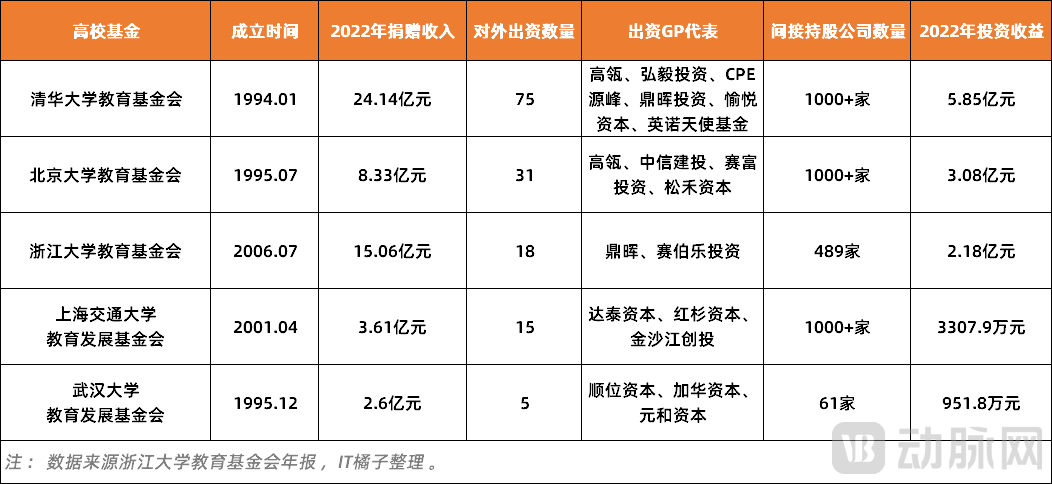 Figure 2. Summary of External Investments by Top Chinese Universities (Data Source: IT Juzi)
Taking the Tsinghua University Foundation as an example, it is the earliest-established university foundation in China.Has served as a limited partner (LP) in over 50 commitments, with investments spanning nearly the entire VC/PE landscape., including Hillhouse Capital, CDH Investments, Inno Angel Fund, Hony Capital, and CPE Yuanfeng. The Peking University Education Foundation is also a typical representative among them,A total of 31 outbound investments have been made to date., and has successively made capital contributions to institutions such as China Securities Co., Ltd. (CSC), SAIF Partners, and Sinopharm Capital.
From these real-world cases, we can also broadly discern the current logic employed by university endowment funds in selecting general partners (GPs), namelyEither choose “insiders” or select the best in the market, which are generally top-tier managers.。
For instance, among the numerous general partners (GPs) of the Tsinghua University Education Foundation, Ginkgo Huaqing Investment Fund and Inno Angel Fund are part of the Tsinghua-affiliated fund family, whereas top-tier institutions such as Hillhouse Capital and CDH Investments are not affiliated with Tsinghua. A representative from the Tsinghua University Education Foundation stated, “We primarily select GPs from two categories:One category comprises alumni-affiliated institutions with well-established reputations, while the other consists of industry leaders., with a generally clear track record and well-defined investment philosophy and strategy within the industry.”
This strategy has also enabled many university endowment funds to realize tangible achievements in the healthcare sector. Taking the Tsinghua Education Foundation as an example, it has seen nearly 10 IPOs in the healthcare field to date, including4Paradigm, Aimei Biotech, St. Noah Pharmaand other star projects. The Peking University Education Foundation is no exception; according to publicly available information, it has generated returns through its invested fundsImmuneOnco, MicuRx Pharmaceuticalsamong other IPO projects. Meanwhile, the Fudan University Education Development Fund and the Shanghai Jiao Tong University Education Foundation have each incubated multiple IPO and unicorn projects in the biopharmaceutical and medical device sectors, respectively.
However, in the current landscape, as the industry cools and university-affiliated funds adopt relatively homogeneous investment strategies, competition has intensified. According to industry insiders, as an increasing number of university-affiliated funds become deeply embedded in the venture capital and private equity community,High-quality GPs backed by listed companies and top-tier capital are currently in high demand, with multiple parties vying for them.。
This means that, setting aside emotional factors, university endowment funds should still demonstrate greater “hard power” at the current stage, namelyWhile possessing professional capabilities, it is also essential to operate in accordance with market-oriented principles.。
Taking specific cases as a reference. Established in 1718, the Yale University Endowment is one of the best-performing university-managed funds in the United States. By June 2023, the size of the Yale University Endowment had grown to approximately $40.7 billion.When it comes to their role as LPs, the most well-known case is undoubtedly Hillhouse Capital.. In 2005, David Swensen, then Chief Investment Officer of Yale University, allocated $20 million from the Yale Endowment to Zhang Lei. With this initial capital, Zhang returned to China to found Hillhouse Capital. By 2020, Hillhouse’s assets under management had exceeded $60 billion, representing a nearly 3,000-fold increase over 15 years.
Yale’s early investment in Hillhouse was driven primarily by three factors:First, people, it remains committed to becoming the preferred partner for the world’s best investors;2. Focus on the Long Term, focusing on opportunities to achieve higher returns on investment;3. Independent Thinking, accustomed to approaching problems from different perspectives or “breaking new ground.” Taking the biopharmaceutical sector as an example, Hillhouse began its strategic early investments in 2015; by 2020, more than half of the 91 Chinese concept stocks it held in the secondary market were in the pharmaceutical and healthcare industries.
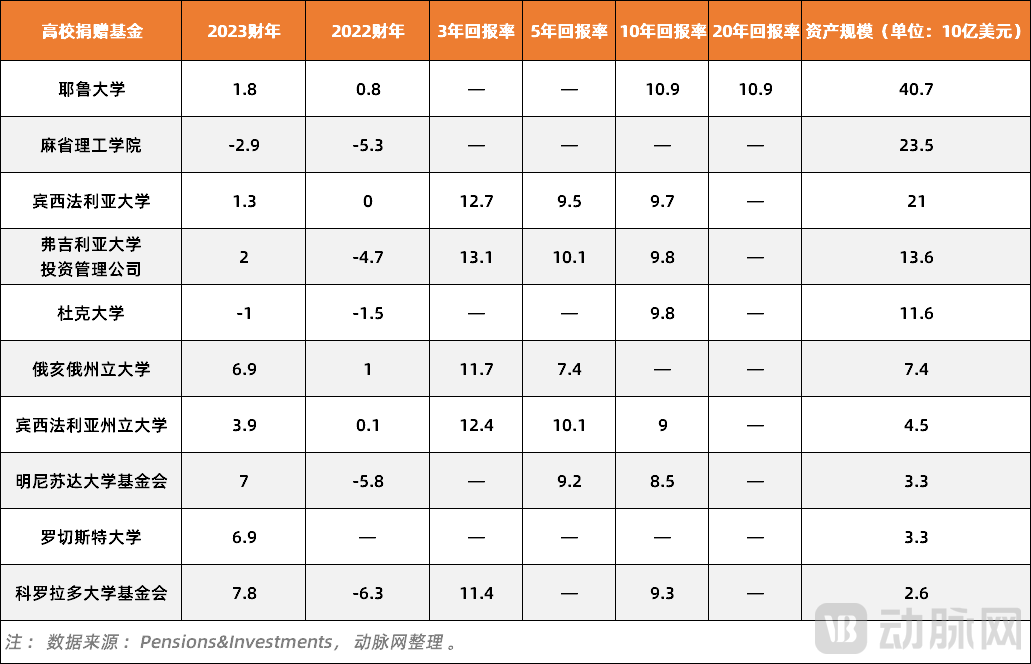 Figure 3. Investment Returns and Asset Size of U.S. Higher Education Endowments (Data Source: Pensions & Investments)
However, as the global market remains sluggish, a cohort of overseas university endowments, exemplified by Yale, is stepping down from its pedestal, with returns significantly diminished. On the other hand,Chinese university endowments, however, are experiencing rapid growth against the trend. These foundations, managing billions in alumni donations, have become a vibrant source of capital for investment firms’ fundraising efforts.. This undoubtedly conceals tremendous opportunities for the entire healthcare industry, which is currently undergoing transformation and upgrading.
1. “The Rise of LPs at Chinese Universities” — Fund of Funds Research Center;
2. “University Endowments, Bolstered by Alumni Donations to Reach Trillion-Yuan Scale, Have Become Super LPs Behind VC/PE” — Financing China;
3. “Chinese Universities Accelerate Their Roles as LPs: When Will China’s ‘Yale Endowment’ Emerge?” – FOFWEEKLY;
4. “Investing in Over 100 GPs, Holding Stakes in 1,000 Companies: How University Foundations Such as Peking University, Tsinghua University, Beijing Jiaotong University, and Zhejiang University Are Strategizing in the Venture Capital Landscape” – IT Juzi.