

Sudo Biosciences Files IPO Prospectus: Aiming to Challenge BMS and Takeda in the $10B TYK2 Inhibitor Market Just Three Years After Founding
Sudo
Biopharmaceutical Manufacturer
In September 2022, Sotyktu, a novel TYK2 inhibitor from pharmaceutical giant Bristol Myers Squibb, received FDA approval, becoming the first oral medication approved in a decade for the treatment of psoriasis. More importantly, it carries no black box warning.
This skin condition, commonly known as "psoriasis," affects approximately 6.5 million patients in China alone, with treatment market size expected to reach $9.5 billion by 2030.
News of a successful foothold in the nearly $10 billion market has further fueled industry enthusiasm for developing TYK2 inhibitors. Another pharmaceutical giant, Takeda, quickly followed suit, acquiring a competing asset in the same class for $6 billion in December of that year. Moreover, Takeda announced that it would conduct research related to severe plaque psoriasis.
The Activity of Two Well-Known Giants Allows Another Listed Company to Profit Quietly.
Whether it was Bristol Myers Squibb announcing the first approval or Takeda entering the fray, Ventyx Biosciences (hereinafter referred to as “Ventyx”), which once held a “best-in-class” TYK2 product, saw its stock price surge.
However, the good times were short-lived.
In a fiercely contested arena, merely playing it safe may no longer suffice. By late 2023, Ventyx’s share price had plummeted by 20%, for one simple reason: its clinical results were underwhelming, leaving it unable to compete with industry giants such as Takeda and Bristol Myers Squibb. This underscores that in a brutally competitive market, mediocre efficacy is tantamount to an original sin, capable of sending even sky-high stock prices back to earth within a year.
Even in such a fiercely competitive environment, startups have still managed to break in.
It was also in 2022 that an emerging company named Sudo entered the industry spotlight under the banner of “best-in-class,” with momentum reminiscent of its “illustrious predecessor,” Ventyx. Yet today, while publicly traded Ventyx continues to struggle in the TYK2 inhibitor race, what impact can a development-stage company—one that has only completed a $146 million (approximately RMB 1 billion) Series B financing round—really make?
To Save His Family, He Led the “Pfizer Trio” to Launch a Startup
Despite scant public reports, Sudo’s debut was remarkably high-profile.
News media welcomed the startup’s high-profile debut with a dramatic narrative: first congratulating Bristol Myers Squibb on securing the first-ever approval for a TYK2-related product, then abruptly adding, “But startup Sudo wants more,” thereby maximizing the hype. Furthermore, Frazier Life Sciences, which incubated Sudo, was also drawn into this “fray.”
It was 2022, just two years after the official founding of Sudo. Dan Estes, a partner at Frazier Life Sciences, once stated that Sudo emerged from an internal discussion at Frazier Life Sciences, in which multiple scientists, entrepreneurs, and investors participated. Recognizing the opportunity to leverage pseudokinases as therapeutics for a range of autoimmune diseases, they considered spinning off their life sciences division to establish a standalone company.
Scott Byrd, who served as an entrepreneur-in-residence at Frazier Life Sciences and later became CEO of Sudo, is one such example—though his reasons were more distinctive.
It is no longer possible to verify the specific details surrounding Frazier Life Sciences’ establishment of Sudo and its appointment of a CEO. However, scattered phrases in official announcements reveal that Scott Byrd has a wife suffering from multiple sclerosis who relies on long-term medication, and both of his parents have Alzheimer’s disease, requiring full-time caregivers to assist with their daily activities.
The suffering endured by his family prompted Byrd to reflect deeply, turning his attention to TYK2 inhibitors. During a lunch with Shinichiro Fuse, Partner and Board Member of the TPG Life Sciences Innovations business unit—a future investor—Byrd proposed the idea of targeting a specific region of TYK2, namely the pseudokinase domain, to enable penetration of the central nervous system.
The initial framework has taken shape, with Byrd attracting fellow Frazier Life Sciences entrepreneur-in-residence executives who have also held senior positions at Pfizer for many years.
Dr. Ian Mills, Chief Medical Officer of Sudo, completed his studies at Oxford and spent over 15 years at Pfizer, where he held various clinical and development leadership roles, ultimately serving as Vice President of Innovative Pharmaceuticals and Global Head of Clinical Development. During his tenure, Dr. Mills led projects across multiple therapeutic areas, including urogenital and women’s health, gastroenterology, inflammation and immunology, and neuroscience, resulting in two FDA-approved products.
Notably, Dr. Gordon McMurray, a graduate of Queen’s University Belfast who later became Chief Development Officer at Sudo, also held senior positions across multiple therapeutic areas at Pfizer, where he led multidisciplinary teams and projects in neuroscience, pain, sensory disorders, and urogenital health. Prior to joining Pfizer, Dr. McMurray served as a Lecturer in Pharmacology and Laboratory Director in the Department of Pharmacology at the University of Oxford.
The third partner with a Pfizer background, Chief Commercial Officer Dr. Imran Babar, is precisely the figure who continues the drama surrounding Sudo.
Babar previously served as Chief Business Officer of Cydan II, an orphan drug accelerator backed by NEA and Pfizer Venture Investments. Additionally, he is a co-founder of several companies, including Arvada Therapeutics.
Penetrating the Blood-Brain Barrier, Targeting TYK2 Inhibitors
Just as Sudo completed its Series A financing round, and the industry had not yet forgotten its competition with Bristol Myers Squibb, Indian media stepped into the spotlight. However, the protagonist this time was neither Byrd nor the “Pfizer Trio,” but Dr. Anjali Pandey, who has served as the company’s Head of Medicinal Chemistry since its inception.
The report reviewed Pandey’s background, revealing that he is also the founder and Head of Medicinal Chemistry at Lengo Therapeutics, a company acquired by Blueprint Medicines in 2021 due to his leadership in developing a drug capable of crossing the blood-brain barrier during his tenure. Leveraging this experience and holding more than 70 patents, Pandey will further support the development of Sudo’s flagship product.
Currently, Sudo is developing multiple potent and selective small-molecule TYK2 pseudokinase inhibitors, aiming to provide suitable therapeutic options for immune and nervous system diseases. Sudo’s key program—the central nervous system (CNS) project—targets the TYK2 pseudokinase domain to develop a potential first-in-class, best-in-class TYK2 inhibitor capable of crossing the blood-brain barrier.
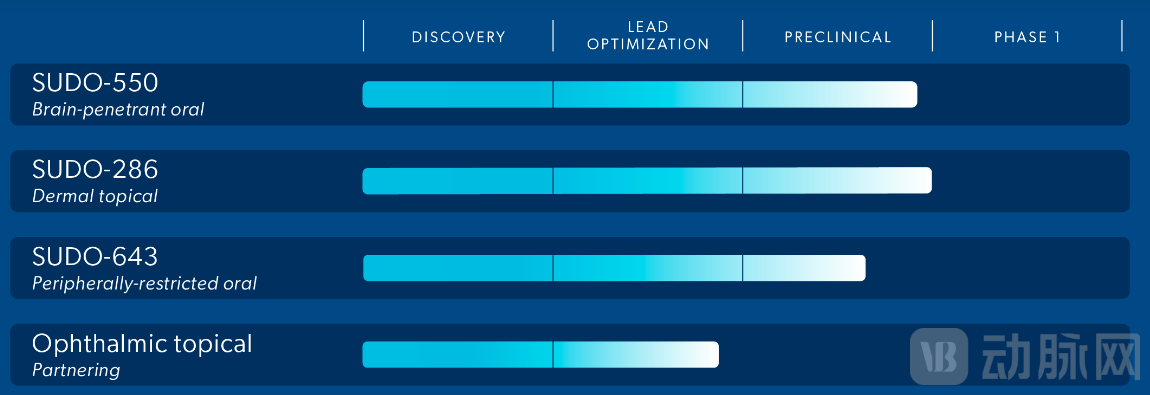
Sudo’s Pipeline of Products Under Development, Image Source: Sudo Official Website
Why Sudo Focuses on TYK2
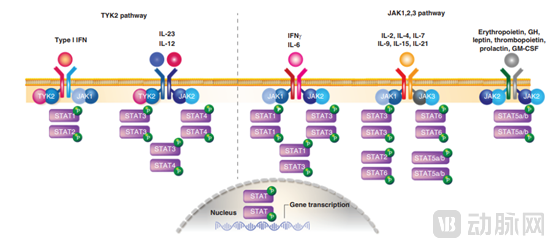
TYK2 is a key mediator of cytokine signaling pathways and is implicated in various immune-mediated inflammatory conditions. Meanwhile, TYK2 is an enzyme that regulates immune and inflammatory signaling pathways by mediating the actions of cytokines such as IL-23, IL-12, and type I interferons (IFNs). These cytokines are central to both innate and adaptive immunity, encompassing the functions of Th17 and Th1 cells, as well as the activity and polarization of myeloid cells, including macrophages and microglia.
Currently, Sudo’s TYK2 inhibitor pipeline includes a candidate drug capable of crossing the blood-brain barrier, holding promise to significantly advance the treatment of relapsing multiple sclerosis and neurodegenerative diseases such as Alzheimer’s disease and amyotrophic lateral sclerosis (ALS). Furthermore, TYK2 inhibitors may also be used to treat psoriasis and other immune-mediated skin disorders.
Advantages of TYK2 Inhibitors
In recent years, JAK inhibitors have emerged as a prominent area of research for the treatment of neurological and immune system disorders. Their mechanism of action involves inhibiting TYK2 and other enzymes in the Janus kinase (JAK) family by binding to the catalytic kinase domain (JH1 domain).
The kinase domain structures (JH) of the JAK protein family members are nearly identical, with JH1 serving as the canonical kinase domain and JH2 referred to as the pseudokinase domain. Most JAK inhibitors employ a competitive strategy, binding to the relevant sites to inhibit the activation of the JAK pathway. However, due to the high structural similarity of the JH1 domains, achieving sufficient selectivity remains challenging.
This lack of selectivity in JAK inhibitors may lead to safety concerns, thereby limiting their therapeutic benefits and restricting their application in autoimmune and neurological diseases.
This explains why Sudo specializes in TYK2 inhibitors: by binding to the TYK2 pseudokinase domain (JH2 domain) to allosterically modulate the function of the TYK2 kinase, selectivity over other JAKs can be significantly improved. This enhanced selectivity helps avoid the safety issues associated with known JAK1 and JAK2 inhibitors in both peripheral tissues and the brain.
Tech Giants Have Made Their Move: How Sudo Can Overtake Them on the Curve
To address the limitations of JAK inhibitors, Bristol Myers Squibb adopted a strategy targeting JH2, which lacks catalytic activity but shares structural similarity with JH1. This approach enables regulatory effects while minimizing off-target risks. Consequently, Sotyktu, an allosteric inhibitor targeting TYK2—whose mechanism is more focused (primarily involving cytokines such as IL-23 and IL-17)—and specifically binding to JH2, was developed.
Previous studies have suggested that Sotyktu exhibits high selectivity for the JH1 domain of JAK1; however, it still binds to the JH2 domain of JAK1. This implies that, even in the absence of an FDA black box warning, Sotyktu does not completely eliminate the risk of off-target effects.
TAK-279, a TYK2 inhibitor potentially under Takeda’s portfolio, may harbor hidden clinical advantages due to design differences, pending further validation; meanwhile, BeiGene and InnoCare Pharma in China also have investigational products in clinical trials.
Giants Surge: Although Sudo did not enter the market through psoriasis, but instead chose multiple sclerosis and even the more challenging Alzheimer’s disease, the difficulty of achieving a comeback remains immense.
Fortunately, according to CEO Byrd, the funding secured to date is sufficient to support Sudo’s research and development efforts for at least three years. Perhaps in three years’ time, Sudo will be able to deliver a truly “best-in-class” product to patients.