

PanMediso-Backed Panmeidi Holdings Files IPO Prospectus to Commercialize GMP-Grade Ac-225 and Ge-68 Medical Isotopes
Nuclear Medicine: Radiopharmaceuticals or Their Labeled Compounds for Clinical Diagnosis or Treatment, Currently Widely Applied in Fields Such as Immunoassay, Tumor Diagnosis and Therapy, Myocardial Imaging, Early Disease Detection, and Inflammatory Tissue Imaging
Amid the prolonged slump in the innovative drug market, radiopharmaceuticals continue to demonstrate robust growth. This sector accounted for the highest proportion of financing deals exceeding RMB 100 million in the innovative drug field in 2022, and has been further bolstered by the continuous rollout of favorable policies, such as the Medium- and Long-Term Development Plan for Medical Isotopes (2021–2035). Major multinational corporations (MNCs) have made significant investments in this space, with nearly 7,000 clinical pipeline projects under development globally.
While capital investment, policy support, and R&D continue to improve, radiopharmaceuticals face the challenges of a global shortage of medical isotopes and China’s heavy reliance on imports. On one hand, the planned shutdown of multiple operational reactors worldwide by 2030 is expected to tighten the global supply of medical isotopes. On the other hand, due to the late development of nuclear technology in China, a lack of commercial reactors capable of large-scale production, and factors such as time sensitivity, geopolitical issues, and supply chain instability, there is an urgent need to address the upstream supply challenges of medical isotopes.
There are four primary methods for producing medical isotopes: reactor irradiation, accelerator irradiation, extraction from high-level radioactive waste, and generator-based production. Accelerator-based production is efficient, convenient, and environmentally friendly, facilitating rapid commercialization; thus, it represents one of the key development trends in the production of medical isotopes.
Panmeidi Holdings (Shenzhen) Co., Ltd. (hereinafter referred to as “Panmeidi”), established in 2023, is an innovative enterprise that utilizes accelerator-based production methods for medical isotopes. The company focuses on the research and development, manufacturing, and sales of Ac-225, known as “the world’s rarest drug,” and is committed to breaking through and resolving the long-standing dual bottlenecks in technology and production capacity that have made China heavily reliant on imports. Recently, VCBeat conducted an exclusive interview with Deng Liming, Director and President of Panmeidi Holdings.
Actinium [Ac-225], known as “the rarest drug on Earth,” once reached a price peak of $1 million per mCi. The primary reason is that scarce production has created a significant supply gap, keeping prices persistently high.
With a global footprint in raw materials and market presence, Panmeidi’s initial product portfolio focuses on the research and development, production, and sales of the isotopes Ac-225 and Ge-68, supplying nuclear medicine developers and manufacturers primarily engaged in Radionuclide Drug Conjugates (RDCs).
According to the "White Paper on the Radiopharmaceutical Industry" by VCBeat and VBInsight, Radiopharmaceutical Drug Conjugates (RDCs) have become a focal point of R&D enthusiasm in the radiopharmaceutical industry in recent years. Their mechanism involves combining tumor-specific targeting moieties with radionuclides to achieve targeted destruction of tumors. By utilizing targeting molecules labeled with radioactive isotopes for disease treatment, RDCs enable precise radiotherapy of lesions within the body. Furthermore, RDCs are the only pharmaceutical agents currently capable of achieving integrated diagnosis and therapy in clinical practice. By incorporating isotopes with short half-lives, the drug rapidly accumulates in target tissues, where the radionuclides bind to primary or metastatic tumors. This allows for signal emission within an extremely short half-life period, thereby generating comprehensive medical imaging results through molecular imaging techniques.
In RDC development, beta-emitting radionuclides currently garner the most attention, but the frontier is shifting from beta- to alpha-emitting radionuclides.Compared with beta rays, alpha particles have greater mass, higher efficacy, and a shorter range, resulting in lower harmful radiation doses to other healthy tissues and organs.Ac-225 has a half-life of 9.9 days, ranking among the top alpha-emitting radionuclides, providing sufficient time for therapy, and allowing the shelf life of prepared actinium [225Ac] radiopharmaceuticals to reach up to 120 hours.
Therefore, actinium-225 (Ac-225) has become a research hotspot among alpha-emitting radionuclide-drug conjugates (RDCs), demonstrating significant therapeutic potential for widely disseminated micrometastases and showing applicability in the treatment of pancreatic cancer, prostate cancer, neuroendocrine tumors, leukemia, and other conditions.。
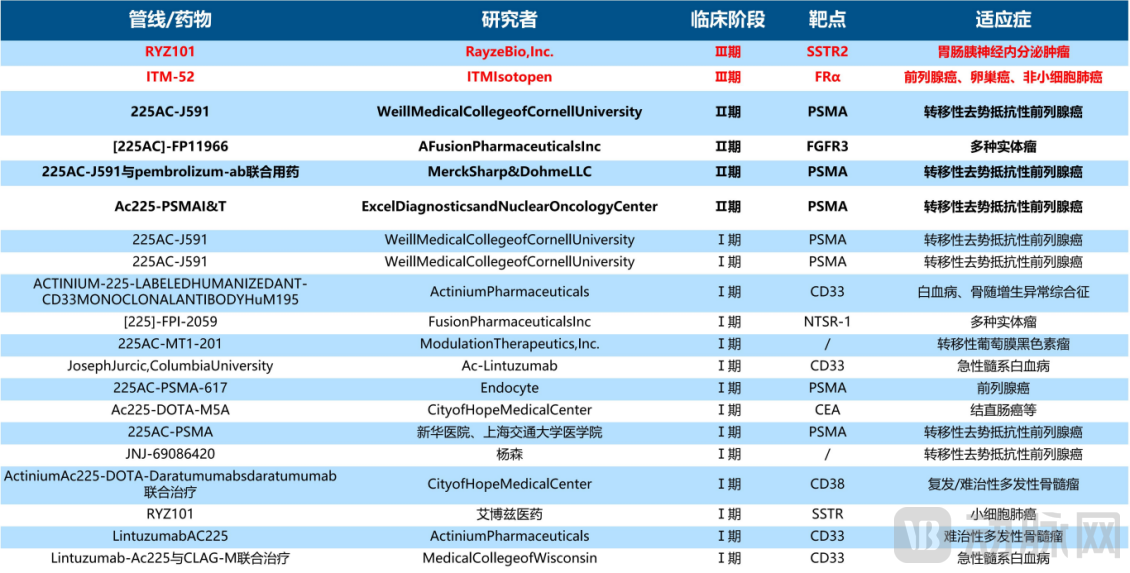
Global Actinium-225 (Ac-225) Radiopharmaceuticals in Clinical Development
According to incomplete statistics, there are 20 actinium-225 (Ac-225) radiopharmaceutical pipelines in clinical development worldwide, with two drugs having entered Phase III clinical trials. According to Clairvoyance Research’s 2022 global market study, the annual demand for Ac-225 is projected to reach approximately 17 Ci in 2025 and 523 Ci by 2031.
However, the supply of the Ac-225 isotope is extremely tight, with current global annual production amounting to approximately 1.8 Ci. Production relies primarily on a few institutions, such as the Oak Ridge National Laboratory (ORNL) in the United States. In particular, no institution is currently capable of supplying high-purity, GMP-grade Ac-225. China still lacks independent production capacity for Ac-225 and must rely entirely on imports.
Panmeidi’s Ac-225 production process has achieved small-scale preparative experimentation. Validated by the team and R&D departments, it offers advantages including high purity, large yield, low radiation, minimal contamination, low cost, and low raw material loss, making it suitable for applications in healthcare, scientific research, and other fields.Deng Liming introduced, “Panmeidi’s accelerator-based production process is highly efficient, convenient, and environmentally friendly, enabling closer alignment with end-user and industrial applications while reducing logistical barriers and time constraints. Panmeidi aims to supply the global market and strives to become the world’s first radionuclide manufacturer to achieve GMP-compliant supply.”
Panmeidi was jointly established by Hong Kong-listed Sicheng Holdings (01486.HK), Hong Kong-based MWA.T Industrial Consultants Ltd., and the UK-based PanMediso (hereinafter referred to as “PanMediso”), with its core technology originating from PanMediso.
PanMedisoLed by a dual fellow of the Royal Academy of Engineering and the Royal Society, who also serves as the Chief Scientist for Nuclear Fuel at the UK Government and at Canadian Nuclear Laboratories, this world-class international team boasts over 20 years of experience in isotope research and development and has secured globally leading production technologies for isotopes such as Ac-225 and Ge-68. Currently, PanMediso has mastered a process for the high-purity, batch production of Ac-225 and has achieved small-scale laboratory production. With an international sales network team based in Switzerland, the company is committed to becoming the first radionuclide manufacturer worldwide to achieve GMP-compliant supply.
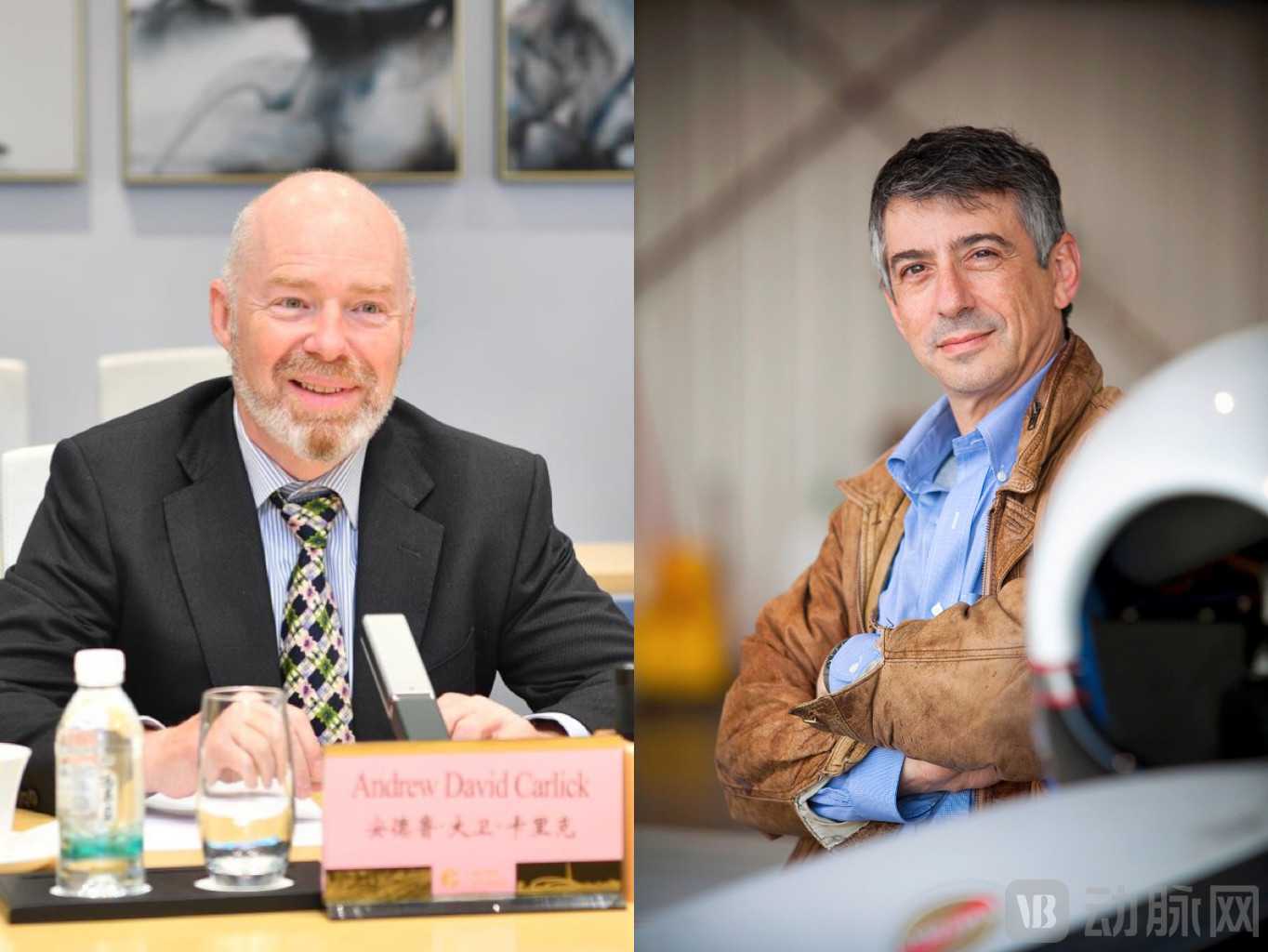
Left-Andrew Carlick, right—Jonathan Sackier
CEO of PanMedisoAndrew CarlickNot only is he a Fellow of the Royal Academy of Engineering, a Fellow of the Institution of Chemical Engineers, a Technical and Engineering Innovation Advisor to the UK Government, a Doctor of Science (Honoris Causa) from the Royal Society of Chemistry, and a Chartered Engineer, but he also possesses extensive successful experience in the fields of nuclear waste management and medical isotopes. Professor Carlick formerly served as Senior Vice President (Isotopes) at Canadian Nuclear Laboratories, where he was responsible for developing Canada’s industrial chain in the medical isotope sector. He also founded UK-based DBD Ltd., a global leader in nuclear waste management.
Chief Medical OfficerJonathan SackierFellow of the Royal College of Surgeons and Fellow of the American College of Surgeons, with over thirty years of global experience in the medical device and pharmaceutical industries. Dr. Sackier founded the Washington Institute for Surgical Endoscopy (WISE) and was a founding partner of Computer Motion, the world’s first surgical robotics company. Computer Motion was later acquired by Intuitive Surgical, which leveraged its technology to develop the da Vinci Surgical System.
Furthermore, PanMediso also has a Fellow of the Royal Society and the Chief Scientific Adviser to the UK Foreign Office.Robin W.Grimes, Ph.D. in Inorganic Chemistry from the University of Manchester, researcher at Wolfson College, University of Oxford, and nuclear technology expertRobert Holmesand other top international isotope experts.
Hong Kong Sicheng HoldingsEstablished in 1985, it is the first and currently the only comprehensive construction and investment group from the Guangdong-Hong Kong-Macao Greater Bay Area listed on the Main Board of the Hong Kong Stock Exchange. The company integrates diversified businesses including investment, trade, logistics, and real estate, with Beijing Enterprises Holdings Limited as one of its major shareholders.
Hong Kong MWA.T Industrial Consultants Co., Ltd.Established in 1977, the firm specializes in providing professional consulting services to large multinational corporations undertaking major investment projects or market expansion initiatives in China. It has been involved in projects with a total value exceeding USD 5 billion and boasts numerous successful cases, including the Daya Bay Nuclear Power Plant in China and China’s next-generation nuclear reactors (CAP600/CAP1000).
“Leveraging Hong Kong Sicheng Holdings’ strength of being rooted in the motherland and oriented toward the world, MWA.T’s project experience in the civil nuclear industry, and PanMediso’s technological advantages, the three parties have jointly laid the foundation for Panmeidi,” introduced Deng Liming.Panmeidi has established a dual global headquarters structure in London, UK, and Shenzhen, China. Leveraging research clustering and international collaboration, it has set up dual R&D centers in Hong Kong and Beijing, and planned three production bases in the UK as well as in Shenzhen and Tianjin, China.
Notably, Panmeidi describes its global architecture for medical isotopes through the concept of “sharing”: shared technology, shared raw materials, shared teams, and shared markets.In short,Panmeidi and PanMediso share technologies, team composition, and raw materials for production. In terms of market channels, multiple bases of Panmeidi serve a common market, supplying medical isotopes to the global market through a worldwide sales network centered in Switzerland.
“Sharing” is, in essence, about introduction and collaboration. The reason Panmeidi has adopted “sharing” as its application philosophy stems from the realities of domestic radiopharmaceutical R&D.
In addition to upstream constraints such as heavy reliance on imported isotopes, insufficient development of domestically produced accelerators, and shortages of certain isotopes, the promotion of radiopharmaceuticals also faces challenges across the industry chain and at the application level. First, public awareness of nuclear medicine remains at an early stage, often associated with early-era radiotherapy or even characterized by “radiophobia,” which has, to some extent, hindered clinical R&D and broader adoption. Second, due to inadequate training and reserves of nuclear medicine professionals and a low proportion of hospital departments dedicated to nuclear medicine, current clinical demand remains unmet.
According to data from the Chinese Society of Nuclear Medicine (CSNM), by the end of 2019, there were 1,148 nuclear medicine departments nationwide. Among the 2,762 tertiary hospitals in China, only 968 had established nuclear medicine departments, accounting for 35% of the total. Of these, 770 nuclear medicine departments conducted radionuclide therapy services, but there were only 2,544 beds dedicated to radionuclide therapy. In the United States, the number of nuclear medicine departments stands at 12,000.
Behind the insufficient establishment of nuclear medicine departments in hospitals lies a shortage of talent reserves in this specialty. Due to their radioactive nature, radiopharmaceuticals often involve multiple disciplines, including radiation dosimetry, radiation biology, radiochemistry, and pharmacy, making it a multidisciplinary field. In reality, the nuclear medicine sector most urgently needs professionals from backgrounds in radiation medicine or radiochemistry, particularly those with combined expertise in pharmacy and radiochemistry.
Deng Liming stated, “By sharing its technical team resources, Panmeidi aims to attract more international talent in radiopharmaceuticals and accelerate industry-academia-research collaborations with international scientific and educational institutions, thereby filling the gaps in domestic talent development and supply chain establishment. Starting from upstream isotope production, it seeks to promote R&D among midstream pharmaceutical companies and foster a series of application scenarios in downstream specialized hospitals.”Panmeidi and Tsinghua University (Institute of Nuclear and New Energy Technology) have jointly established a special program for the deep integration of industry, academia, and research in accelerator-produced medical isotopes. This program is currently Tsinghua University’s only externally collaborative project on medical isotopes.
Panmeidi Holdings has also established comprehensive cooperation with Hong Kong R&D institutions.Adhering to Hong Kong’s actual conditions, we will establish new frameworks before dismantling old ones, adapt measures to local conditions, and provide categorized guidance, so as to actively promote the high-end, intelligent, and green development of the nuclear medicine and radiopharmaceutical industries, thereby fostering new quality productive forces in both the mainland and Hong Kong.
“Furthermore, the narrow distribution channels for radiopharmaceuticals in China, coupled with monopolistic tendencies and insufficient competition, hinder the expansion of their application.” Due to the regulated and specialized nature of radiopharmaceutical raw materials, those who control the supply chain dominate the market. Moreover, the short half-lives of many radiopharmaceuticals impose stringent requirements on production, storage, and distribution. Consequently, integrated radiopharmacy facilities that combine production, management, distribution, and services have become a critical link in the industry chain. In China, radiopharmacy resources are primarily concentrated in two companies: China Isotope & Radiation Corporation (CIRC) and Dongcheng Pharmaceutical. “We need a larger market scale and enhanced collaboration to break through demand bottlenecks and foster synergies in talent development, technological advancement, and raw material supply.”
Next, Panmeidi will expand its channel network across multiple dimensions. On the research front, it will jointly establish industry-academia-research centers and talent development programs with universities in the UK, mainland China, and Hong Kong to facilitate the translation and implementation of scientific achievements. In overseas sales, with Switzerland as the hub, its sales network has extended to Europe, the Middle East, and South America, achieving cross-border cooperation in supply channels. On the industrial front, leveraging its production bases in Shenzhen and Tianjin, the company seeks collaborations with government entities and enterprises in the radiopharmaceutical sector. For hospital partnerships, based on the subsequent product development of Ac-225 and Ge-68, it will engage in deep clinical collaborations with specialized hospitals. Meanwhile, Panmeidi is accelerating the layout of its domestic intellectual property portfolio and advancing the construction of its two major production bases in China.