

Boosting New Quality Productive Forces: BohrGo Unveils Digital-Intelligent Stem Cell Robotics Solutions
On March 2, 2024, the Stem Cell Robot Medical-Engineering Technology Center project, constructed and implemented by Guangdong Bogong Sanluwu Robot Technology Co., Ltd. (hereinafter referred to as “Bogong Technology”), officially commenced construction at the Songshan Lake Biomedical Industry Base.
This project will focus on developing new types of intelligent medical equipment, such as life science robots, high-end molecular and cellular quality testing instruments, and digital biobanks. It aims to establish a benchmark R&D and industrialization base for the integration of medicine and engineering, centered on life science robots, helping to fill China’s gaps in fields such as medical life science robots and stem cell precision medicine devices.
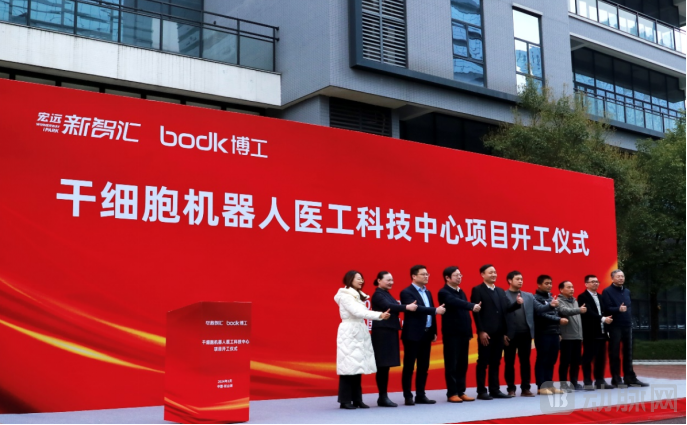
It is reported that the project is mainly divided into two phases. Phase I focuses on high-end molecular and cellular quality testing equipment and digital biobanks, while also taking into account the field of high-end medical equipment. Phase II targets the entire field of life science robotics. All R&D, production, and testing facilities and equipment will be completed within one year, with clinical trials expected to be completed and promoted within three years.
“Leveraging the Stem Cell Robotics Medical-Engineering Technology Center, we will implement the ‘Digital Life Science Robotics Solution.’ The medical-engineering intelligent product line developed under this solution comprises six robotic equipment groups: incubators, microscopes, liquid handlers, centrifuges, waste disposal units, and liquid nitrogen tanks, enabling automated cell storage and automated expansion and preparation. To our knowledge, this product line is a global first,” introduced Liu Zhaoqiang, founder of Bogong Technology.
Notably, the project’s “Expert and Scholar Database” includes distinguished experts such as Wu Dongfang, an Academician of the World Academy of Productivity Science and a Foreign Academician of the Russian Academy of Engineering, and Li Tao, who holds a Ph.D. in Biology from the University of Tokyo, Japan, and is an expert in stem cell science.
Liu Zhaoqiang majored in mechatronics at university, where he studied how to manufacture robots. Over the fourteen years since his graduation, he has consistently placed robotics at the center, with business and technology as the radius, continuously expanding the scope of practical robot applications.
Over the past fourteen years, he served as General Manager of the South China Division at Future Partner Robotics Co., Ltd. and, as a co-founder, spearheaded Muyi Robotics’ expansion into the field of autonomous unmanned transportation. As one of China’s earliest professionals engaged in robotics R&D, Liu Zhaoqiang has mastered key technologies such as robotic trajectory control precision and visual control, and has filed dozens of invention patents.
Had the “black swan” of the pandemic not flapped its wings, Liu Zhaoqiang might have continued to press forward aggressively in the field of industrial automation.
He told VCBeat that his decision to pivot and apply robotics technology to the life sciences sector stemmed from a chance collaboration with Zhongxu Medical Group, a domestic precision medicine company, during the pandemic. At that time, Zhongxu’s stem cell culture robotics equipment was supplied by a Japanese manufacturer, but the pandemic disrupted product deliveries. As a result, the client sought suppliers within China and ultimately partnered with Liu Zhaoqiang’s team.
“While automation in the industrial sector primarily addresses labor issues, its industrial value in healthcare settings may be even greater.” This was not a rash decision made by Liu Zhaoqiang on a whim, but rather a conclusion drawn from his personal, in-depth experiences working within frontline life sciences research laboratories.
“There is indeed much room for improvement in the imported equipment used in life science laboratories, and these technologies happen to align perfectly with my professional expertise. At that time, two clients strongly encouraged me and eventually became my investors,” Liu Zhaoqiang said with a shy smile.
In 2022, Liu Zhaoqiang left Moqi Robotics to found Bogong Technology, dedicated to providing automation solutions for users in life science scenarios. At the age of 35, he resolved to make this the career of his “second half of life.”
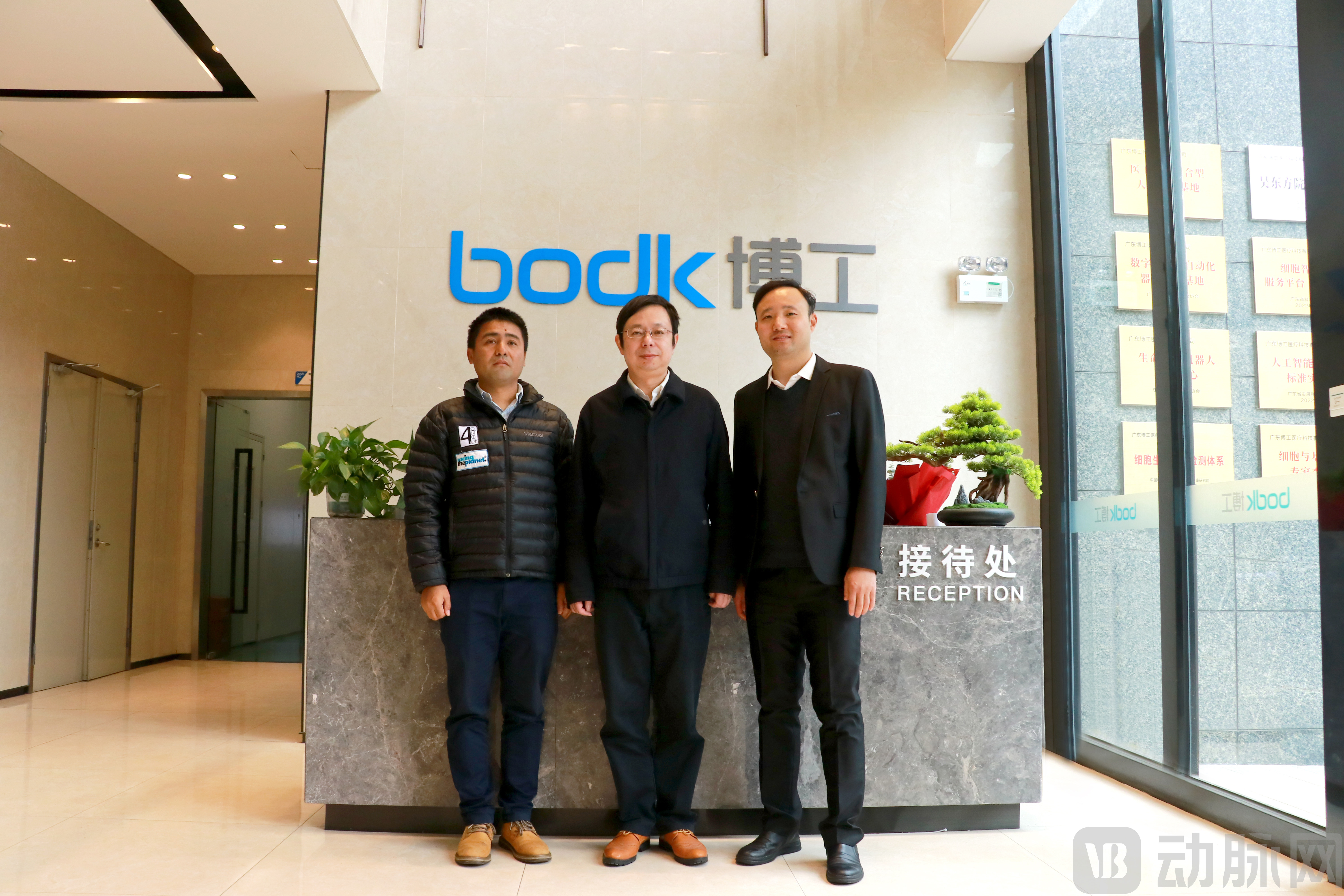
Zhang Yunpeng, Founding Partner of Qingcheng Capital (left); Academician Wu Dongfang, AI Expert (center); Liu Zhaoqiang, Founder of Bogong Technology (right)
In the life sciences sector, cell culture is a critical and technically demanding task. Highly repetitive and labor-intensive procedures not only reduce laboratory personnel efficiency but also inevitably lead to sample contamination and loss due to human error, thereby compromising the consistency and reliability of experimental results. Robotic systems effectively address these pain points by enhancing efficiency while mitigating contamination risks and ensuring product homogeneity.
Liu Zhaoqiang believes that “the development trend in the life sciences sector is quite similar to my previous experience in industrial automation.” In the early stages of industrial automation, foreign instruments such as robotic arms dominated the market; it was not until the Industry 4.0 wave that domestically produced automated production lines became increasingly refined. The trajectory of equipment development in the life sciences field follows a similar pattern, currently undergoing a leapfrog transition from manual operations to fully closed-loop end-to-end output.
Based on this, he concluded that focusing solely on the single dimension of replacing imported instruments with domestically produced ones is unlikely to yield breakthrough progress; however, by developing comprehensive automation solutions tailored to real-world application scenarios, it is possible to systematically address deficiencies across all stages.
Bogong Technology’s digital solution for cell storage and preparation consists of two major components: intelligent hardware and digital software.
Modular Cell Preparation Workstations Based on Monolithic Intelligence
The hardware component includes a series of biotechnology instruments, such as medical automated guided vehicles (AGVs), liquid handling robots, microscopes, incubators, and centrifuges. These instruments are integrated with software systems via 5G connectivity and are interconnected with automated robots based on scientific management methodologies encompassing “personnel, equipment, materials, methods, environment, and data.” This integration achieves standardization, visualization, intelligence, and traceability across the entire workflow. The system is widely applicable to drug development, vaccine production, cell therapy, and other areas within the biopharmaceutical industry.
Bogong Technology initially entered the market through stem cell cultivation scenarios, independently developing modular robotic products such as incubator robots, microscope robots, liquid handling robots, centrifuge robots, waste disposal robots, and liquid nitrogen tank robots. These systems are comprehensively embedded with various sensors to enable intelligent interconnectivity. Currently, these products have been successfully applied in stem cell cultivation settings, facilitating the industrialization of cell storage and preparation processes, and are gradually expanding into application areas such as medical testing and pharmaceutical R&D.
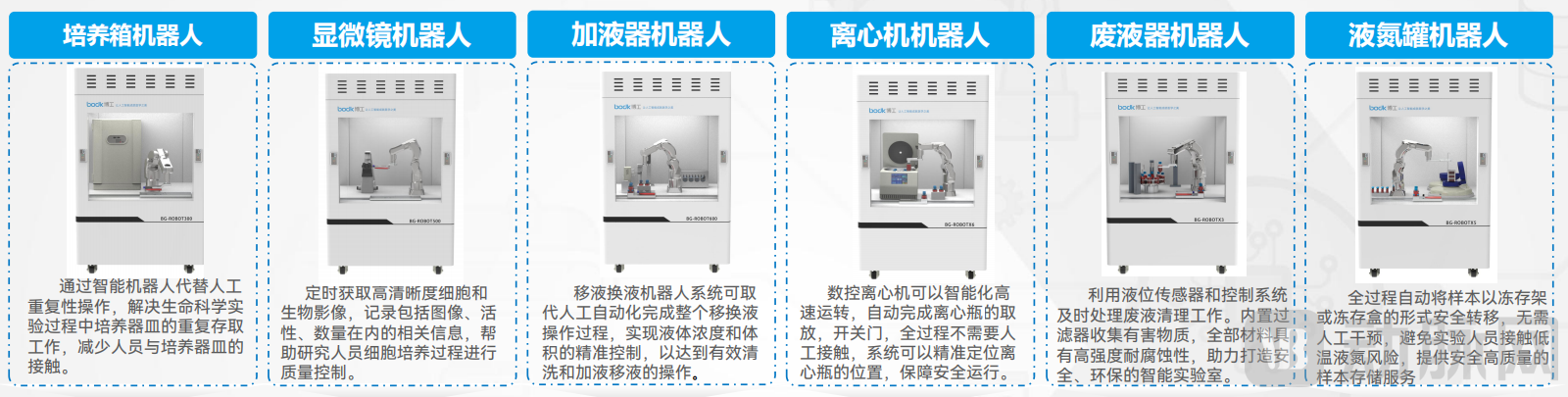
Bogong Technology's Life Science Robots
“In the past, we were committed to fully integrating various products to form a complete closed-loop system. However, after in-depth communication with users, we found that not all customers require a full-process closed loop; some only need closed-loop solutions for specific stages, such as incubator-based experimental closed loops or centrifuge-based experimental closed loops.” Therefore, Bogong Technology has adopted a modular intelligent strategy, enabling each robot to operate independently while also being able to connect and interact with one another to form cell preparation workstations.
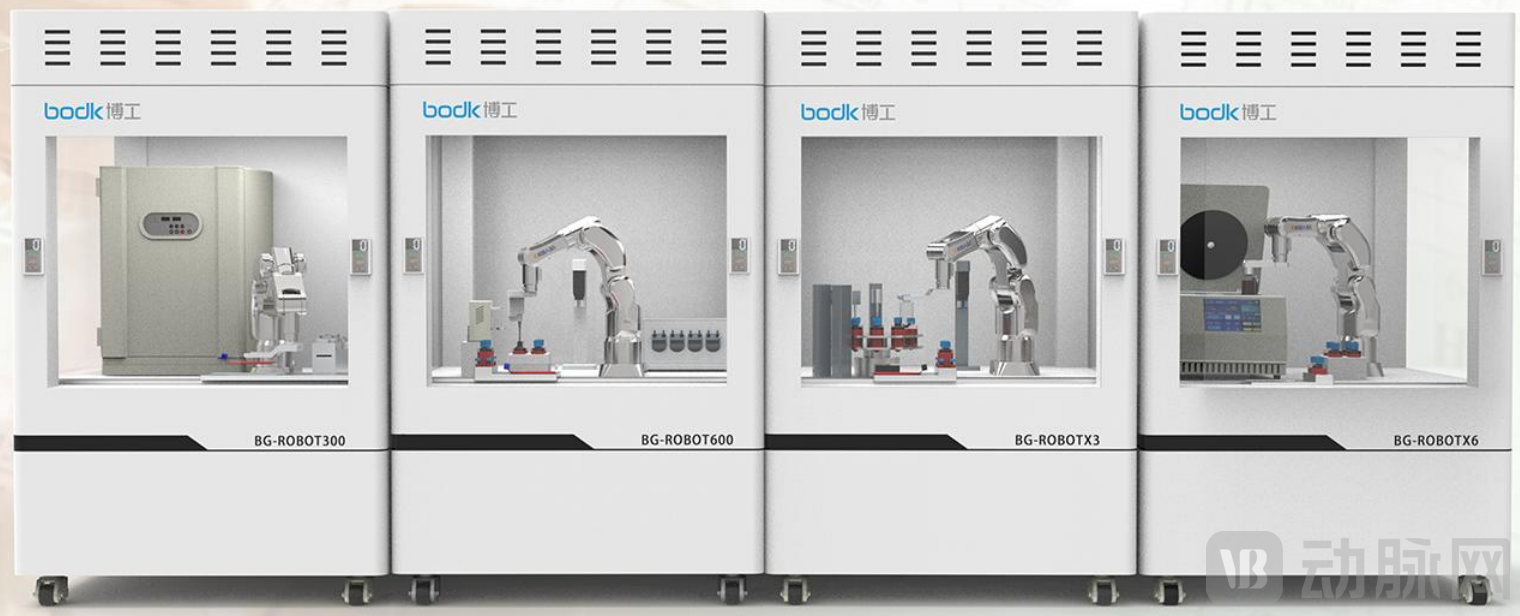 Cell Preparation Workstation
Automated Cell Storage System: Providing Intelligent Support for the Preservation and Management of Cell Samples
Cellular Automated Storage System, i.e., the Life and Health Database, not only stores a large volume of cell samples such as immune cells and stem cells, but also features genetic data and vital signs management. It works in close coordination with collaborative robots to achieve seamless integration across various workstations. Furthermore, it supports integration with multiple laboratory management systems, allowing for easy incorporation into diverse laboratory workflows.
Furthermore, the system employs precise liquid nitrogen environment control technology to maintain a stable temperature of as low as -196°C in the sample storage area, creating an ideal cryogenic environment for the long-term preservation of cell samples. Meanwhile, it features hierarchical permission management and enables full traceability through host computer software, ensuring that every operation is documented and thereby safeguarding sample security and traceability.
To date, Bogong Technology has accumulated dozens of leading industry clients, including prominent enterprises in the cell therapy sector such as Zhongxu Medicine, Zhongzhen Biotechnology, Zhongmei Sai'er, and Jinzhuan Biotechnology; research institutions like the Dongguan Key Laboratory of Stem Cells and Regenerative Tissue Engineering and the Songshan Lake Materials Laboratory; as well as local hospitals benefiting from the “pilot and first-mover” policy initiatives.
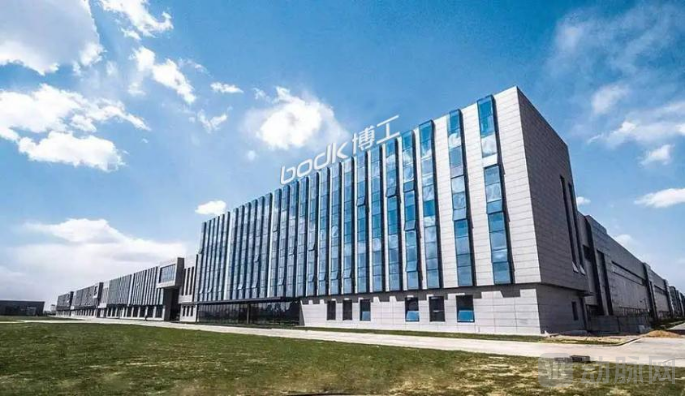
In addition, the company currently operates an intelligent laboratory and GMP-like production workshop spanning over 3,000 square meters. It has filed nearly 100 patent applications and has independently designed and developed high-end automated instruments and product lines tailored to various smart healthcare scenarios in life sciences. The company boasts successful case studies, including automated solutions for stem cell cultivation in China, AI-driven digital laboratory solutions, and intelligent medical testing solutions.
Finally, Liu Zhaoqiang revealed to VCBeat that Bogong Technology plans to hold a grand new product launch event in the near future, providing ample momentum for the development of China’s AI-powered medical equipment industry. Friends are welcome to stay tuned.
References:
1. When “Stem Cells” Meet “Artificial Intelligence”: Songshan Lake Enterprise Drives Industry Development Through Medical-Engineering Integration, Innovating Songshan Lake
2. Songshan Lake Biopharmaceutical Company Secures Tens of Millions in Pre-A Financing, Innovating Songshan Lake