

Nanjing University of Posts and Telecommunications' Prof. Wang Lianhui Team Develops Intelligent DNA Nanorobot for Precision Thrombolytic Drug Delivery
Thrombus: A small clot formed on the surface of a detachment or repair site within the vascular lining of the cardiovascular system. These clots are "ticking time bombs" in the body, with the constant risk of dislodging and obstructing blood vessels.
Currently, thrombolytic therapy is the first-line clinical treatment for acute thrombotic conditions such as stroke, myocardial infarction, and pulmonary embolism.However, thrombolytic agents may indiscriminately dissolve fibrin, leading to coagulation dysfunction and even life-threatening complications.Therefore, there is an urgent need for precise dosing regimens for thrombolytic agents.
Recently,Professor Wang Lianhui, Professor Chao Jie, and Associate Professor Gao Yu, leading their research teams from the State Key Laboratory of Organic Electronics and Information Displays at Nanjing University of Posts and Telecommunications and the National Key Laboratory (Incubation) of Bio-intelligent Materials and Diagnostic & Therapeutic TechnologiesA has been developedIntelligent DNA Thrombolytic Nanomachines, it can identify the thrombus biomarker thrombin within the complex pathophysiological environment of blood vessels, and differentiate between thrombi and wound clots through logic operations based on thrombin concentration, thereby achieving precise, targeted drug delivery to thrombi.
The related work was published in Nature Materials under the title “An intelligent DNA nanodevice for precision thrombolysis”.
 Screenshot of the paper (Image source: Nature Materials)
I. Overcoming the Challenges of Precise Drug Delivery for Thrombolytic Agents
The nano drug-delivery robots designed by Wang Lianhui’s team not only feature an innovative designDNA Nanolock, to protect drug activity; meanwhile, it also incorporatesThrombin Concentration Threshold Controller, achieving logic operations targeting thrombin concentration in animals for the first time, capable of accurately distinguishing between normal fibrin clots and thrombi.
Additionally, this nanoscale drug-delivery robot is composed of human nucleobases, can be degraded by endogenous enzymes, and is metabolized via the liver and kidneys, thereby exhibiting excellent biocompatibility.
Currently, this product has been validated in animal models of stroke, pulmonary embolism, and thrombosis of the carotid artery and leg veins.Significantly reduces coagulation abnormalities caused by thrombolytic drugs, enabling intelligent and precise drug administration.
The research team plans to complete, within the next three to five years, the efficacy and safety evaluation of intelligent DNA thrombolytic nanomachines in large animal models, conduct druggability studies on these DNA thrombolytic nanomachines, and optimize scalable manufacturing processes. The team will actively submit applications for clinical trials and strive to obtain approval for clinical trial initiation.
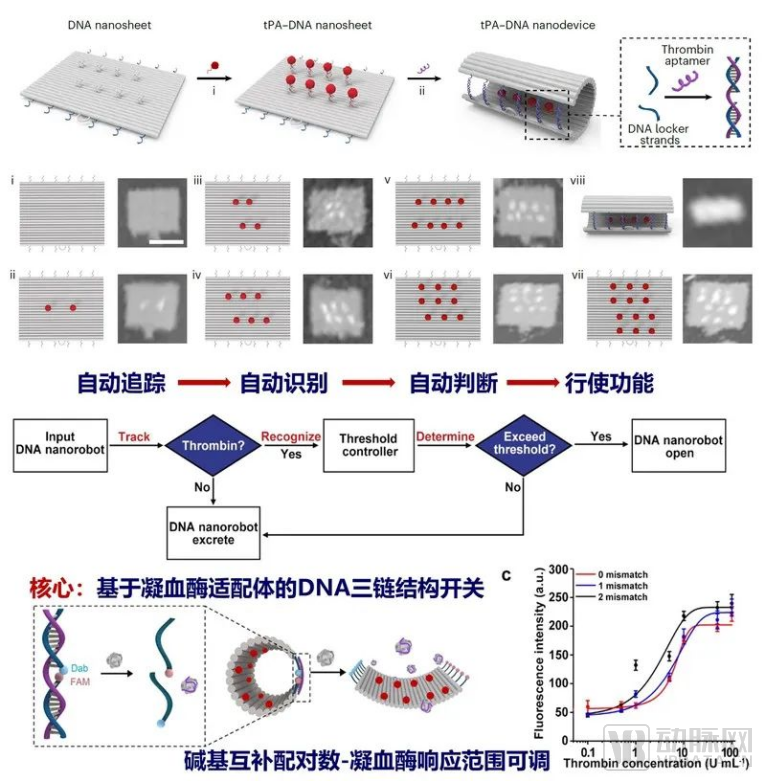 Intelligent DNA Thrombolytic Nanomachines Based on DNA Nanotechnology (Image source: Nanjing University of Posts and Telecommunications WeChat Official Account)
II. Industrialization of Domestically Produced DNA Nanorobots Is Just Getting Underway
The research subjects in the field of biomedicine, such as viruses and genes, are all at the nanoscale. In recent years, DNA nanorobots have emerged as a powerful force in the fields of drug delivery and vaccines.
In 2018,The team of Nie Guangjun from the National Center for Nanoscience and Technology collaborated with the team of Hao Yan from Arizona State University in the United States., jointly developed China's first fully autonomous DNA robot system for precise drug design and targeted cancer therapy.
This breakthrough lays the foundation for the research and development of DNA nanorobots in China, inspiring more researchers to join the field and drive continuous innovation and iteration.
2022,Yang Liangbao's Team at the Hefei Institutes of Physical Science, Chinese Academy of SciencesA smart DNA molecular nanorobot has been developed. By rationally designing DNA molecules, the team constructed this DNA nanorobot with dynamic functions such as locomotion, structural opening and closing, and target capture. In the future, it can be used for targeted drug delivery in the narrow human circulatory system, as well as for directed treatment of inflammation or tumor clearance.
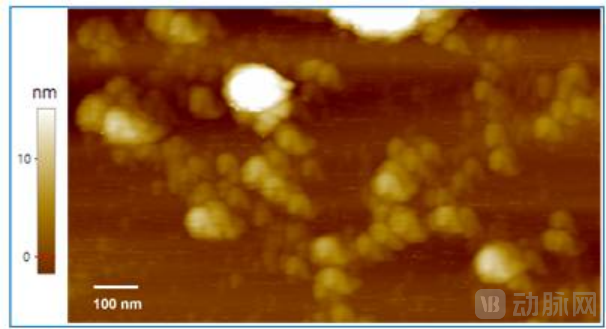 Nonlinear Cloud “Siege” of Intelligent DNA Molecular Nanorobots: Atomic Force Microscopy Imaging (Image source: Chinese Academy of Sciences)
Beyond their research endeavors, some scientists are also working to apply DNA nanorobots in clinical settings. In 2020, Professor Nie Guangjun and Dr. Shi Quanwei co-founded the first enterprise in China dedicated to the development and commercialization of DNA nanorobots.Beijing Junquan Zhiyao Biotechnology Co., Ltd.(hereinafter referred to as: Junquan Zhiyao).
Currently, Junquan Zhiyao has established a DNA nanostructure-based drug delivery platform and developed two generations of intelligent nanorobots dedicated to drug delivery, with some products having entered preclinical trials. Additionally, leveraging the DNA nano-platform, the company has also developed DNA nanobionic vaccines and in vitro diagnostic (IVD) products.
FurthermoreNie Zhou's Team at Hunan UniversityIn 2021, the team developed a “self-walking” DNA molecular robot, which has reportedly entered preclinical studies. Notably, the novel G-quadruplex fluorescent probe ThT-NE, developed during this research, has been commercialized and is now commercially available by Sigma-Aldrich, the world’s largest chemical reagent company (now acquired by Merck).
Based on the current market landscape, DNA nanorobots in China started later than their overseas counterparts, and the market is primarily composed of startups; consequently, most products remain in the R&D and regulatory approval stages. In contrast, the entry of major corporations such as Bruker, Oxford Instruments, and Toronto Nano Instruments has accelerated the commercialization of this field abroad. In the future, with the emergence of advanced technologies such as machine learning and artificial intelligence, DNA nanorobots are poised to find applications in a broader range of clinical areas.