

Amid 90% Foreign Monopoly and Supply Chain Crisis, How Does This Jiangsu MEMS Firm Break Through?
“In the past, we missed out on chips; today, we cannot afford to miss out again.”MEMS.”
When it comes to the development of micro-electromechanical systems (MEMS), Xiong Yuxin, founder of Zhixin Sensing, answers with directness and candor.
China's "14th Five-Year" National Informatization Plan》The document lists a number of key technological breakthroughs in frontier science and technology areas that are vital to national welfare and the people's livelihood, with MEMS explicitly included among them.
MEMS is a technology that utilizes silicon-based semiconductor manufacturing processes to fabricate micro-electromechanical systems. MEMS pressure sensors are sensors manufactured using MEMS technology, offering advantages such as miniaturization, integration, and intelligence compared to traditional sensors. They are widely applied in the medical and health sectors, including in respiratory devices (e.g., ventilators, oxygen concentrators), diagnostic equipment (e.g., electrocardiographs, blood glucose monitors), multi-parameter patient monitors, cardiac pacemakers, and wearable devices.
Looking back at the development of MEMS, the application of this technology began in the 1980s. Research on MEMS chips in China started in the 1990s. Although it was not much later than that in foreign countries, due to historical reasons such as fragmentation, dispersed efforts, and severe underinvestment, the supply of MEMS chips in China is not sufficient.
Although China is the largest market for MEMS, the localization rate of MEMS products remains low, with 90% of high-end products sourced from European and American companies. According to the "Blue Book on China's Sensor Development," imports account for 80% of mid-to-high-end sensors in China, and the import reliance for sensor chips reaches 90%, indicating a substantial gap in domestic production. Meanwhile, the ranking of global leading MEMS manufacturers has remained largely unchanged over the past decade, dominated by foreign companies such as Bosch, Broadcom, Qorvo, STMicroelectronics, and Qualcomm.
Around 2010, Xiong Yuxin was inadvertently introduced to MEMS. Unlike the current fervent landscape characterized by rapid expansion, China’s mid-to-high-end MEMS sector was virtually nonexistent at that time. Despite nearly two decades of development, numerous constraints have left domestic mid-to-high-end MEMS capabilities “ambitious yet under-resourced.” Consequently, he dedicated himself to the MEMS industry for the next decade, quietly accumulating expertise and resources, until he founded Suzhou Zhixin Sensor Technology Co., Ltd. in 2019.
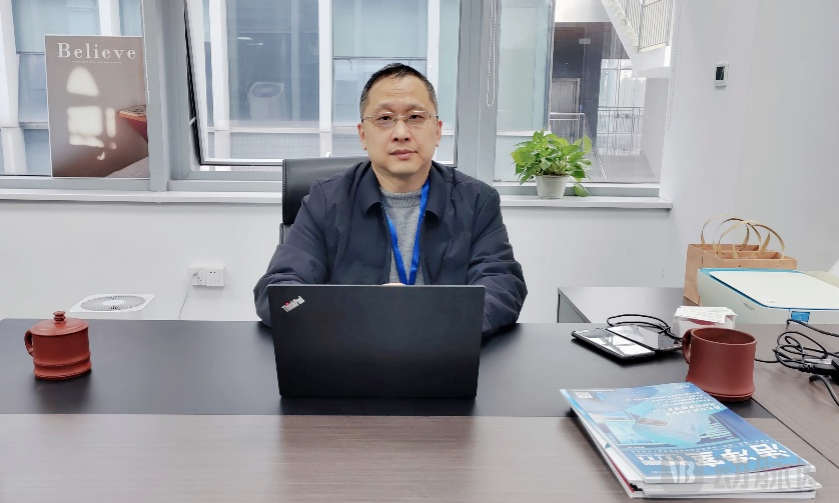
Xiong Yuxin, Founder of Zhixin Sensing
With the rapid development of sectors such as consumer electronics, automotive electronics, industrial applications, and healthcare, market demand for MEMS products has become increasingly urgent.
In the medical field, MEMS components facilitate the miniaturization, intelligence, and precision of medical devices, thereby becoming a "new standard" for such equipment. MEMS pressure sensors are utilized in devices that faced supply shortages during the pandemic, such as ventilators, oxygen concentrators, and pulse oximeters, as well as in wearable wristbands. Furthermore, MEMS differential pressure sensors play a critical role in cleanroom environments and HVAC pressure differential control within the healthcare sector.
As previously mentioned, over 90% of China’s mid-to-high-end MEMS chips are currently imported. The pandemic’s earlier disruption to global supply chains has further exacerbated the supply-demand imbalance in the chip market, leaving many medical device manufacturers without access to essential chips and even forcing them to halt operations. In April 2021, Philips Healthcare issued a warning that, due to the global chip shortage, it would have to temporarily suspend production of devices used to treat cardiac arrest. If even industry giants face such challenges, smaller and medium-sized medical device manufacturers are undoubtedly in an even more precarious position.
Yet crisis may well present the greatest opportunity. The confluence of multiple disruptive factors—the pandemic shock, external sanctions, chip supply disruptions, and domestic substitution—has created substantial market space for the development of Chinese-made medical MEMS chips.
Taking the micro-differential pressure MEMS pressure sensor in ventilators as an example, Xiong Yuxin pointed out that although MEMS pressure sensors serve as core foundational components in ventilators, their cost amounts to only tens of yuan, compared with the complete device priced at thousands or even tens of thousands of yuan. Manufacturers accustomed to using foreign chips find it difficult to change their established practices. However, the sudden outbreak of the pandemic led to supply disruptions of foreign chips, forcing countless domestic manufacturers to urgently seek alternatives within China’s supply chain. As a result, domestically produced chips, such as those from Zhixin Sensing, seized this valuable opportunity to demonstrate their capabilities amid the crisis.
Founded in 2019, Zhixin Sensing is dedicated to achieving domestic substitution in the mid-to-high-end MEMS device sector, aiming to become an industry-leading provider of MEMS solutions. The company focuses on two core areas: "MEMS pressure sensors" and "MEMS micromirrors." It has mastered core technologies spanning MEMS chip design, wafer fabrication, packaging and testing, and module integration, thereby covering the entire MEMS chip industry chain. With over 40 independent intellectual property rights, its business serves various sectors including automotive, industrial, medical, home appliances, and consumer electronics.
The company’s core team comprises overseas-educated PhDs, technical experts, and industry elites, with years of accumulated expertise in the MEMS field. Founder Xiong Yuxin holds a Bachelor’s degree in Chemical Engineering from Northwest University and an MBA from Nanjing University. He has previously worked at Sinopec and a specialized design firm, specializing in the marketing of high-tech products and systems.
Chairman Chen Qiao, an expert in MEMS sensor devices, holds a Ph.D. in Micro-Electro-Mechanical Systems (MEMS) from FEMTO-ST, French National Centre for Scientific Research (CNRS). With over ten years of experience in MEMS micromirror design, he has successfully developed MEMS-OCT and MEMS-FTS technologies and led his team to achieve mass production of the world’s first endoscopic OCT scanning micromirror. He also served as a core member of the National Major Scientific Instrument Special Project—Vertical Large-Displacement Micromirror Project, successfully developing and industrializing miniature spectrometers. Additionally, he completed Huawei’s global pre-research OXC micromirror project.
The design of MEMS requires integration across the entire upstream and downstream industry chain. Given the high R&D difficulty, long development cycles, and the involvement of multidisciplinary convergence, there is a critical need for intensive support from cross-disciplinary talent. After years of development, Zhixin Sensing has successfully established a professional team of approximately 60 members, with R&D personnel accounting for more than half of the total.
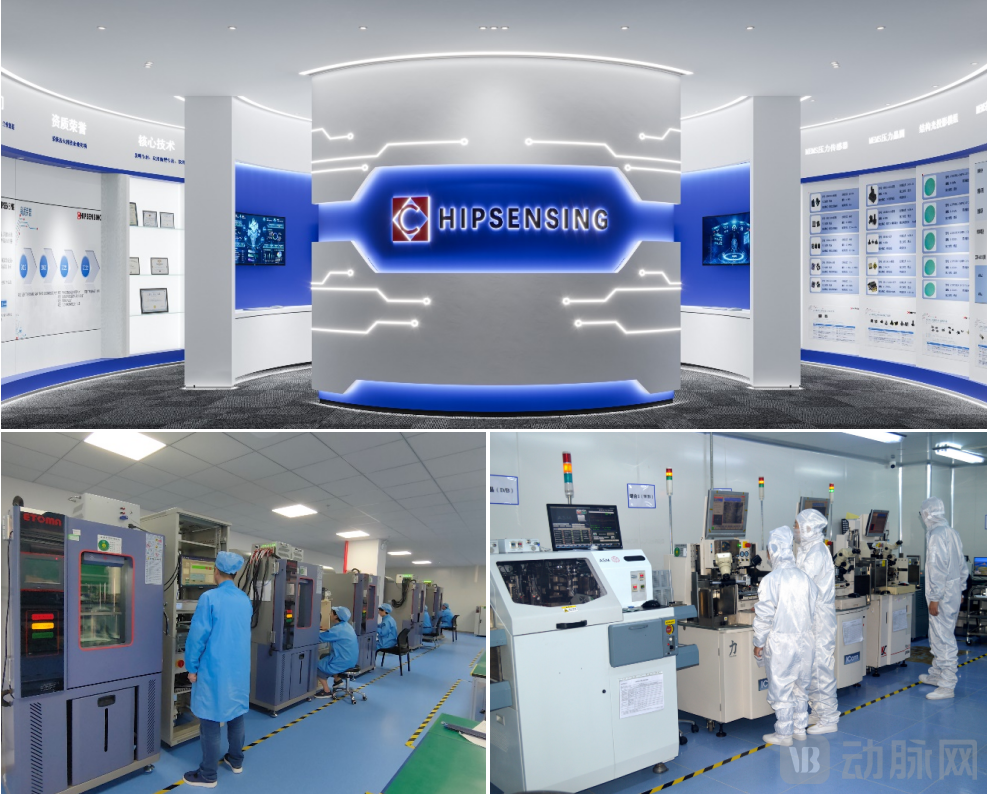
Zhixin Sensing Focus“MEMS Pressure Sensor”and"MEMS Micromirror"Two major directions, with over 20 products currently on the market.
Among them, the ZP9541SD micro differential pressure sensor is the flagship product of Zhixin Sensing’s MEMS pressure sensor series. This ultra-compact, integrated, high-precision semiconductor micro differential pressure sensor features a customizable differential pressure range design, enabling precise pressure testing.
It adopts an SOIC-16 package compliant with JEDEC standards, featuring vertical dual nozzles and a barb design, which provides great convenience for subsequent installation and use by users. In terms of performance, price, and production capacity, the ZP9541SD can fully replace similar products from the United States. It has been widely applied inPreparationOxygen concentrators, ventilators, CPAP devices and other respiratory system equipment, medical beds, breast pumps, cleanrooms in healthcare facilitiesand other devices and scenarios.
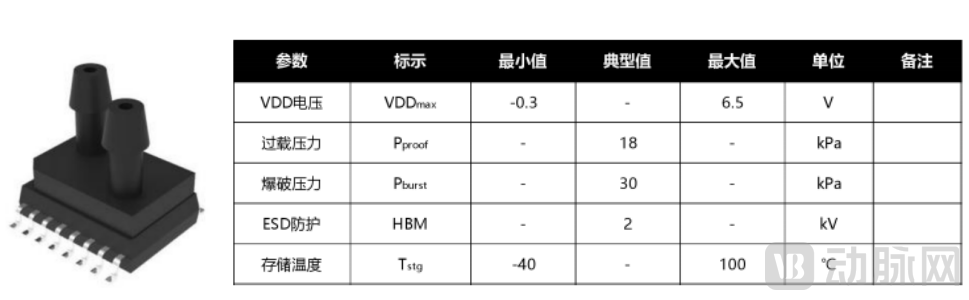
ZP9541SD and Its Related Parameters
“Traditional large-scale medical devices offer distinct advantages, including high precision, but they are expensive, difficult to popularize, and typically limited to a single function per unit. However, leveraging the miniaturization benefits of MEMS technology enables closer contact with measurement targets, reducing costs while maintaining adequate precision. Furthermore, MEMS technology facilitates the integration of multiple functions, providing more convenient and efficient solutions for the healthcare sector,” introduced Xiong Yuxin.
MEMS micromirrors are another flagship product of Zhixin Sensing. Also known as MEMS micro-scanning mirrors, they are tiny actuated reflective mirrors fabricated using MEMS technology. Compared with traditional optical scanning mirrors, they offer advantages such as lightweight design, compact size, ease of mass production, and low manufacturing costs, while delivering outstanding performance in optical and mechanical properties as well as power consumption.Currently, Zhixin Sensing is collaborating with partners in the medical aesthetics industry to jointly explore the applications of MEMS micromirrors for scanning and real-time high-precision modeling in scenarios such as cosmetic surgery and orthopedic rehabilitation.
Xiong Yuxin told VCBeat that the biggest challenge facing domestically produced medical MEMS devices is the lack of supply chain integration. For a long time, China’s MEMS industry has been in its early stages, characterized by small-scale manufacturers, a low-end product structure, and immature, incomplete process development technologies. In contrast to global giants and their established industrial ecosystems, China’s MEMS industry remains fragmented across design, manufacturing, and packaging/testing segments, lacking balance and failing to form a comprehensive supply chain and technological process system.
“Although our company was established relatively recently, the preparatory phase of our entire project actually underwent extensive deliberation over a prolonged period. Leveraging our years of industry experience, we take into account multiple factors during R&D, including chip reliability, manufacturability, and mass-production feasibility.”
Xiong Yuxin further added that Zhixin Sensing has now mastered independent core technologies in MEMS chip design, process manufacturing, and integrated packaging, possessing substantial technical reserves for the commercialization of MEMS products. It is one of the few companies in the industry to cover the entire MEMS industrial chain. The company has not only applied for multiple invention patents but also accumulated extensive experience in the mass production of various MEMS devices, with some high-end products already achieving mass production.
Different medical devices have varying requirements for MEMS pressure sensor chips, and a single chip typically cannot meet the needs of all medical devices. This necessitates collaborative design and customized manufacturing between chip manufacturers and device manufacturers.
Xiong Yuxin pointed out that the common predicament for domestically produced medical MEMS pressure sensors lies in the diversified downstream applications. Product iteration relies on rapidly obtaining authentic feedback from customers; however, foreign suppliers control market channels by virtue of their first-mover advantage, making it difficult for domestic manufacturers to gain “real-world” application opportunities, let alone continuously optimize and iterate their products through practical use.
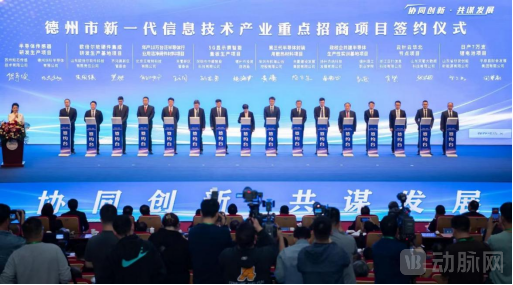
Zhixin Sensing Attends the 2023 China Semiconductor Materials Industry Development (Dezhou) Summit and Officially Signs Agreement with Huake Semiconductor
“Given our company’s relatively small scale and limited resources, it is challenging to simultaneously advance the R&D and production of a large number of products. Therefore, we will select products with high technical content that are in short supply both domestically and internationally as our strategic entry points.” He believes that for domestically produced chips to break into the medical device market, the key lies in whether their performance metrics can match or even surpass those of foreign competitors, and whether they truly meet customer needs in practical applications.
In terms of commercialization,Zhixin Sensing’s automotive chips are not only bestsellers in Southwest and South China, but also exported to the Middle East and Southeast Asia.The company’s business focus in the healthcare sector remains primarily within China. On one hand, it provides customized chip solutions tailored to the specific needs of medical device customers; on the other hand, it also offers services such as design and foundry manufacturing. It is reported that last year alone, the company sold approximately30 Million MEMS UnitsChip. With the R&D and commercialization of other medical chips and MEMS micromirrors, the company will make significant strides in the medical MEMS chip market this year.
Looking to the future, Xiong Yuxin sincerely appealed: “We eagerly look forward to collaborating with more medical device companies this year, and we hope everyone will give Chinese-made chips greater opportunities and trust. Although chips are components within complete devices, they are an indispensable key link in driving the domestic substitution of medical devices.”
Coincidentally, not long ago, I had the privilege of listening to Mr. Lin Xueping, an industry observer, share his insights on the “chokehold” phenomenon. During my recent interview with Mr. Xiong from Zhixin Sensing, I was surprised to discover a subtle resonance between their perspectives. Seizing this opportunity, I hope to share and discuss these viewpoints with you, and I look forward to engaging in further dialogue with readers to delve deeper into this topic.
Often, we perceive "chokehold" technologies as merely technical issues. However, Professor Lin Xueping argues that the essence of a "chokehold" is actually systemic failure, categorizing it into three scenarios: inability to manufacture, inability to sell, and inability to integrate.
Inability to manufacture stems from the insurmountable challenge of progressing from 0 to 1, i.e., creating something out of nothing. This constitutes a pure hard constraint and is what we commonly refer to as being “strangled” by critical technological bottlenecks.
If products fail to sell, it is economically unviable, due to factors such as low initial yield rates and high ramp-up costs. For instance, MEMS manufacturers need to adopt different process strategies for each individual device, often requiring concurrent process development for multiple products during actual production. Foreign mid-to-high-end MEMS manufacturers, leveraging their first-mover advantage, have steadily strengthened their positions in technology, manufacturing, and sales channels, resulting in a pronounced Matthew effect.
If integration proves difficult, it is because the existing industrial chain has formed a solid community of interests, making companies reluctant to switch suppliers and creating high barriers for new entrants. For instance, as Mr. Xiong mentioned earlier, although their ZP9541SD series matches the performance of products from major international manufacturers, most enterprises in the supply chain already have established suppliers and entrenched user habits. Consequently, they can only serve as second-tier suppliers and struggle to become the primary choice. This specific case reflects a broader reality: the challenges faced by Zhixin Sensing are common to many domestic mid-to-high-end MEMS chip manufacturers, as well as companies in other industries.
Technological breakthroughs require user participation, which serves as a stepping stone for such efforts. Simply put, there must be users willing to adopt domestically produced mid-to-high-end MEMS chips. This enables Chinese manufacturers to iterate their products based on feedback and ultimately deliver outstanding results. Once this stepping stone disappears, the entire endeavor becomes difficult to accomplish.
“A nine-story terrace begins with piled earth; a journey of a thousand miles starts with a single step.” To accelerate the substitution of imports with domestically produced alternatives and strive for global leadership in innovation, China’s medical device industry must start from the “core.”