

RuiTouch Unveils World’s First CT-Integrated Robotic System for Sub-Millimeter Precision Lung Biopsy in 5–8 Minutes

Simpletouch
Developer of Precision Puncture Surgical Robots
On February 26, Shanghai Simpletouch Technology Co., Ltd. (hereinafter referred to as “Simpletouch”) officially obtained the Class III Medical Device Registration Certificate issued by the National Medical Products Administration for its CT-guided lung puncture surgical robot, the “Puncture Surgery Navigation and Positioning System RC120.”
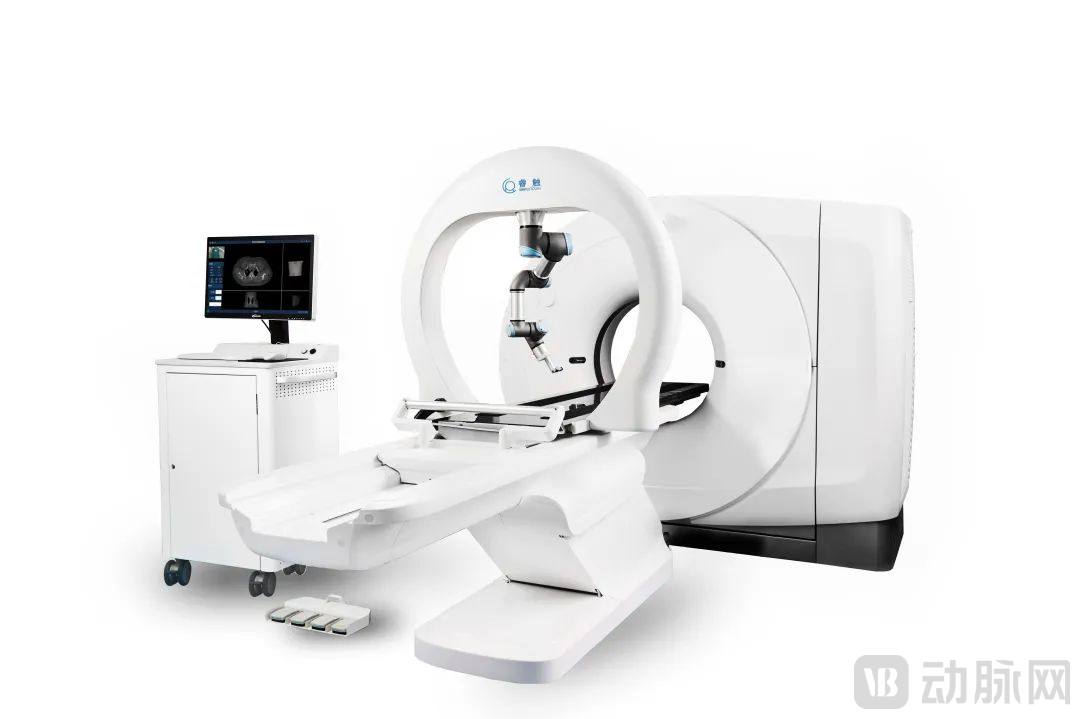
Simpletouch Lung Puncture Surgical Robot
The lung puncture surgical robot approved this time is a type ofWorld’s First “Integrated Technology of CT Imaging and Intelligent Sensing”This high-tech innovative medical device, integrating advanced technologies, assists physicians in precisely locating target lesions and rapidly planning puncture paths during minimally invasive interventional oncology procedures, thereby effectively reducing puncture-related risks and supporting China’s lung cancer screening and early diagnosis and treatment initiatives.
According to the "Chinese Expert Consensus on Early Diagnosis of Lung Cancer (2023 Edition)," there were approximately 820,000 new cases of lung cancer and 710,000 deaths in China in 2020.Lung Cancer Ranks First Among Malignant Tumors in Both New Cases and Deaths. Furthermore, according to WHO statistics from 2020,China Leads the World in Both New Lung Cancer Cases and Deaths。
In the face of the substantial burden of lung cancer, countries worldwide have been committed for many years to reducing lung cancer-related mortality through screening, early diagnosis, and early treatment. As one of the early manifestations of lung cancer, pulmonary nodules remain critical for early diagnosis and treatment, with histopathological and cytopathological findings serving as the gold standard for definitive diagnosis.
Clinically, the diagnosis of pulmonary nodules is generally achieved through three approaches: surgical resection, flexible bronchoscopy, and percutaneous lung biopsy. In comparison, percutaneous lung needle biopsy, being a minimally invasive procedure, causes less trauma to lung tissue and has relatively controllable complications, making it the most commonly used method for the clinical diagnosis of peripheral pulmonary nodules.
However, this procedure is also technically demanding and heavily reliant on the operator’s clinical experience. It often requires multiple CT scans to adjust the positioning, puncture angle, and depth, thereby increasing associated risks and hindering the implementation of early lung cancer diagnosis initiatives.
Since the advent of robot-assisted surgery (RAS) in the 1980s, many complex surgical procedures have rapidly entered an era of elite performance. Precision maneuvers that were difficult to achieve in traditional surgeries have been successfully accomplished one by one, significantly improving surgical accuracy and efficiency, thereby enhancing patient outcomes and bringing about a revolutionary transformation in the development of surgical practice.
It was precisely the vast imaginative potential and broad prospects of robot-assisted surgery (RAS), also known as surgical robotics, along with the remarkable progress this technology has made in mainstream medicine, that caught his attention. At the time, Liu Jian, who served as R&D Director at a leading Chinese medical device company, recognized the immense potential within the surgical robotics sector and decided to embark on his entrepreneurial journey. In 2019, he officially left his corporate role to co-found a startup with two other co-founders.Simpletouch: A technology innovation enterprise centered on the independent R&D of high-performance medical surgical robots.
Liu Jian, the company’s founder and CEO, holds a Ph.D. in Advanced Manufacturing from Shanghai Jiao Tong University and brings over 15 years of experience in medical device R&D and management. Prior to joining a leading domestic medical imaging enterprise, Mr. Liu served in R&D management roles for several years at two of the “GPS” giants (GE Healthcare, Philips, and Siemens Healthineers). He also possesses extensive international work and advanced study experience, with particular expertise in the development of medical imaging equipment, digital surgical solutions, and intelligent R&D management.
Furthermore,Other partners at Simpletouch Technology also possess several years of extensive experience in market management and work with certification bodies. Under the leadership of its founders, Simpletouch Technology has targeted the high-end surgical robot market and assembled a technical team with rich expertise in medical imaging and clinical practice., and aims to provide doctors and patients with affordable, comprehensive smart healthcare solutions by leveraging advanced China-originated surgical robot technologies, thereby effectively increasing the proportion of early-stage lung cancer detections in China to reduce mortality rates and improve survival rates.
This is also the original intention behind the founding of Simpletouch, namely“Unity of Knowledge and Action, Intelligent Reach”。
In contrast to the alarming global cancer mortality rate, public health awareness is gradually increasing. With the clinical application of new technologies such as low-dose spiral CT and the widespread adoption of early lung cancer screening programs across various regions, the detection rate of early-stage pulmonary nodules is showing a significant upward trend.
After pulmonary nodules are identified through imaging screening, the next challenge to address is how to perform precise pathological sampling and achieve rapid, accurate diagnosis. To this end, Simpletouch has independently developed a lung puncture surgical robot based on its globally pioneering, fully proprietary “Integrated CT Imaging and Intelligent Sensing Technology.”
Specifically,First, the biopsy robot accurately locates the target lesion through fusion with CT images, achieving a mechanical positioning accuracy at the sub-millimeter level., effectively avoiding pulmonary bullae and larger blood vessels, minimizing the risks of pneumothorax and hemorrhage, and fundamentally improving the accuracy, success rate, and efficiency of percutaneous lung biopsy.
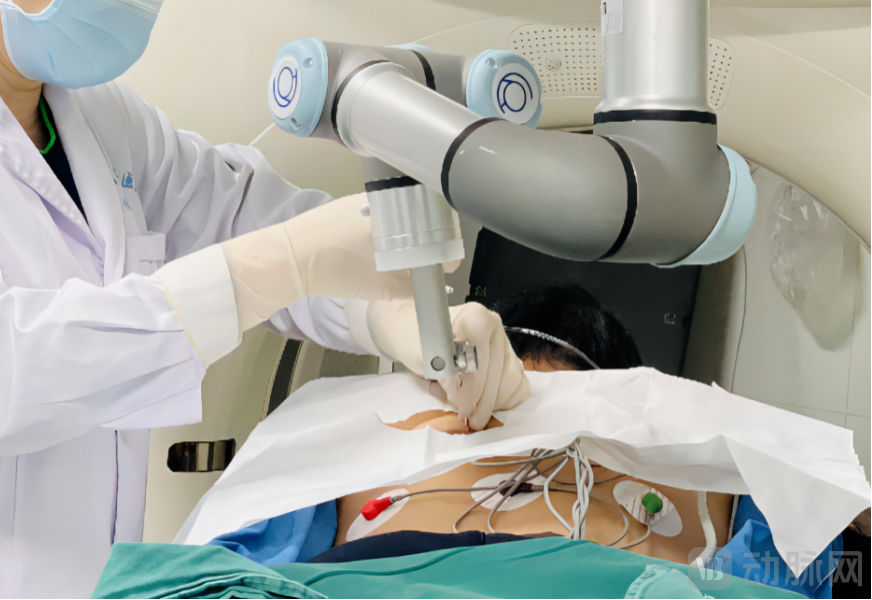
Secondly, during traditional CT-guided percutaneous lung biopsy, physicians need to repeatedly adjust and confirm the needle insertion path under CT guidance. This process is not only time-consuming but also exposes both physicians and patients to significant unnecessary radiation.
The puncture robot developed by Simpletouch features a standardized workflow design, requiring only three CT scans for each percutaneous lung biopsy procedure.The first scan accurately locates the lesion, the second scan confirms that the localization needle is in place, and the third scan observes for any complications.
These three essential CT scans not only reduce radiation exposure but also promote the standardization of surgical workflows and quality, significantly improving the detection rate of diverse, complex, and early-stage small tumors, thereby further reducing surgical complications and enhancing patient prognosis.
“Compared to the puncture robots currently on the market that use electromagnetic and optical positioning, Simpletouch’s lung puncture surgical robot adopts the world’s first integrated technology of CT imaging and intelligent sensing,”The entire surgical localization process requires no markers or registration, thereby reducing errors associated with complex operational workflows. Furthermore, this puncture system can be integrated with the scanning tables of all CT scanners featuring 16 slices or more available on the market, without occupying the limited floor space in the CT room.“Liu Jian said.”
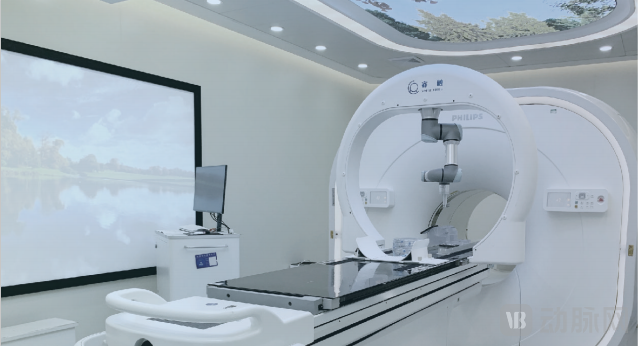
Involving Simpletouch's Lung Puncture Surgical RobotStructural Design, Motion Control, Image Algorithms, and Artificial IntelligenceIt has also established unique advantages in fields such as these, effectively addressing the challenges posed by respiratory motion of the lungs and the complexity of human anatomical structures. This technology assists physicians in rapidly planning needle insertion paths during surgery, significantly reducing procedural difficulty and shortening operation time.
According to reports, the traditional percutaneous lung biopsy procedure typically takes about 30 minutes.The use of a lung biopsy surgical robot can reduce the procedure time to 5–8 minutes, significantly improving CT suite throughput and alleviating the current strain on radiology department resources.
In addition, this surgical robot can also provideParticle Implantation, Ablation Therapy, Targeted Drug Delivery, and Preoperative Auxiliary Localization for Small Pulmonary Nodulesproviding additional therapeutic avenues for multiple clinical scenarios, as well as offering physicians more ideas for scientific research and academic exchange.
As the global pioneer of “integrated CT imaging and intelligent sensing technology,” physician education is a responsibility and mission that Simpletouch must undertake. With several puncture surgical robots already approved in the current market, establishing a commercial closed loop based on leading-edge technology has been a key strategic focus for Simpletouch, with layout efforts initiated even prior to obtaining regulatory approval.
In terms of its overall solution layout for lung biopsy procedures, Simpletouch is developing dedicated consumables, such as localization needles and biopsy needles, tailored to clinical applications and aligned with physicians’ usage habits.Furthermore, to reduce manufacturing costs and enhance the stability and reliability of its supply chain, Simpletouch is deepening the localization of its supply chain. It expects to achieve domestic substitution of core components in its next-generation products, thereby further boosting product competitiveness.
When discussing Simpletouch Technology’s goal of becoming a leading pioneer in first-class medical surgical robots, Liu Jian stated, “This objective certainly encompasses more than just obtaining a Class III medical device certification. In addition to continuously iterating and developing its products, the company is currently building a platform-based R&D system for surgical robots and has developed”Precision therapy robots for cardiovascular diseases, laparoscopic robots, and corresponding various innovative clinical treatment methodsof the products, related items have successively entered the stage of type testing and animal clinical trials.”
Liu Jian continued, “Innovative surgical robot technologies are gradually being trialed and accepted across various real-world clinical applications. This is a long-term process that requires continuous collaboration between medical specialists from different departments and patients to iteratively improve the products and ultimately achieve widespread adoption.”
To this end, Simpletouch has co-established academic centers and launched academic collaborations with local hospitals in provinces and cities including Shanghai, Anhui, Jiangsu, Guangdong, and Fujian.On the one hand, this can provide expert physicians with a platform for academic research, exchange, and collaboration, helping to enhance the awareness and acceptance of innovative products among both doctors and patients, promote the clinical adoption of lung biopsy robots, and thereby improve the quality and efficiency of medical services.
On the other hand, academic centers can also serve as a bridge for “medical-engineering integration,” helping Simpletouch closely align with clinical needs to drive the iterative upgrading of its technological products, continuously develop innovative solutions that enhance the quality of medical services, and promote the overall development of the healthcare industry.
At the conclusion of the interview, Liu Jian stated, “To enable doctors across diverse regions and at various professional levels to experience precise, safe, and minimally invasive surgical robot technology, Simpletouch has launched its ‘Cloud Control’ experience service. By leveraging high-definition, multi-angle real-time video feeds, this service transcends temporal and spatial constraints, bringing offline surgical scenarios directly to every physician. With this regulatory approval as a new starting point, Simpletouch is committed to promoting the widespread sharing of high-quality medical resources, continuously benefiting clinical patients and enhancing the treatment standards of clinical experts. We aim to meet the demands of increasingly complex clinical scenarios with our surgical robot platform, which is becoming more personalized, precise, safe, and minimally invasive, paving the way for a new future in precision medicine!”