

25 Years of Turbulence: The Rise and Evolution of Recombinant Collagen in China

Giant Biogene
Skin Care Product R&D Developer
Recently, Euromonitor International issued a statement recognizing Giant Biogene as the global leader in recombinant collagen. For market participants worldwide, the significance of Euromonitor International’s certification is self-evident. With 52 years of history, this long-established British research firm is currently one of the most authoritative and professional providers of strategic market information globally.
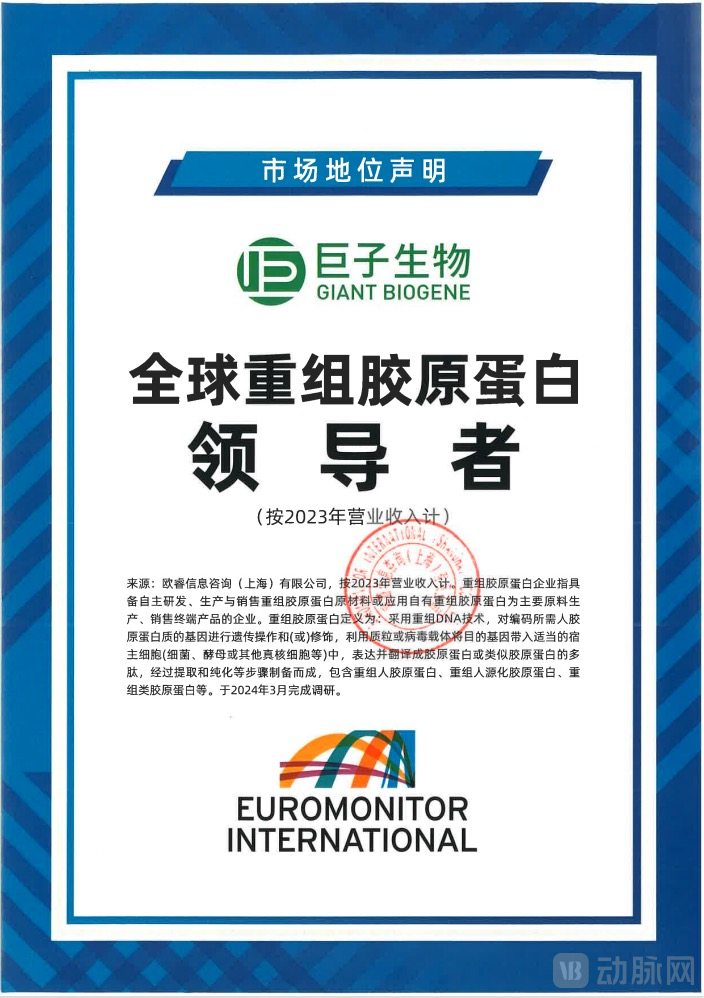
Euromonitor's Market Position Statement | Image Source: Public Information
For a long time,Supplementing with additional collagen is a relentless pursuit for many, further fueling a massive market.From animal glue to collagen, and then to recombinant collagen, humanity has spent over 4,000 years understanding and deconstructing this substance, which accounts for 30%-40% of the total protein in the human body, and ultimately manufacturing it at scale through the most reliable methods. Currently, the industrial application of recombinant collagen technology has largely met the demand for collagen in functional skincare, injectable aesthetics, and biomedical applications.
Unlike other raw materials such as glycerin and hyaluronic acid, which are mostly mass-produced overseas and imported into China, the key growth period of recombinant collagen technology coincided with the explosive development of domestic scientific research and transformation capabilities. Chinese scientists, medical experts, and entrepreneurs have been deeply involved in promoting recombinant collagen from the laboratory to various application scenarios including skincare, professional treatments, and clinical use.
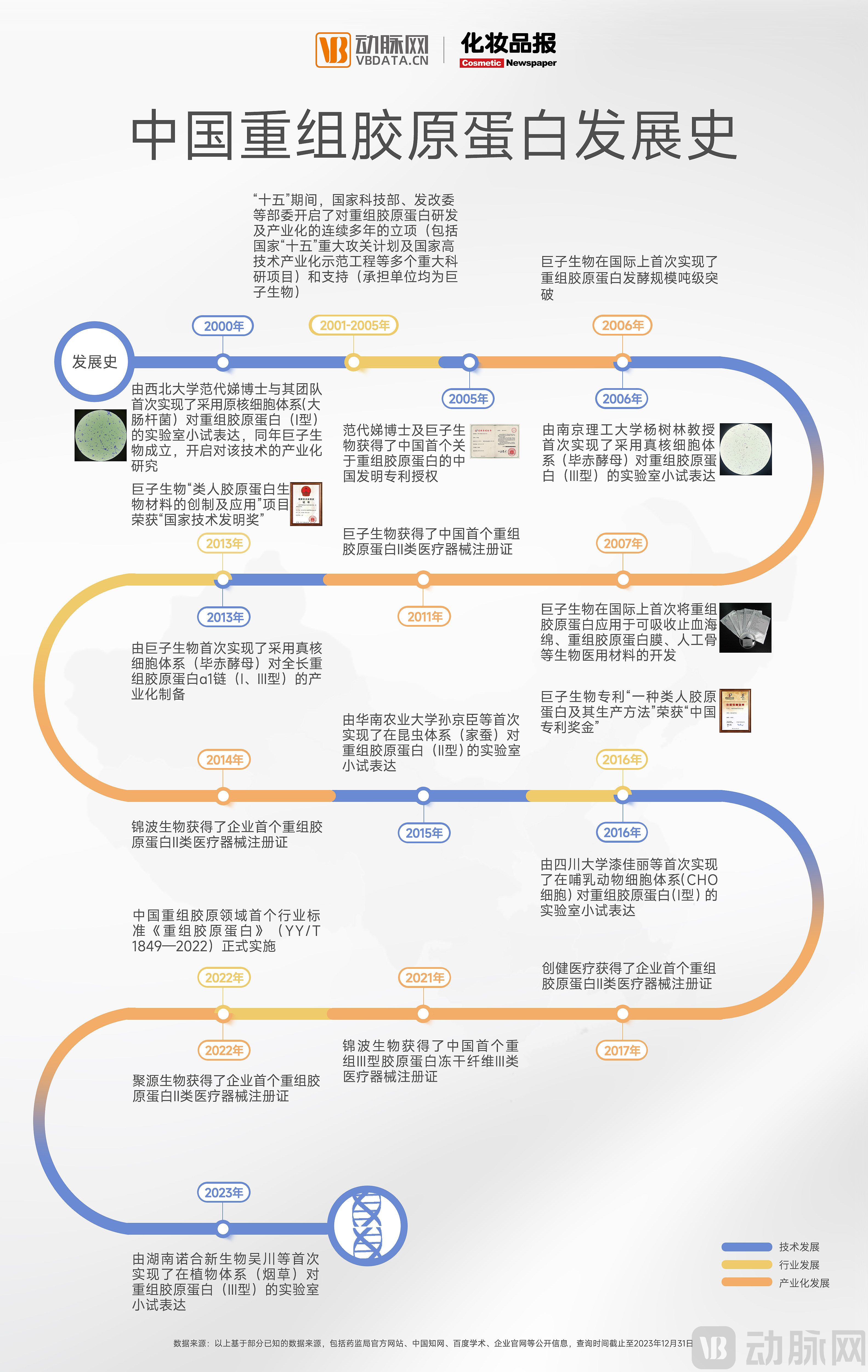
Recently, VCBeat and Cosmetics News jointly released the "Chronicle of Recombinant Collagen in China," detailing the tumultuous industrial history of this popular ingredient. Seizing this opportunity, VCBeat also reviewed the developmental trajectory of the global recombinant collagen industry from its inception to its current state, highlighting the increasingly significant role of Chinese scientific research capabilities.
Youthful Active Ingredients
Setting aside the distant wisdom of antiquity, humanity’s true exploration of collagen began with the deconstruction of its microscopic structure.
In 1940, scientists began to investigate the structure of collagen. Just over half a century later, collagen technology completed its journey from initial theoretical research to product commercialization. To date, the research and development of collagen has progressed through three major early-stage phases: the nascent stage dominated by the extraction of animal-derived collagen; the rapid growth stage characterized by the development of recombinant collagen technology based on structural biology and genetic engineering; and the commercial exploration stage focused on identifying potential application scenarios for recombinant collagen.
Among them, the early embryonic stage began in 1950.In that year, the triple-helix structure of collagen molecules was discovered for the first time. By 1958, humans had extracted collagen from bovine hide for the first time. Four years later, United Shoe Machinery Corporation developed the first commercially viable process for collagen extraction. In 1976, the United States formally classified collagen products as medical devices for regulatory purposes. Five years later, Inamed’s bovine collagen implant, Zyderm, received FDA approval. Thus, humanity established a methodology for obtaining collagen according to specific needs.
Animal-derived collagen once enjoyed immense popularity after its market launch but soon met with a disastrous setback. The outbreak of bovine spongiform encephalopathy (BSE), commonly known as mad cow disease, in Europe during the 1990s severely impacted bovine collagen products, leading to a significant market contraction. Subsequent research has indicated that the use of animal-derived collagen in humans poses numerous safety concerns. On one hand, the manufacturing process merely involves the physical comminution of animal connective tissues, followed by extraction using acid, alkali, or enzymatic solutions, which may leave behind unknown viral contaminants in the final product. On the other hand, as a xenogeneic protein, animal-derived collagen is associated with a relatively high risk of immune rejection and an elevated rate of allergenicity.
We know that it is technically challenging to eliminate viruses carried in animal-derived collagen, and it is even more difficult to reduce the rejection reactions caused by such xenogeneic proteins. Consequently, researchers began attempting to synthesize collagen using recombinant technology, which was considered advanced at the time. In 1980, American scientists successfully cultured Type I and Type III procollagen in vitro from human skin cells, marking the nascent stage of recombinant collagen technology.R&D of collagen has also entered a new phase of rapid growth.
During the 1980s and 1990s, emerging disciplines such as cell biology and bioengineering experienced a golden age of rapid development. Leveraging a series of new tools, research on recombinant collagen frequently achieved breakthroughs at key milestones. In 1995, the Institute for Biomedical Sciences of Japan’s Terumo Corporation achieved the world’s first small-scale laboratory expression of recombinant type III collagen using an insect cell system (silkworm). Over the three years beginning in 1997, scientists successively expressed type III collagen, human-like type III collagen containing hydroxylated fragments, and the α1 peptide chain of human type I collagen in microbial hosts such as Pichia pastoris, Saccharomyces cerevisiae, and Hansenula polymorpha. Consequently, the first generation of recombinant collagen products became reproducible in the laboratory, establishing the fundamental paradigm for recombinant collagen production.
By 2000, the field of recombinant collagen witnessed another major breakthrough, as scientific teams from China and France respectively achieved laboratory-scale expression of recombinant collagen in prokaryotic and plant systems. Notably, Dr. Fan Daidi and her team at Northwest University in China successfully realized the laboratory-scale expression of recombinant Type I collagen using a prokaryotic system (Escherichia coli). In the same year, Giant Biogene was established, marking the commencement of industrialization research on recombinant collagen.
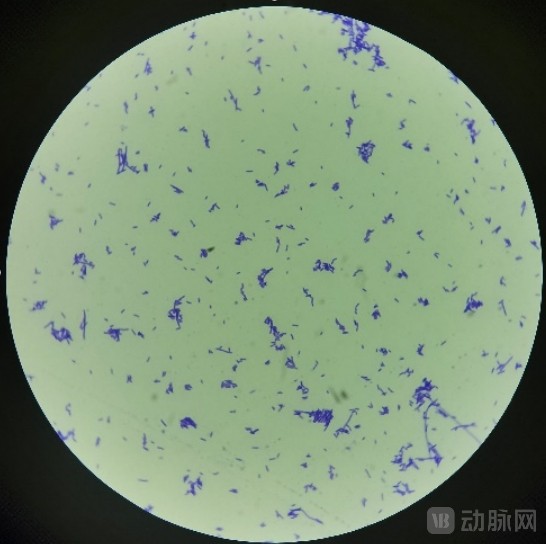
In 2000, Dr. Fan Daidi’s team achieved the first laboratory-scale expression of recombinant collagen (Type I) using a prokaryotic cell system (Escherichia coli).
Image source: *Chronicles of Recombinant Collagen in China*
Meanwhile, domestic regulatory authorities have attached great importance to the industrialization of recombinant collagen. During the “10th Five-Year Plan” period, ministries and commissions including the Ministry of Science and Technology and the National Development and Reform Commission initiated and supported multiple multi-year research projects focused on the research, development, and industrialization of recombinant collagen. In 2005, Dr. Fan Daidi and Giant Biogene were granted China’s first invention patent for recombinant collagen.
During this period, the development of recombinant collagen technology in China entered a golden age marked by the emergence of numerous leading innovators. In addition to Northwest University, universities in southern China—including Nanjing Tech University, Jinan University, and South China University of Technology—as well as those in northern China, such as Tianjin University and Shanxi Medical University, have established dedicated research teams, appointed top-tier principal investigators, and strategically positioned themselves to advance frontier technologies and applied research in recombinant collagen. For instance, in 2006, Professor Yang Shulin from Nanjing University of Science and Technology achieved the first laboratory-scale expression of recombinant type III collagen using a eukaryotic cell system (Pichia pastoris) in China.
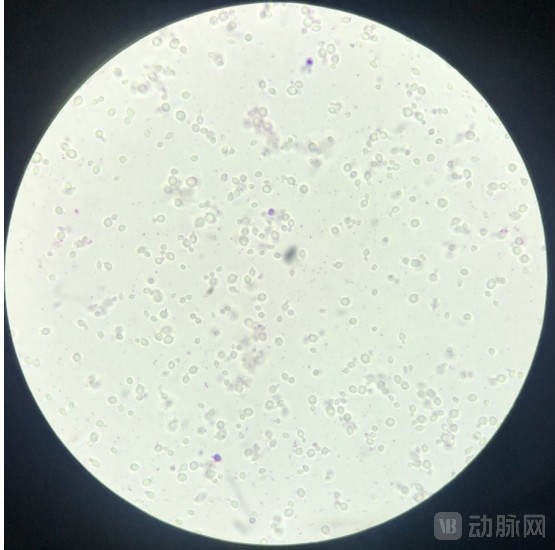
In 2006, Professor Yang Shulin achieved laboratory-scale expression of recombinant collagen (Type III) using a eukaryotic cell system (Pichia pastoris).
Image source: "Chronicle of Recombinant Collagen in China"
Since then, Chinese research teams have been at the forefront of global efforts to develop recombinant collagen using animal and plant cell-based expression systems. In 2015, Sun Jingchen and colleagues from South China Agricultural University achieved the first laboratory-scale expression of recombinant type I collagen in an insect system (silkworms). In 2016, Qi Jiali and colleagues from Sichuan University achieved the first laboratory-scale expression of recombinant type I collagen in a mammalian system (CHO cells). In 2023, Wu Chuan and colleagues from Nuohexin Bio achieved the first laboratory-scale expression of recombinant type III collagen in plant cells (tobacco).
Compared with eukaryotic and prokaryotic cells, the microenvironments of animal and plant cells are more complex, involving a greater number of regulatory elements for the expression of recombinant collagen. Furthermore, due to the intricate microscopic structure of collagen—where each basic unit consists of three left-handed α-chains intertwined to form a triple helix—the establishment of each new expression system is extremely challenging. Nevertheless, the development of such expression systems constitutes a critical foundation for the industrialization of recombinant collagen.
Struggling to Achieve Mass Production
Starting in 2006, the recombinant collagen industry entered a phase of commercial exploration to identify potential application scenarios.This phase focused on resolving three key issues: the establishment of commercial-scale manufacturing processes for recombinant collagen, regulatory compliance and product registration, and the development of large-scale production capacity.
In Terms of Manufacturing Process Development, from laboratory petri dishes to factory-scale production at the tonnage level, involves a series of complex process details. Extensive targeted adjustments are required for factors such as local metabolite accumulation, flow field environment, inoculum ratio, culture medium formulation, and dissolved oxygen control. With no precedents to follow, this endeavor demands substantial interdisciplinary expertise. Many early manufacturers attempting to develop recombinant collagen achieved success in the laboratory but suffered from low expression levels, making industrial-scale production difficult to realize.
As the company with the world’s largest production capacity for recombinant collagen, Giant Biogene has conducted in-depth research on manufacturing processes and achieved multiple technological breakthroughs. In 2006, Giant Biogene became the first company globally to achieve ton-scale fermentation of recombinant collagen, marking a critical step toward its large-scale production. In 2007, Giant Biogene pioneered the international application of recombinant collagen in the development of biomedical materials such as absorbable hemostatic sponges, recombinant collagen membranes, and artificial bone.
During this period, domestic recombinant collagen companies established manufacturing processes suitable for commercial-scale production. Notably, in 2017, following Giant Biogene, Juyuan Bio achieved a breakthrough in tonne-scale fermentation of recombinant collagen.
On the foundation of a stable manufacturing process lies product compliance.For recombinant collagen companies, product registration certificates are a critical battleground, marking the first true competition after years of internal development.
The competition for product compliance has already eliminated most participants in the recombinant collagen market. At present, a Class II or higher medical device registration certificate has become virtually mandatory for recombinant collagen products to enter the medical device market. Furthermore, early-stage market competition demonstrates that the first-mover advantage in product compliance is significant. In 2011, 2014, 2017, and 2022, Giant Biogene, Jinbo Bio, Trautec Medical, and Juyuan Bio successively obtained their first Class II medical device registration certificates for recombinant collagen, with the corresponding products all being medical dressings containing recombinant collagen.
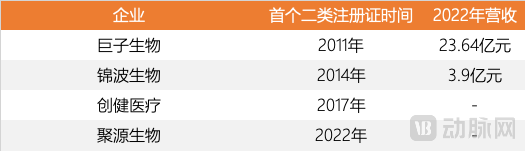
2022 Revenue of Major Domestic Recombinant Collagen Companies. Image source: Compiled by VCBeat based on public information
Based on the market size estimated in Giant Biogene’s prospectus, Giant Biogene and Jinbo Bio—the first companies to obtain product registration certificates—accounted for half of China’s recombinant collagen market in 2022. In 2013 and 2016, Giant Biogene’s project “Development and Application of Human-like Collagen Biomaterials” and its patent “A Type of Human-like Collagen and Its Production Method” received the “National Technology Invention Award” and the “China Patent Award,” respectively.
Of course, the path to product compliance is arduous and long. As recombinant collagen finds application in more serious medical scenarios, the Class III medical device registration certificate will become a new and higher barrier to entry.
Capacity expansion is an unavoidable topic for the recombinant collagen industry.Although recombinant collagen has a significantly lower average unit price compared to animal-derived collagen, it remains an expensive raw material. In the current and near-term landscape, companies with robust production capacity are more likely to capture market share. It is evident that domestic recombinant collagen enterprises have long recognized the critical importance of production capacity.
By the end of 2022, Giant Biogene’s recombinant collagen production line had reached a capacity of 10.88 tons, and the construction of an additional 212.5-ton capacity had entered a critical phase. Giant Biogene has become one of the companies with the largest production capacity globally, achieving a purification and recovery rate of 90% after a single processing cycle.
Furthermore, Juyuan Biotech’s recombinant collagen factory in Zhuji, Zhejiang, achieved successful trial production in February 2023 and has an annual production capacity of 20 metric tons of pure recombinant collagen upon full-scale operation. Trautec Medical possesses stable fermentation and purification technology with a 30-metric-ton scale, supplying over 3 metric tons of pure raw material sponge. Jinbo Bio’s 10-metric-ton production line for Type A recombinant humanized collagen raw materials commenced operations on September 20, 2023. Freda officially announced the commencement of production for its recombinant collagen raw materials on December 15, 2023.
Having completed its early-stage commercialization explorations, the global recombinant collagen market is now entering a fast-growth phase. According to Frost & Sullivan statistics, by 2021, over 15% of skincare products and more than 8% of professional-grade (clinic-used) products had chosen recombinant collagen as their primary ingredient. The market size growth rate of recombinant collagen has also been significantly higher than that of other ingredients in the skin health sector, such as animal-derived collagen, Pro-Xylane, retinol, and peptides.
The New Cycle of Recombinant Collagen
Around 2021, the entire recombinant collagen industry began to enter a more standardized phase of commercial expansion.Beyond products, there are brands; beyond industries, there are ecosystems. More importantly, domestically produced recombinant collagen and its related products are attempting to reshape the competitive landscape of the global recombinant collagen market.
On the one hand, a more standardized and regulated market ecosystem for recombinant collagen is being established.As a novel biomaterial, the lack of unified product standards represents the most significant risk currently facing the recombinant collagen industry, while also limiting its potential application in more complex scenarios.
The mixed quality of products is one of the initial impressions conveyed by recombinant collagen products. In response, China issued the industry standard “Recombinant Collagen” (YY/T 1849-2022) and the “Guiding Principles for the Classification and Nomenclature of Recombinant Collagen” in 2022, explicitly defining the classification and nomenclature standards for recombinant collagen for the first time.
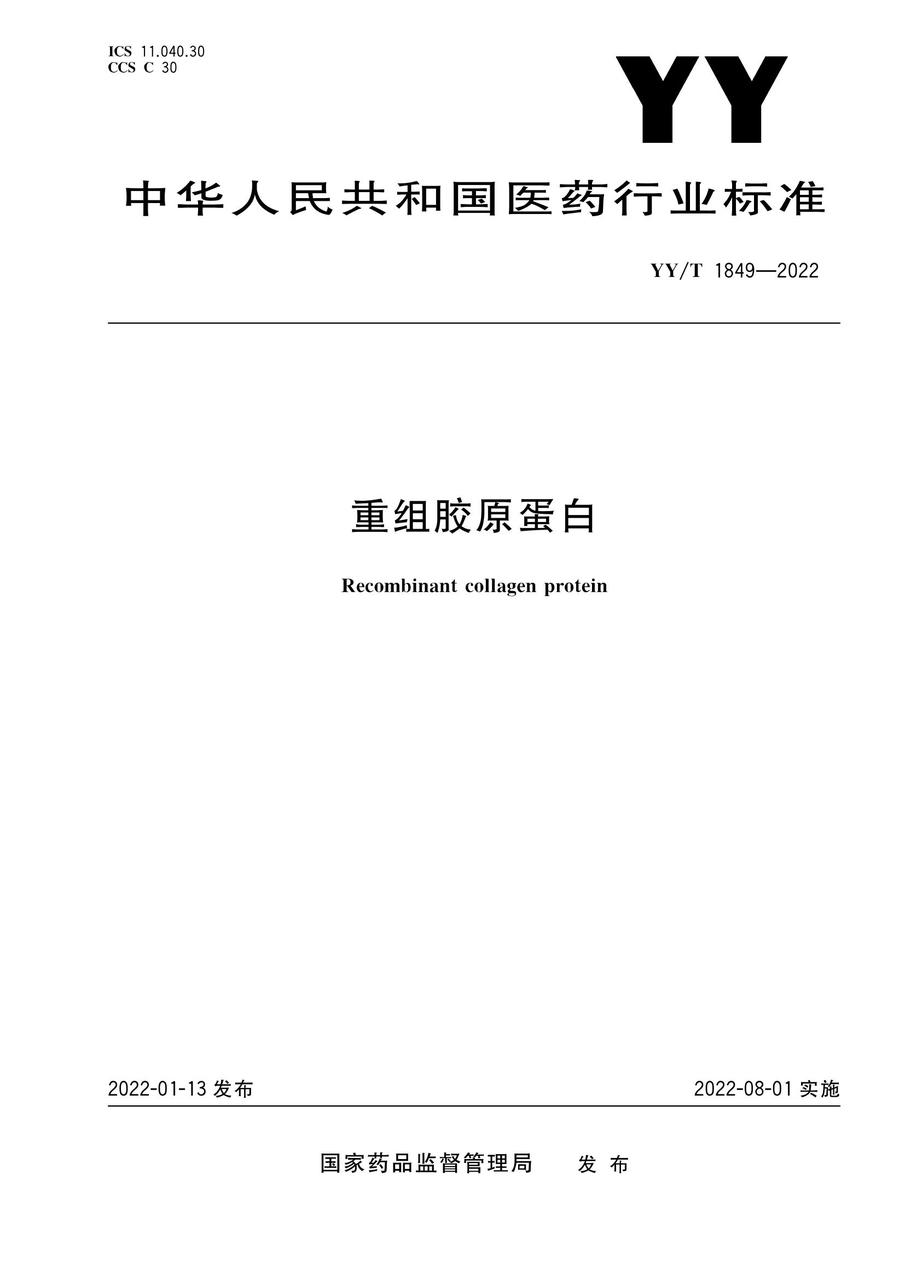
“Recombinant Collagen” (YY/T 1849-2022) Industry Standard Image Source: Public Information
This industry standard is notably stringent, explicitly classifying recombinant collagen based on its microstructure and amino acid sequence, thereby compelling companies to strengthen their core technological capabilities. According to the standard, recombinant collagen is categorized into three types: recombinant human collagen, recombinant humanized collagen, and recombinant collagen-like protein. Among these, recombinant human collagen exhibits the highest degree of homology, possessing a triple-helix structure and being identical to human collagen. Recombinant humanized collagen is produced by replicating specific functional collagen peptide chains multiple times until a structure similar to that of recombinant human collagen is achieved. Recombinant collagen-like protein has the lowest degree of homology, with an amino acid sequence that is not entirely consistent with human collagen. Products attempting to exploit regulatory loopholes have been forced out of the market.
On the other hand, expand the application boundaries of recombinant collagen.This involves two dimensions: the iteration of mature recombinant collagen products and the productization breakthroughs of novel recombinant collagen.
At present, recombinant collagen is primarily applied in the fields of functional skincare and Class II medical devices. However, greater potential may lie within clinical settings. As a raw material for clinical use, current recombinant collagen is not yet perfect. For instance, studies have shown that full-length recombinant collagen with an intact triple-helix structure is significantly superior to single-chain collagen fragments when used as a clinical dermal filler. Nevertheless, no company has yet mastered the complete manufacturing process for this type of recombinant collagen with higher homology. This undoubtedly represents a key direction for technological optimization.
Furthermore, in addition to the already well-established Type III recombinant collagen, many companies are attempting to develop products based on Type II and Type XVII recombinant collagen. Notably, Type XVII collagen is associated with skin rejuvenation and follicular miniaturization. Several companies have launched brands dedicated to Type XVII recombinant collagen, aiming to develop innovative products such as lyophilized powders for repair and basal layer injectables.
Since the first Type I recombinant collagen was expressed in laboratory-scale trials, China’s domestically produced recombinant collagen industry has undergone nearly 25 years of dynamic development. With Giant Biogene securing Euromonitor certification in March 2024, Chinese recombinant collagen enterprises have finally taken their place at the forefront of the global market. However, this is merely a high-starting-point beginning. The extent to which the recombinant protein industry will continue to deliver surprises depends on how the companies at the pinnacle of the industry pyramid make their future choices.