

Lyndra Therapeutics Files IPO Prospectus for Weekly Oral Risperidone Therapy Targeting Schizophrenia

Lyndra Therapeutics
Pharmaceutical R&D Developer
A bloated and frail person lay on the sofa, silent and with a vacant stare.
On the surface, this may appear to be merely an ordinary individual suffering from excessive fatigue. In reality, however, the dull gaze is attributable to declining visual acuity, indicating a borderline state for diabetes; the silence stems from the concurrent burden of chest pain, confusion, panic, and anxiety; while the physical obesity is highly likely a manifestation of neuroleptic malignant syndrome.
These are the schizophrenia patients featured in Hidden Valley Road: Inside the Mind of an American Family (hereinafter referred to as Hidden Valley Road), a nonfiction work published in 2020 by Robert Kolker, one of North America’s most prestigious independent investigative journalists. This acclaimed nonfiction author, who previously chronicled the development of the revolutionary gene-editing technology CRISPR, employs his distinctive prose and multi-threaded narrative style to recount the Greek tragedy-like life of a family affected by schizophrenia, as well as the tortuous history of schizophrenia treatment in the United States during the twentieth century.
According to Kolker’s account, the treatments for schizophrenia in the mid-20th century, which often caused more harm than good, were among the instigators of the familial tragedy depicted in the book—a paradox that remains striking within the medical field. Fortunately, with advancements in therapeutic techniques and growing awareness among both the medical community and society at large, patients with schizophrenia no longer need to grope in the dark, even though the etiology remains unclear and the efficacy of medications is limited.
However, new problems have emerged.
As a severe mental disorder, schizophrenia presents a major challenge in treatment due to high relapse rates and disease fluctuation caused by poor patient adherence. Currently, oral antipsychotic medications are the mainstream therapy; however, up to 70% of patients with schizophrenia become non-adherent within two years after discharge, and treatment discontinuation is the primary risk factor for disease relapse.
In clinical practice, several strategies have been adopted to address poor patient adherence, such as monitoring timely medication intake through patient diaries or assessing drug compliance by measuring relevant biomarkers in blood samples. In recent years, the rise of digital health has also brought medication management apps into the spotlight for both physicians and patients.
Meanwhile, there is also a view that addressing low adherence from a pharmaceutical perspective is a more effective approach. For instance, the use of long-acting injectable formulations and long-acting oral formulations can enable patients to take medication only once a week or even once a month.
This is also the specialized focus of Lyndra Therapeutics (“Lyndra”), which has just completed a $110 million Series E financing round.
Two Leadership Changes: South Africa’s “Factory Apprentice” and the American Midwest’s “Small-Town Girl”
A visit to Lyndra Therapeutics’ corporate website reveals that the legendary Robert Langer occupies the central position in the Board of Directors section.
In fact, Lyndra’s LYNX™ long-acting drug delivery platform is based on technology invented in the laboratory by Robert Langer and MIT Professor Giovanni Traverso. With over 50 patented innovations in design, engineering, and materials science, the platform can significantly reduce the frequency of dosing. Lyndra holds the exclusive license to this laboratory’s technology.
Dr. Tyler Grant and Dr. Rosemary Kanasty collaborated with Robert Langer at the MIT Langer Lab, completing their postdoctoral and doctoral research, respectively. After finalizing their work on the LYNX™ drug delivery system, they officially joined Lyndra, a startup led by Amy Schulman, J.D., Managing Partner at Polaris Partners and current board member of Lyndra, becoming founding team members.
Unlike other innovative drug companies whose founders directly manage daily operations, Grant and Kanasty no longer hold positions at Lyndra. As for Lyndra itself, as a drug delivery technology R&D company that has reached Series E financing, it continues to recruit diverse talent.
In 2023, prior to stepping down as CEO of Lyndra, Dr. Patricia Hurter publicly introduced the LYNX™ drug delivery platform, which is assembled using laser welding processes and extruded plastic components. She highlighted that the “weld points” of the drug itself are a key feature, and that excellent weld quality is essential to ensure Lyndra’s drug delivery technology can provide stable drug release over one week, and potentially up to one month in the future.
Hurter’s phrasing sounds more closely aligned with manufacturing, which is hardly surprising. Hurter grew up in South Africa. When she was ten years old, her father launched his own alternative fuels business and encouraged her to intern at the plant during school holidays. He even involved Hurter in the scientific and engineering challenges the facility was tackling, leading her to take on a variety of unusual assignments, such as developing a process for extracting high-quality coconut oil from coconuts.
This philosophy of solving practical engineering problems has permeated Hurter’s career. Under her leadership, Lyndra advanced its LYNX™ long-acting oral drug delivery technology into pivotal clinical trials and established GMP manufacturing facilities. Meanwhile, to achieve the desired outcomes, Hurter integrated manufacturing processes from multiple high-tech industries to drive innovation in design, engineering, and materials science.
Jessica Ballinger, who assumed the role of CEO at Hurter, was not a founding member of Lyndra. She joined Lyndra in 2016, was promoted to Chief Operating Officer in 2018, and became President in 2021. For a long period, Ballinger was the first person Hurter spoke to each day.
It may be hard to imagine that Ballinger grew up in East St. Louis, a blue-collar town of only 700 people, in a family of military veterans and often relying on welfare to make ends meet. Ballinger was also the first in his family to attend college, earning a Bachelor of Science degree in Biochemistry from the University of Illinois in just three years.
Over a 25-year career, Ballinger has contributed to the development and commercialization of more than 15 cutting-edge patient therapies, and has held leadership roles at Biogen and Pfizer, overseeing patient-centric technology development organizations.
Just months after Ballinger assumed the role of CEO at Lyndra, the company completed a $101 million Series E financing round.
It is reported that this round of financing was led by Sarissa Capital, with participation from Sun Pharma and Polaris Partners. The proceeds will be used to support the development of Lyndra’s product pipeline, including its long-acting oral risperidone (LYN-005), which is nearing completion of its pivotal Phase 3 study. Furthermore, as part of the financing agreement, Sun Pharma will obtain exclusive licenses to manufacture and market long-acting oral risperidone (LYN-005), long-acting oral dapagliflozin (LYN-045), and long-acting oral aripiprazole (LYN-006) in six countries, including Brazil and India, pending further clinical development of these candidate products.
LYNX™ Drug Delivery Platform
On January 4, 2024, Lyndra announced positive data from the STARLYNG-1 (LYN-005-C-301) trial, which compared the pharmacokinetic (PK) profiles of long-acting oral risperidone (LYN-005) and immediate-release risperidone. In the trial, immediate-release risperidone was administered daily to adult patients with schizophrenia and schizoaffective disorder, while long-acting oral risperidone was taken once weekly. The study was designed to enroll 90 participants, with an interim analysis conducted in 46 participants.
At the interim analysis, the trial met its prespecified primary endpoint; it also met the secondary endpoints for safety and scores on the Positive and Negative Syndrome Scale (PANSS), a measure of schizophrenia symptom severity. In light of these positive results, the trial was terminated early.
Introduction to the LYNX™ Drug Delivery Platform
Lyndra’s LYNX™ drug delivery platform features a thoroughly engineered medication designed to provide long-acting therapy via an orally administered, standard-sized capsule. The LYNX™ drug delivery platform works as follows:

Image from Lyndra's official website
First, in terms of appearance, the LYNX™ drug delivery platform is indistinguishable from conventional oral capsules. However, instead of containing powder or granules, the capsule houses a starfish-like drug delivery device with six drug-loaded arms attached to a flexible core, which can be folded to fit within a standard oral capsule.
Among them, the drug-loaded arm is manufactured via hot-melt extrusion, while the core connecting the drug-loaded arm is produced through injection molding. The entire drug delivery device is assembled using pick-and-place robotic technology derived from electronic microchip manufacturing.
After the patient ingests the extended-release capsule, the capsule shell dissolves, and the drug delivery device inside unfolds from its folded state into a starfish-like shape. This configuration helps the dosage form sustain drug delivery in the human stomach for one week or longer, preventing it from passing directly through the pylorus (the opening between the stomach and the small intestine) and being prematurely expelled.
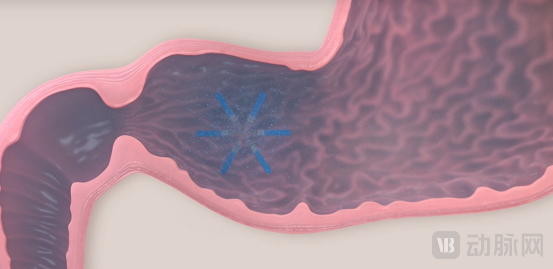
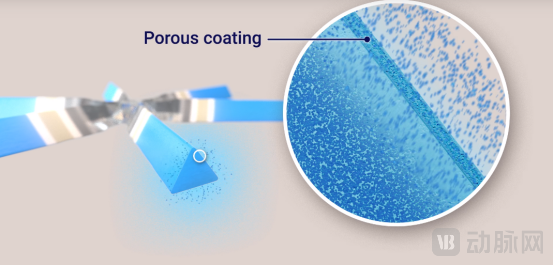
Image from Lyndra’s official website
Upon completion of drug delivery, these drug-loaded arms attached to the flexible core gradually soften and ultimately disintegrate. These components can then pass smoothly through the pylorus and be safely eliminated from the body.
For patients and caregivers, the LYNX™ drug delivery platform may offer a longer duration of action and superior pharmacokinetic performance compared to current immediate-release or extended-release oral formulations. Furthermore, using risperidone as an example, once-weekly dosing does not compromise tolerability.
Lyndra's Current Pipeline
At its inception, Lyndra primarily focused on developing therapies for psychiatric disorders, cardiometabolic diseases, and other conditions with significant unmet patient needs. Currently, Lyndra has pioneered the first oral, ultra-long-acting sustained-release therapy, enabling patients to take medication weekly rather than daily.
Long-acting oral risperidone (LYN-005) is one of Lyndra’s lead product candidates.
Currently, risperidone is one of the most commonly prescribed medications for patients with schizophrenia. However, adhering to prescribed regimens poses significant challenges for patients with central nervous system disorders and their caregivers. Unauthorized discontinuation of medication increases the risk of relapse and hospitalization, while also severely compromising quality of life. By substantially reducing dosing frequency, Lyndra’s long-acting oral therapy has the potential to enhance adherence, prevent relapse, and improve therapeutic outcomes, thereby helping patients alleviate the burden of daily medication sooner.
Lyndra also plans to initiate a pivotal safety study in 2024. This double-blind study will compare the safety of weekly oral long-acting risperidone with daily (immediate-release) tablets.
Lyndra is also developing long-acting oral therapies for cardiovascular disease, opioid use disorder, women’s health (contraception), and malaria. Notably, its long-acting oral levomethadone (LYN-014) for opioid use disorder has received FDA Fast Track designation for this indication.
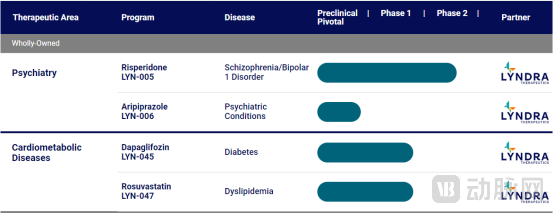
Lyndra’s Key Pipeline, Image Source: Lyndra Official Website
Long-Acting Formulations Make a Strategic Market Entry
The development of antipsychotic medications has undergone three generations of iteration: from typical antipsychotics, to second-generation agents represented by clozapine, risperidone, and olanzapine, and then to dopamine receptor agonists. Despite these iterative advancements in drug development, critical unmet needs persist.
In terms of market share, taking China as an example, the deepening implementation of national centralized procurement has gradually eroded the market share of conventional formulations from foreign pharmaceutical companies. Consequently, these companies are shifting their focus to long-acting formulations, which present greater technical challenges. In addition to improving patient adherence and reducing hospitalization rates among patients with schizophrenia, long-acting formulations serve as a key strategy for extending the lifecycle of drugs whose patents have expired.
Multinational giants continue to hold a competitive edge. Johnson & Johnson’s long-acting paliperidone palmitate formulation has maintained robust sales growth over the past decade, while domestic companies such as Luye Pharma and Livzon Pharmaceutical Group have also achieved breakthroughs in long-acting formulations in recent years.
Long-acting formulations for schizophrenia also face significant drug homogenization. New products targeting novel mechanisms from companies such as Karuna have entered late-stage clinical trials. Domestic enterprises, including Zai Lab and Soho Bio, are developing new schizophrenia drugs through in-licensing or in-house R&D. Lyndra’s drug delivery innovation is just one approach among these, yet it holds promising application prospects and a broad potential range of indicated conditions.
In *Hidden Valley Road*, patients who discontinued their medication due to various factors suffered not only from recurrent schizophrenia but also from a range of complications in the later stages, creating harrowing images that remain indelible throughout the book. Perhaps, thanks to innovative technologies from companies like Lyndra Therapeutics, such tragedies will one day be a thing of the past.