

SHIELD Project Featured on Nature Medicine Cover: Digital Therapeutics Platform 'Xiao Beike' Drives Near-Elimination of HBV Mother-to-Child Transmission in China
Not long ago, a top-tier international journalNature Medicine(2022 IF 82.9) Published as a cover article titledReal-world implementation of a multilevel interventions program to prevent mother-to-child transmission of HBV in Chinapaper.

Nature MedicineCurrent Issue Cover (Screenshot fromNature MedicineOfficial Website)
This original paper, co-authored by Professor Hou Jinlin and Chief Physician Liu Zhihua from the Department of Infectious Diseases at Nanfang Hospital as corresponding authors, and Dr. Yin Xueru from the Department of Infectious Diseases at Nanfang Hospital and Deputy Chief Physician Wang Wei from Shenzhen Bao'an District Maternal and Child Health Hospital as co-first authors, presents an interim analysis of the "Zero Mother-to-Child Transmission of Hepatitis B Project" (Small Shell Project). The results indicate that standardized management protocols can significantly reduce the rate of mother-to-child transmission of hepatitis B.
This represents a strong endorsement by leading international academic authorities of digital therapeutics and real-world studies, marking a milestone event for digital therapeutics in China and globally, and providing robust evidence to demonstrate the efficacy of digital therapeutics.
Hepatitis B (HBV), caused by the hepatitis B virus, remains incurable to this day and has had a profound impact on Chinese society. During the peak severity period from 1992 to 1995, China had 120 million HBV carriers, with a prevalence rate as high as 9.75%—far exceeding the World Health Organization’s definition of a “highly endemic area.” This situation triggered a series of social issues, making it truly deserving of the title “China’s No. 1 Disease.”
Since 1992, China has embarked on a long journey to combat hepatitis B, often referred to as the “number one disease” in the country. This effort reached a critical milestone in 2005, when the Chinese government explicitly included the neonatal hepatitis B vaccine in the Category I immunization program, making it fully free of charge. Between 1992 and 2006, the number of hepatitis B virus carriers in China decreased by 30 million—more than the entire population of Australia. Nevertheless, there remain 78 million hepatitis B virus carriers, representing a substantial burden.
As the hepatitis B vaccine has been incorporated into China’s Category 1 Immunization Program, the prevalence of hepatitis B among newborns in the country has declined continuously for many years. Nevertheless, mother-to-child transmission (MTCT) remains the primary route of hepatitis B virus (HBV) infection. Currently, approximately 23 million women of childbearing age in China are chronic HBV carriers. Despite the implementation of combined immunoprophylaxis for newborns, the MTCT blockade fails in about 5% of cases, resulting in more than 50,000 infants acquiring HBV infection through mother-to-child transmission each year.
Before a definitive cure for hepatitis B becomes available, 90% of patients infected with the hepatitis B virus during the neonatal period are likely to develop chronic infection, and one-quarter of them will ultimately progress to liver cirrhosis or hepatocellular carcinoma.
Theoretically, adding antiviral drugs for pregnant women with high viral loads at 24-28 weeks of gestation can further reduce the failure rate of blocking mother-to-child transmission. However, due to the lack of standardized clinical management guidelines and implementation standards for preventing hepatitis B virus (HBV) mother-to-child transmission in the past, this intervention has not achieved the desired effect.
In 2015, with the support of the Chinese Foundation for Hepatitis Prevention and Control, the teams led by Hou Jinlin and Liu Zhihua launched the “Little Shell Project for Zero Mother-to-Child Transmission of Hepatitis B” across China, implemented in three phases.
The first phase, from July 2015 to May 2018, was the pilot phase. Under the guidance of experts from the WHO Hepatitis Department, the project team drafted and released China’s first Clinical Management Protocol for Prevention of Mother-to-Child Transmission of Hepatitis B during this period. It provided standardized management recommendations across ten aspects, including screening and assessment of pregnant women with hepatitis B virus infection, management during pregnancy and delivery, timing of antiviral drug initiation and discontinuation, and infant immunization.
Meanwhile, the project team pioneered the innovative application of emerging digital therapeutics by developing the “Hepatitis B Mother-to-Child Transmission Blocking Assistance Management Software” (also known as “Little Shell”) to standardize follow-up care and data management for pregnant women with hepatitis B. The software has been promoted and implemented across 10 hospitals nationwide. Based on this platform, the project conducted a multicenter, prospective real-world study, which demonstrated that the rate of mother-to-child transmission of hepatitis B virus could be reduced to 0.88%.
Phase II, the full implementation phase, spanned from July 2015 to December 2025. During this period, the successful experiences from the pilot phase were rolled out across 178 hospitals nationwide, while large-scale prospective real-world studies were conducted to evaluate the effectiveness of standardized process management.
Phase III, the community coverage phase, spanned from January 2018 to December 2019. During this period, the project explored a “hospital-community integrated” management model for preventing mother-to-child transmission (PMTCT) of hepatitis B in Bao’an District, Shenzhen. By establishing “E-Clinics,” the project provided “one-stop” PMTCT services to pregnant women with hepatitis B within the jurisdiction. Concurrently, the project conducted community-based epidemiological studies, which demonstrated that the rate of mother-to-child transmission of hepatitis B could be reduced to 0.23%. These findings confirmed the feasibility of the “hospital-community integrated” PMTCT management model, laying the foundation for its broader promotion and application in the subsequent phase.
Nature Medicine has published the interim analysis of phase II results. According to the analysis, with the implementation of standardized management protocols, the rate of mother-to-child transmission (MTCT) of hepatitis B virus (HBV) can be further reduced to 0.23%. Compared with the group that did not follow standardized management protocols, the HBV MTCT rate in the standardized management group was significantly lower. Furthermore, subgroup analysis revealed that the HBV MTCT rate remained consistently low across patients from different geographic regions, economic backgrounds, types of healthcare facilities, and hospital tiers, indicating that the comprehensive intervention measures are highly effective, feasible, and scalable.
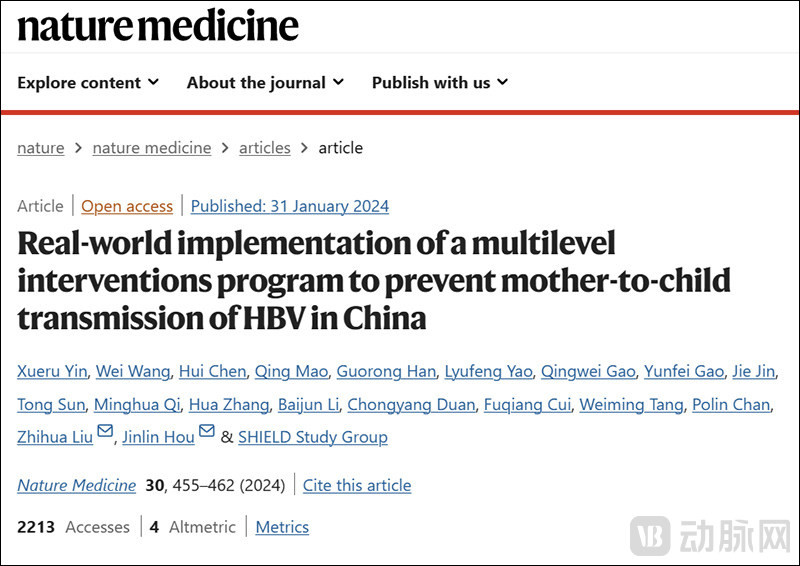
Screenshot of the paper (screenshot fromNature MedicineOfficial Website)
Notably, as a nationwide, multicenter, large-sample real-world study, the “Little Shell” Zero Mother-to-Child Transmission of Hepatitis B Project enrolled nearly 40,000 pregnant women with hepatitis B across China, representing the largest known global cohort for mother-to-child transmission of hepatitis B to date. It has demonstrated the effectiveness of comprehensive intervention strategies for preventing mother-to-child transmission of hepatitis B in both hospital-based and community populations, and for the first time, provided large-scale, high-quality evidence-based medical data confirming that the World Health Organization’s goal of eliminating mother-to-child transmission of hepatitis B is achievable.
Among these, the Hepatitis B Mother-to-Child Transmission Blocking Assistance Management Software (Xiao Beike), developed by Zhilan Health, is key to the project’s implementation, as it addresses critical pain points in controlling mother-to-child transmission of hepatitis B from several aspects.
First, one of the main reasons why mother-to-child transmission (MTCT) of hepatitis B is difficult to control lies in the long follow-up period, which makes it challenging to ensure long-term patient adherence. Once pregnant, women with chronic hepatitis B virus (HBV) infection must undergo regular monitoring of liver function and viral load. However, there is a high likelihood of poor patient adherence or missed visits due to various reasons. The lack of coherent strategies and management for subsequent follow-up screening poses challenges to the ongoing treatment of mothers and the management of infant vaccination follow-up.
Secondly, patients’ insufficient professional knowledge and awareness of hepatitis B hinder effective self-management. Currently, prevention of mother-to-child transmission (PMTCT) of hepatitis B is primarily achieved through the administration of hepatitis B immunoglobulin (HBIG) and vaccination. Although this process appears straightforward, unexpected obstacles in practical implementation can lead to prophylaxis failure. On one hand, patients lack specialized biological and medical knowledge, resulting in inadequate psychological acceptance and an inability to correctly perceive the hazards of hepatitis B; additionally, prejudice may prevent them from timely access to diagnostic and therapeutic advice as well as health education. On the other hand, patients may receive insufficient feedback, incentives, and supervision during self-management, making long-term adherence difficult and leading to poor compliance.
Finally, significant disparities in medical standards persist across regions, hospitals of different tiers, and various types of healthcare institutions. Some primary care facilities demonstrate insufficient awareness and management capabilities regarding hepatitis B during pregnancy; some cases are left untreated to follow their natural course, while others are subject to overtreatment. This underscores the need to provide primary care physicians with an accessible, standardized tool for clinical decision support, building upon continuing medical education.
Xiao Beike can automatically push follow-up reminders at specific key follow-up points in accordance with clinical management processes, and further confirm via a professionally configured call center. This provides patients with adequate feedback, monitoring, and reminders, thereby ensuring greater reliability in achieving successful interruption, while also offering convenient access and operation.
Furthermore, it can intelligently diagnose and analyze test results, providing clinical decision support to physicians. This effectively reduces their documentation burden. Meanwhile, the design linking maternal and infant information enables a comprehensive display of indicators for both the mother and the newborn, thereby facilitating a more thorough understanding of the current clinical status of hepatitis B patients and their infants, and aiding in the formulation of subsequent treatment plans.
More importantly, in addition to enabling intelligent follow-up across the entire care continuum, reducing the follow-up burden on departments and physicians, facilitating straightforward and efficient end-to-end paired management, supporting diagnostic and therapeutic management, and improving patient adherence, Xiao Beike was specifically designed with clinical research in mind. It helps strengthen evidence-based data accumulation and scientific research, promotes real-world studies on mother-to-child transmission blockade of hepatitis B, and further informs and supports clinical practice.
The research findings have also received high praise from domestic experts.
Huang Hefeng, an academician of the Chinese Academy of Sciences and Dean of the International School of Medicine at Zhejiang University, stated that the “Little Shell Hepatitis B Mother-to-Child Zero Transmission Project” has established 10 demonstration bases across China. Building on this foundation, the project has expanded to 178 hospitals, covering all 31 provinces, municipalities, and autonomous regions nationwide. It promotes mature technologies and standardized management processes to participating hospitals, which in turn extend their reach to surrounding areas, particularly remote western regions such as Tibet and Qinghai. This initiative has effectively improved the local status of hepatitis B prevention and control and enhanced the health outcomes of women and children.
Wang Fusheng, an academician of the Chinese Academy of Sciences and Director of the Department of Infectious Diseases at the Fifth Medical Center of the PLA General Hospital, stated that the multidisciplinary, end-to-end “one-stop” service provided to hepatitis B-positive mothers and their newborns not only advances efforts to eliminate mother-to-child transmission but also enhances service quality and management efficiency. Furthermore, it offers the possibility of close follow-up and timely treatment for newborns in whom prophylaxis has failed. He also expressed anticipation for subsequent linkages to improve the management of such cases.
Zhang Wenhong, Director of the National Center for Infectious Diseases and Director of the Department of Infectious Diseases at Huashan Hospital Affiliated to Fudan University, also expressed high appreciation for the project’s innovative application of digital health technologies in the management of prevention of mother-to-child transmission (PMTCT). He noted that utilizing mobile health tools for the follow-up management of pregnant women with hepatitis B not only improved research efficiency but also enhanced these patients’ adherence to follow-up protocols, thereby providing data support for the comprehensive implementation of PMTCT in the future.
Internationally, the “Zero Mother-to-Child Transmission of Hepatitis B Project” by Xiao Beike has also garnered significant attention. Professor Hou Jinlin has been repeatedly invited by the World Health Organization (WHO) and the World Hepatitis Summit. In May 2023, at the invitation of Dr. Philippa Easterbrook from WHO Headquarters, he joined the WHO Expert Panel for the Update of Hepatitis B Guidelines and participated throughout the revision process of the latest WHO Hepatitis B Guidelines.
Meanwhile, the project has also driven revisions to international hepatitis B guidelines, with its preliminary research findings cited as early as 2020 in the WHO Guidelines on Hepatitis B Mother-to-Child Transmission Prevention. A WHO delegation visited project implementation sites in Guangzhou, Shenzhen, and Haikou for on-site inspections on three separate occasions, highly commending the project for accelerating mother-to-child transmission prevention efforts in China and globally.
In the near future, we will also witness the former “No. 1 Disease in China” become a thing of the past.
Patient-centered, software-driven digital therapeutics deliver preventive, management, or therapeutic interventions for diseases based on evidence-based medicine. Their essence lies in clinical problem-driven research and the exploration of innovative medical applications.
It is worth noting that “Xiao Beike,” an auxiliary management software for preventing mother-to-child transmission of hepatitis B, is also one of the pioneers of digital therapeutics in China. Its initial development coincided with the nascent stage of digital therapeutics globally, at a time when there were no innovative digital therapeutic products in China that had truly received regulatory approval. The journey from zero to one was fraught with numerous challenges and difficulties, making its path a remarkable and thought-provoking endeavor.
For instance, digital therapeutics inherently possess the dual attributes of data algorithms and serious medical care. Relying solely on either internet product thinking or traditional medical thinking for development has certain limitations. The development of digital therapeutic products must not only comply with evidence-based medicine and medical device regulatory requirements but also enhance patient adherence through thoughtful product design, thereby ensuring that their clinical application value meets the needs of both physicians and patients.
Furthermore, as a software medical device, its product development and registration filing require a dual-track approach. The registration filing for medical devices is a systematic endeavor that necessitates careful consideration of every stage, from quality management system establishment and project initiation to product testing and clinical trials for registration.
Fang Qiuxue, Marketing Director at Zhilan Health, acknowledged that Little Shell underwent multiple “zero-to-one” cycles during its R&D phase to explore and iteratively upgrade both the medical aspects and the product itself: “Digital therapeutics is a relatively new field, requiring product development and market launch to be considered within the framework of a medical device quality management system. However, we had to feel our way forward, sometimes treating digital therapeutics purely as an internet product, and at other times focusing solely on evidence-based data while overlooking the unique characteristics of mobile applications, which led us down many detours.”
Wu Yifeng, Business Director of the National Precision Medicine Industry Innovation Center, commented on this issue, noting that transforming concepts into products and moving from the laboratory to the market has always been a major challenge in the translation of clinical research. “The key lies in achieving alignment between scientific research and patient needs, between technological development and clinical application, and between academic value and market value,” he stated.
Wu Yifeng believes that clinical needs are the foundation for achieving translational innovation. Innovation progresses in a spiral manner, requiring the identification and resolution of problems through continuous clinical practice. From an R&D perspective, digital therapeutics, by working closely with clinicians and guided by clinical needs, conduct organized research aimed at patient application and value architecture. This approach provides a new pathway for effectively integrating the entire chain of clinical practice, scientific research, translation, and application.
After recognizing that the challenges encountered in the R&D of “Xiao Beike” were, in fact, common bottlenecks in digital therapeutic product development, Zhilan Health chose to extend and expand upon the experience gained from this project. It innovatively proposed a CDMO (Contract Development and Manufacturing Organization) model and end-to-end solutions for digital therapeutics, establishing a comprehensive service and clinical translation system encompassing digital therapeutic software, monitoring devices, combined supply of pharmaceuticals and medical devices, and data service platforms. Furthermore, it successfully developed an intelligent foundational platform for incubating digital therapeutics to support clinical innovation and translation, having already facilitated the commercialization of more than fifty digital therapeutic research achievements.
The good news is that, as a form of “new quality productive forces,” the advantages of digital therapeutics are rapidly gaining recognition, and the current regulatory approval environment has improved significantly.
Professor Wang Chenxi, a senior domestic regulatory expert in the industry, told VCBeat that in recent years, regulatory authorities at all levels in China have attached great importance to the supervision of digital medical products, and have successively issued relevant standards, guidelines, and documents related to software, cybersecurity, mobile healthcare, and artificial intelligence. “It can be said that China has basically established a regulatory system for digital medical products,” he introduced.
He believes that, as an important component of the digital health product ecosystem, digital therapeutic medical devices possess the general characteristics of digital health products while also having their own distinct features. From a regulatory perspective, it is essential to fully recognize the unique risks associated with digital therapeutic medical devices, actively conduct research on quality evaluation methods, and propose risk mitigation measures to ensure the safety and efficacy of these products.
For instance, from a physician’s perspective, clinicians can promptly adjust the timing and intensity of in-hospital treatment based on therapeutic outcomes. However, the application scenarios of digital therapeutics extend beyond the hospital setting. This results in physicians’ inability to maintain full control over patients’ treatment courses, leading to delayed awareness of patients’ conditions and precluding real-time intervention.
From the hospital’s perspective, as certain digital therapeutics products require interaction both within and outside the hospital setting, issues concerning medical data security and patient privacy protection arise. Meanwhile, whether patients obtain these products through physical delivery or online distribution also poses challenges in prescription management.
From the patient’s perspective, the combined use of digital therapeutics with medications and medical devices often increases the treatment burden, including time and financial costs. Furthermore, for digital therapeutics that incorporate multimedia elements such as games and audio-visual tutorials as active ingredients, patient psychological fatigue toward these multimedia components may also affect treatment efficacy.
Currently, regulatory authorities are working intensively to develop multiple standards, guidelines, and documents related to digital therapeutics.
For instance, in 2023, the Center for Medical Device Standards Administration of the National Medical Products Administration (NMPA) researched and compiled the “Guiding Principles for the Classification and Definition of Digital Therapeutics Software in Rehabilitation,” which has become a guiding document for product classification and definition. This year, the key project “Research on Quality Evaluation Methods for Digital Therapeutics Medical Devices” under the NMPA’s initiative to build a regulatory science system was officially launched. Led by the National Institutes for Food and Drug Control (NIFDC), the project focuses on attribute definition, data governance, human factors engineering, and cybersecurity. It aims to elucidate challenges encountered in the regulation of digital therapeutics medical devices and propose response strategies and constructive recommendations.
In terms of standardization, the first draft of China’s inaugural industry standard, “Special Quality Requirements for Digital Therapeutics Medical Devices,” led by the National Institutes for Food and Drug Control (NIFDC), has been completed. Upon approval of the project proposal, it will formally enter the standard development phase. The standard will focus on quality risk control throughout the product lifecycle, establish requirements for evaluation methods, and support regulatory oversight.
“In short, this series of measures by the regulatory authorities will guide and standardize the healthy development of the industry, ensure the safety and efficacy of products, and safeguard public health,” said Wang Chenxi.
“Digital therapeutics medical devices are products that integrate multidisciplinary technologies, with rapid technological iteration. The introduction of new technologies inevitably brings new risks. I also hope to see the swift implementation and application of digital therapeutics medical device products, and the prompt issuance of relevant policies covering design and R&D, review and approval, and clinical use, so as to regulate the healthy development of the industry,” he added.
These initiatives are gradually yielding results. According to the 2023 White Paper on the Digital Therapeutics Industry, the number of “digital therapeutics” approved in China has shown a clear accelerating trend in recent years. As of 2023, 88 digital therapeutics had received regulatory approval and obtained medical device certificates, with their applications expanding into an increasing number of disease areas.
Xiao Beike’s “Zero Mother-to-Child Transmission of Hepatitis B Project” Has Been FeaturedNatureFeatured on the cover of a Nature subsidiary journal, this work represents an academic breakthrough in the innovative translation of research driven by clinical application needs in China. It provides detailed implementation strategies, successful practical experience, and robust data support for preventing mother-to-child transmission of hepatitis B virus (HBV), holding significant value for global efforts to eliminate HBV mother-to-child transmission.
According to the WHO’s World Health Statistics 2023, the prevalence of hepatitis B surface antigen (HBsAg) among children under five years of age is 2.53% in the African Region and 0.84% in the Eastern Mediterranean Region. Clearly, these regions, as well as the South-East Asia Region, have a substantial need for interventions to prevent mother-to-child transmission (MTCT) of hepatitis B. Little Shell’s “Zero MTCT of Hepatitis B Initiative” can promote China’s successful experiences in preventing MTCT of hepatitis B, thereby better contributing to the building of a global community of health for all.
A Future Without Hepatitis B Is Undoubtedly a Better One.
References:
Left Yi, Li Shanshan | 8:00 Health News: The Rise and Fall of China’s No. 1 Disease—From 120 Million to 70 Million People