

Vico Therapeutics Files for IPO: Pioneering ASO Therapy VO659 Targets Huntington’s Disease at Its Genetic Root in $8.6B RNA Therapeutics Market
Vico Therapeutics
RNA Modulation Therapy Developer
A Dancing Pig Was Featured in the Prestigious Academic Journal Cell.
However, this “dance” appears somewhat eerie; the piglet stands unsteadily with convulsing limbs, bearing no resemblance to terms like “cute” or “amusing.” Rather than eliciting applause from viewers, the scene is more likely to evoke confusion.
In fact, this is not genuine dancing. The “dancing pig” was developed by an international research team comprising scientists from the Key Laboratory of Regenerative Biology of the Chinese Academy of Sciences, Jinan University, and other institutions. In 2018, the team successfully generated the world’s first Huntington’s disease gene-knockin pig using CRISPR/Cas9 gene-editing technology and somatic cell nuclear transfer (SCNT). This model was created to accurately mimic human neurodegenerative diseases for drug screening and the identification of therapeutic strategies.
Huntington’s Disease: While the name may sound romantic, it is in fact a “dance of death” that torments patients over the long term. In 1872, George Huntington, a graduate student at Columbia University in the United States, first accurately described it as a typical autosomal dominant genetic disorder—if one parent is affected, their children have a 50% chance of inheriting the disease; if a child does not inherit the disease, their descendants will not be affected either.
Since then, the medical community and the public have gradually come to refer to this condition as Huntington’s disease, which initially presents with brief, uncontrollable facial grimacing, head nodding, and finger twitching. As the disease progresses, involuntary movements worsen progressively. Due to the characteristic choreiform involuntary movements, dysphagia, and dysarthria observed in patients, the condition is also known as Huntington’s chorea.
Currently, the treatment of Huntington’s disease is primarily symptomatic and palliative. In other words, it aims to improve quality of life by alleviating tremors (using VMAT2 inhibitors and benzodiazepines) and psychiatric symptoms (using SSRIs and SNRIs), but it still cannot cure the disease or alter its progression.
Fortunately, both scientific research and capital are exerting significant efforts.
In January 2024, the prestigious journal Nature published a breakthrough in Huntington’s disease research: scientists had tamed the lethal biological triggers. Meanwhile, Vico Therapeutics (“Vico”), a company developing antisense oligonucleotide (ASO) therapies, announced the completion of a $60 million Series B financing round, dedicated to pursuing a cure for Huntington’s disease.
The Management Team Brought Together by the "Dance of Death"
Although Vico’s two founders, Josh Mandel-Brehm and Luc Dochez, are featured in the board member gallery on the company’s official website, they do not occupy the central spotlight. Due to the lack of detailed reporting from the company’s early days, it is now difficult to verify the founders’ original thoughts and intentions. Nevertheless, their professional backgrounds bear the hallmark of “slashies”—individuals with diverse, multi-faceted career paths.
Perhaps driven by the ambition to scale greater heights, Dochez has served at multiple companies without pausing his exploratory endeavors, with his areas of interest including cellular immunotherapy and small-molecule antibody drugs for oncology. Meanwhile, Mandel-Brehm serves as both a board member of Vico Therapeutics and the CEO of CAMP4 Therapeutics, which, coincidentally, is also a company dedicated to the development of antisense oligonucleotide therapies.
Meanwhile, a review of the resumes of the three current leaders reveals that “Huntington’s disease” stands out prominently, with striking consistency.
In August 2022, Vico Therapeutics officially announced the appointment of Micah Mackison as Chief Executive Officer, stating that he would bring significant leadership experience in biotechnology and pharmaceuticals to the company.

Founding team, from left to right: Mackison, Datson, and Schobel
Prior to joining Vico, Mackison served at Locanabio, an RNA-targeted gene therapy company, as Chief Business Officer and Executive Vice President of Strategy and Corporate Development. During his tenure at Locanabio, Mackison’s primary contribution was establishing a division focused on genetic neurological disorders. As is common for biotech executives who often have experience at multinational corporations (MNCs), Micah also held corporate finance roles at Eli Lilly and Pfizer.
Previously, Mackison served as Head of Corporate Strategy at Lundbeck, with a focus on neuroscience. Earlier in his career, he was Director of Corporate Development and Mergers & Acquisitions at Ovation Pharmaceuticals, a neuroscience-focused company that launched the first product for Huntington’s disease before being acquired by Lundbeck.
Dr. Nicole Datson, Chief Scientific Officer responsible for discovery and non-clinical drug development, has a long-standing connection to Huntington’s disease and extensive expertise in antisense oligonucleotides.
She earned her Ph.D. in Molecular Genetics from Leiden University in the Netherlands and served as an Assistant Professor at the Department of Pharmacology and Human Genetics of Leiden University Medical Center (LUMC) from 2005 to 2013. During this period, she also led a research group in molecular neuroscience, focusing on identifying genes and pathways regulated by stress hormones in the brain as potential drug targets for treating stress-related brain disorders.
Datson has a strong background in molecular neuroscience and is a member of the International Huntington’s Disease Collaborative Research Group, which cloned the Huntington’s disease gene as early as 1993.
Meanwhile, she has over two decades of preclinical research experience in both academia and industry. Prior to joining Vico Therapeutics, she served as Senior Director of Drug Discovery and Early Preclinical Development at BioMarin Nederland from 2015 to 2019. Previously, she was Head of Preclinical Development at Prosensa Therapeutics from 2013 to 2015, where she focused on the development of antisense oligonucleotide-based therapies.
Dr. Scott Schobel, Chief Medical Officer, previously served as Group Medical Director at Roche before joining Vico. During his tenure, he spearheaded the huntingtin protein research program to clinical endpoints and co-led a special task force that developed a novel, biology-based staging framework for Huntington’s disease, advancing huntingtin-lowering therapeutic candidates into Phase 3 clinical trials.
Prior to joining Roche, Dr. Schobel, who earned his M.D. from the University of North Carolina, served as an Assistant Professor of Clinical Psychiatry at Columbia University Medical Center, where he focused on researching hippocampal dysfunction in neurological and psychiatric disorders. He also served as the Medical Director of the Center for Prevention and Evaluation at Columbia University Medical Center, a clinical service dedicated to treating high-risk populations with mental disorders, particularly adolescents.
VICOMER™ RNA Modulation Platform: Starting from Huntington’s Disease
Vico’s decision to focus on Huntington’s disease is perhaps easy to understand: Huntington’s disease is a neurodegenerative disorder caused by a single-gene mutation, making it an ideal disease model and a foundation for studying polygenic disorders. Furthermore, Alzheimer’s disease, Parkinson’s disease, and amyotrophic lateral sclerosis (ALS) are also neurodegenerative diseases. Due to the lack of suitable animal models for drug screening, there are currently no effective curative treatments for these conditions.
Taking Huntington’s disease as an example, its cause is a mutation in the gene responsible for producing huntingtin protein in the patient’s body. This mutation results in an enlarged huntingtin protein that is more prone to accumulation. Research suggests that the increased viscosity of huntingtin protein promotes neuronal death in the brains of patients with Huntington’s disease. As the disease progresses, patients experience gradual deterioration in various behavioral capabilities, including motor function, learning, cognition, and emotional regulation.
Vico Therapeutics’ VICOMER™ platform is an antisense oligonucleotide platform designed to target RNA. We can begin to understand it by examining gene function.
Human genes are composed of DNA, which contains special codes that promote cellular function; utilizing this information, cells can produce various proteins necessary for maintaining their functions. Antisense oligonucleotides, on the other hand, can interfere with the critical stage between DNA and protein synthesis, namely the process by which DNA is transcribed into messenger RNA (mRNA).
mRNA is similar to DNA but exhibits lower stability. Furthermore, the two differ significantly in their chemical properties; mRNA serves as a template for protein synthesis, and without it, proteins cannot be produced. In other words, a key characteristic of human mRNAs is that they contain precise codes encoding each specific protein, which implies that designed antisense oligonucleotides can target and modulate protein production.
Vico’s VICOMER™ platform primarily targets trinucleotide repeat expansion (also known as triplet repeat expansion, tri-nucleotide repeat expansion, or trinucleotide amplification), a type of DNA mutation that can lead to trinucleotide repeat disorders. In dynamic genetics, this is referred to as a dynamic mutation.
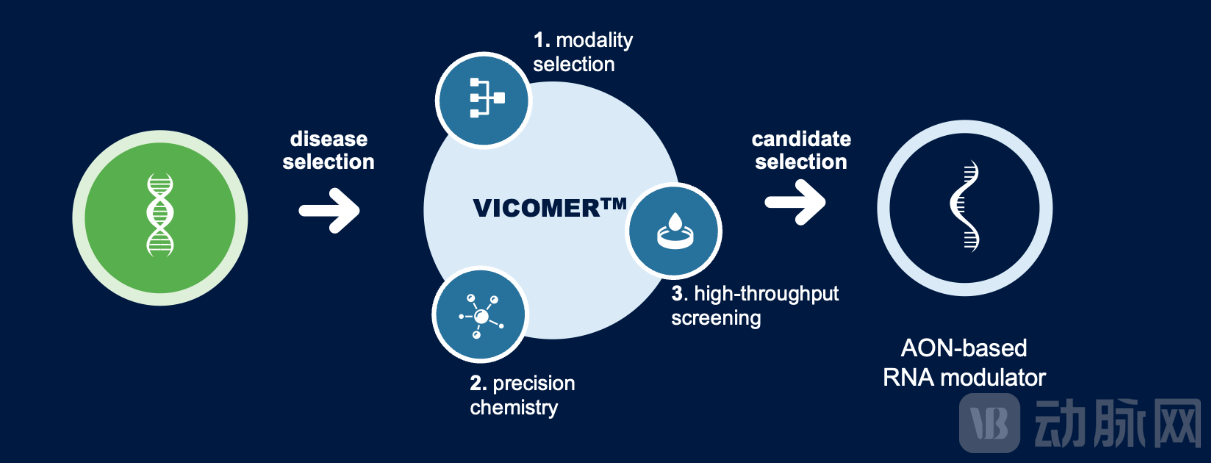
VICOMER™ Platform, from the official Vico website
The number of trinucleotide repeat expansions is positively correlated with disease progression, severity, and age of onset in a range of trinucleotide repeat disorders, including spinocerebellar ataxia types 1 and 3, and Huntington’s disease; meanwhile, these conditions are also referred to as polyglutamine (PolyQ) diseases.
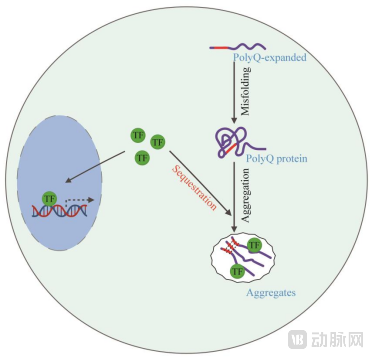
Currently, the VICOMER™ platform has been demonstrated to preferentially reduce levels of mutant polyglutamine. The lead candidate, VO659, is currently in Phase 1/2a clinical development for the treatment of spinocerebellar ataxia types 1 and 3, as well as Huntington’s disease. According to public reports from Vico Therapeutics, this represents the first antisense oligonucleotide drug in clinical development targeting the nine known polyglutamine diseases caused by trinucleotide repeat expansions.
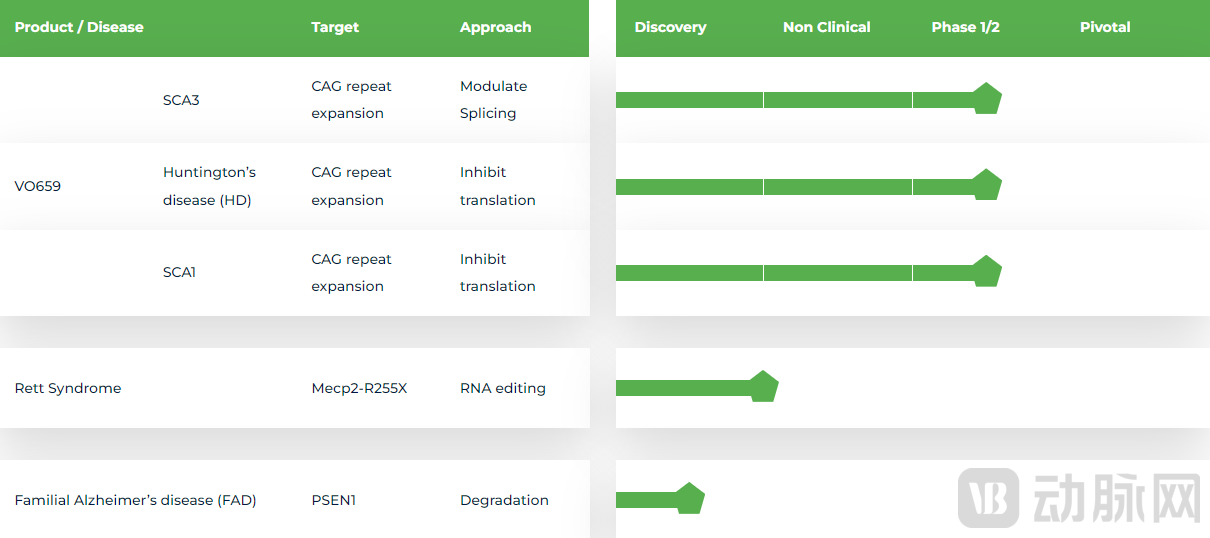
Vico Pipeline, from the Vico Official Website
According to public information from Vico Therapeutics, the funding secured at the beginning of 2024 will be used to accelerate the advancement of its lead candidate, VO659. The company continues to evaluate the trial, which is designed to assess the safety and tolerability of intrathecal administration of multiple ascending doses of VO659 in patients with mild-to-moderate spinocerebellar ataxia type 1 (SCA1) and type 3 (SCA3), as well as early-stage Huntington’s disease. The first patient was dosed in April 2023.
Unlocking an $8.6 Billion Market
More than two decades have passed since the approval of the world’s first antisense oligonucleotide drug in 1998. Although the development of small nucleic acid drugs has experienced a trough marked by market withdrawals, these therapies have gradually ushered in a period of rapid growth in recent years. Leveraging advantages over traditional pharmaceuticals—such as rapid target screening, higher R&D success rates, broader therapeutic indications, prolonged pharmacological effects, and lower rates of drug resistance—a steady stream of small nucleic acid drugs, including antisense oligonucleotides and siRNA therapeutics, has reached the market. This progress brings new hope for genetic and rare diseases that previously lacked effective treatment options.
According to analyses by Evaluate Pharma and BCG, the global market for small nucleic acid therapeutics is projected to reach $8.6 billion in 2024. In the future, the continuous approval of small nucleic acid drugs in clinical development, particularly those targeting indications with large patient populations, will further drive rapid market growth.
With companies such as Vico Therapeutics joining the development of curative therapies for Huntington’s disease, market expectations are increasingly optimistic. Furthermore, as the incidence of Huntington’s disease continues to rise and becomes more prevalent in North America, the demand for effective treatments will increase, thereby driving overall market growth and attracting more researchers and enterprises to join the R&D efforts.
Currently, curative therapies for neurodegenerative diseases, including Huntington’s disease, have not yet reached maturity. In the coming years, it remains difficult to assert with certainty that drugs under development will inevitably slow disease progression at its source. Nevertheless, the series of clinical trials in neurodegenerative diseases, driven by both scientific research and market forces, offers new hope.