

Suzhou Bangqi Biotech Launches Fully Automated Flow Cytometry Fluorescence Immunoassay Analyzer BQ-TF6000, Ushering in a New Era for Autoimmune and Allergy Multiplex Testing
On March 16, Suzhou Bangqi Biotechnology Co., Ltd. (hereinafter referred to as “Bangqi Biotech”) grandly launched the BQ-TF6000 Fully Automated Flow Fluorescence Chemiluminescence Immunoassay Analyzer at the 21st China Association of Clinical Laboratory Practice (CACLP) Expo.By achieving breakthroughs in its proprietary optical and fluidic systems as well as its microsphere technology, the BQ-TF6000 has driven technological innovation in flow fluorescence detection platforms. With fully automated, ultra-high-speed, high-throughput, and multiplexed testing capabilities, it ushers in a new era of multiplex assays in the fields of autoimmunity and allergy.
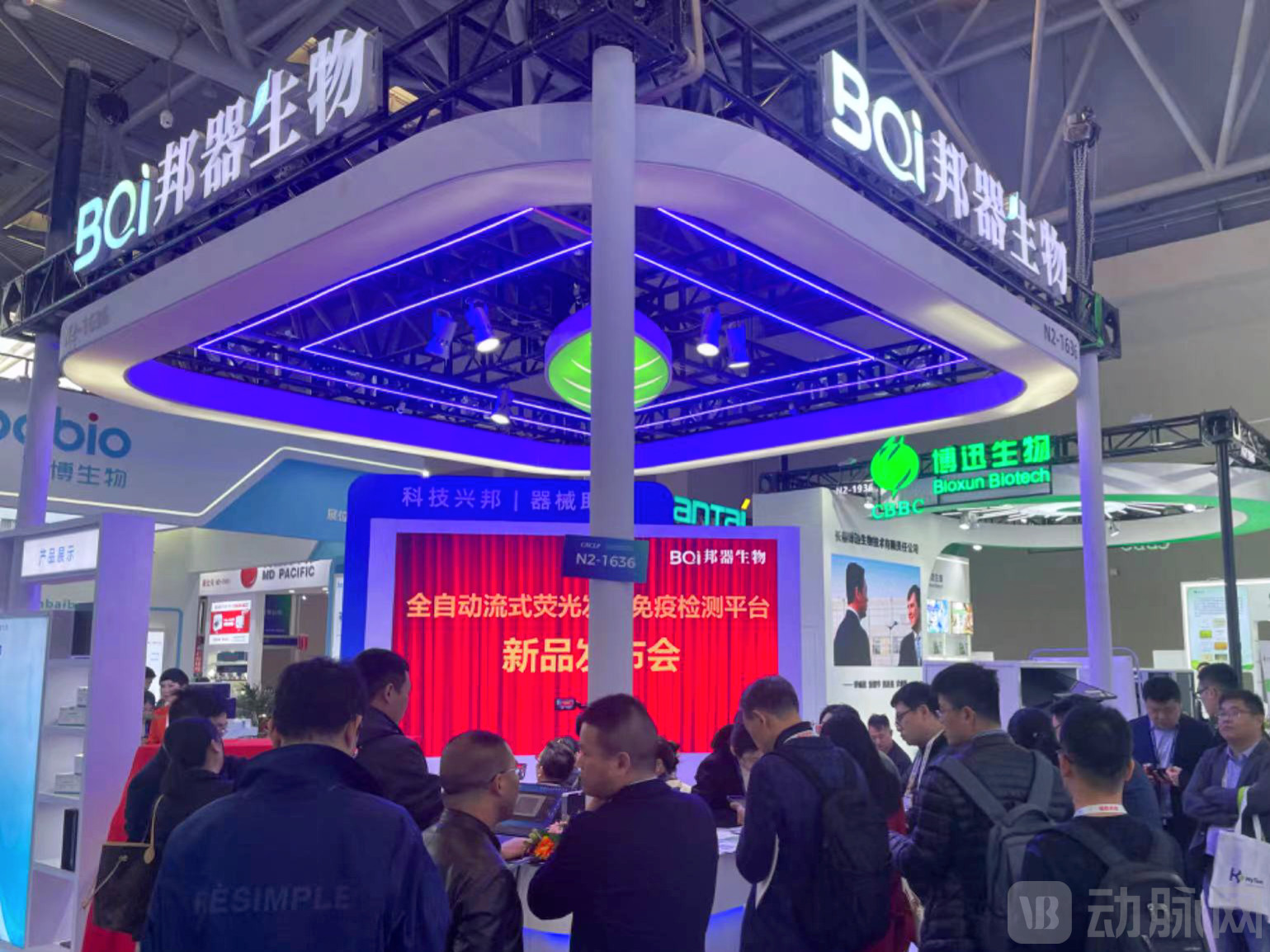
CACLP: New Product Launch Event by Bangqi Biotechnology
Immune response is the process by which the body distinguishes “self” from “non-self,” mounts an immune response to eliminate foreign antigens or induces immune tolerance, thereby maintaining internal homeostasis. However, excessive immune responses or erroneous recognition of harmless proteins (self-antigens) can lead to allergic reactions or autoimmune diseases.
Autoimmune diseases can affect a single organ or be systemic, with symptoms varying depending on the type of antigen involved.Systemic lupus erythematosus, polyarteritis nodosa, scleroderma, dermatomyositis, mixed connective tissue disease, autoimmune liver disease, autoimmune encephalitis, and idiopathic membranous nephropathy were once regarded as “unexplained” “intractable diseases” or “rare diseases.” With advances in diagnostic technologies, these conditions have since been classified as “autoimmune diseases.”
Driven by surging clinical demand, the need for upgrading laboratory equipment, and the continuous expansion of cost-reduction and efficiency-enhancement initiatives in primary healthcare institutions, China’s autoimmune diagnostics market is experiencing a rapid growth window.In responding to market demands and achieving greater product accessibility, domestic manufacturers of autoimmune diagnostics have emerged, gradually establishing a localized industrial value chain.
Currently, the diagnosis of autoimmune diseases is undergoing a period of rapid development, with domestic manufacturers entering the market and the iteration of multiple methodological platforms reshaping the autoimmune and allergy diagnostics market.
On the one hand, domestic substitution is entering a period of rapid growth.To achieve technological self-reliance and controllability in key sectors, the government has increased investment and support for the research and development of domestic in vitro diagnostic (IVD) platforms. A series of policies promoting the substitution of high-end scientific instruments with domestically produced alternatives have been consecutively issued, further restricting the procurement of imported equipment and creating a favorable policy environment for domestic substitution. The Government Procurement Law of the People's Republic of China also explicitly stipulates that where domestically produced drugs and medical devices meet the requirements, government procurement projects shall, in principle, procure domestic products, thereby gradually increasing the level of domestic equipment configuration in public medical institutions.
On the other hand, the high costs and lengthy turnaround times associated with autoimmune disease diagnostics are driving domestic manufacturers to accelerate product iteration.Underdevelopment at the primary care level and evolving clinical needs have become new growth drivers.One of the clinical characteristics of autoimmune disease diagnosis is that the process of identifying and diagnosing these conditions is highly time-consuming. No single biomarker can effectively and accurately diagnose autoimmune diseases; therefore, multiple testing methods and a combination of indicator results are required for comprehensive validation. A more practical challenge lies in the low penetration rate of autoimmune testing panels, which leads to longer turnaround times and continuously rising healthcare costs.
At a deeper level, this has indirectly led to significant challenges in China’s autoimmune diagnostics market. For a long time, limited public awareness and insufficient attention from healthcare institutions have been key reasons why autoimmune diseases are overlooked, particularly within widespread primary care facilities. Since symptoms in autoimmune patients are often not critical, healthcare providers may underestimate their severity, allowing patients ample therapeutic window to seek care at higher-level hospitals.
More importantly, most secondary and lower-tier hospitals lack the capability to diagnose autoimmune diseases. Limiting factors include the high cost of imported diagnostic equipment, low automation levels in early-stage diagnostic devices, high operational startup costs, and an insufficient reserve of specialized personnel.Low diagnostic capabilities have also resulted in low confirmed diagnosis rates for autoimmune diseases. Patients with autoimmune conditions are often forced to seek care across various specialties, such as nephrology, hepatology, hematology, and endocrinology, leaving a large population of potential patients undiagnosed in China.
In 2019, the National Health Commission issued a document requiring and encouraging hospitals to establish departments of rheumatology and immunology. All tertiary hospitals across China were mandated to set up rheumatology departments with at least 10 beds, and to have independent clinical laboratories capable of supporting routine testing for rheumatic and immune-mediated diseases. Common conditions such as rheumatoid arthritis, gouty arthritis, and allergic asthma are all included within the scope of rheumatology and immunology departments. If “autoimmune diseases” is replaced by “rheumatic diseases,” the vast potential of the domestic market becomes even more apparent.
Rising prevalence of autoimmune diseases, growing public awareness, and increasing demand for quality of life have led primary healthcare institutions, which are continuously seeking new business growth drivers, to recognize the clinical opportunities in autoimmune disease management.
In the current landscape shaped by medical insurance cost containment, healthcare reform, and centralized procurement, secondary and lower-tier medical institutions have placed greater emphasis on cost-effectiveness. Meanwhile, the need for equipment upgrades in tertiary hospitals has also been prioritized, further expanding the market for domestic substitution.
A major trend is the full automation of instruments and testing processes, including labor liberation; ensuring testing safety; reducing report turnaround time to improve efficiency; and standardization to guarantee reproducibility and result reliability.Taking immunoblotting as an example, early diagnostic reagents required manual operation in accordance with the instructions for use, resulting in low efficiency and interpretation accuracy susceptible to various interfering factors. These have since evolved into semi-automated testing platforms that still require manual assistance and monitoring, with both precision and turnaround time needing further improvement. Industry insiders indicate that more than 70% of clinical laboratory equipment currently used in hospitals still relies on manual methods and semi-automated testing.
Suzhou Bangqi Biotechnology Co., Ltd. is a typical domestic manufacturer that persists in technological innovation in both equipment and reagents.In 2022, Bangqi Biotechnology launched its first self-developed product, the BQ-BM100 Fully Automated Immunoblotting Analyzer. Featuring a fully automated and intelligent design that covers the entire workflow from loading primary tubes to result interpretation, the system requires no personnel supervision during operation. It allows simultaneous processing of different assays, generating over 5,000 results concurrently. With dual-module operation and parallel multi-assay capabilities, it can process 100 samples per run, reducing the turnaround time from the previous 3–7 days to as little as 1.5 hours.
Having achieved high precision, high throughput, and high speed in immunoblotting methods, Bangqi Biotechnology has expanded into a new methodological testing platform: flow cytometry-based fluorescent immunoassay technology.
The newly launched BQ-TF6000 Fully Automated Flow Fluorescence Chemiluminescence Immunoassay Analyzer takes a significant step forward, supporting automatic dilution, automatic cuvette replenishment, automatic washing, and automatic transfer of reaction cuvettes, requiring no manual intervention throughout the entire process. Through bidirectional LIS communication, test status can be monitored in real time. Furthermore, the BQ-TF6000 achieves fully quantitative detection, greatly enhancing accuracy and stability.
Continue tracing downward,The second major trend is the high precision and high speed of test results.As previously mentioned, no single laboratory test can effectively and accurately diagnose autoimmune diseases. In the clinical diagnosis of autoimmune diseases, high-efficiency multi-parameter data can provide physicians with a basis for diagnosis and significantly shorten the diagnostic timeframe. Therefore, combined multi-parameter testing is also one of the key competitive advantages for enhancing efficiency.
Flow Cytometry Fluorescence Technology (also known as Multiplex Liquid Chip) enables the simultaneous detection of dozens of biomarkers within a single reaction system. Using only one set of reagents and consumables, it facilitates multi-analyte testing with flexible combination options, allowing for the accurate quantitative detection of 200–500 different biological molecules in a single tube.It features high throughput, high sensitivity, parallel detection, a high degree of automation, a wide linear range, good reproducibility, and low overall cost.
In terms of performance, the BQ-TF6000 features a constant throughput of 120 samples/hour, with a maximum online throughput of up to 9,120 tests/hour (high-throughput); it supports simultaneous quantitative detection of more than 60 analytes; CV ≤ 3%; and its modular design supports multi-unit integration and connection to automated laboratory assembly lines.
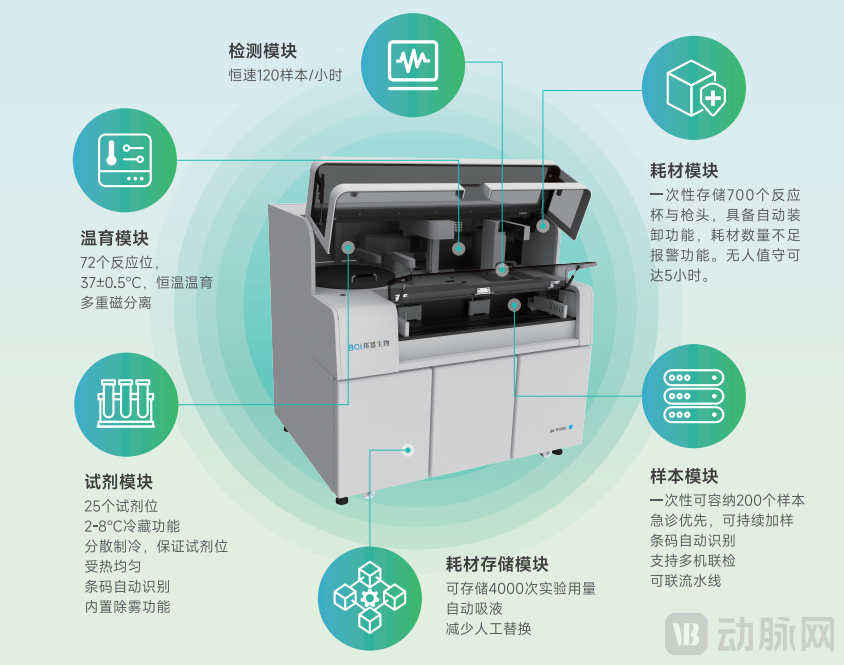 BQ-TF6000 Fully Automated Flow Fluorescence Detection Platform
Currently, Bangqi Biotechnology operates a GMP-compliant facility and R&D laboratory spanning nearly 4,000 square meters, and has established an in-house R&D team for instruments and reagents led by overseas industry elites.Based on the BQ-BM100 immunoblotting and BQ-TF6000 flow fluorescence detection platforms, Bangqi Biotechnology will gradually launch a comprehensive suite of solutions for autoimmune and allergen testing. Closely aligned with clinical needs, Bangqi Biotechnology will develop multi-disease, multiplex clinical solutions covering autoantibodies for rheumatic diseases, antinuclear antibody profiles, and immunoglobulin G antibodies associated with autoimmune liver diseases.
Following the new product launch, Tao Rui, founder of Bangqi Biotechnology, granted an exclusive interview to VCBeat. Tao stated, “The name ‘Bangqi’ is derived from the Rites of Zhou passage ‘Xin Bangqi, ji junqi’ (anointing state vessels and military equipment). Technological innovation and craftsmanship have always been the driving forces behind Bangqi Biotechnology. Adhering to the principles of compliance, safety, efficiency, and stability, we meticulously refine every product to provide faster, more stable, and precise data for medical laboratory testing, thereby offering clear diagnostic evidence for clinical practice. We are committed to continuous development, leveraging technology to strengthen the nation and medical devices to support healthcare.”
Since its inception, Bangqi Biotechnology has established a business strategy centered on mainstream diagnostic methodologies, deploying multi-methodology testing platforms, and gradually expanding into other areas of multiplex testing.
Tao Rui stated that, looking to the future, Bangqi Biotechnology will gradually deploy multiple methodological testing platforms in the fields of autoimmunity and allergies, providing hospitals at all levels with a diversified, high-performance matrix of autoimmunity and allergy testing platforms to benefit more patients. Meanwhile, Bangqi Biotechnology will continue to expand and refine its flow fluorescence testing platform, launch a series of reagent solutions, and explore additional application areas for flow fluorescence technology, thereby continuously raising the company’s growth ceiling and laying a solid foundation for Bangqi Biotechnology to become an industry leader.
Autoimmune diseases have become the third largest chronic disease, following cardiovascular diseases and cancer.According to data from The Lancet, the prevalence of common autoimmune diseases has been rising year by year.
As life sciences are incorporated into the Government Work Report and categorized under “new quality productive forces,” which signify a leap in productivity, independent innovation and in-house R&D are increasingly becoming the keys to success for medical enterprises specializing in high-barrier, cutting-edge technologies.
In a broader sense, with the rise of industry-leading enterprises driven by independent R&D, such as Suzhou Bangqi Biotechnology Co., Ltd., an increasing number of diseases once considered “intractable” are being conquered. These advances are gradually permeating primary healthcare diagnosis and treatment, pointing toward the ultimate goal of high-quality development in the health sector: safeguarding public health and meeting the people’s needs for a better life.