

The Future of iPSC-Derived NK Cell Therapy: An Exclusive Interview with Dr. Junying Yu, Global Pioneer of hiPSC Technology and Founder of Zhongsheng Suyuan

Nuwacell
Cell Therapy Product Developer
Cellular immunotherapy has become increasingly mature. Six CAR-T cell therapies have received FDA approval for market launch, while five have been approved by China’s National Medical Products Administration (NMPA). The first tumor-infiltrating lymphocyte (TIL) therapy was approved by the FDA this year, and the first T-cell receptor-engineered T cell (TCR-T) therapy has filed for marketing approval and entered the final stage of review. Among these, one therapy should not be overlooked: natural killer (NK) cell therapy.
In the past two years, natural killer (NK) cell-based immunotherapy has garnered significant attention and has emerged as a promising treatment modality for solid tumors and hematologic malignancies. The potential of induced pluripotent stem cell (iPSC)-derived NK cells for tumor therapy is also gaining increasing recognition within the industry. Compared with the more mature CAR-T cell therapy, iPSC-derived NK cells not only substantially reduce the risk of adverse reactions but also significantly lower pharmaceutical manufacturing costs. Furthermore, they are more amenable to genetic modification to enhance their tumor-killing efficacy.
However,NK cell therapy is still in the clinical trial phase, with a long way to go before drug approval can be verified.Despite active research efforts both domestically and internationally, NK cell therapies have not yet received formal regulatory approval for clinical application in either China or abroad, and their development has been marked by a tortuous path.
The last time NK cell therapy sparked heated discussion was in January 2023. iPSC star company Fate Therapeutics announced the early termination of its collaboration with Johnson & Johnson, cut multiple existing NK cell therapy R&D pipelines, and implemented significant layoffs.
One year later, in late February this year, BeiGene announced in its fourth-quarter and full-year 2023 earnings report that it had terminated its collaboration with Shoreline Biosciences on four allogeneic iPSC-derived NK cell therapy targets developed by the latter, with the termination taking effect in the first quarter of 2024. Shoreline is dedicated to developing off-the-shelf, standardized, allogeneic iPSC-derived natural killer (NK) cell and macrophage immunotherapies, and is one of the leaders in the field of iPSC-based immune cell therapies.
The termination of this collaboration has brought NK cell therapy back into the spotlight, sparking debate: Is the future of NK cell therapy truly as promising as anticipated? VCBeat spoke with Dr. Junying Yu, a global pioneer in hiPSC technology and founder of Anhui Zhongsheng Traceability Biotechnology Co., Ltd., to discuss the current status, challenges, and future prospects of NK cell therapy.
Dr. Junying Yu, Founder and Chief Scientist of Zhongsheng Traceability
This article is the second installment in the exclusive interview series with Dr. Junying Yu. For the first part, please see:
NKCurrent Status of Cell Therapy: Excellent Safety Profile, with Durability and Tumor-Killing Efficacy Requiring Optimization
VCBeat: What are the similarities and differences between NK cell therapy and CAR-T therapy?
Yu Junying:After entering the patient’s body, CAR-T cells can efficiently recognize tumor cells and possess robust expansion capabilities. They can differentiate into memory T cells that persist long-term in the patient, thereby achieving sustained anti-tumor efficacy. This characteristic represents a double-edged sword for CAR-T therapy: while the ability to continuously kill tumor cells is potent, it also poses the most critical risks—cytokine release syndrome (CRS) and persistent off-target toxicity—leading to numerous post-treatment adverse effects. For instance, since CD19 is expressed on normal human B cells, CD19-targeted CAR-T cells eliminate not only B-cell malignancies but also normal B cells during the therapeutic process.
Unlike CAR-T therapy, NK cells possess an innate ability to recognize tumor cells, and their activation is regulated by the balance between signaling from activating and inhibitory NK cell receptors. Furthermore, in addition to recognizing tumor cells, NK cells are capable of killing cells infected by microorganisms such as bacteria and viruses.
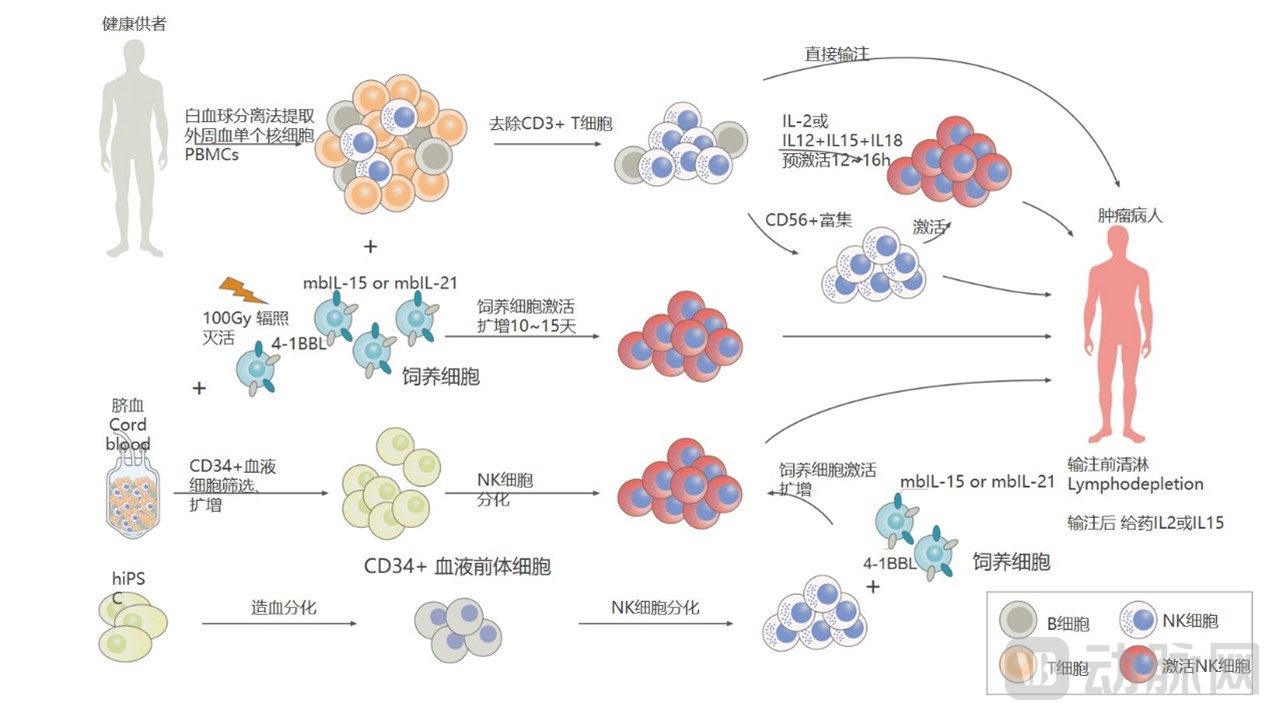 NK Cell Therapy Technology Pathway
NK cell therapy also differs from CAR-T in terms of dose-response relationship. Compared with CAR-T cells, NK cells have much weaker expansion capacity after entering the body. Therefore, it can be observed that CAR-T therapy does not exhibit a strong dose-response relationship; although the number of infused cells varies significantly among patients, therapeutic efficacy can still be maintained. In contrast, NK cell therapy demonstrates a clear dose-response relationship. Due to their limited expansion potential, a certain order of magnitude of NK cells must be infused into the human body to achieve effective tumor killing.
A significant advantage of NK cell therapy lies in its safety profile; in the presence of cytokines in vivo, it can be cleared from the body within approximately three weeks. From a pharmacological perspective, it is certainly desirable for the therapeutic agent to be eliminated from the patient’s system after treatment.
Therefore, NK cell therapy and CAR-T therapy each have their own advantages and disadvantages. Since NK cells cannot be expanded extensively in vitro, they are less likely than CAR-T therapy to cause severe side effects such as cytokine release syndrome (CRS) and neurotoxicity. Furthermore, NK cells can be used for allogeneic transplantation without triggering graft-versus-host disease (GVHD). Consequently, while the therapeutic efficacy of NK cell therapy may not be as durable as that of CAR-T therapy, it offers a superior safety profile. If their tumor-killing capacity can be further enhanced, NK cells would possess strong druggability as universal off-the-shelf cellular therapeutics.
VCBeat: NK cells have diverse sources. What are the differences, advantages, and disadvantages of iPSC-derived NK cells compared to autologous NK cells?
Yu Junying:NK cell therapy has a long history of clinical application and, like mesenchymal stem cells (MSCs), can be expanded to cover various indications and patient populations. However, its efficacy remains questionable for many, who point to significant variability in treatment outcomes. A major contributing factor to this inconsistency is the heterogeneous quality of the cells used.
How to address this quality issue? The solution lies in developing NK cells derived from pluripotent stem cells. This approach ensures greater batch-to-batch consistency in cell quality compared with NK cells sourced from allogeneic donors or patients’ autologous cells.
The production of NK cells through iPSC differentiation offers multiple advantages. First, iPSCs can be expanded on a large scale, facilitating the mass production and storage of NK cells while reducing manufacturing costs. Second, iPSC-derived NK cells differ from adult NK cells in their surface receptor expression profiles and exhibit superior tumor-killing potency at equivalent doses. Furthermore, compared with primary NK cells, iPSCs are more amenable to genetic engineering; genetic modifications can be introduced at the iPSC stage to generate multi-component genetically modified iNK cells, thereby meeting the diverse needs of tumor therapy. As an off-the-shelf cell therapy product, iPSC-derived NK cells demonstrate strong druggability.
Therefore,The greatest advantage of iPSCs is their ability to mass-produce NK cells with consistent quality. This scalability implies that, once NK cell therapies are approved and launched on the market, their prices will be more affordable and better suited to the general public in China.
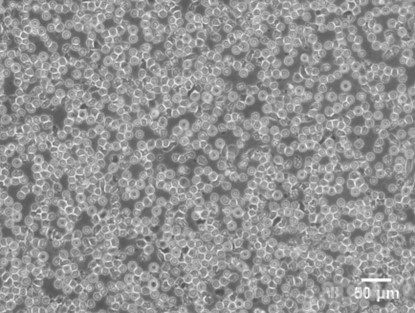
iPSC-derived NK cells
VCBeat: In your view, what stage have the R&D of iNK cell drugs reached internationally and domestically? What difficulties and challenges still need to be addressed?
Yu Junying:Currently, the field is largely still in the clinical trial stage, with notable players including Fate Therapeutics and Shoreline Biosciences. Fate Therapeutics’ product pipeline is currently in Phase I clinical trials. In China, our company and Qihan Biotechnology are also advancing their product pipelines, which are currently in Phase I clinical trials.
Internationally, companies such as Fate and Shoreline are at the technological forefront. However, a challenge associated with this leading position is that their current technologies may not yet be fully mature. In clinical trials, this immaturity has resulted in gene-modified iNK cells failing to achieve optimal therapeutic efficacy. This issue has been identified through our R&D efforts over the past few years, and we have been continuously working to overcome these challenges.
VCBeat: Pioneers like Fate Therapeutics have encountered setbacks in their product and clinical development, and this year, BeiGene also terminated its collaboration with Shoreline. How do you interpret these developments?
Yu Junying:Fate received approval for clinical trials in 2018 and subsequently advanced several pipeline candidates into clinical development. However, there have been no recent reports of new clinical trial data from the company. Based on our understanding and findings regarding iNK cells, we have hypothesized that their challenges stem from the issue mentioned above: the immaturity of gene-modified iNK cell technology.
This is not to say that the direction of using iPSCs to differentiate and produce iNK cells is flawed; rather, the pioneering companies are inevitably navigating uncharted waters. We must learn from their experiences and lessons, address these challenges, and continue to optimize our own products.
Although Fate is currently in a trough, this downturn does not indicate that iPSC-derived iNK cell therapy is ineffective. The industrialization process in frontier technology sectors typically experiences fluctuations. It is only through continuous technological iteration and maturation that its true value will become evident in the future.
Future Pathways: Achieving Functional Enhancement Through Genetic ModificationiNKCell
VCBeat: Zhongsheng Traceability’s iNK pipeline is the first iPSC-derived NK cell therapy approved for clinical trials in China, yet the company has not rapidly launched a CAR-NK pipeline. What considerations have guided this decision?
Yu Junying:As I mentioned earlier,Due to the immaturity of current technologies, gene-modified NK cells have not yet achieved the expected functions and efficacy. Therefore, we are not rushing to advance our CAR-NK pipeline; instead, we are first focusing on overcoming the challenges of genetically engineering these NK cells to generate functionally enhanced variants.
Currently, NK cells face two major challenges: first, their persistence in vivo is insufficient due to the lack of adequate cytokines to sustain them after infusion; second, they are prone to entering an exhausted state under the influence of the tumor microenvironment.
Therefore, our investigational enhanced NK cells are being developed with a dual focus: first, to extend their in vivo persistence and enhance their proliferative capacity; and second, to ensure sustained tumor cell cytotoxicity throughout their lifespan. Addressing these challenges will enable NK cells to achieve more potent antitumor efficacy while maintaining safety.
VCBeat: In your view, can the iNK pipeline achieve therapeutic efficacy similar to that of CAR-T therapy in the future? What are the clinical needs and value proposition of iNK? In other words, what are the prospects for the efficacy and druggability of iNK-based products?
Yu Junying:Compared with CAR-T therapy, NK cell therapy exhibits a lower overall intensity of tumor cytotoxicity, primarily because NK cells have a weaker expansion capacity in vivo than T cells. However, NK cell-based therapeutics can achieve comparable efficacy through dose escalation. Most importantly, while CAR-T cells are highly specific and recognize only the designated CAR target, NK cells (including CAR-NK cells) possess intrinsic ability to recognize a broad spectrum of tumor cell types beyond the CAR target. Consequently, NK cell therapy offers greater versatility and broader applicability.
It is difficult to claim that NK cell products can achieve therapeutic efficacy as robust as that of CAR-T therapy; however, their application prospects remain promising. At sufficient dosages, NK cells can effectively eliminate NK-sensitive tumor cells in patients, thereby achieving clinical benefit. Ultimately, NK cell therapy functions as a transient therapeutic agent, and for any drug, achieving favorable therapeutic efficacy is of paramount importance.
VCBeat: There are currently registered clinical trials internationally for iPSC-derived T-cell therapies, with Fate Therapeutics being one of the companies involved. How do you view this development direction for T-cell therapies?
Yu Junying:iPSC-derived NK cells exhibit potent tumor-killing activity, demonstrating superior antitumor efficacy compared to NK cells derived from adult donors in pharmacological studies.
However, according to the literature and our own research, there is still a functional gap between iPSC-derived T cells and T cells in adult human bodies. Simply put, the current technologies and processes for differentiating T cells from iPSCs are not yet mature and require further improvement.
Conclusion
Although iPSC-derived NK cell therapy holds promising prospects, significant challenges remain to be addressed. These include ensuring consistent quality and scalable manufacturing, enhancing tumor-killing function and potency through genetic modification, and overcoming the decline in cytotoxic activity caused by persistent tumor cell killing or the immunosuppressive tumor microenvironment in vivo. Addressing these challenges requires sustained efforts across the industry to continuously refine and mature iNK technology, thereby launching a diverse portfolio of products and therapeutic regimens to serve patients.
Related Articles from the Exclusive Interview Series with Dr. Junying Yu: