

Qyuns Therapeutics-B (2509.HK), the First Autoimmune-Focused Biotech on HKEX, Debuts with a Market Cap of RMB 6.14 Billion

Qyuns
Developer of Biologics for Autoimmune and Allergic Diseases
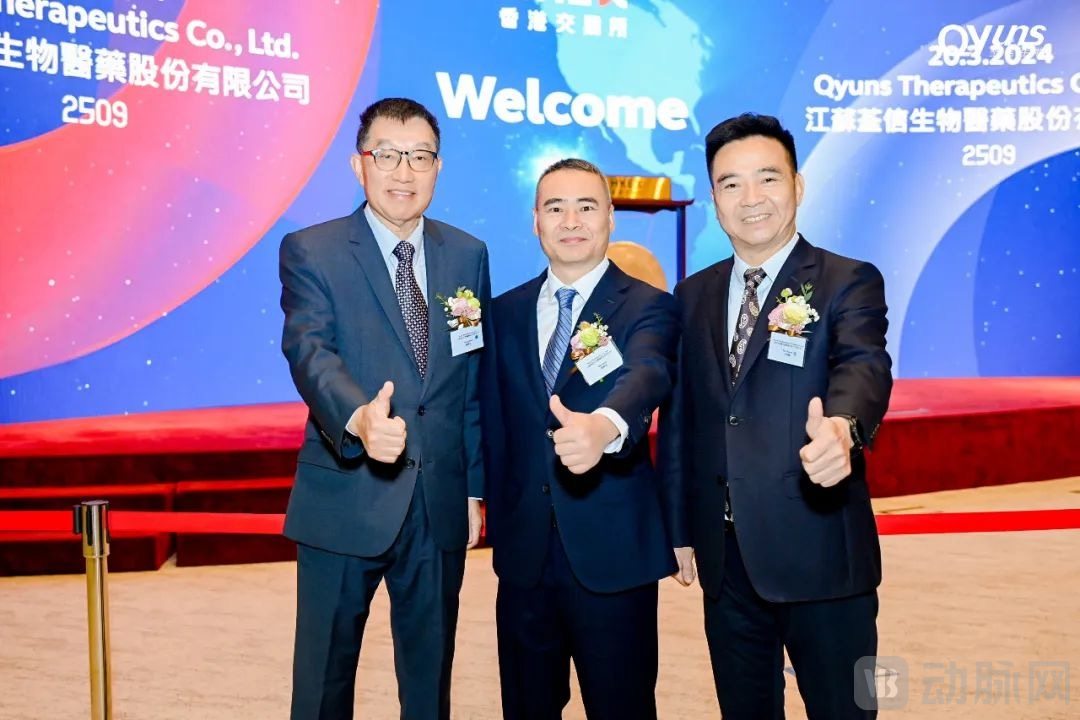
On March 20, Quanxin Biologics-B (2509.HK), the first autoimmune disease-focused company to list on the Hong Kong stock market, officially went public.
The allotment results show that the company’s global offering comprised 12.0464 million shares, with the Hong Kong public offering accounting for 17.77% and the international offering accounting for 82.23%.The final offering price was HK$19.8 per share, with net proceeds from the global offering of approximately HK$163 million.H-shares commenced trading on the Stock Exchange of Hong Kong Limited on March 20, 2024. The public offering was oversubscribed by 163.15 times, while the international offering was subscribed to 0.9965 times.
Quansin Biologics opened at HK$27.40 per share this morning. As of press time at 9:53 a.m., the price remained at HK$27.65 per share, representing a gain of 39.65%, with its total market capitalization rising to RMB 6.14 billion.
Yesterday (March 19), according to Gelonghui, Quanxin Biologics-B (2509.HK) opened significantly higher in Futu’s grey market, surging more than 57% at one point to a high of HK$31.1, with trading volume exceeding HK$4.6 million. Among the cornerstone investors in Quanxin Biologics are three companies, including Huadong Medicine Investment Holding, a subsidiary of Huadong Medicine, which collectively subscribed for US$25 million, accounting for 4.45% of the issued shares after the completion of the global offering.
Founded in 2015, Quanxin Biologics is a clinical-stage biotechnology company focused on developing biological therapies for autoimmune and allergic diseases. The company currently has two self-developed core products: QX002N and QX005N.
Transthera Bio boasts a distinct strategic focus, centered on rabbit monoclonal antibody technology licensed from Epitomics. As a serial entrepreneur, founder Qiu Jiwan brings extensive experience in pipeline strategy and product development: six candidates have advanced into clinical trials over the past eight years, with the ustekinumab biosimilar QX001S poised for commercialization as early as the fourth quarter of this year. Meanwhile, QX002N has entered Phase III clinical trials for ankylosing spondylitis, and QX005N is undergoing Phase II clinical trials for multiple indications.
On the Eve of the Boom in China’s Domestic Autoimmune Disease Sector, Quanxin Bio’s IPO Adds Further Fuel to the Fire.
On March 12, Huadong Medicine announced that its wholly-owned subsidiary, Huadong Investment, would use its own funds equivalent to USD 5 million in Hong Kong dollars (excluding brokerage commissions, related transaction fees, and levies) to participate as a cornerstone investor in the initial public offering (IPO) of Quanxin Biopharma. Other cornerstone investors included Jianxin Pharmaceutical (wholly owned by Taizhou Jianxin, an existing shareholder of the company) and Feng Investment Capital (wholly owned by Kuang Jianhong).
Huadong Medicine has played a significant role in the development of Quanxin Biologics.
In August 2020, Quansin Biotech introduced Zhongmei Huadong as an investor in its Series B+ financing round. The RMB 370 million capital injection propelled Zhongmei Huadong to become the second-largest shareholder of Quansin Biotech, securing one seat on the board of directors. According to the prospectus, Zhongmei Huadong holds a 17.09% stake, second only to Hangzhou Quanyi, controlled by Quansin Biotech’s founder Qiu Jiwan, which holds 19.05%. Additionally, Qiu Jiwan previously worked for Jiuyuan Gene, a subsidiary of Huadong Medicine, for 11 years.
In August 2023, the Biologics License Application (BLA) for QX001S (HDM3001), a ustekinumab biosimilar co-developed by Quanxin Biologics and Huadong Medicine, was accepted by the National Medical Products Administration (NMPA) for the indication of psoriasis. This indicates that QX001S (HDM3001) is poised to become the first ustekinumab biosimilar (reference product: Stelara®) launched in China. According to available data, Zhongmei Huadong is expected to commence commercialization of QX001S in the fourth quarter of 2024.
Ustekinumab, marketed under the brand name Stelara®, was approved by the FDA in 2009 and received approval in China in 2017. As the first biologic agent to selectively inhibit the IL-23 and IL-12 pathways, it has become one of the primary therapies for psoriasis worldwide. In 2022, its global sales reached $9.723 billion, rising to $10.85 billion in 2023—a year-on-year increase of 9%—solidifying its position as a cornerstone product of Johnson & Johnson’s pharmaceutical division.
In China, ustekinumab was included in the National Reimbursement Drug List in 2022, leading to a significant surge in sales volume. Public information indicates that Stelara® achieved sales exceeding RMB 950 million in the Chinese market in 2022, with a tenfold growth recorded in public medical institutions. The potential indications for QX001S include psoriasis, psoriatic arthritis, Crohn’s disease, ulcerative colitis, and systemic lupus erythematosus. With approval imminent, QX001S is poised to break the monopoly held by the originator product and is expected to gain a first-mover advantage in the domestic biosimilar market for ustekinumab.
The costs associated with the development, clinical trials, and manufacturing of biosimilars are higher than those for generic drugs, creating certain barriers to entry. It is not uncommon for companies to adopt a business model that leverages biosimilars as a pathway to commercialization, with several high-performing pioneers leading the way. For instance, Henlius has penetrated the Chinese market with multiple monoclonal antibody biosimilars, establishing a mature commercialization network that paves the way for its subsequent innovative drugs. Similarly, Bio-Thera Solutions, which has recently sparked a wave of Chinese biosimilars going global, secured FDA approval for the first domestically produced bevacizumab biosimilar and signed a $60 million licensing deal for its biosimilar candidates under development.
Merely having clear commercialization prospects is not enough for Quanxin Biologics to fully bolster investor confidence. More importantly, Quanxin Biologics is one of the few biotechnology companies in China that is entirely focused on late-stage clinical development of biologics for autoimmune and allergic diseases.
Quanxin Bio’s pipeline covers four major areas of autoimmune and allergic diseases: dermatological, rheumatological, respiratory, and gastrointestinal disorders, including psoriasis, atopic dermatitis, rheumatoid arthritis, inflammatory bowel disease, and asthma. Of its nine projects in development, six have entered clinical stages, with eight developed through its rabbit monoclonal antibody platform. Among these, two are the company’s core products: QX002N and QX005N.
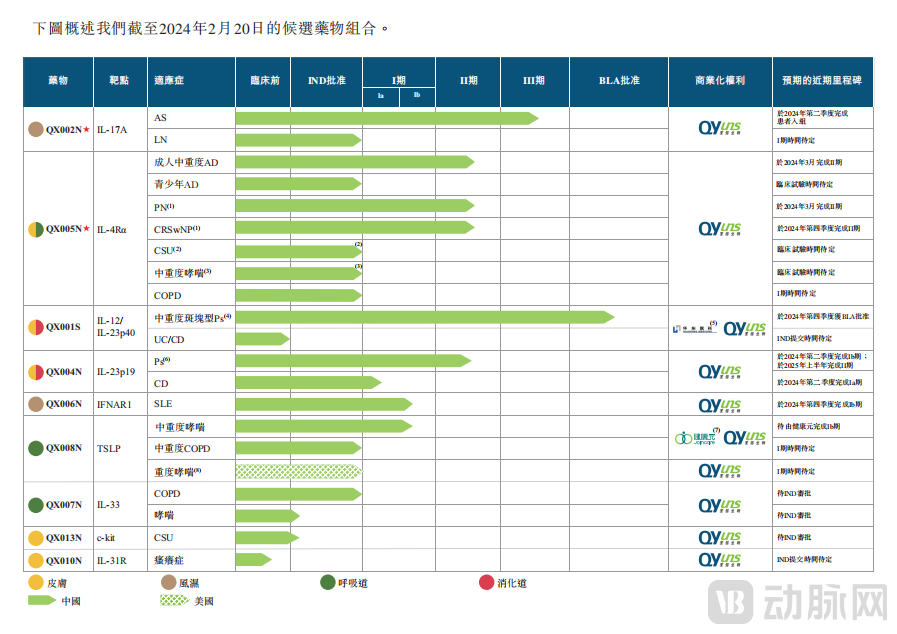
QX002N is a high-affinity monoclonal antibody targeting IL-17A. Quanxin Biologics has obtained IND approval for QX002N for the treatment of ankylosing spondylitis and lupus nephritis, and is currently conducting Phase III clinical trials in China for the treatment of ankylosing spondylitis (AS).
QX005N is a monoclonal antibody that blocks IL-4Rα. Quanxin Biologics has obtained Investigational New Drug (IND) approval for QX005N to treat five indications: atopic dermatitis (AD), prurigo nodularis (PN), chronic rhinosinusitis with nasal polyps (CRSwNP), chronic spontaneous urticaria (CSU), and asthma, making it one of the companies with the most indications among IL-4Rα-targeted candidate drugs in China. Currently, Phase II clinical trials of QX005N for AD, PN, and CRSwNP have been initiated in China, with Phase III trials for AD and PN nearing initiation.
IL-17A and IL-4Rα are both well-validated, blockbuster targets. It is evident that Quanxin Biologics’ strategy is to leverage the advantages of its rabbit monoclonal antibody technology for fast-follow development, thereby accelerating product advancement. In addition, the company has four drug candidates undergoing Phase I or Phase II clinical trials, primarily for the treatment of diseases such as Crohn’s disease, systemic lupus erythematosus, and asthma.
While identifying drug candidates through rabbit monoclonal antibody technology, Quanxin Bio has evolved into a platform-based company. During its first four years since establishment, Quanxin Bio operated under the model of an early-stage biotech firm, focusing on advancing a single-pipeline drug development program.
In 2019, Quanxin Biologics initiated a strategic transformation, rapidly establishing a process development platform and a drug quality research platform. It also invested in the construction of the Saifushi “Antibody Drug CDMO Production Base,” built in accordance with the GMP standards of China’s NMPA, the U.S. FDA, and the European EMA, to prepare for large-scale product manufacturing. The Saifushi production base commenced operations in 2020. That same year, Quanxin Biologics entered its commercialization transition phase. The company partnered with Huadong Medicine to jointly develop and commercialize QX001S, and introduced Huadong Medicine as a key institutional shareholder.
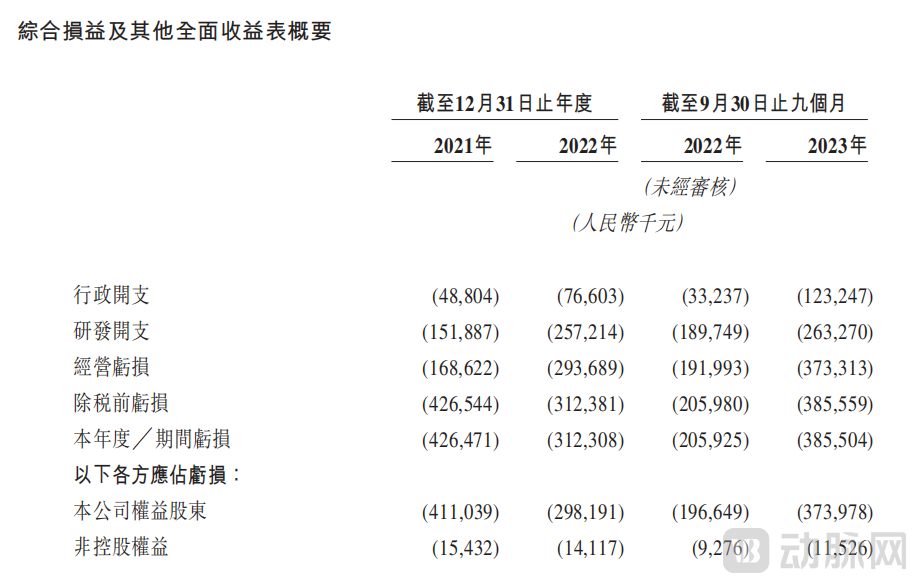
According to the prospectus, Quanxin Biologics currently has no operating revenue. However, while corresponding R&D expenses increased from RMB 152 million to RMB 257 million, the net loss decreased from RMB 426 million to RMB 312 million. The net loss for the nine months ended September 2023 increased, primarily due to higher employee costs resulting from additional equity incentives granted in October 2022, as well as rising costs associated with CROs and clinical trial sites as pipeline clinical trials progressed.
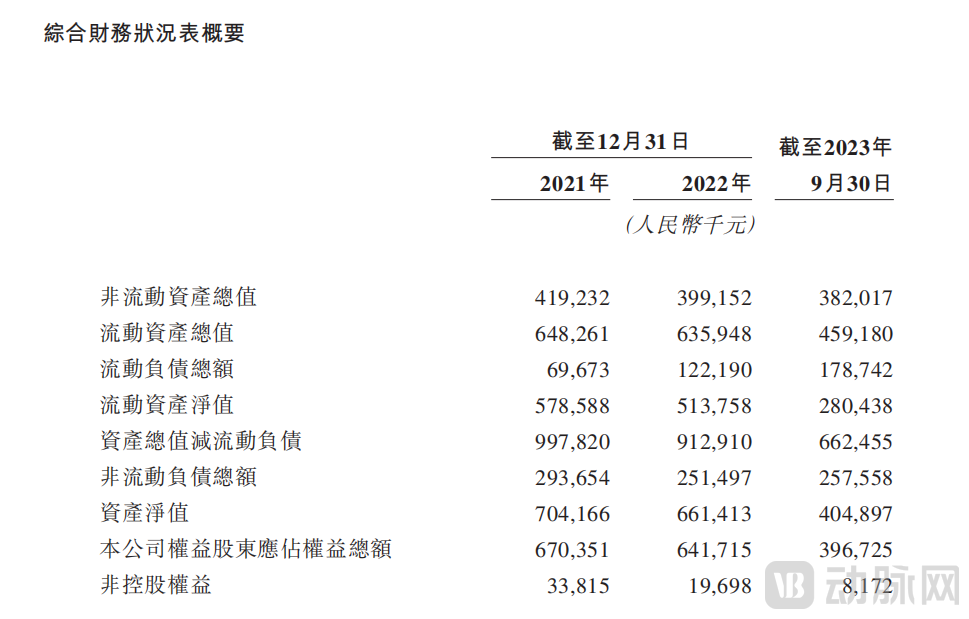
As of September 30, 2023, current assets totaled RMB 459 million, including cash of RMB 257 million; current liabilities amounted to RMB 178 million. In the short term, cash holdings are sufficient to cover current liabilities, indicating a favorable outlook.
Successfully advancing six drug candidates into clinical trials within eight years, proactively securing manufacturing capacity—or, more broadly, establishing comprehensive drug lifecycle management capabilities—and promptly identifying commercialization partners to steadily drive revenue generation. This clearly demonstrates the exceptional resource integration and operational prowess of Quanxin Biopharma’s leadership team.
Founder and CEO Qiu Jiwan and Co-founder Dr. Yu Guoliang are both prominent figures in the field of rabbit monoclonal antibody technology. With nearly 30 years of experience in the biotechnology industry, Mr. Qiu joined Hangzhou Jiuyuan Gene Engineering Co., Ltd. after graduating from Fudan University’s Department of Genetics and Genetic Engineering in 1993. He participated in the research and development of China’s first recombinant human granulocyte colony-stimulating factor (rhG-CSF), interleukin-11 (IL-11), and other recombinant protein therapeutics.
Qiu Jiwan is a typical serial entrepreneur with deep ties to Dr. Yu Guoliang, a Fudan University alumnus and one of the pioneers in rabbit monoclonal antibody technology. Dr. Yu is a renowned Chinese-American scientist and entrepreneur who has invested in more than 20 biotechnology and healthcare companies and co-founded over 10 biotech firms.
Promoting the development of rabbit monoclonal antibody technology and related industries is one of Dr. Guoliang Yu’s significant achievements: In 2001, Guoliang Yu and Weimin Zhu founded Epitomics, successfully developing a series of pioneering global patents that addressed issues such as the stability of rabbit hybridoma cells. Rabbit monoclonal antibodies are characterized by high affinity, high specificity, high sensitivity, and great diversity, enabling the production of antibodies that are difficult to generate in mice.
Throughout Qiu Jiwan’s nearly two-decade-long entrepreneurial career, he has worked in close collaboration with Dr. Yu Guoliang. Since 2004, Qiu has served as Deputy General Manager of Yikang Biology, the Chinese subsidiary of Epitomics, where he was primarily responsible for establishing production and technical platforms, with a business focus on raw materials for diagnostic reagents. He subsequently founded Taikang Biology and Quanxin Biologics, aiming to develop a series of drug products based on rabbit monoclonal antibody technology. Dr. Yu Guoliang was a co-founder of both companies, and Epitomics served as the technological source for these two enterprises.
Taikang Bio was established in December 2005. During his tenure at Taikang Bio, Qiu Jiwan established a large-scale production technology platform for high-affinity rabbit monoclonal antibodies, as well as a long-acting protein drug technology platform. In 2015, Qiu Jiwan sold Taikang Bio and founded Quanxin Biologics, advancing rabbit monoclonal antibody technology into specialized drug development focused on antibody therapeutics for immune-related diseases.
After years of development, Quanxin Biologics, Apexigen (spun off from Epitomics), and Alder BioPharmaceuticals, which has been acquired by Lundbeck, are regarded as leading companies in the global rabbit monoclonal antibody technology sector.
Qiu Jiwan is keenly aware of the unmet needs in the autoimmune disease field. Qiu believes that while autoimmune diseases are not fatal, they severely impact patients’ quality of life and constitute a significant social issue. By 2015, Humira had surpassed Lipitor to become the first single drug to achieve over $10 billion in annual sales. At that time, China’s treatment landscape remained stuck at an early and traditional stage, relying heavily on steroid-based therapies, with a notable lack of highly effective, precise, and targeted therapeutic agents.
Following its IPO, Quanxin Biologics faces an autoimmune market on the verge of a “hundred-drug war.”
In 2023, as the patent thicket surrounding Humira gradually expired, its global sales reached a turning point, toppling it from the throne of “blockbuster drug.” The autoimmune disease market, the world’s second-largest therapeutic area and the source of previous “blockbuster” miracles, remains a powerful lure for every developer of autoimmune therapies. It is evident that the global autoimmune drug market is becoming increasingly crowded at an accelerating pace:
The established giants in the autoimmune disease sector have not yet exited, while new autoimmune therapies have already entered the arena. Competition for market share of adalimumab (originally developed as Humira) has become intensely fierce, with companies such as Amgen rapidly moving to capture a portion of the market. The psoriasis treatment landscape is also highly crowded, featuring a multitude of competing agents including risankizumab, guselkumab, ixekizumab, apremilast, ustekinumab, and adalimumab.
New multinational pharmaceutical companies have also entered the fray with substantial financial resources. In June 2023, Novartis acquired Chinook Therapeutics, a leading company in IgA nephropathy drugs, for $3.5 billion, while Eli Lilly acquired DICE Therapeutics for $2.4 billion, gaining its oral IL-17 inhibitor and other autoimmune disease treatments.
By contrast, the autoimmune disease drug market in China is far less competitive. For a long time, innovative autoimmune drugs failed to gain traction in China: in 2022, the global market for autoimmune disease drugs was valued at approximately $131.7 billion, whereas the Chinese market amounted to only about $3.6 billion—less than the annual global sales of secukinumab alone.
The autoimmune disease sector has a large patient base and requires long-term medication. However, one of the reasons for the poor domestic sales performance of autoimmune drugs, represented by Humira, is their high price. This situation has begun to improve over the past three years with the inclusion of autoimmune drugs in China’s National Reimbursement Drug List (NRDL). In 2022, Dupixent achieved sales of RMB 1.8 billion in the Chinese market, while Stelara’s sales exceeded RMB 950 million.
Meanwhile, the rising prevalence of autoimmune diseases, growing public awareness, increasing demand for quality of life, and continuous advancements in detection and diagnosis have objectively driven the growth of the autoimmune disease market.
On the R&D front, as an increasing number of novel targets are validated, many companies are intensifying their investments in autoimmune disease pipelines. Data show that dozens of domestic new drug developers have laid out over a hundred autoimmune new drug pipelines. Among these, competition among domestically produced biosimilars targeting two well-established autoimmune targets, TNF-α and IL-12/IL-23, remains fierce. Meanwhile, major new targets such as IL-17A, IL-4Rα, and JAK are attracting extensive commitment from innovative pharmaceutical companies, accounting for the largest number of products under development.
According to a Frost & Sullivan report, the market size of autoimmune drugs in China is expected to reach approximately $23 billion by 2030. As the domestic autoimmune market enters a period of rapid growth, numerous prominent companies, including Hengrui Medicine, Zhixiang Jintai, 3SBio, Junshi Biosciences, and Akeso, have entered the field. Whether Quanxin Biotech’s highly focused strategy and proprietary rabbit monoclonal antibody technology can stand out amid the “hundred-drug war” characterized by generational transitions and intense competition among industry leaders remains to be seen.