

Agilis Robotics Secures $10 Million Series A+ Funding to Advance R&D and Clinical Registrations

Agilis Robotics
Surgical Robot Developer
VCBeat has learned that Agilis Robotics (“Agilis”), a startup specializing in surgical robots, recently completed its Series A+ financing round. The round raised $10 million, with exclusive investment from a Singapore-based family fund. The proceeds will be primarily used to advance R&D efforts and clinical registration processes.
To date, Guangzhou Qiaojieli Medical Robot Co., Ltd. has successfully completed three rounds of financing, raising a total of over $17 million. Despite the industry downturn, institutional investors have chosen to take equity stakes in Qiaojieli, which not only demonstrates their recognition of the surgical robotics sector but also affirms Qiaojieli’s core technological strengths.
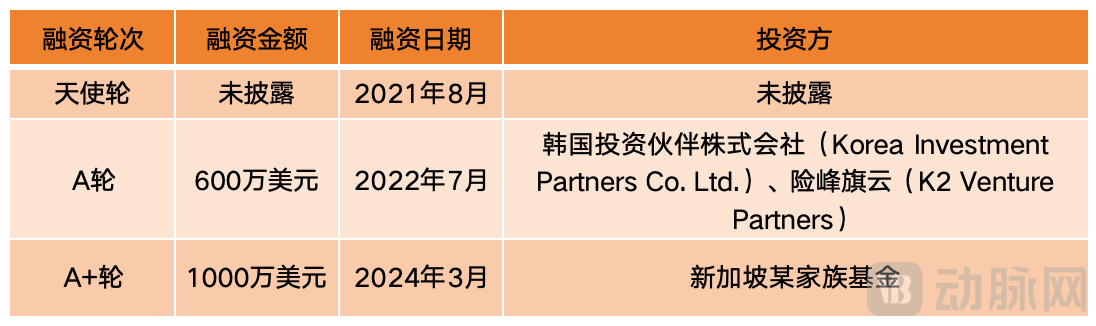
Qiaojieli's Historical Financing
As a medical technology company incubated by The University of Hong Kong, Qiaojieli was jointly founded in 2021 by Professor Guo Jiawei from the Department of Mechanical Engineering at The University of Hong Kong, Mr. Xu Jiaming, Visiting Lecturer in the Finance Department of HKU Business School, Professor Chen Yingquan, Assistant Dean of the Faculty of Medicine at The Chinese University of Hong Kong, and senior engineering partner Mr. He Dilang. Since its establishment, the company has focused on the innovation and development of natural orifice surgical robots. Adhering to the philosophy of promoting the continuous advancement of medical technology in China, Qiaojieli is committed to advancing the innovation and widespread adoption of surgical robots, ensuring that ordinary patients can benefit from high-standard, high-quality medical services in a more cost-effective manner.
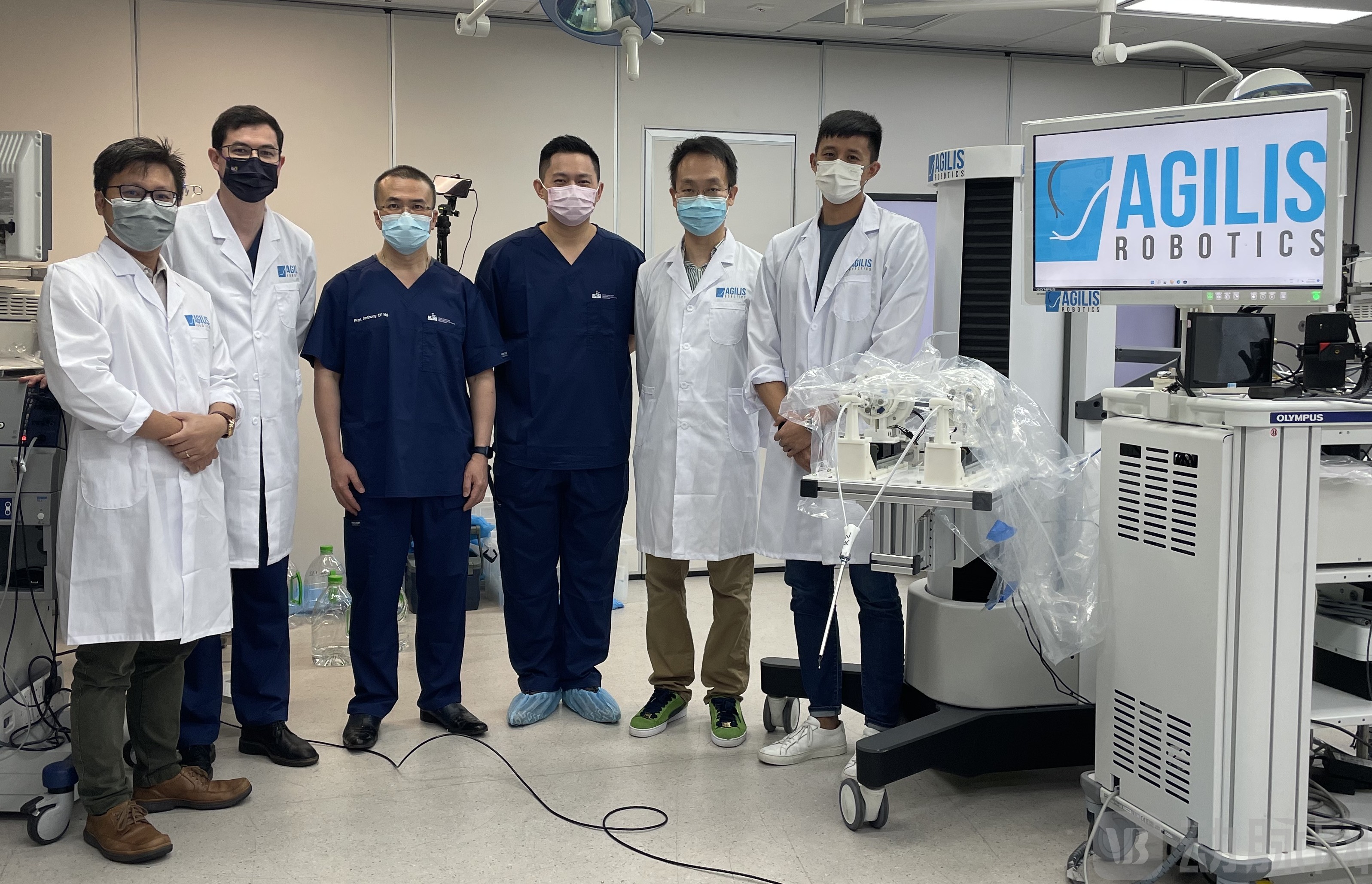
Guo Jiawei (far left), Chen Yingquan (second from left), Xu Jiaming (second from right), He Dilang (far right)
As a domestic brand, the company has successfully developed the world’s smallest fully flexible dual-arm endoscopic surgical robot. Its independently developed fully flexible surgical robotic arm has broken through the size limitations of existing surgical robotic arms, achieving technological leadership on the global stage. The innovation has gained prominence and won numerous awards in multiple competitions both domestically and internationally.
Currently, Qiaojieli has established clinical collaborations with numerous leading hospitals, and its innovative technological achievements have garnered widespread recognition and attention from experts both domestically and internationally. Moving forward, the company will continue to strengthen cooperation with medical teams at home and abroad, actively expand its global partnership network, and simultaneously initiate worldwide product registration plans. By building a brand of “Intelligently Made in China” endoscopic surgical robots, Qiaojieli aims to provide efficient, high-quality medical solutions to more doctors and patients around the world.
Breakthroughs in Technical Challenges of Natural Orifice Surgical Robots,
Development of the World's Smallest Fully Flexible Dual-Arm Endoscopic Surgical Robot
In recent years, the field of surgical robotics has attracted significant attention. Among its applications, orthopedic robots and natural orifice surgical robots represent the most prominent use cases for surgical robotic technology. Globally, numerous surgical robotics companies have achieved R&D breakthroughs in this area and obtained authoritative certifications. However, as an emerging technology, natural orifice surgical robots face extremely high barriers to core technologies, resulting in a relatively small number of FDA-cleared products.
The primary technical challenges of this technology lie in overcoming the motion limitations imposed by the rigid joint structures of da Vinci-style laparoscopic surgical robots, and in achieving an optimal balance among size, force, and flexibility when performing diagnostic and therapeutic procedures, such as biopsy and resection, within the narrow and highly curved natural lumens of the human body. Furthermore, as product developers, it is essential to address the high level of interactivity required between physicians and natural lumen surgical robots.
It is precisely for this reason that the market for natural orifice surgical robots remains largely untapped, with fully flexible systems or those compatible with general-purpose endoscopes being particularly scarce worldwide. The surgical robot system developed by Guangzhou Qiaojieli Medical Robot Co., Ltd. addresses key challenges, including instrument degrees of freedom, compatibility, and the diversity of supported surgical procedures.
To address the clinical pain points of endoscopic surgery, the Qiaojieli Endoscopic Surgical Robot employs a unique mechanical design. Its fully flexible surgical robotic arms feature a slim diameter, enabling seamless compatibility with existing hospital endoscopic equipment. This integration reduces application costs without altering current surgical workflows or physicians’ operational habits. Each fully flexible surgical robotic arm offers more than five degrees of freedom, ensuring precise and agile movements that facilitate intricate, complex dual-arm robotic procedures within confined spaces.
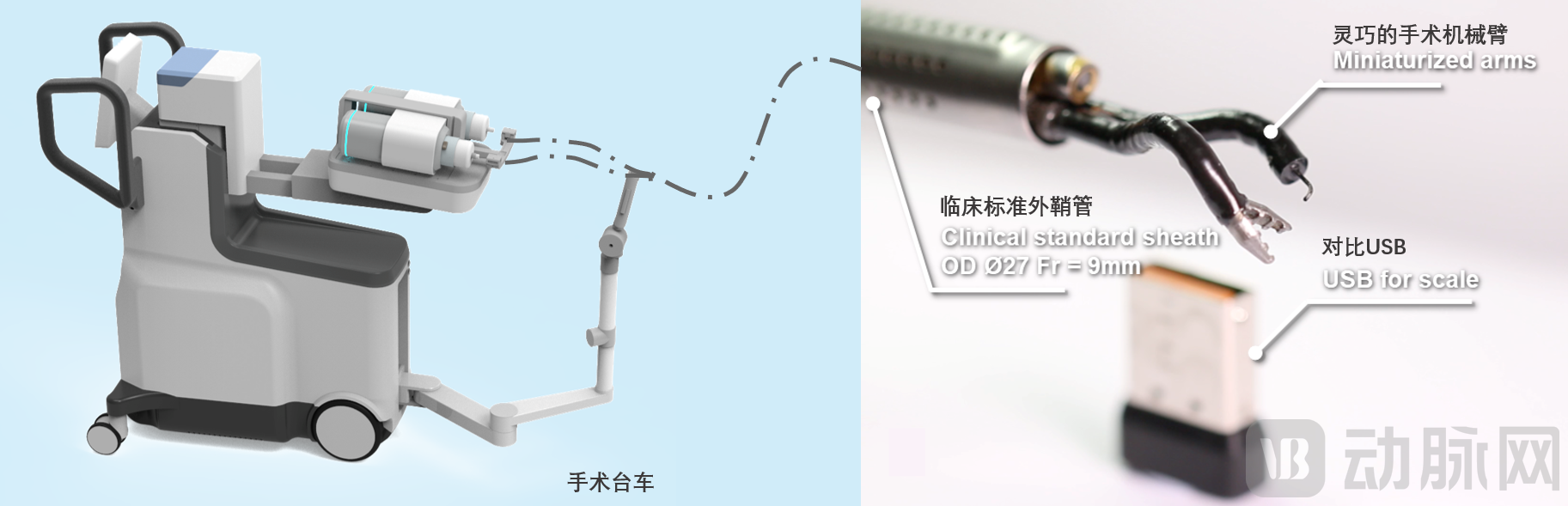
Specifically, for the surgical environment of endoscopic submucosal dissection (ESD)-related strictures, the robotic arm of the surgical robot system developed by Qiaojieli adopts a flexible continuum structure, enabling it to maintain the necessary force for performing surgery within extremely small lumens. Furthermore, its fully flexible robotic arm has a diameter of less than 2.8 mm, addressing the challenges posed by the narrow working channel of endoscopes and the stringent size requirements for instruments. The diameter of the robotic arm can also be adjusted according to the type of surgery, allowing it to be applied to any conventional endoscopic procedure, thus demonstrating versatility.
It is worth noting that this product not only interfaces with existing endoscopic equipment in hospitals, but the flexible robotic arms of the Qiaojieli surgical robot can also be configured and combined as needed. For different surgical steps (such as tissue grasping and electrosurgical cutting), the system’s flexible robotic arms can be equipped with different surgical instruments, enabling the system to perform multiple dexterous tasks in confined spaces.
Finally, the Qiaojieli system features multiple control modes. Taking into account individual physician preferences, the system can be configured to match each surgeon’s preferred operational style, enabling comfortable and intuitive instrument manipulation. This reduces the complexity and difficulty of surgical procedures, thereby facilitating broader adoption across more clinical departments and application scenarios.
The surgical robot market is expected to grow at a compound annual growth rate (CAGR) of 19.3%.
Rapid Growth in Market Share of Natural Orifice Surgical Robots
The field of natural orifice surgical robots, in which Qiaojieli operates, represents the pinnacle of the medical device industry. Intuitive Surgical (NASDAQ: ISRG), a U.S. company, has dominated this sector for over two decades with its Da Vinci surgical robot, backed by more than 2,000 patented technologies. Under the monopoly of tech giants, this field remains largely an untapped blue ocean of technological innovation.
According to a report by market research firm IMARC Group, the global medical robotics market reached $16.1 billion in 2022 and is projected to grow at a compound annual growth rate (CAGR) of 19.3% over the next five years.
In addition to surgical applications, natural orifice surgical robots can also be used for diagnostic examinations, gradually unlocking their commercial potential. Data from Open Source Securities Research Institute shows that the global market share of pan-vascular surgical robots and natural orifice surgical robots is growing rapidly, making companies in these fields worthy of attention.
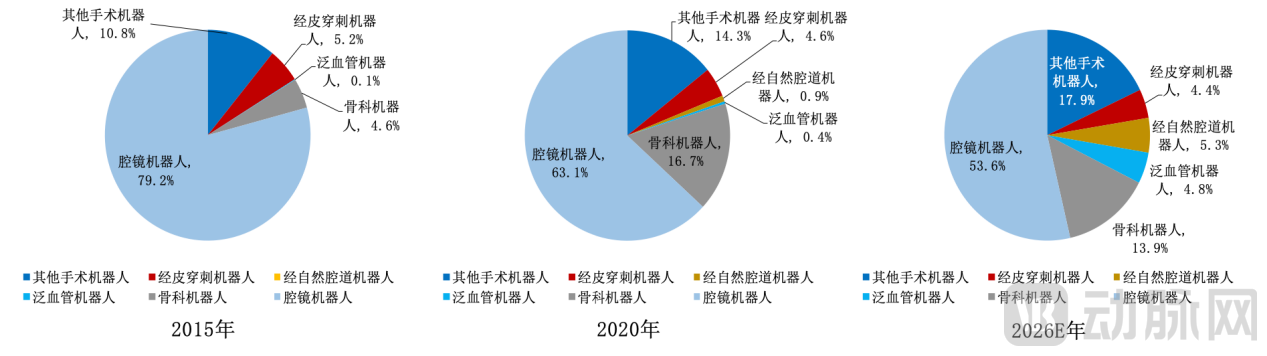
Image source: Open Source Securities Research Institute, "Surgical Robot Series Report I"
The fully flexible endoscopic surgical robot developed by Qiaojieli has not only achieved multiple technological innovations, but its fully flexible surgical robotic arm has also broken through the size bottleneck of existing surgical robotic arms, holding promise for Chinese-made robots to achieve leapfrog development.
Currently, Qiaojieli’s fully flexible endoscopic surgical robot has officially entered the registration and approval processes with the U.S. Food and Drug Administration (FDA) and the National Medical Products Administration (NMPA). The company has also established branch offices in Hong Kong, China; Guangzhou and Shenzhen, China; and Boston, USA, while actively preparing for the construction of production bases and training centers to meet growing market demand. Furthermore, the company is concurrently advancing its global product registration strategy and actively seeking market entry opportunities in various regions, with the aim of providing patients worldwide with more advanced and safe medical solutions.