

Maien Medical Advances Pulp-Preserving Therapy with Unidirectional Membrane Decompression Technology Amid New Breakthroughs in Endodontic Treatment
You’ve most likely heard this saying: “A toothache isn’t a disease, but it can be excruciating.”
However, the saying “a toothache is not a disease” is a myth, while the adage “the pain can be excruciating” holds true. Indeed, a significant number of patients endure this debilitating pain. According to the Fourth National Oral Health Epidemiological Survey in China, the prevalence of dental caries in permanent teeth among 12-year-old children was 34.5%, and the rate of dental caries in primary teeth among 5-year-old children was 70.9%. Furthermore, a survey reported by CCTV News in 2020 indicated that over 90% of adults in China suffer from periodontal disease to varying degrees, and 66% of children have dental caries.
Driven by pain and increased awareness of oral health, most patients exhibiting obvious symptoms of periodontal disease, pulpitis, dental caries, and other conditions choose to seek treatment at hospitals or dental clinics, where the most likely treatment option is root canal therapy.
However, the debate surrounding root canal therapy has a long history. It is not uncommon to encounter online articles with titles such as “Try to Avoid Root Canal Therapy If Possible—Advice from a Dentist.” The underlying reason is that, although root canal therapy preserves the affected tooth by removing the dental pulp and nerves, it significantly reduces the tooth’s resistance, causes loss of sensation and nutrient supply, and ultimately shortens the tooth’s lifespan.
“This is akin to a patient seeking treatment for a leg fracture, only to be advised by the physician to undergo immediate amputation,” said Cai Hui, CEO of Maien (Suzhou) Medical Technology Co., Ltd. (hereinafter referred to as “Maien Medical”). “Consequently, in our communications with clinicians, we have found that they strongly desire to preserve patients’ pulp function.”
In other words, dentists are reluctant to directly opt for root canal therapy unless absolutely necessary. This preference presupposes the availability of an alternative treatment option for pulp-related conditions where a certain degree of pulp vitality remains. This alternative is a novel procedure based on Maien Medical’s “Unidirectional Filter Membrane Decompression Pulp Preservation Technology.”
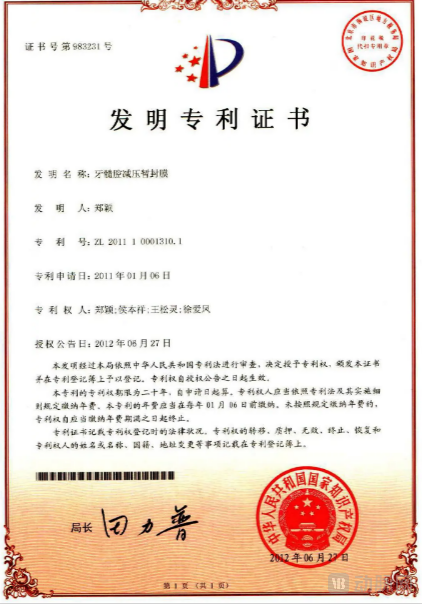
“Hello, may I speak with Professor Zheng Ying?” In May 2023, Cai Hui placed a call to Professor Zheng Ying, one of the patent holders of the unidirectional filter membrane decompression technique for pulp preservation, thereby launching the commercialization journey of this technology.
At that time, as centralized volume-based procurement (VBP) for dental implants was underway, VBP for orthodontic treatments was also poised to follow suit. Cai Hui, who had maintained long-term connections with dental medical institutions, sensed the shifting landscape: dental hospitals and clinics were facing squeezed profit margins. Amid intensifying industry competition and persistently high customer acquisition costs, these providers needed to explore additional business lines to boost revenue.
Orthodontics and dental implants exhibit strong consumer-driven characteristics, with customer acquisition heavily reliant on third-party channels such as advertising and online platforms. In contrast, patients suffering from toothaches often proactively seek treatment at hospitals or clinics due to unbearable pain, reflecting a widespread instinctive need. Furthermore, as previously mentioned, China has a vast number of patients affected by dental caries and endodontic diseases. This indicates that the treatment market for dental caries and endodontic conditions not only offers substantial growth potential but also entails relatively lower customer acquisition costs.
Therefore, Cai Hui conceived the idea of starting a business in the field of dentistry, particularly in the treatment of dental hard tissue and endodontic diseases such as dental caries and pulpitis. By a stroke of serendipity, he learned about the existence of the one-way filtration membrane decompression technique for vital pulp preservation.
The so-called one-way filter membrane decompression pulp preservation technique refers to a method in which an access cavity is created in the pulp chamber, and a one-way filter membrane that prevents oral microorganisms from invading the dental pulp is employed to continuously decompress the pulp chamber. This process improves pulpal blood microcirculation, and once the inflamed pulp tissue returns to normal, pulp capping therapy is performed.
This patented technology was developed by Zheng Ying, Hou Benxiang, Wang Songling, and Xu Aifeng from the Department of Endodontics and Operative Dentistry, School of Stomatology, Capital Medical University.
In February 2024, the team published a case report in the Chinese Journal of Stomatology detailing the follow-up results of vital pulp therapy for irreversible pulpitis using a novel one-way filter membrane decompression technique. The results indicated that “vital pulp preservation treatment was performed on a case of irreversible pulpitis using the one-way filter membrane decompression technique, with favorable outcomes observed over a 4-year follow-up period.”
“Following inflammation of the dental pulp tissue, exudate accumulates within the pulp chamber and arterial vessels dilate, leading to an increase in intrapulpal pressure. If this pressure is not relieved, it can result in toothache or even headache—hence the common saying, ‘A toothache may not seem like a serious disease, but the pain is excruciating,’” explained Cai Hui. “The unidirectional membrane decompression technique for pulp preservation not only allows exudate to drain outward but also prevents microorganisms from entering the pulp chamber.”
Furthermore, Cai Hui revealed to VCBeat that the unidirectional membrane decompression and pulp preservation technique not only has a low learning curve and simple operational procedures, but also takes approximately 70% of the time required for root canal therapy. In other words, this technique offers advantages such as ease of promotion and replication, which can improve dentists’ work efficiency and boost clinic revenue. Additionally, the use of the unidirectional membrane decompression and pulp preservation technique allows for the retention of the patient’s dental pulp, thereby effectively extending the lifespan of the affected tooth.
Therefore, the single-filter membrane decompression and pulp preservation technique not only helps clinics increase revenue but also benefits patients, offering both economic benefits and clinical value. Consequently, Maien Medical and Professor Zheng Ying’s team quickly reached an agreement to commercialize it.
So, what is the market promotion strategy formulated by Maien Medical for Rebers Pulp Temporary Sealing Membrane?
It is reported that Main Medical will primarily promote the Rebers Pulp Temporary Sealing Membrane through the following approaches: First, Main Medical will establish partnerships with distributors via a nationwide investment promotion strategy. Second, it will produce separate training videos for dentists and educational videos for patients. Third, Main Medical will continue to publish the latest findings and follow-up results of the one-way filter membrane decompression pulp preservation technique in the Chinese Journal of Stomatology, so as to enhance its academic and clinical visibility and influence. Finally, Main Medical will collaborate with affiliated hospitals of prestigious medical institutions, including Nanjing Medical University, Sun Yat-sen University of Medical Sciences, and the Fourth Military Medical University, to launch special research projects on the one-way filter membrane decompression pulp preservation technique, jointly advancing its clinical application.
Furthermore, MaiEn Medical will regularly host salons on pulp preservation across China, facilitating exchange and learning among dental practitioners while providing training on the concepts and practical techniques of unidirectional membrane decompression for vital pulp therapy.
“In fact, in December 2023, we provided samples of the Ruibo Pulp Capping Temporary Sealing Membrane to over 30 medical institutions in Jiangsu Province for clinical trials involving more than 170 patients. The final success rate reached 100%, and the clinical feedback was highly positive,” said Cai Hui enthusiastically. “We warmly welcome interested institutions to collaborate with us in promoting the adoption of the one-way filter membrane decompression pulp preservation technology, thereby benefiting a broader patient population.”