

Ping An Health Sees Enterprise Health Management Revenue Surge Over 80% to RMB 1 Billion, Embarking on a New Long March in Value-Based Care

PINGAN GOOD DOCTOR
Internet Medical Health Platform
Over the past year or more, Ping An Health, a leading internet healthcare enterprise in China, has undertaken sweeping adjustments in an effort to forge a high-quality development path for internet healthcare with distinct Ping An characteristics. Whether this thorny path is truly viable and can serve as the “stepping stones” for latecomers to cross the river has remained a focal point of industry attention.
On March 19, 2024, Ping An Healthcare and Technology Company Limited released its annual performance report for 2023. The report showed that the company’s full-year gross profit margin reached a five-year high, while its net loss narrowed significantly by 47.6% year-on-year. Notably, several strategically prioritized business segments achieved substantial growth, emerging as new drivers of performance and bringing Ping An Healthcare closer to profitability than ever before.
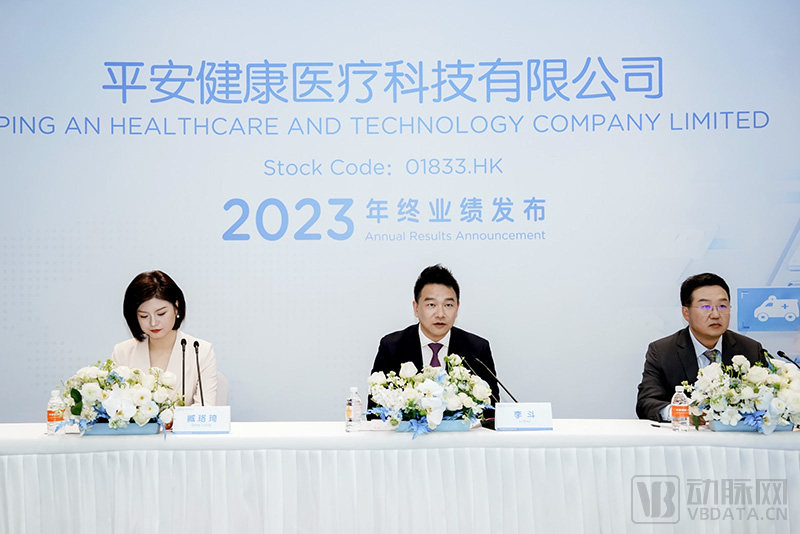
Ping An Healthcare Releases 2023 Year-End Results
All signs indicate that the veteran of internet healthcare has largely achieved its expected goals in the previous business structure adjustment. Ping An Health, now unburdened, is steadily navigating out of a sharp turn and sounding the horn for a new long march.
Rewinding to October 2021, Ping An Health announced the launch of its Strategy 2.0 deepening initiative, establishing a new model of “managed care + family doctor membership + O2O healthcare services” and formally commencing strategic adjustments. Through these adjustments, Ping An Health’s senior management aimed to refocus its business on the F-side (financial) and B-side (enterprise) segments, which are characterized by high willingness to pay and significant growth potential, thereby building a bridge between healthcare suppliers and payers.
This model has further evolved into Ping An’s distinctive “3-2-3” managed care model. Ping An Health identifies three major payer segments—F (Financial), B (Business/Corporate), and C (Consumer/Individual)—assumes two key roles as family doctor and elderly care steward, and provides three O2O service models (internal physician teams and cooperative networks, specialized disease centers, and external partner healthcare institutions).
To align its business with the new strategy, Ping An Healthcare has been proactively adjusting its operations over the recent period, reducing revenue streams that have low strategic relevance and limited value for future development. While these adjustments have led to a decline in revenue to some extent, they have also reduced the proportion of low-gross-margin revenue in total revenue, thereby achieving more sustainable long-term development.
In terms of organizational structure, Ping An Healthcare has also implemented sweeping reforms to align its structure with strategic objectives. “For instance, we have standardized the architecture of our Sales Center to map onto the F-end, B-end, and C-end. We require that the new structure, encompassing the Sales Center, Medical Center, and Product Center, seamlessly integrate with the ‘3-2-3’ framework,” Li Dou, CEO of Ping An Healthcare, told VCBeat.
“For example, we require the Product Center to integrate the ‘Three Arrivals (to the production line, to the home, and to the store)’ service platform, enhancing cost-effectiveness through supplier management and centralized procurement—this constitutes its KPI. In this way, each department can align seamlessly with the group’s organizational structure and strategic objectives, much like interlocking gears, ensuring that corporate, individual, and departmental goals are fully integrated. Only in this manner can efforts be synergized through consistent direction,” he added.
Furthermore, Ping An Healthcare has significantly enhanced operational efficiency by leveraging informatization, digitalization, and AI empowerment, leading to a substantial reduction in expenses. Administrative expenses decreased by 15.3%, while selling expenses dropped by 25.4%.
According to the annual report, although Ping An Health’s revenue declined slightly due to the divestiture of certain low-value revenue streams, its net loss narrowed significantly by 47.6% year-on-year. The gross profit margin has also risen continuously over the past two years. At the outset of its Strategy 2.0 deepening initiative in 2021, Ping An Health’s gross profit margin stood at 23.27%. It began to rise in 2022 and increased by another 5 percentage points from the 2022 level in 2023, reaching 32.3%, the highest level in the past five years.
While cost reduction and efficiency improvement have certainly contributed to the enhancement of gross profit margins, they are not the primary drivers behind the sustained improvement in Ping An Health’s profitability. Senior management at Ping An Health has stated that the key factor is the unexpectedly rapid growth of its emerging strategic businesses. In particular, healthcare and elderly care services targeting the corporate (F-end) segment have become a major revenue pillar, generating RMB 2.2 billion in annual revenue, representing a year-on-year increase of 14.8%.
Since aggressively expanding its B-end business, Ping An Health, the flagship of Ping An Group’s healthcare and elderly care ecosystem, has consistently implemented a managed care model, providing one-stop, 7×24 proactive healthcare management services—both online and offline—to users of Ping An Group’s integrated financial businesses, including commercial insurance and banking.
This model was once misinterpreted as being overly reliant on Ping An Group. In fact, the close synergy between Ping An Health and Ping An Group is actually a form of mutual empowerment.
Specifically, by collaborating with life insurance, property and casualty insurance, health insurance, and banking sectors, Ping An Healthcare develops innovative businesses such as product integration, benefits procurement, and value-added services tailored to the user profiles and healthcare needs of different financial services. This strategy enables the company to secure substantial customer referrals from both the business (B-end) and financial (F-end) sectors.
Conversely, the professional and high-quality medical, health, and elderly care services provided by Ping An Healthcare to these users can further enhance user stickiness and recognition, thereby increasing repeat purchases and transforming financial services—typically low-frequency—into high-frequency medical and healthcare services.
For example, in 2023, Ping An Health and Ping An Life Insurance jointly upgraded the existing “Zhenxiang RUN” service system. Building upon services such as specialized health check-ups, online consultations, appointment registration and escorted medical visits, blood glucose management, and critical illness case management, they established Ping An Family Doctor as the hub for user services and operations. This initiative created a one-stop healthcare service experience that is “worry-free, time-saving, and cost-effective,” leading to continuous improvements in user adoption and satisfaction.
These initiatives have yielded corresponding returns. According to statistics, the number of paying users on the F-end increased to approximately 26.3 million over the past year, a year-on-year growth of 6.7%, while the Average Revenue Per User (ARPU) grew by 7.5% year-on-year. Furthermore, data disclosed in Ping An Group’s third-quarter report shows that among individual customers who utilized the services of Ping An Group’s medical and elderly care ecosystem, the average number of contracts per customer and the average Assets Under Management (AUM) per customer were 1.6 times and 3.4 times higher, respectively, than those of other individual customers.
In the future, Ping An Health will continue to explore the F-end, enhance penetration among users of Ping An Group’s integrated financial services, further expand membership coverage, strengthen user operations, and improve user stickiness and secondary conversion, thereby supporting its long-term development.
Corporate health management is a key strategic pillar in the deepening of Ping An Health’s Strategy 2.0. Ping An Health has been consistently providing professional, comprehensive, high-quality, one-stop corporate health management services to its clients. By helping enterprises improve employee health, reduce employer-sponsored healthcare costs, and enhance workforce productivity, Ping An Health contributes to building happy and thriving workplaces.
The “Yi Qi Health” corporate health management product system serves as the foundation for Ping An Health’s corporate health management offerings. By conducting in-depth research into and uncovering employee health management needs, Ping An Health has iteratively developed two major solutions—“Check-up+” and “Health Management+”—establishing a differentiated product and service matrix with enhanced competitive advantages.
Among these, “Physical Examination+” creates an innovative model for employee health screenings by offering value-added services such as customized examination plans, corporate group screening reports, corporate health dashboards, and end-to-end consulting and guidance from corporate health officers and wellness physicians. Meanwhile, “Health Management+” provides employees with multi-channel medical access, including online consultations, offline medical visits, and services from renowned specialists, while also tailoring products such as psychological Employee Assistance Programs (EAP) and corporate infirmaries to meet enterprise needs, thereby comprehensively safeguarding corporate health.
Meanwhile, this service system also achieves full-process digital management by breaking down data silos, providing enterprises with visualized, customized medical and health services for analysis, thereby eliminating fragmentation in corporate health management.
In 2023, Ping An Health aggressively expanded its corporate health management market through two primary channels: first, by leveraging Ping An Group’s distribution network to reach and deepen collaborations with corporate clients, focusing on medium-to-large enterprises with sufficient health management budgets, clear employee health management plans, and strong payment capacity and willingness, thereby providing them with comprehensive solutions for employee health management.
Taking the collaboration with China Resources Snow Breweries as an example, the annual employee health check-up program represents a massive undertaking due to the company’s large workforce, wide geographic distribution, and operations in remote areas such as Sichuan and Tibet. Ping An Healthcare provides robust medical service resources covering all of China to meet personalized needs across different regions, leveraging its extensive experience in health management for employees of large enterprises. Its rapid response and high-quality service have been well received by employees. In 2023, the estimated actual participation rate for health check-ups at China Resources Snow Breweries reached approximately 94%, the highest on record.
Second, leveraging the experience and capabilities accumulated through channel cooperation within the Ping An Group, Ping An Health is also actively strengthening the expansion of its independent sales channels.
Through the continuous improvement of penetration rates among Ping An Group’s corporate clients and the steady growth of independently acquired corporate customers, Ping An Healthcare’s corporate health management business has achieved explosive growth in a short period. As previously mentioned, in 2023, Ping An Healthcare’s revenue from corporate health management services reached RMB 1.08 billion, representing an 81.2% year-on-year increase, thereby establishing it as the leading corporate health management service provider in China.
As of the end of the reporting period, Ping An Health had served 1,508 corporate clients, an increase of 530 from the same period last year; the number of paying B-side strategic business users exceeded 5.1 million, representing a year-on-year growth of 75.0%. Broken down by segment, there were 895 corporate clients for “Health Checkup+” services, with a cumulative year-on-year increase of 53.3%; and 696 corporate clients for “Health Management+” services, with a cumulative year-on-year increase of 49.7%. In addition, the number of dual-service clients subscribing to both “Health Management+” and “Health Checkup+” reached 147, a cumulative year-on-year increase of 28.9%, which sufficiently demonstrates the market recognition of its corporate health management services.
According to the annual report, the penetration rate of Ping An Health’s corporate clients within Ping An Group’s healthcare and elderly care ecosystem stands at 2.7%, indicating substantial room for expansion. Li Dou, CEO of Ping An Health, told VCBeat that the company will make significant efforts to further increase this penetration rate in the future.
“A tiger needs to find the right spot to take a bite. In our overall planning, we have customer maps, prioritization, and product maps—these are the operational details. The entire group will also provide substantial support for the development of the corporate health business, including professional resources and capabilities at various levels to expand this area. We focus on refining our products, while the Group, as the channel partner, can drive deeper customer penetration. Therefore, these goals and responsibilities are driven by the Group, serving as a key lever,” he stated.
Li Dou stated that Ping An Health’s corporate health management team maintains continuous engagement with clients, enabling them to promptly grasp the varying conditions of different enterprises. This provides valuable reference for product models centered on the “1+N” health checkup framework. “Large enterprises span multiple cities and have a substantial employee base. Our advantage in this regard lies in our extensive coverage capabilities. For local small businesses, budgets are relatively tight; they do not necessarily require a broad range of services, but the services provided must be tangible and concrete. Addressing the needs of such clients demands strong product synergy capabilities, allowing us to identify health services within our service map that align with the distinct characteristics of each enterprise.”
Under the 2.0 Strategy, family doctors and elderly care managers are positioned as the two core hubs of the company’s medium- to long-term development strategy. They serve as the key link connecting its services with the three payment ends (F-end, B-end, and C-end), embodying Ping An Health’s “customer-centric” philosophy.
First, the family doctor. Previously, Ping An Healthcare had a "Four Doctors" system composed of family doctors, renowned doctors, specialists, and medical treatment, providing customers with rich multi-dimensional healthcare scenarios. However, it was not perfect, and customer experience still had some gaps.
In 2023, Ping An Health launched its flagship medical and health service brand, “Ping An Family Doctor,” which integrates the resources of “four medical” services through a single family doctor portal, connects “home-based, store-based, and online” services, and enables “rapid diagnosis for minor illnesses, standardized management of chronic diseases, and precise referral for serious conditions,” providing users with a high-quality, convenient, end-to-end healthcare experience.
For instance, the “Ping An Family Doctor · Elderly Care Edition” launched this year focuses on the medical and health pain points and needs of elderly users. By providing a service model featuring one filial care manager, one Ping An family doctor, and three layers of health protection, it offers users a one-stop, specialized, and exclusive service characterized by “professional diagnosis, proactive care, and secure living.” This product helps more elderly people in China strengthen their daily health management, facilitates convenient access to medical consultations and medications, and provides greater physical and mental well-being support for seniors, thereby alleviating the concerns of their children who are working away from home.
This customer-centric philosophy has also received widespread acclaim from users, driving the growth of Ping An’s family doctor services. In 2023, the number of members covered by Ping An’s family doctor services reached nearly 13 million. Among them, the average number of service uses per person was 3.7 times during the year, an increase of 0.8 times compared to 2022, with a five-star rating rate for user consultations exceeding 98%.
Ping An Health has also established a medical team covering 29 specialties, comprising approximately 50,000 internal and external physicians, and has collaborated with nearly 2,500 renowned experts to meet users’ diverse healthcare needs across all scenarios. Furthermore, the company has set up 23 specialized disease centers focused on eight major specialties, developing standardized pre-diagnosis, intra-diagnosis, and post-diagnosis solutions for each specialty and disease.
Taking chronic disease management services as an example, Ping An Health has launched three flagship offerings for chronic conditions: blood glucose control, blood pressure control, and weight management. By establishing personal health records for users, providing personalized solutions, and offering end-to-end monitoring and management guidance, these services have helped users effectively improve their health outcomes.
In addition to family doctors, home-based elderly care is also emerging as a new growth pole for Ping An Health in the future. In recent years, the aging trend of China’s population has continued to intensify, and the country has entered a moderately aged society, making elderly care an increasingly prominent focus of attention across all sectors of society. Notably, since the beginning of this year, elderly care has been mentioned 13 times in the Government Work Report, with “ensuring support for the elderly” becoming a key area of market interest.
In 2023, Ping An Healthcare gained deep insights into market demands and collaborated with Ping An Life Insurance to focus on ten major scenarios—“medical care, diet, housing, transportation, finance, elderly care, health, wellness, protection, and safety”—alongside “a unified supervision system.” This initiative provided seniors with a one-stop, high-quality home-based elderly care solution, delivering 24/7 services through an integrated model comprising smart assistants, lifestyle managers, and physician managers.
Furthermore, to address the current pain points of home-based elderly care, Ping An Health has integrated Peking University Medical Care’s rehabilitation service standards and collaborated with over 40 rehabilitation and nursing service providers as well as industry experts to establish a “Care Alliance” for home-based elderly care. This initiative aims to build rigorous service standards and a robust service supervision system, continuously optimizing a user experience that is both professional and compassionate.
Li Dou told VCBeat that through continuous in-depth development, the elderly care business has the potential to become a moat for Ping An Healthcare. “Healthcare is a serious matter, and elderly care is something that demands even greater reverence. Therefore, the company strictly adheres to national standards in its medical and elderly care health services, and has established a quality control system under the user-first philosophy.”
“We have the courage to pioneer in many fields, a trait ingrained in Ping An’s DNA. Take home-based elderly care, for instance; the concept is hardly new and widely understood. However, when it comes to actual implementation, I estimate that 99.99% of people would merely consider it and then abandon the idea due to its immense difficulty. Yet, we dare to take on this challenge, striving to execute it with dedication. This commitment stems from our original aspiration. While we do not claim to solve the nation’s broader issues, we are determined to effectively address these challenges for our own clients.”
Since the exploration of Ping An’s home-based elderly care service model, its effectiveness has become increasingly significant. As of 2023, Ping An’s home-based elderly care services covered 54 cities across China, with nearly 100,000 individuals having qualified for Ping An Butler services. The satisfaction rate for butler services stood at 95%.
Leveraging AI to enhance operational efficiency has become a consensus in today’s healthcare industry. Ping An Healthcare, with AI inherent in its DNA, places significant emphasis on AI empowerment. Currently, its “AI + Healthcare” model assists physicians across the entire service workflow, covering approximately 36,000 diseases and 420,000 disease terms. It incorporates 30 million of the world’s leading medical literature sources and 20,000 clinical guidelines, with daily updates of 10,000 medical knowledge entries.
Not only serving doctors, its artificial intelligence has also brought great convenience to patients. Within the year, it provided consultation and advisory services to nearly 480 million people, with cumulative consultations exceeding 1.42 billion. Notably, the response rate for rapid consultations within 30 seconds reached 92.9%, and the patient satisfaction rate was as high as 99.2%.
Looking ahead, against the backdrop of China’s vigorous development of new-quality productive forces, Ping An’s distinctive “AI + Healthcare” model will continue to comprehensively enhance service efficiency and user experience, safeguarding the company’s high-quality and sustainable development.
As a series of strategic business adjustments draws to a close, the results of Ping An Health’s deepened Strategy 2.0 layout have become increasingly clear. Viewed over a longer timeline, its losses have dropped to their lowest level in five years, while its gross profit margin has reached a five-year high, bringing the company within striking distance of profitability.
Belated Profitability: Late but Inevitable. What Comes Next? Li Dou, the New Helmsman of Ping An Health, Offers a Concise 16-Character Strategy: “Deepen Empowerment, Expand Corporate Health Services, Strengthen the ‘Three Arrivals,’ and Specialize in Our Role.”
By focusing on its two core customer segments—financial services clients and corporate clients—Ping An Health is building a differentiated “product + service” model that creates mutual empowerment with Ping An Group’s core financial businesses. At the same time, it has not relaxed its efforts to identify new growth drivers. Through organic growth and inorganic expansion, Ping An Health aims to establish a robust barrier of medical and elderly care resources, refine its products with meticulous craftsmanship, build reputation through quality, and create a sustainable business model, striving to achieve steady and profitable development.
The bugle has sounded for the new Long March to create a Chinese model of managed care; let us wait and see when it will arrive.