

Dynegene Technologies Launches High-Fidelity Gene Fragment Synthesis Service with Next-Day Delivery
As a key foundational technology for the development of life sciences and related fields, DNA design and synthesis not only enables the modification of existing DNA sequences but also allows for the de novo construction of biological information, significantly enhancing our ability to understand, predict, and manipulate living systems.
The coupling efficiency and side reactions of existing chemical methods make it difficult to synthesize oligonucleotides at the gene-length scale of kilobases (kb).【1-4】Therefore, longer gene fragments must be obtained through assembly techniques. However, both oligonucleotide synthesis and DNA assembly processes inevitably introduce errors, thereby reducing the accuracy of long DNA fragments. The use of error-correction technologies can effectively eliminate various types of errors, thus improving the accuracy of synthetic products and significantly reducing quality control costs for long-fragment synthesis.
Reducing the error rate in long-fragment synthesis has always been a challenge in gene synthesis. Based on its high-quality oligonucleotide synthesis platform and independently developed ultra-redundant assembly and multi-point error correction processes, Diying has launched a high-quality gene fragment synthesis service.DiYing high-quality gene fragments are double-stranded DNA fragments up to 2 kb in length, and their high-fidelity characteristics enhance subsequent gene assembly capabilities and the efficiency of accurate cloning.Meet your gene fragment needs for recombinant expression, drug development, vaccine development, and more with lower costs, faster turnaround times, and enhanced sequence confidentiality.Next-day delivery at the earliest!
● High-fidelity genome assembly
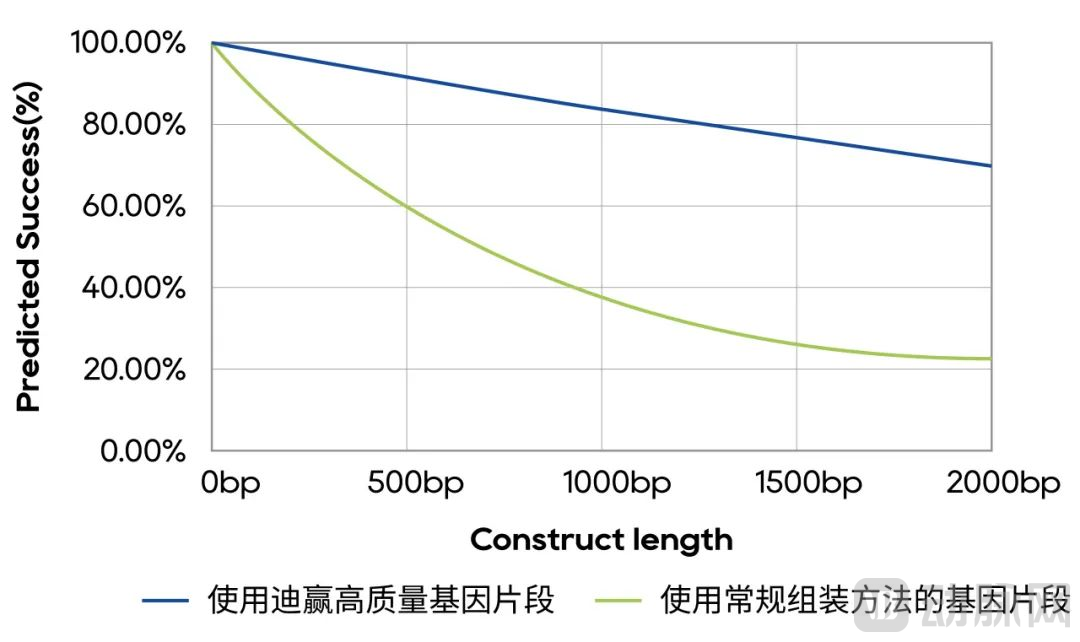
Figure 1. Using Diying high-quality gene fragments and
Probability of Successful Clone Assembly Using Conventional Methods
DiYing provides high-quality gene fragments within 2 kb, with an overall average error rate of 1/10,000 bp. For fragment lengths <1 kb, the average cloning accuracy is 85%, and it is recommended to sequence 2–3 clones; for fragment lengths of 1–2 kb, the average cloning accuracy is 70%, and it is recommended to sequence 3–4 clones.
● Minimal screening required to identify the correct clone
Cloning efficiency is influenced by many factors, including the cloning method used, the toxicity of expressing the coding sequence, and the choice of competent cells. Using Diying’s high-quality gene fragments requires minimal screening to identify correct clones, thereby reducing the time and cost associated with clone screening.
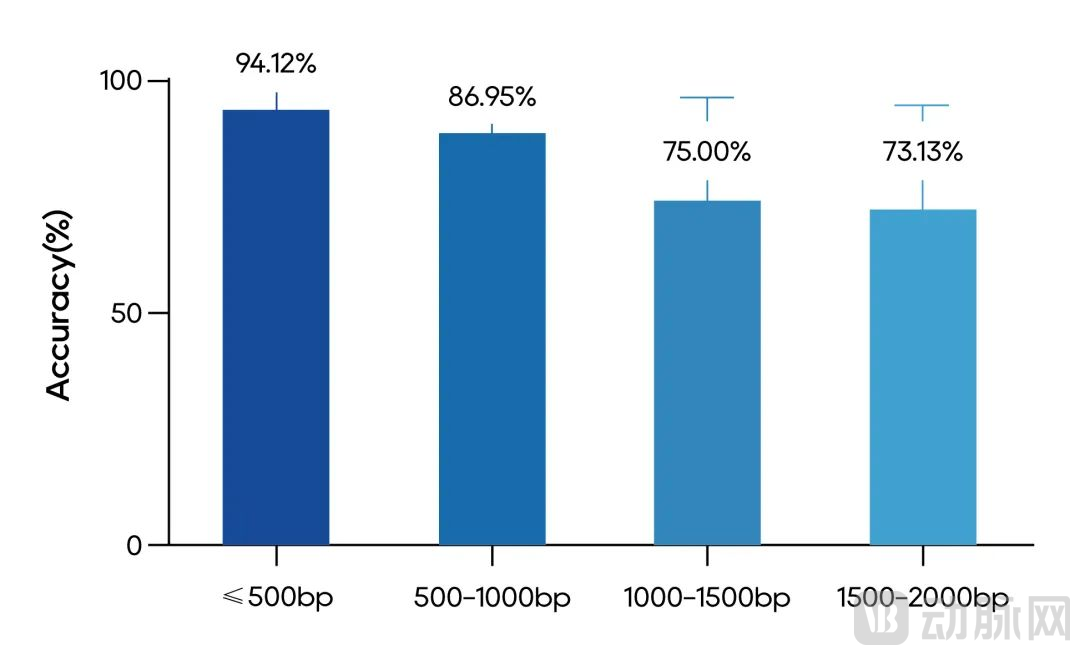
Figure 2. Average clonal accuracy of high-quality gene fragments of different lengths
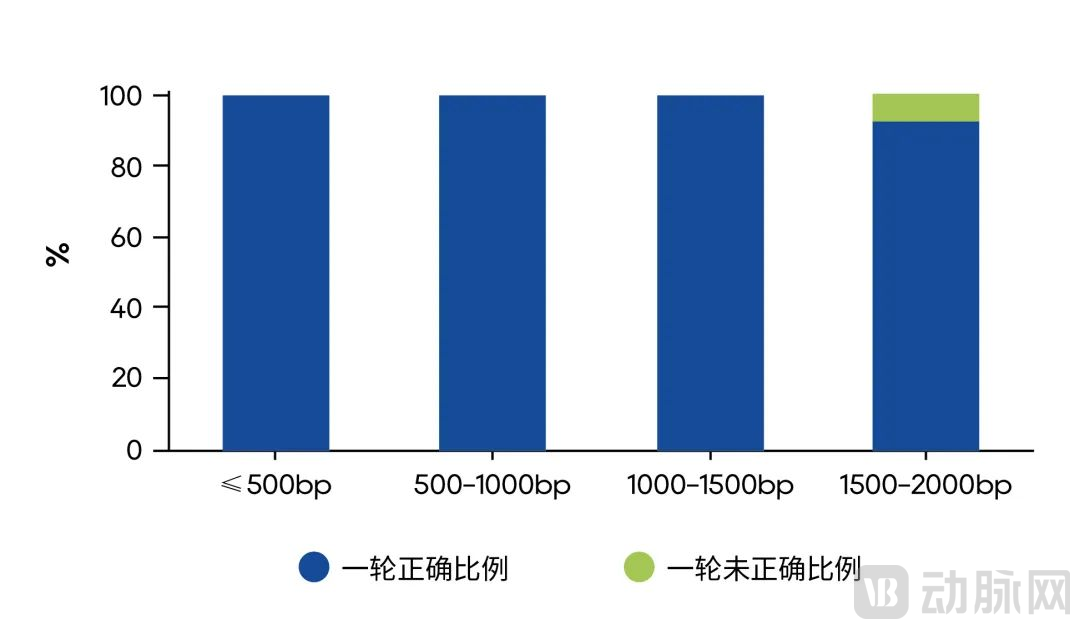
Figure 3. Proportion of successful one-round construction of high-quality gene fragments of different lengths
Eliminating the need for amplification primer synthesis, PCR amplification, and DNA fragment recovery, high-quality gene fragments can be directly cloned into the target vector.
For DNA fragments <2 kb, selecting 2–5 colony PCR-positive clones yields a probability of up to 92% for obtaining a fully correct clone.
High-quality gene fragment synthesis features a short turnaround time, with delivery possible as early as the next day.
Comparable to the cost of primer synthesis.
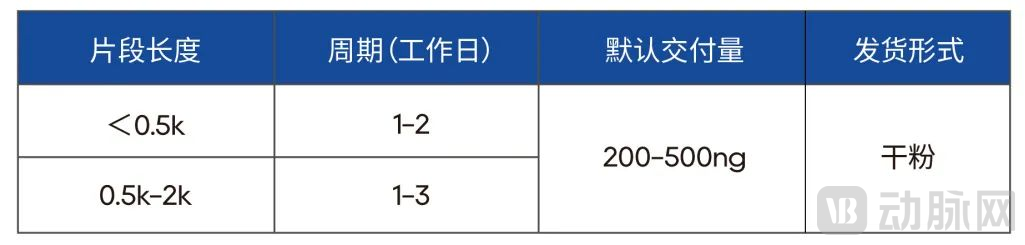
Note: This service applies to non-complex sequences. For special delivery volumes and formats, please consult us.
About Diying
Shanghai Dynegene Biotechnology Co., Ltd. (Dynegene Technologies Co., Ltd.), established in 2018, is a rapidly growing innovative high-tech enterprise and the first company in China to achieve commercial-scale production of ultra-high-throughput next-generation DNA synthesis technology and equipment. Dynegene has secured hundreds of millions of RMB in venture capital financing from prominent domestic investors, including Volcanic Stone Capital, Nest Bioventures, Matrix Partners China, Boyu Capital, Hansoh Capital, and ByteDance.
Diying Bio is dedicated to next-generation nucleic acid synthesis, providing robust support for fields such as synthetic biology, molecular diagnostic reagents, and biopharmaceutical tools. The company has successfully developed a 3D inkjet printing-based ultra-high-throughput in situ nucleic acid synthesis platform, achieving a breakthrough in this field within China. Technical indicators of our products, including throughput, accuracy, and length, have reached globally leading levels. Our solutions have gained widespread favor and recognition from customers and partners in molecular diagnostics, antibody drug screening, novel biomanufacturing, nucleic acid drug development, de novo genome assembly, DNA data storage, and single-cell spatial omics research.
For more information, please visit the official website of Diying.www.dynegene.com
* References
[1] MA S, TANG N, TIAN J. DNA synthesis, assembly and applications in synthetic biology[J]. Current Opinion in Chemical Biology, 2012, 16(3/4): 260-267.
[2] CARUTHERS M H. The chemical synthesis of DNA/RNA: our gift to science[J]. Journal of Biological Chemistry, 2013,
288(2): 1420-1427.
[3] PALLUK S, ARLOW D H, DE ROND T, et al. De novo DNA synthesis using polymerase-nucleotide conjugates[J]. Nature Biotechnology, 2018, 36(7): 645-650.
[4] PENG Kai,LU Xiaoyun,CHENG Jian, et al. Advances in technologies for de novo DNA synthesis,assembly and error correction[J]. Synthetic Biology Journal,2020,1(6):697-708.