

Kenai Therapeutics Files for IPO Following $82M Series A to Advance iPSC-Derived Cell Therapy for Parkinson’s Disease
Kenai Therapeutics
Cell Therapy Developer

Saisei Ventures
Venture Capital Firm

The Column Group
Venture Capital Firms

Euclidean Capital
Hedge Fund

Cure Ventures
Venture Capital Firms

Alaska Permanent Fund Corporation
Fund Management Institution
In recent years, cells derived from induced pluripotent stem cells (iPSCs) have gradually attracted widespread attention. iPSCs refer to stem cells with multilineage differentiation potential that are obtained by reprogramming differentiated adult cells using viral or non-viral vector technologies. These cells exhibit pluripotency similar to that of human embryonic stem cells and hold immense potential for research and clinical applications.
The development of iPSCs began in 2006. At that time, Shinya Yamanaka’s team at Kyoto University in Japan successfully reprogrammed adult mouse skin cells into novel cells resembling embryonic stem cells by introducing genes via viral vectors. Through screening, they narrowed down the required transcription factors to four, ushering in a new chapter in iPSC research. The following year, this team, in collaboration with James Thomson, successfully converted human adult cells into pluripotent stem cells. Since then, iPSCs have been the first to complete clinical trials in the field of ophthalmic diseases, and in 2018, the world’s first transplantation surgery using iPSCs for the treatment of Parkinson’s disease was performed.
In this field, a cohort of biotech companies focused on iPSC technology has rapidly emerged, with Kenai Therapeutics (“Kenai”) being one of them.
Targeting the Degenerative Neurological Disease Sector, Pipeline Poised for IND Application
In March this year, San Diego-based Kenai announced that it had secured$82 million Series A financing roundThis round of financing was co-led by Alaska Permanent Fund Corporation, Cure Ventures, and The Column Group, with participation from Euclidean Capital and Saisei Ventures. The proceeds will be used to support the Investigational New Drug (IND) application for the lead candidate RNDP-001 and to advance its Phase 1 clinical trial, which is expected to launch later this year. According to the press release, Kenai had previously raised seed funding under the name Ryne Bio.
Currently, Kenai has developed three pipelines, namely RNDP-001, RNDP-002, and RNDP-003.
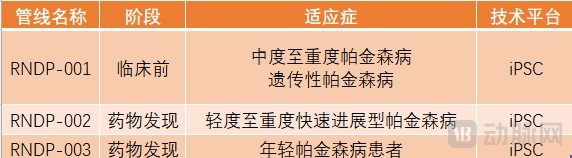
Kenai Pipeline. Image source: Kenai official website
In February last year, Kenai announced that it had received a $4 million grant from the California Institute for Regenerative Medicine (CIRM) to advance the research and development of RNDP-001. RNDP-001 is an iPSC-basedAllogeneic Dopamine Progenitor Cell Therapy, currently in the preclinical stage, is designed to treat idiopathic and genetic Parkinson’s disease. According to Kenai Therapeutics, RNDP-001 has demonstrated favorable viability, innervation capacity, and behavioral rescue effects in preclinical models of Parkinson’s disease.
According to Kenai Therapeutics’ official website, its development strategy involves providing patients with dopaminergic neuron progenitor cells derived from induced pluripotent stem cells (iPSCs) to replace cells lost due to disease. The preparation of iPSCs entails treating mature somatic cells (such as those from skin or blood) with reprogramming factors to revert them to a pluripotent stem cell state, thereby enabling their differentiation into nearly any cell type in the body.
When these iPSCs are treated with specific molecules, they differentiate into dopamine-producing neuronal progenitor cells. This “off-the-shelf” therapy is not manufactured on demand; instead, it can be produced in advance and stored at low temperatures for future use. Once these progenitor cells are surgically implanted directly into the brain, they extend neuronal projections to various brain regions, thereby restoring dopaminergic signaling pathways. This innovative therapy holds promise for helping patients with idiopathic and genetic Parkinson’s disease regain function.
Leveraging precision manufacturing technology, Kenai is now capable of directly replacing lost dopaminergic neurons. Preclinical data indicate that this therapy can establish innervation in multiple brain regions of rats, including the striatum—a region where dopaminergic input is typically lost in patients with Parkinson’s disease. Furthermore, in rat models of Parkinson’s disease, increased delivery of progenitor cells was positively correlated with enhanced innervation, recovery of motor function, and higher survival rates.
The development of RNDP-001 has also received support from The Michael J. Fox Foundation for Parkinson's Research. In addition to RNDP-001, Kenai Therapeutics is actively developing a pipeline of off-the-shelf dopaminergic neuron replacement cell therapies for the treatment of neurological disorders.
Of course, Kenai’s success is no accident; it is underpinned by a strong leadership team. The company’s two scientific founders are Dr. Howard Federoff and Dr. Jeffrey H. Kordowe.
Dr. Howard FederoffHe is an Adjunct Professor of Neurology and Neuroscience at Georgetown University, with research interests including gene therapy and neurodegenerative diseases such as Parkinson’s disease, Alzheimer’s disease, and prion diseases.HowardHolds multiple medical patents and has received support from the National Science Foundation, the National Institutes of Health, and the U.S. Department of Defense.
Another Scientific FounderDr. Jeffrey Kordower, has taught at Arizona State University for over 30 years. He is the founding chair of the ASU-Banner Neurodegenerative Disease Research Center and serves as The Charlene and J. Orin Edson Distinguished Director at the ASU Biodesign Institute. He possesses profound expertise in neural transplantation technology, with key research areas including gene and stem cell therapies, as well as the pathogenesis of related diseases, encompassing morphological and molecular changes associated with neurodegeneration, cognition, memory, and aging.
In February 2022, Howard Federoff collaborated with the team of Jeffrey Kordower, inNature Regenerative MedicineThey jointly published a paper. In the study, they described the process of differentiating implanted induced pluripotent stem cells (iPSCs) into dopaminergic neurons and evaluated the maturity and dosage of iPSC-derived cells. The study found that in rat models, iPSC-derived dopaminergic precursor cells with optimal maturity and dosage successfully reversed 6-hydroxydopamine (6-OHDA)-induced hemiparkinsonism.
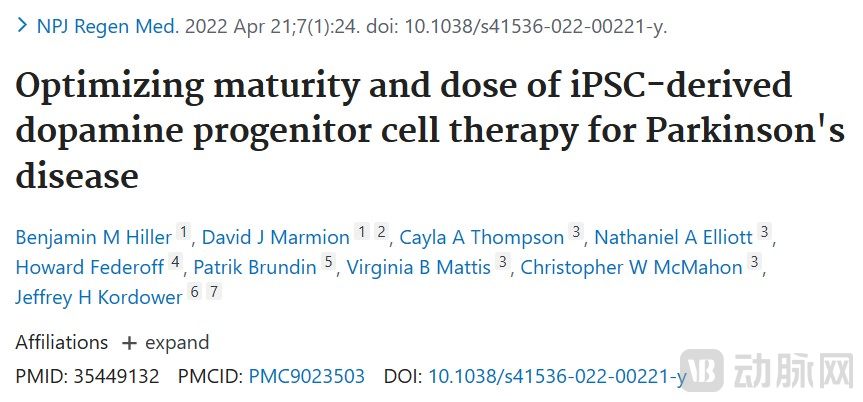
Image source: National Library of Medicine website
Over the past two years, the two scientists have continued their in-depth collaboration and jointly founded Kenai Therapeutics. Their latest research findings were published in February this year inBrainin the journal.

Image source: National Library of Medicine official website
This new study highlights the role of a key protein called tau in the early stages of Parkinson’s disease. The findings suggest that tau protein aggregates may initiate the neuronal damage and death processes characteristic of the disease. This discovery challenges the traditional view of Parkinson’s pathology, in which alpha-synuclein has long been regarded as the hallmark diagnostic marker.
Furthermore, this study reveals that tau pathology actively contributes to the degeneration of dopaminergic neurons in the brain, independent of α-synuclein. This finding may shift the focus of future Parkinson’s disease research, diagnosis, and treatment.
As one of the most common neurodegenerative diseases worldwide, Parkinson’s disease primarily affects the central nervous system, leading to chronic degeneration of the motor nervous system. Current mainstay pharmacological treatments include elevating dopamine levels in the brain through dopamine supplements (such as L-DOPA) or agonists, employing deep brain stimulation to modulate dopaminergic activity, or inhibiting dopamine degradation; however, therapeutic efficacy is often not sustained. Consequently, Parkinson’s disease has become one of the primary indications for iPSC-derived therapies, with advantages including:
① Potential for a cure. By leveraging induced pluripotent stem cells (iPSCs) for directed differentiation in vitro to generate large quantities of healthy dopaminergic neurons for cell replacement therapy, it is possible to address the loss of dopaminergic neurons, thereby reversing the progression of Parkinson’s disease;
② Prolonged therapeutic efficacy. Transplanted iPSC-derived dopaminergic neurons can integrate into the brain and stably produce and release dopamine over an extended period, thereby maintaining patients' motor function;
③ Stable and safe. iPSCs provide a stable and secure cell source, enabling batch production and quality control of dopaminergic neurons. This addresses the challenges associated with scaling up manufacturing and implementing quality control for primary cell-based therapeutic products, while also reducing costs. Currently, numerous companies both in China and abroad are actively investing in this field and have made significant progress.
In China, in August last year, the official website of the Center for Drug Evaluation (CDE) under the National Medical Products Administration (NMPA) announced that the Investigational New Drug (IND) application submitted by Ruijian Medicine for human-derived dopaminergic progenitor cell injection had been approved, with Parkinson’s disease as the indicated condition.
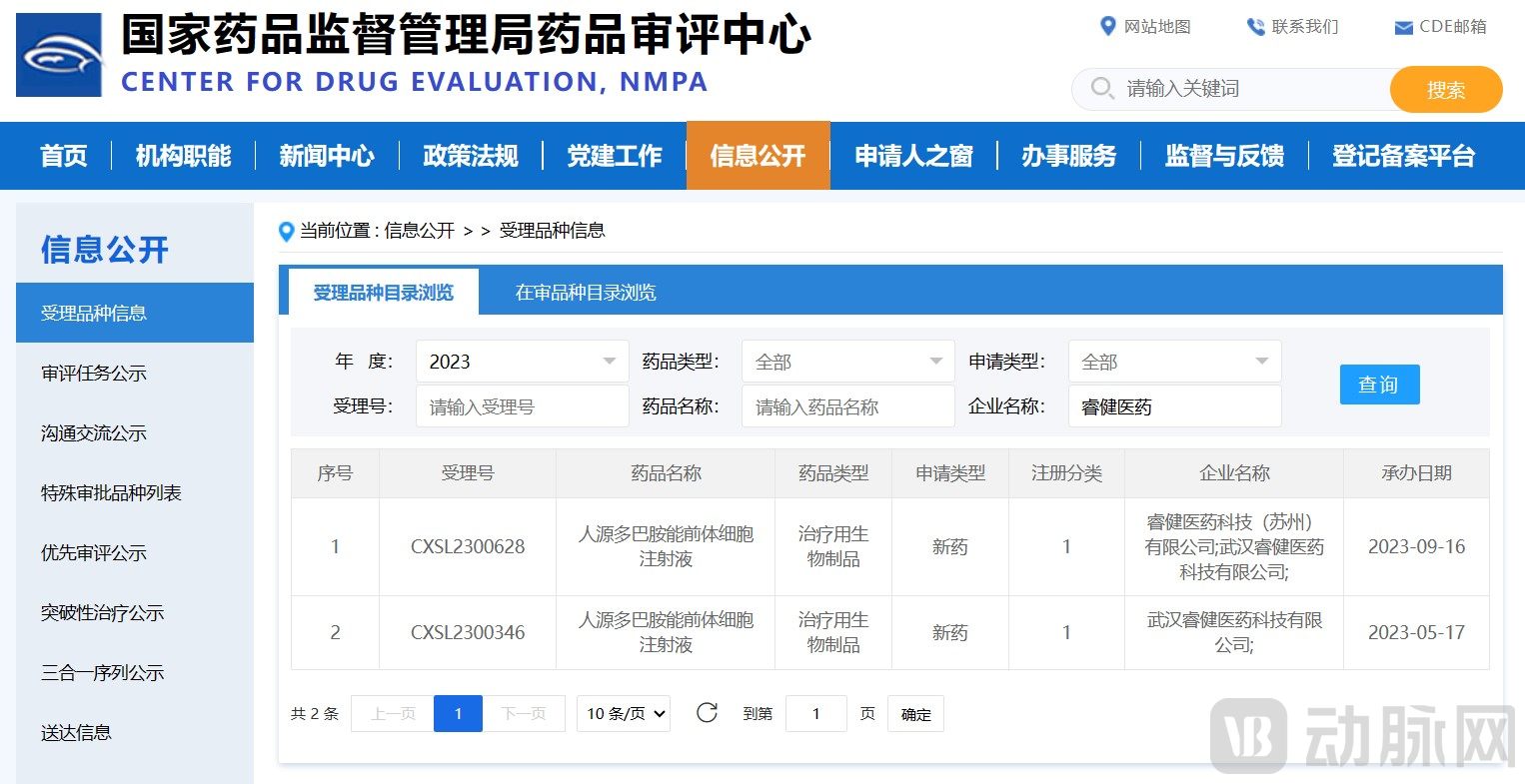
Image source: Official website of the Center for Drug Evaluation, National Medical Products Administration of China
NouvNeu001 is a universal cell therapy product developed by Ruijian Medicine based on its “AI + Chemical Induction” platform. It achieves high-purity differentiation of neuronal subtypes through compound modulation, forms connections with endogenous neurons, and enhances cellular secretory function, thereby further improving the therapeutic effect of transplanted cells on existing lesions to achieve comprehensive treatment outcomes.
In January this year, Beijing Hospital successfully administered the first dose of NouvNeu001 to a patient, and the observation period was completed without incident. The project is currently progressing smoothly, demonstrating favorable safety profiles and positive therapeutic efficacy.In December 2023, the National Medical Products Administration (NMPA) officially approved the Investigational New Drug (IND) application for NouvNeu003, a pipeline candidate under development by Ruijian Medicine., this pipeline targets early-onset Parkinson’s disease as its indication, specifically addressing Parkinson’s patients with an age of onset under 50 years.
In the same month, the clinical research project titled “Clinical Study of Clinical-Grade iPSC-Derived Dopaminergic Neural Progenitor Cells for the Treatment of Parkinson’s Disease,” jointly conducted by Shanghai East Hospital (East Hospital Affiliated to Tongji University) and Shize Biopharmaceuticals (Suzhou/Shanghai) Co., Ltd., was officially filed with the National Health Commission and the National Medical Products Administration (Filing No.: MR-31-24-001927).This project is the first clinical study in China on the treatment of Parkinson’s disease with iPS cell-derived therapies to complete filing with the two national committees and one bureau, and it is also the only filed clinical study among national filings for the use of iPS cell-derived therapies in treating neurological disorders.
On the global stage, Bayer had already acquired Bluerock, a leading player in this field, at a valuation of $1 billion as early as 2019. Last October, Bayer invested an additional $250 million to open its first cell therapy manufacturing facility in Berkeley, California, aiming to advance its biological pipeline for protein, cell, and gene therapies. Currently, BRT-DA01, a stem cell-derived therapy developed for Parkinson’s disease, is Bayer’s most advanced pipeline candidate in the cell therapy sector, designed to replace neurons that have lost their dopamine-producing function in patients with Parkinson’s disease.
At the International Congress of Parkinson’s Disease and Movement Disorders held in August 2023, BlueRock announced that BRT-DA01 had met its primary endpoint in the Phase 1 clinical trial for the treatment of Parkinson’s disease. The results showed that none of the 12 patients with Parkinson’s disease enrolled in the trial reported any serious adverse events related to the therapy within one year after cell transplantation, and some patients experienced symptom relief. Recruitment of volunteers for its Phase 2 clinical study is expected to commence in the first half of this year.
Although iPSCs demonstrate significant advantages in the treatment of Parkinson’s disease, their clinical application faces numerous challenges. Heterogeneity, tumorigenicity, and immunogenicity constitute the three primary obstacles. Specifically, cell therapies derived from iPSCs may contain undifferentiated cells; upon transplantation into patients, these cells can not only trigger immune rejection but also undergo uncontrolled proliferation and differentiation, potentially leading to tumor formation. Furthermore, urgent issues remain to be addressed, including the complexity of manufacturing processes, stringent regulatory policies, low induction efficiency, technical operational difficulties, and a shortage of specialized personnel for industrialization.