

Chuangjian Medical Raises $560M in 13 Months with Backing from LVMH and Shiseido, Files for IPO as China's Recombinant Collagen Unicorn
The Recombinant Collagen Industry Sees Renewed Turmoil, Potentially Shifting from a “Duopoly” to a “Triopoly.”
Following the successful IPOs of Giant Biogene and Jinbo Bio, another company in the recombinant collagen sector is set to go public.
On January 8, 2024, Jiangsu Trautec Medical Technology Co., Ltd. (“Trautec”) initiated its IPO filing under the guidance of CITIC Securities.
In July 2022, the company secured nearly RMB 200 million in Series A financing, followed by another round exceeding RMB 200 million in September 2023. A key reason for the attention drawn to Trautec lies not only in its remarkable ability to attract RMB 400 million in just 13 months, but also in the strong backing it has received. Its investors include strategic funds such as Shiseido’s Ziyue Fund and L Catterton (the private equity arm of LVMH), as well as leading financial institutions like CLSA Capital, Mingfeng Capital, and CDH Investments’ BaiFu. Notably, securing LVMH’s first-ever investment in a Chinese recombinant collagen company has propelled this low-profile yet rapidly growing industry giant into the mainstream spotlight.
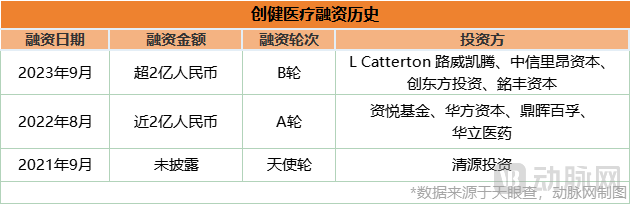
Mingxing Group Capital’s Favor for TRAUTEC Did Not Come Out of Nowhere.
From an industry-wide perspective, the surge in capital investment, the successive entry of leading domestic and international brands, and the rollout of national policies have fueled strong consumer enthusiasm for recombinant collagen. These trends indicate that recombinant collagen has claimed the laurel wreath as the new star ingredient in anti-aging.
Trautec’s focus on recombinant collagen currently represents a scarce asset in the primary market. In the A-share market, Jinbo Bio-Pharmaceutical (832982.BJ) is the only company whose core business centers on recombinant collagen products, and it has become the sole stock on the Beijing Stock Exchange with a share price surpassing RMB 200.
From a corporate vertical perspective, the growth of TRAUTEC is inseparable from the exploration and endeavors of two generations in the medical device industry. The father of Qian Song, Chairman of TRAUTEC, founded China’s first domestically established orthopedic medical device company to be listed in Hong Kong, which was later acquired by Stryker, the global leader in orthopedics, for HK$5.9 billion in 2010. Therefore, the establishment of TRAUTEC was not built from scratch; rather, it carries with it decades of profound accumulation and expertise in the medical device industry.
TRAUTEC, which has anchored its strategy in recombinant collagen, has demonstrated remarkable tenacity and determination—akin to “holding fast to the green mountains without relenting.” Through years of dedicated cultivation, strategic advancement, and continuous innovation and breakthroughs,
On January 6, 2023, the recombinant Type XVII collagen independently developed and manufactured by the Company was included in the International Nomenclature of Cosmetic Ingredients (INCI) directory, marking the official entry of TRAUTEC’s first recombinant collagen material into the international market;
On April 28, the group standard “Quality Requirements and Efficacy Evaluation Methods for Recombinant Collagen Raw Materials” (No. T/ZGKSL 005—2023), led by TRAUTEC (as the lead organization), officially came into effect;
On May 26, the recombinant Type III small-molecule collagen developed by the company was officially included in the International Nomenclature of Cosmetic Ingredients (INCI) directory. This marks the second ingredient from the company to be successfully listed in the international cosmetic ingredients directory, following its recombinant Type XVII collagen, which had previously been assigned an INCI name. This inclusion signifies that the recombinant Type III small-molecule collagen ingredient has gained recognition both domestically and internationally.
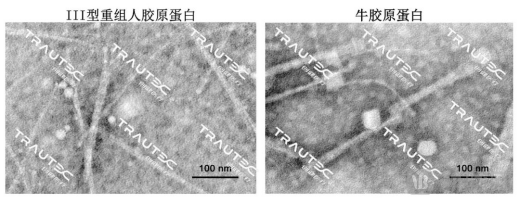
On February 20, 2024, the company announced the successful development of Type III recombinant human collagen, which features an amino acid sequence identical to that of native human collagen and possesses a natural triple-helix structure, thereby enabling industrial-scale production.
Meanwhile, TRAUTEC is strategically advancing its global patent portfolio in the United States, South Korea, Japan, and other regions, paving the way for subsequent globalization.
A grand panorama of China’s recombinant collagen industry, akin to “A Thousand Li of Rivers and Mountains,” is gradually unfolding...
In 1981, Zyderm, the world’s first bovine collagen implant, received regulatory approval, ushering in the application of collagen in the medical aesthetics industry. Given that overseas markets had an early start, with substantial technological accumulation and a mature industrial chain, they should theoretically hold greater advantages in recombinant collagen technology. Why, then, have Chinese companies taken the lead in this field?
Li Haihang, CTO of TRAUTEC, told VCBeat that the world’s first research paper on recombinant collagen dates back to 1987. In the 1990s, numerous Chinese PhD holders pursued advanced studies abroad and brought cutting-edge international perspectives back to China. Taking Giant Biogene, an industry pioneer in the field of recombinant collagen, as an example, Professor Fan Daidi, Co-founder and Chief Scientific Officer of Giant Biogene, established a research team at Northwest University after returning from her studies abroad to focus on the development of recombinant collagen, ultimately founding Giant Biogene in 2001.
Secondly, the extraction and manufacturing processes of recombinant collagen are fundamentally different from those of animal-derived collagen, placing domestic and international research and industrialization efforts on a relatively level playing field. Given that it is challenging for China’s animal collagen industry to catch up with the century-long accumulation of expertise in Europe and the United States within just a few decades, there is greater impetus to achieve breakthroughs in recombinant collagen.
Furthermore, the production technology for recombinant collagen is relatively complex, requiring advanced technical approaches such as genetic engineering and biofermentation. Although overseas research on collagen started earlier, it primarily focused on animal-derived collagen; thus, technological breakthroughs in recombinant collagen had to start from scratch. While relevant research has been ongoing abroad, publicly available data indicate that it was not until 2022 that a U.S. company formally commercialized recombinant collagen, reflecting a relative lag in industrialization.
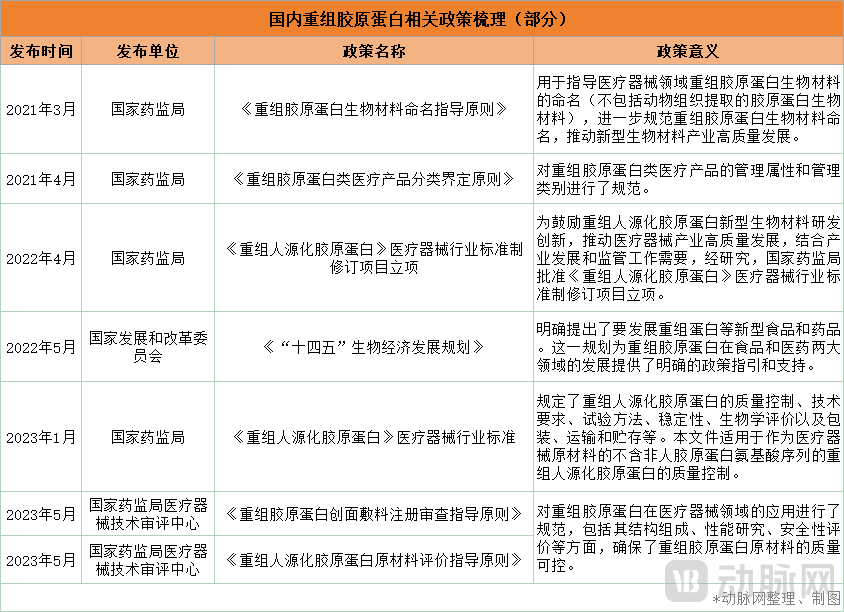
Furthermore, as a quintessential example of novel biomaterials, recombinant collagen has been the focus of numerous policies and regulations introduced by the Chinese government in recent years to support and standardize industry development. Benefiting from substantial government support and the convergence of multiple favorable factors, China’s recombinant collagen sector—spanning R&D, manufacturing, clinical application, clinical data collection, regulatory oversight, and market education—has demonstrated a more mature and comprehensive landscape compared to overseas markets, thereby exhibiting significant competitive advantages.
Meanwhile, Li Haihang also pointed out that the current controversy in the industry mainly lies in the design of different collagens. Recombinant collagen involves the selection of bacterial strains and sequences, and each type of collagen has its unique biological function. Therefore, in the process of selecting collagen sequences with different biological functions and subsequent raw material product development, companies adopt various specific truncation and recombination strategies, leading to a diverse landscape in the industry. However, these materials ultimately need to be experienced by consumers themselves to truly reflect their effectiveness, as once they enter the formulation level, compatibility and friction factors between components must also be considered.
Currently, China's recombinant collagen industry is flourishing, with many leading companies having made substantial progress and numerous emerging players having developed their own representative products.
Li Haihang believes that “product strength is the core competitiveness, and breaking through involution still relies on product strength.”
As a biological macromolecule, collagen is an essential protein component of the human body. To date, 28 types of collagen have been identified, among which Type I, Type II, and Type III are the most abundant, best recognized, and most clearly characterized. Consequently, these three types have become the entry-level choice for many companies, and TRAUTEC is no exception.
After consolidating its core business in Type I, II, and III collagens, TRAUTEC further developed Type XVII recombinant collagen and small-molecule collagen, achieving large-scale, standardized production of these raw materials. It is reported that TRAUTEC has successfully produced recombinant collagen using Pichia pastoris at a 30-ton fermentation scale.
Why did TRAUTEC select Type XVII collagen and low-molecular-weight collagen from among 28 different subtypes? According to Li Haihang, Type XVII collagen is a transmembrane protein that plays a crucial role in basement membrane adhesion, the mechanisms of skin aging, and the maintenance of hair follicle stem cells. Although Type XVII collagen is present in minute amounts in the human body, it supports both our “face” and our “crown” (the top of the head).
In 2016, the pivotal role of collagen XVII in hair follicle aging was first reported by *Science*; in 2019, research demonstrating that type XVII collagen participates in the regulation of epidermal stem cells to promote skin rejuvenation was published in *Nature*; and in 2021, its regulatory effects and mechanisms on hair follicle stem cell fate were further confirmed and published in a *Nature* subsidiary journal. This series of publications in top-tier journals has galvanized the industry, as there are very few active ingredients with authoritative validation in the field of hair loss prevention, with only a handful of products such as finasteride and minoxidil currently available on the market.
At that time, after coming across research papers on Type XVII collagen, TRAUTEC keenly recognized its potential to become the next prominent star in the collagen field and promptly initiated R&D efforts. However, with only a handful of relevant papers and analytical data available at the time, the company faced a series of challenges, including ensuring the structural stability of the protein, selecting physiologically active fragments, and scaling up production for industrial manufacturing.
In the extraction of recombinant Type XVII collagen, TRAUTEC has overcome technical challenges such as the optimization and selection of non-unique recombinant human Type XVII collagen sequences, low secretion expression efficiency in Pichia pastoris, the limited cell-adhesion activity of existing recombinant human Type XVII collagen, and the lack of scalable manufacturing processes. By achieving large-scale, high-density, and high-expression fermentation production and purification of recombinant human Type XVII collagen in Pichia pastoris, TRAUTEC has become the world’s first company to independently develop and mass-produce recombinant Type XVII collagen. Furthermore, the inclusion of recombinant Type XVII collagen in the International Nomenclature of Cosmetic Ingredients (INCI) signifies the successful global expansion of Chinese cosmetic raw materials, establishing a Chinese benchmark in the international market.
The deployment of small-molecule collagen aims to address the limitations of high-molecular-weight collagen. Although recombinant collagen demonstrates significant efficacy in skin repair, its poor transdermal absorption rate due to large molecular size has long been a persistent industry concern. To overcome this, TRAUTEC isolated key bioactive fragments that retain low molecular weight while preserving physiological activity, and through recombinant technology, developed small-molecule collagen with enhanced transdermal absorbability, making it better suited for the skincare market.
Through superior and sophisticated sequence design, TRAUTEC achieves a positive charge across its entire product line, enabling enhanced interactions with cells to promote cellular adhesion. Upon adhesion, the sequences function as an extracellular matrix to anchor cells, ultimately delivering superior bioactive efficacy.
Of particular note, TRAUTEC has sustained its efforts to overcome two major technical challenges: achieving the “full-length amino acid sequence of 100% human-native collagen” and “constructing and maintaining the triple-helix structure.” The company ultimately achieved a breakthrough, announcing in February this year the successful development of Type III recombinant human collagen with an amino acid sequence identical to that of native human collagen and a natural triple-helix structure. This product is ready for industrial-scale production, representing a typical example of new quality productive forces and marking another milestone for synthetic biology technology in China and worldwide.
In previous public interviews, Qian Song, CEO of TRAUTEC, revealed that the company’s R&D expenditure accounts for more than 20% of its total investment. This substantial commitment has enabled TRAUTEC to fully integrate the entire value chain of recombinant collagen, from research and development to production. Currently, the company focuses on the B2B market, primarily serving clients in raw material production, medical end-products, and OEM services.
At the raw material sourcing stage, the company has independently developed and achieved large-scale, standardized production of recombinant Type I, II, III, and XVII collagen as well as small-molecule collagen. Leveraging the high expression levels of Pichia pastoris, which ensures accurate transcription and translation of exogenous genes, the platform delivers stable, high-yield protein expression with low endotoxin levels. This enables TRAUTEC’s recombinant collagen ingredients to feature more complete fragments and structures, a stable genetic expression system, higher biological activity, larger production scale, and cost leadership advantages. Additionally, the company can provide partners with customized, exclusive raw materials that have clearly defined mechanisms of action and high efficacy.
At the medical terminal, the company develops Class II medical device products centered on recombinant collagen as the core biological raw material, including skin repair, scar repair, oral mucosa repair solutions, gynecological intimate care, and wound repair. According to VCBeat, TRAUTEC has more than 10 Class III medical devices in its R&D pipeline, with seven Class III products having entered clinical trials.
In terms of OEM partnerships, TRAUTEC leverages its pharmaceutical-grade R&D capabilities and quality management standards to provide customized development and manufacturing of medical dressings and cosmetics for clients.
“Different customer segments have distinct demands, leading to varied formulation logics,” introduced Li Haihang. Customers prioritizing anti-aging may opt for Type XVII collagen; those seeking cost-effective skincare solutions may use Type III low-molecular-weight collagen; while brands focusing on sensitive skin repair may choose a combination of Type I and Type III collagen.
By continuously deepening its expertise in the structural characteristics and patterns of collagen, TRAUTEC has established partnerships with renowned domestic and international brands such as Shiseido, Proya, Winona, Yunnan Baiyao, and Sinopharm Group. Leveraging advanced biomanufacturing technologies, the company provides green, sustainable, and innovative raw material products for the medical, beauty, personal care, and nutrition markets. It has successfully served over 50 listed companies and built a global distributor network across more than ten countries, including the United States, Canada, Brazil, France, Italy, the United Kingdom, Turkey, Japan, South Korea, and Thailand.
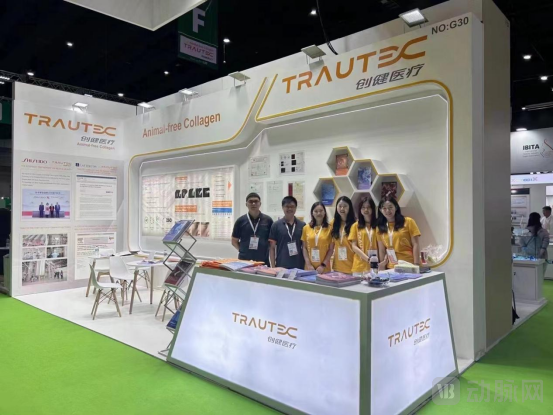
November 2023, In-Cosmetics Thailand
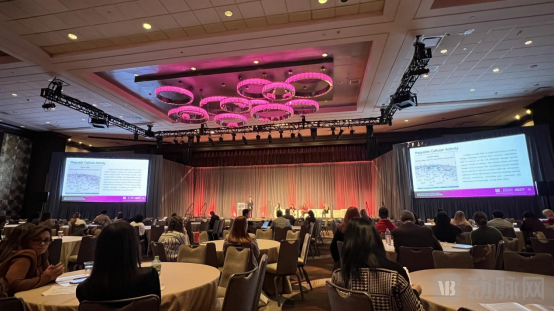
77th SCC Annual Meeting in New York, USA: TRAUTEC is the only Chinese company selected to deliver a presentation at this year’s conference
“2024 is a pivotal year for the global expansion of our Type XVII collagen, as well as China’s recombinant collagen industry as a whole,” Li Haihang shared with VCBeat. Although Type XVII collagen has only recently been introduced, it has surprisingly already captured the attention of numerous overseas brands. What astonished them even more was that a Chinese enterprise had taken the top spot.
Finally, Li Haihang emphasized that becoming a global leader in the field of recombinant collagen is only the initial goal for TRAUTEC. Leveraging its significant industrial advantages and strong R&D capabilities, TRAUTEC is also advancing the research, development, and mass production of more bio-innovative materials, such as tetrahedral DNA nanostructures, recombinant elastin, recombinant lactoferrin, and recombinant silk fibroin, to build a truly diversified biosynthesis technology platform.
References:
1. From Face to Scalp: Type XVII Collagen Poised to Become the New Savior for “Hair Loss Sufferers,” 36Kr Pro
2. Why Did LV’s Parent Company Take an Interest in TRAUTEC, the Venture Founded by the Qian Father-and-Son Duo for Their Second Startup? — Frontline of Entrepreneurship
3. TRAUTEC’s IPO: Following in the Footsteps of Hyaluronic Acid, Is Recombinant Collagen Set to Welcome Its Own “Three Musketeers” in the Stock Market? – Songguo Finance
4. Good News | Recombinant Human Collagen Is Here! TRAUTEC Releases Its Latest Self-Developed Achievement, TRAUTEC