Brainsmart Technology Secures Over $10M in Series Angel Funding to Advance Invasive Brain-Computer Interface Development

Brainsmart Technology
Developer of High-Performance Electrodes and Neural Decoding Systems for Brain-Computer Interfaces

Shanghai BioGerm Medical Biotechnology Co.,Ltd
Molecular Diagnostics Reagent Developer

Comprehensive Medical Information
1. The Unification Reform of Medical Insurance Pricing Accelerates
Recently, the National Healthcare Security Administration has made the standardization and unification of medical service price items a key reform task, accelerating the development and implementation of project guidelines. So far, 39 batches have been published, and the 40th batch of inspection guidelines is currently under consultation. The unification of "generic names" is about to be achieved. The reform has proactively laid out over 180 new technologies and products, providing clear pricing references for the clinical application of advanced innovative medical technologies and industrial development. The core elements of the price project guidelines are clearly defined, establishing market access rules for medical innovations, with strict adherence to four screening dimensions for the inclusion of new technologies. A reasonable pricing mechanism not only ensures companies' innovation momentum but also makes advanced medical technologies accessible and affordable for the public. For instance, after the implementation of the pricing guidelines for artificial heart implantation in end-stage heart failure, the overall surgical costs have significantly decreased, and the procedure has been included in healthcare reimbursement in multiple regions, substantially reducing patients' financial burdens. (Pharmaceutical Network)
2. Shanghai BioGerm Medical Biotechnology Co., Ltd. Science and Innovation Center Officially Launched
Recently, the opening ceremony and industry forum of BioGerm Medical Science and Technology Innovation Center was held in Fengxian, Shanghai. The event was guided and supported by multiple parties and jointly organized by Shanghai BioGerm Medical Biotechnology Co., Ltd. and others. Several government leaders attended, and more than 300 guests gathered to witness the occasion. During the opening ceremony, Zhao Baihui introduced the industrial positioning and development blueprint, announcing the launch of a brand visual upgrade. Zhu Zhenggang shared the strategic layout, and leaders from the development zone delivered speeches. In the core part of the event, the Science and Technology Innovation Center completed industrial cooperation agreements with eight high-quality companies covering various subfields such as in vitro diagnostics and medical devices, achieving a breakthrough in investment attraction and talent recruitment. BioGerm Medical also signed a global health project cooperation agreement with the Shanghai Global Health Innovation Research Institute, focusing on tuberculosis diagnosis and treatment challenges in low- and middle-income countries. They will jointly develop diagnostic reagents, serving global public health with "Chinese technology and standards." (Life Science Industry Observation)
3. Hunan Province Releases Pricing for Auxiliary Operation Medical Services
Recently, it was learned from the Hunan Provincial Medical Security Bureau that the "Notice on Standardizing and Integrating Surgery and Treatment Auxiliary Operation Medical Service Price Projects" has been issued, marking the implementation of relevant national project guidelines in Hunan. The Notice specifies that the Hunan Provincial Medical Security Bureau will establish government-guided pricing for 3D printing-related projects, removing previous pilot restrictions, allowing medical institutions within the province with proper qualifications to offer high-end medical services; after products are approved for market release, bio-3D printing (organs) will follow market-regulated pricing, with material consumption costs included in the overall project price—no additional charges for printing materials. Additionally, based on the centralized procurement results of electric scalpels, the Hunan Provincial Medical Security Bureau set the fee for electric scalpel auxiliary operations at 100 yuan per session. Prices for energy device-related projects include reusable tools and fiber optic costs, and no extra auxiliary operation fees can be charged for using disposable consumables, avoiding increased patient burden. (Sina.com)
4. Jiangxi Builds a Brain-Computer Interface Collaborative Innovation Platform with National Influence in China
Recently, the Jiangxi Brain Valley·Brain-Computer Interface Joint Innovation Center officially commenced construction in the Ganjiang New Area. It will integrate industry display, research and development, transformation, and incubation to promote breakthroughs across the entire brain-computer interface chain. As a new track in global technological competition, brain-computer interfaces are supported by measures introduced in Jiangxi to build a pilot zone for future industries, with Jiangxi Brain Valley being a key strategic deployment. The center will pool resources from various parties to carry out collaborative research and innovative services around all aspects of the chain. Ten enterprises have confirmed their move-in, while plans are underway to establish joint laboratories with multiple cooperative hospitals, forming an industrial innovation matrix. The first batch of companies moving in demonstrate clear technical roadmaps, strong innovation capabilities, and broad industrialization prospects. Additionally, the Brain Technology super factory is undergoing intensive renovations, and leading enterprises have successively invested, underscoring business confidence in Jiangxi's brain-computer interface industry prospects. (Sina Finance)
5. JD.com's Cell Therapy Hospital Officially Opens
Recently, JD's Cell Therapy Hospital — JD Health Langjian Wei Cell Therapy Hospital — opened in Beidaihe New Area, Qinhuangdao, marking JD's transition from strategic planning to implementation in the cell therapy field. Previously, JD recruited key positions such as "Cell Laboratory Director" and "Stem Cell Sales Manager," indicating its efforts to build cell processing and production capabilities while planning to replicate its C-end market operation strengths into the cell therapy sector. The hospital serves as an integrated platform combining medical institutions, cell laboratories, and translational research, relying on JD’s resources with a focus on regenerative and precision medicine to establish a full-cycle health management service loop. JD Health has now formed a complementary pattern of "Sanya in the south, Beidaihe in the north." The hospital’s development capitalizes on new national policy opportunities, focusing on cell therapy, precision medicine, and personalized health management, streamlining critical translational pathways, showcasing the cross-industry thinking and systematic operational capacity of an internet enterprise. (Cell and Gene Therapy Field)
6. Preoperative Lymph Node Metastasis Detection Kit for Papillary Thyroid Carcinoma (qPCR Fluorescent Probe Method) Receives FDA Breakthrough Designation
Recently, the preoperative lymph node metastasis detection kit for papillary thyroid carcinoma (qPCR fluorescence probe method) independently developed by Xuanyan Biotechnology (Jiangsu) received the FDA Breakthrough Device Designation, making it the medical device product from Changzhou City to receive this honor. The core challenge in papillary thyroid carcinoma surgery is accurately determining preoperative lymph node metastasis. This kit innovatively integrates qPCR fluorescence probe technology with a self-developed AI algorithm model to achieve precise assessment of metastasis risk, providing surgeons with a "molecular navigation map." The FDA Breakthrough Device Designation has stringent criteria, requiring the product to address serious diseases and demonstrate breakthrough technological advantages. Xuanyan Biotechnology, founded in 2021, is an innovative enterprise focused on AI-enabled precision diagnosis and treatment. This designation not only affirms the product but also recognizes China's biopharmaceutical innovation ecosystem. Its success is inseparable from the company’s hardcore technical efforts and guidance from local pharmaceutical regulatory authorities. (Medical Device Business Review)
7. What is the medical device public service platform?
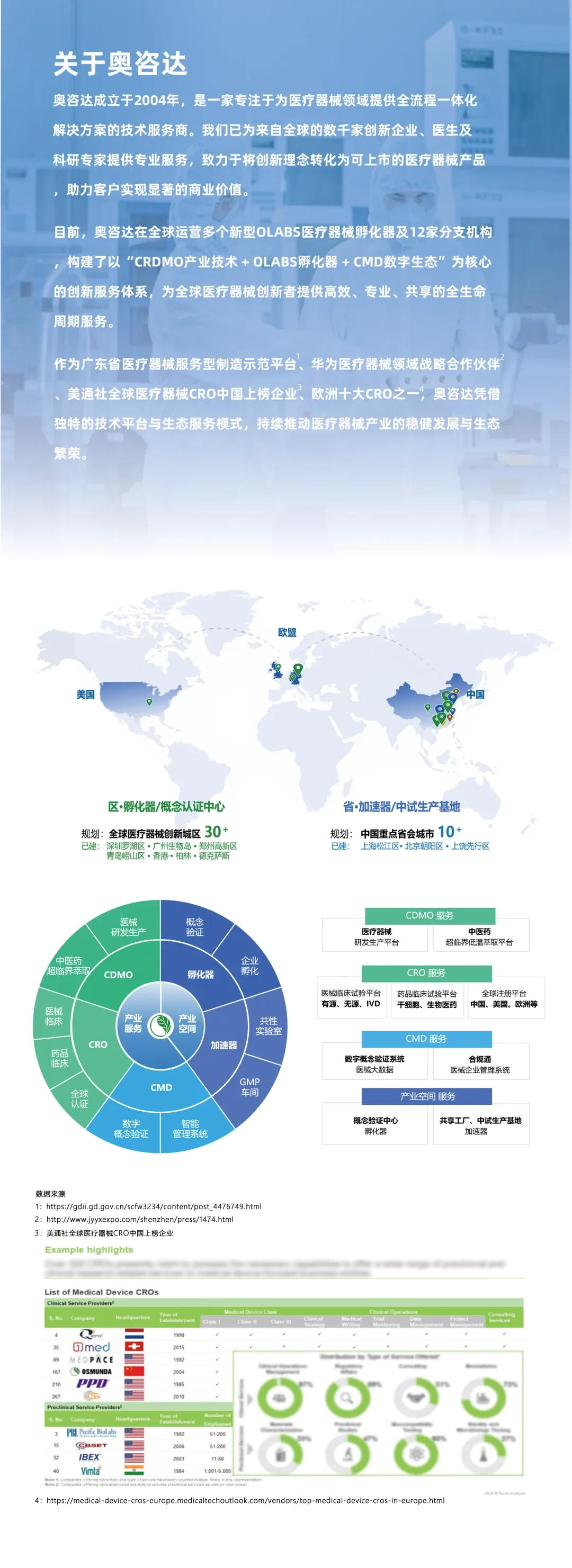
The Medical Device Public Service Platform is jointly developed by the Ozuda Group in collaboration with local governments, industrial parks, medical institutions, and research universities. It focuses on incubating, transforming, and investing in cutting-edge and innovative global medical device technology projects. By establishing scientific research and transfer mechanisms aligned with international standards and implementing an open and shared operational model, the platform attracts top-tier scientific researchers, doctors, and innovators from around the world. It provides comprehensive industry technical services that integrate R&D transformation, incubation, and investment, fostering significant innovative achievements in medical devices with high application value. This initiative strongly supports the development of the medical device industry and technological innovation. (Compiled by Ozuda)
8. Brainsmart Technology Completes Over Ten Million US Dollar Angel Round Financing
Recently, Brainsmart Technology, an innovative brain-computer interface company, announced that it has completed an angel round series financing of over ten million US dollars, led successively by Kangjun Capital and BlueRun Ventures, with Fosun Health Capital participating. The funds from this round will mainly be used to advance product engineering, develop neural foundation models, and construct GMP production facilities, accelerating the resolution of challenges in ensuring stable use of brain-computer interfaces in real-world scenarios. Brainsmart Technology is led by Professor Guoliang Chen of the University of Hong Kong and was founded based on the world-class research platform of InnoHK-ABIC under the Hong Kong Innovation and Technology Commission. Professor Chen also serves as the Executive Director of the Advanced Biomedical Instrumentation Center (InnoHK-Advanced Biomedical Instrumental Center) and the Director of the Central Fabrication Laboratory at the University of Hong Kong, achieving significant accomplishments in academic research, scientific management, and technology transfer. (VcBeat)