

BetJoule Biosciences Unveils IPO Prospectus: Pioneering Label-Free, High-Content 3D Live Cell Imaging Platform Developed at Shenzhen Brain Science Industrial Innovation Center
In the 17th century, Dutch scientist Antonie van Leeuwenhoek was the first to observe the microbial world using a simple optical microscope of his own design. Over time, microscopy technology has continuously evolved and achieved significant breakthroughs, becoming an indispensable research tool in fields such as biology, healthcare, and industry.
However, traditional optical microscopes are limited by factors such as resolution, contrast, and imaging depth when performing cellular microscopy, making it difficult to capture the complex and subtle dynamic changes within living cells.
With the continuous advancement of scientific theories and technologies, the rise in the past two decades ofQuantitative Phase Imaging (QPI)This technology combines phase imaging with optical microscopy, providing a method for observing transparent biological samples such as cells.Label-free, rapid, non-destructive, high-resolutionimaging modality, marking another major breakthrough in the field of microscopy.
After more than two decades of scientific accumulation, quantitative phase imaging technology has entered a critical period of translation.
In this context, as a key enterprise incubated by the Shenzhen Brain Science and Technology Industry Innovation Center (hereinafter referred to as the “Brain Innovation Center”), Shenzhen Beijingrui Biomedical Technology Co., Ltd. (hereinafter referred to as “Beijingrui”) has leveraged scientific research achievements from The Chinese University of Hong Kong to successfully complete the research and development, manufacturing, and commercialization of its label-free high-content live-cell analyzer based on quantitative phase microscopy technology. This innovation has enabled high-precision, high-resolution three-dimensional imaging of intracellular structures in living cells across multiple fields, establishing Beijingrui as a global leader in the field of quantitative phase imaging.
The Chinese scientific instrument industry started relatively late. Breaking the monopoly of foreign high-end analytical instruments and increasing the localization rate of high-end analytical instruments are of great significance for promoting industrial upgrading, enhancing scientific research levels and innovation capabilities, and reducing research costs. This has also been an important focus of China’s major plans.Source innovation in foundational technologies will become a crucial force for China to catch up and surpass others in scientific research instruments.
“Quantitative phase imaging technology can accurately quantify and measure the phase information of samples, such as three-dimensional topography and refractive index distribution. It has become one of the most ideal label-free microscopic imaging techniques and holds significant application value across multiple fields. However, the precision and speed of phase information extraction, particularly when processing complex samples, as well as challenges in establishing standardized product supply chains, have long been bottlenecks hindering the practical implementation and widespread adoption of quantitative phase microscopy,” said Sun Rui, CEO of Beijierui, in an interview.
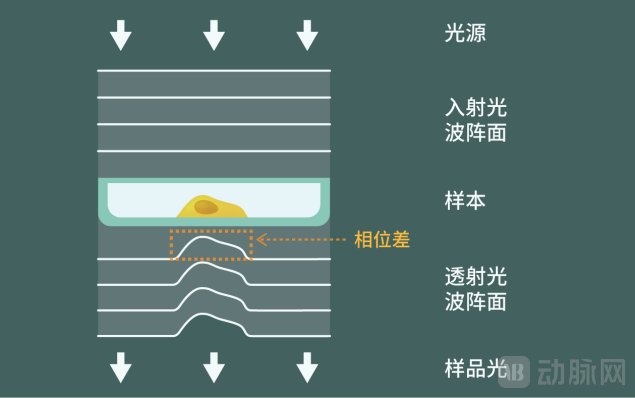
Principles of Phase Imaging
Image source: Beijierui
Backed by robust theoretical achievements from universities, Beijierui has mastered quantitative phase imaging technology.Professor Zhou Renjie, Chief Scientist at Beijierui, is the direct inventor of this technology., studied under Professor Gabriel Popescu, a key pioneer in the field of global quantitative phase imaging.
Professor Renjie Zhou is currently an Associate Professor (with tenure) in the Department of Biomedical Engineering at The Chinese University of Hong Kong. He is a Senior Member of both OPTICA and SPIE. He has conducted systematic and in-depth research on quantitative phase microscopy (QPM) and optical diffraction tomography (ODT), and has published more than 50 SCI-indexed papers.
Professor Renjie Zhou previously conducted research at world-leading institutions in the field of optics, including the Massachusetts Institute of Technology, the University of Illinois, and the University of Arizona. During this period, he received numerous awards, such as the SPIE 2012 Optics & Photonics Education Scholarship, the P. D. Coleman Research Excellence Award, and the Yuanzhi Luo Research Excellence Award.
Recalling the early days of Beijierui’s founding, Sun Rui stated, “After earning my master’s degree in Biomedical Engineering from Boston University, I embarked on multiple entrepreneurial ventures and led several biomedical optics projects. In particular, while working on a drug screening and analysis project using organ-on-a-chip technology, I identified a lack of effective observation and imaging methods in this field.”
“By chance, I met Professor Renjie Zhou, who was then conducting postdoctoral research at MIT. After thoroughly evaluating the technology and conducting market research both domestically and internationally, we decided to return to China in 2017 and co-founded Beijing Rui in 2018, aiming to rapidly commercialize our proprietary quantitative phase imaging technology and patents in China, thereby filling the domestic gap in live-cell imaging.”
Since its establishment more than five years ago, despite facing obstacles from objective factors such as strained international relations and the pandemic,However, drawing on the extensive experience accumulated by Professor Renjie Zhou and his team over many years, BeiJieRui has developed a range of imaging solutions based on quantitative phase imaging (QPI) technologies with different principles, such as optical diffraction tomography, diffraction phase microscopy, and label-free high-content quantitative phase imaging. These solutions allow for the selection of appropriate technical approaches tailored to specific application scenarios. This has also laid a solid theoretical foundation for BeiJieRui to further streamline its industrialization chain in the future.
Conventional fluorescence imaging typically involves labeling specific cellular molecules with fluorescent dyes to directly visualize their location and dynamics under a microscope. However, the potential cytotoxicity of these dyes can disrupt normal cellular physiological functions and even lead to cell death. Furthermore, the widespread adoption of advanced confocal microscopy is hindered by high acquisition costs and operational complexity.
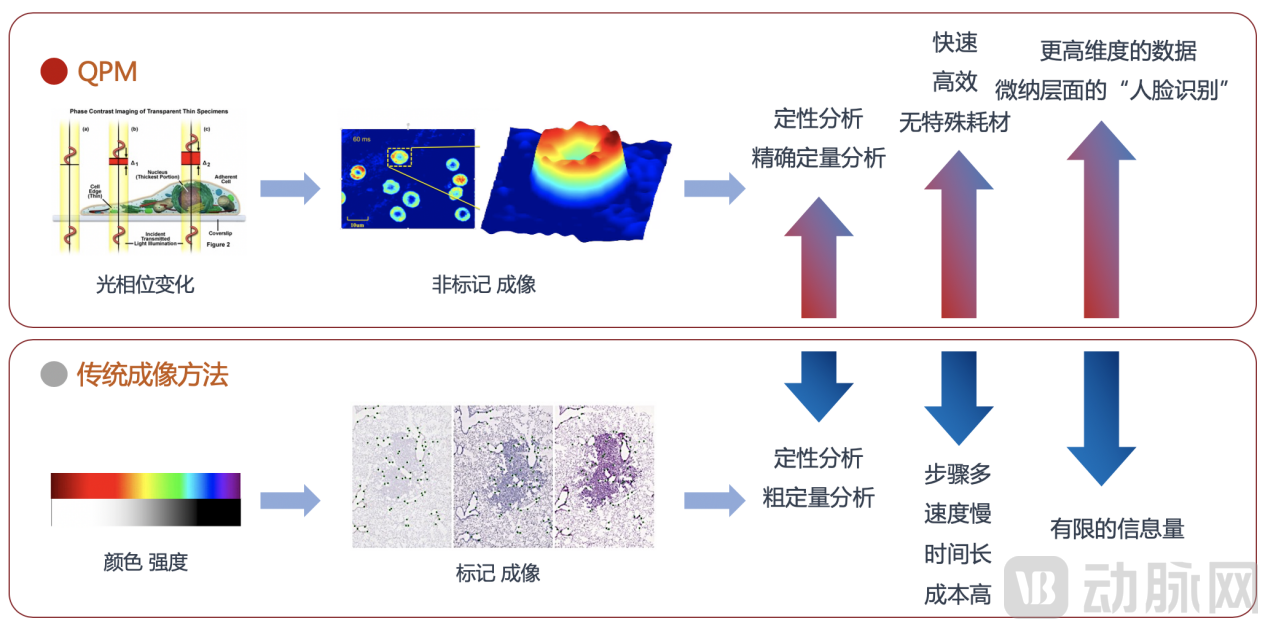
Comparison of Imaging Technologies
Image source: Beijierui
Beijierui’s specialized quantitative phase imaging technology measures the phase delay of transmitted or reflected light from microscopic objects without any pre-processing of samples, thereby providing accurate morphological and dynamic information.
As a result, the label-free high-content live-cell analyzer based on this technology not only eliminates the need for complex sample preparation procedures but also causes no damage to live-cell samples.Moreover, it enables continuous, long-term acquisition of biophysical information from cells, and the samples can even be stored for reuse. Meanwhile, the adoption of label-free technology reduces reliance on consumables such as fluorescent dyes, thereby lowering costs.
Addressing the second advantage of this technology, Sun Rui continued, “Traditional optical imaging techniques, whether stained or not, struggle to achieve dynamic, high-speed flow imaging. However, the label-free high-content live-cell analyzer developed by Beijierui does not rely on complex methods to increase imaging speed; instead, it leverages the high-contrast advantages provided by quantitative phase imaging technology,”Achieving a cellular imaging rate of 10,000 frames per second, the device also enables real-time, dynamic, and high-speed acquisition and analysis of cellular behavior and changes by integrating artificial intelligence with automated microfluidics technology.
The third advantage of label-free high-content live-cell analyzers lies in their ability to acquire higher-dimensional and more informative cellular data.It is understood that traditional optical imaging techniques generally utilize variations in light wavelength and intensity, converting them into colors and grayscale values recognizable by sensors, thereby enhancing image contrast—that is, distinguishing the observed sample from the background.
Beijierui’s quantitative phase imaging technology captures entirely new physical parameters by acquiring and analyzing the third critical parameter of light—phase information—and converting it into phase or refractive index distribution maps. This enables the acquisition of information “invisible” to conventional optical microscopes, facilitating precise quantitative analysis of sample characteristics such as size and density.
Leveraging these three major advantages, Beijierui has successfully achieved the commercialization of its two product series across four key application scenarios, gradually expanding from the research sector into the broader industrial market.
Scientific research serves as a key driver of industrialization, while industrialization provides a crucial pathway for the practical application and widespread adoption of scientific achievements. Therefore, Beijierui’s proprietary foundational imaging technology must identify the most suitable application scenarios to unlock its immense potential and translate it into innovative product capabilities that benefit both the industry and the nation.
Through the team’s concerted efforts, Beijierui has achieved the transition from laboratory to industrialization and from concept to market, successfully transforming scientific and technological achievements into“NHQLive Live-Cell Analyzer” and “NHQ-Zeiss Module”: Two Series of Label-Free High-Content Live-Cell Analyzers.
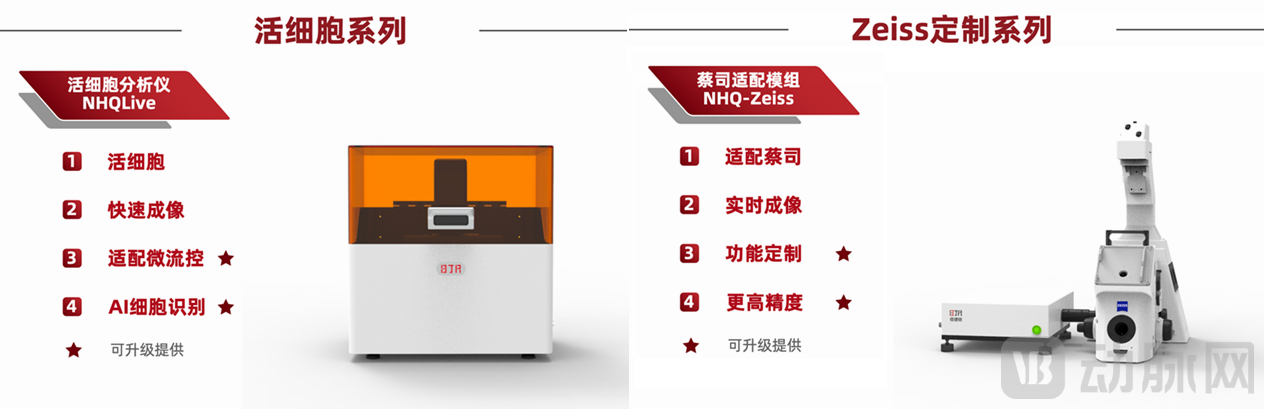
Live Cell Analyzer NHQLive (left), Zeiss Module NHQ-Zeiss (right)
Image source: Beijierui
Specifically,The NHQLive series enables high-speed, dynamic live-cell analysis, supporting features such as microfluidic analysis and AI-based cell recognition. It is suitable for applications including high-throughput screening of live cells and is compatible with fluorescence imaging systems. The NHQ-Zeiss series is deeply integrated with Zeiss microscopes, offering higher precision and enhanced customization capabilities. It facilitates quantitative analysis of fine cellular structures, assessment of cell viability and yield, and bacterial species identification. Supporting deep customization and fluorescence imaging, this series serves research and synthetic biology applications.
Given the broad prospects of quantitative phase microscopy, BeiJieRui has currently identified four major application scenarios, namely:Screening of engineered cell lines for antibody protein production, analysis of strain activity and prediction of active product yield in synthetic biology, long-term analysis of nerve cells and non-contact analysis of action potentials, and sperm analysis for assisted reproductive technology in clinical medicine。
Taking synthetic biology as an example, this interdisciplinary field is hailed as one of the “Top Ten Technologies That Will Change the World in the Future.” According to estimates by Qianzhan Industry Research Institute, the global market size for synthetic biology reached $6.8 billion in 2020 and is projected to reach $20.8 billion by 2025, representing a compound annual growth rate (CAGR) of 28.8%.
Beijierui’s quantitative phase imaging technology leverages its advantages in high-throughput, label-free analysis of live cells to play a significant role in both fundamental research and industrialization within synthetic biology, including applications such as strain analysis and screening, as well as yield prediction.
Furthermore, against the backdrop of growing global demand for precision medicine and personalized therapy, brain science and related industries are ushering in unprecedented development opportunities. According to CB Insights data, the global market size for brain science was $6.2 billion in 2020 and is projected to exceed $10 billion by 2024.
Leveraging its innovation and leadership in quantitative phase imaging technology, Beijierui not only supports research teams in studying neuronal activity, constructing neural circuit maps, and investigating the mechanisms of brain diseases, but also provides robust technical support for applications in neuroscience. This includes early diagnosis of neurodegenerative diseases, development of brain-computer interfaces, and exploration of novel neuromodulation methods. These technological applications have not only accelerated progress in brain science research but also promoted industrial development and innovation, offering new perspectives and solutions for the treatment of neurological disorders.
In its future development roadmap, BeiJieRui has also received support from the Brain Innovation Center. The Brain Innovation Center aims to facilitate BeiJieRui’s continuous innovation and growth in the fields of brain science and applied technologies by linking advanced technical support platform resources, providing capital market-related services, and building an industry collaboration network. It is anticipated that the partnership between BeiJieRui and the Brain Innovation Center will gradually expand the impact of scientific research outcomes in practical applications, accelerate the translation of technological innovations into industrial products, achieve efficient alignment between scientific exploration and societal needs, and contribute to promoting human health and sustainable social development.
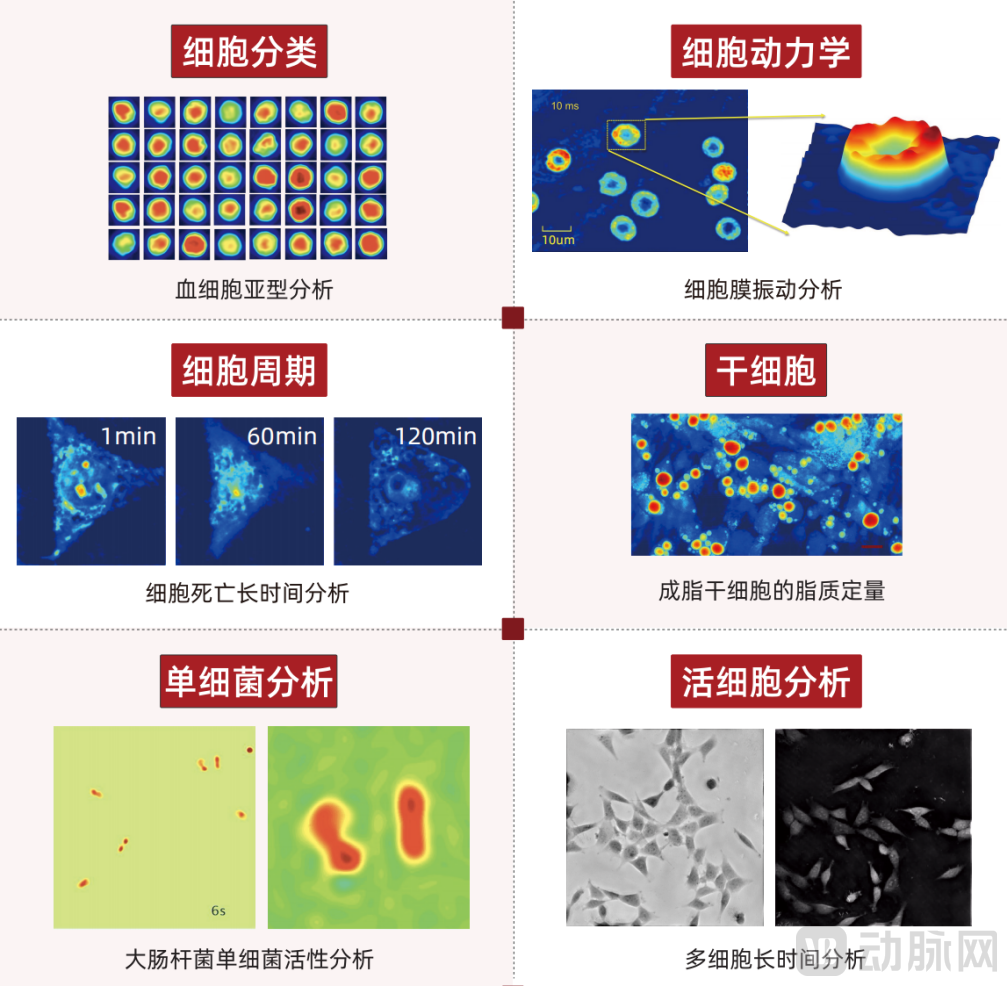
Applications of BeiJieRui Quantitative Phase Imaging Technology
Image source: Beijierui
Beijierui’s current flagship products have achieved basic localization, from components to manufacturing, and the company is further deepening and optimizing its supply chain. According to reports, the third-generation products scheduled for release in the second half of 2024 will be priced at approximately one-half to one-third that of imported alternatives, entering the market with strong performance and pricing advantages.
At the end of the interview, Sun Rui stated, “The high costs associated with procuring, maintaining, calibrating, and upgrading imported instruments have placed a significant financial burden on China’s research institutions and enterprises, leading to technological dependence and limiting industrial competitiveness. BeiJieRui aims to build a fully self-developed domestic platform for innovative scientific research equipment. By leveraging our proprietary live-cell imaging technology, we seek to break the foreign monopoly in the field of optical research instruments, thereby supporting pharmaceutical companies, research institutes, and hospitals, and even advancing the progress and development of China’s pharmaceutical industry, while showcasing the remarkable strength of Chinese innovation and manufacturing.”
Shenzhen Brain Science and Technology Industry Innovation Center (hereinafter referred to as the “Brain Innovation Center”) is a specialized incubation platform established with strong support from the Shenzhen Municipal Government and the Guangming District Government. It receives technical support and operational management from the Institute of Brain Cognition and Brain Diseases, Shenzhen Institutes of Advanced Technology, Chinese Academy of Sciences, and the Shenzhen-Hong Kong Institute of Brain Science. The Brain Innovation Center is committed to building China’s first “plug-and-play” specialized incubation and empowerment platform, striving to become a demonstration hub for brain science and technology industry innovation that serves China and radiates globally. Since commencing trial operations in October 2022, the Center has developed a “phased” incubation model and secured over 220,000 square meters of industrial space. It has attracted nearly 50 enterprises to settle in its incubator and industrial park, with both the incubator and the China Merchants Group Brain and Brain-like Intelligence Industrial Park fully leased. The cumulative historical financing of settled enterprises exceeds RMB 1 billion, with valuations surpassing RMB 10 billion. The Center has facilitated additional financing of over RMB 200 million for these enterprises and established China’s first venture capital fund in the fields of brain science and brain-like intelligence entirely funded by social capital, with a scale of RMB 100 million, focusing on high-quality early-stage projects at the Brain Innovation Center. The Brain Innovation Center sincerely invites enterprises, institutions, and research teams in the fields of brain science, brain-computer engineering, and brain health to visit and exchange ideas!