

Newcells Biotech Files for IPO Following Strategic Collaboration with Pfizer and Government-Backed Recognition as a Leading Organoid Startup

Newcells
3D Model Developer
“Contributed £5.2 billion to the UK economy and created thousands of jobs!”
This is a 2024 report by the UK Biotechnology and Biological Sciences Research Council (BBSRC), which presents conclusions drawn from an analysis of the economic contributions made by BBSRC-funded spin-outs and university-incubated enterprises over the 25-year period from 1997 to 2021.
Professor Guy Poppy, Interim Executive Chair of the Biotechnology and Biological Sciences Research Council (BBSRC), stated that although much of the transformative research funded by the BBSRC often goes unnoticed by the public, its impact should never be underestimated. Meanwhile, some of the less visible projects supported by the BBSRC are quietly laying the groundwork for a healthier and more sustainable future.
The organoid company Newcells made a high-profile appearance in the report as a representative of biotechnology.
The terms “organoids” and “organs-on-chips” have generated extraordinary hype over the past year or two, to the extent that the industry has barely had time to scrutinize their definitions or distinguish between them. This enthusiasm has been further amplified by a series of policies introduced by the U.S. Congress and the Food and Drug Administration (FDA), the internationally recognized authority in medical regulation, driving interest in organs and organs-on-chips to unprecedented heights.
In June 2022, the U.S. House of Representatives passed the FDA Modernization Act 2.0, which introduced two significant amendments: first, it uniformly revised the term “animal testing” in the original legislation to “non-clinical testing”; second, it incorporated organ-on-a-chip and microphysiological systems as an independent framework for non-clinical drug evaluation into the law, recognizing them as research tools of equal importance to cell models, computer modeling, and animal models.
In August 2022, the FDA approved the first new drug worldwide to enter clinical trials based entirely on preclinical data derived from organ-on-a-chip studies (NCT04658472). This investigational new drug program was conducted in collaboration between Sanofi and Hesperos for the treatment of two rare autoimmune demyelinating neuropathies. Previously, research into these diseases was hindered by the lack of ideal animal models.
Subsequently, in December 2022, the U.S. Senate and House of Representatives jointly passed the FDA Modernization Act 2.0. The most significant objective of this legislation is to eliminate the mandatory requirement for animal testing in drug development, thereby advancing diverse preclinical testing models, including organ-on-a-chip technologies.
Naturally, the bold assertion that “it is possible to conduct all necessary preclinical trials to test the safety and efficacy of various substances without relying on animals”—a statement capable of disrupting the industry’s established order—is no longer merely a figment of imagination, thanks to the development of organoids.
From Historical Witness to Corporate Founder
According to the definition in VCBeat’s “White Paper on the Organoid and Organ-on-a-Chip Industry,” organoids are tissue-like structures with defined three-dimensional (3D) architecture, generated through in vitro 3D culture of adult stem cells or induced pluripotent stem cells (iPSCs). They exhibit histological features highly similar to those of their corresponding human organs and can recapitulate the physiological functions of these organs, hence they are also referred to as “mini-organs.”
Therefore, it can be said that the rapid advancement of organoid technology would not have been possible without the remarkable breakthroughs in stem cell research achieved by scientists over the past decade. The two founders of Newcells happen to be witnesses to this developmental history.
Dr. Lyle Armstrong, currently the Chief Scientific Officer at Newcells, completed his chemistry studies at the University of Sheffield and Northumbria University, officially earning his Ph.D. in physical organic chemistry in 1992. His research achievements in fluorescent molecular chemistry led him to establish a contract research organization focused on developing and licensing chemiluminescent diagnostic technologies. This venture proved to be a successful commercialization effort, with Armstrong and his colleagues launching and successfully marketing a series of products.
Just as Armstrong was exploring entrepreneurship and earning his first pot of gold, the United States established its first umbilical cord blood bank for storing cord blood. Shortly thereafter, the first embryonic stem cell line was derived from primates, and Science magazine ranked stem cell research as the top scientific achievement of the year, ahead of cloning technology and the Human Genome Project.
Overwhelming innovative technologies have swept through the medical and academic communities with unprecedented force, and Armstrong has not been immune to this impact.
In 2008, research on induced pluripotent stem cells (iPSCs) was ranked as the first and second most significant scientific breakthroughs by *Nature* and *Science*, respectively; furthermore, that same year saw the market launch of the world’s first adult stem cell product.
One year later, Armstrong led a research team at Newcastle University in using pluripotent stem cell technology to investigate early hematopoietic development in patients with Fanconi anemia (FA). This marked Armstrong and his team’s first formal engagement with organoids; they focused on reprogramming cells into human induced pluripotent stem cells (hiPSCs) and began developing organoids and other complex human tissue models. The crux of this research lay in exploring the potential for reversing aging during the reprogramming process and assessing its value for using induced pluripotent stem cells (iPSCs) to repair organ damage or treat human diseases.
This endeavor has gradually gained industry recognition, establishing the research team as one of the internationally recognized leaders in the field of induced pluripotent stem cell (iPSC) research.
As Armstrong pursued cutting-edge advancements, Dr. Mike Nicholds, who later became the CEO of Newcells, gradually expanded his focus beyond the immune checkpoint inhibitors that marked the beginning of his career. After gaining familiarity with one of the UK’s earliest major industrial biotechnology centers, Nicholds embarked on a commercialization path, holding product management, sales, and marketing positions at a series of multinational corporations—including Zeneca (later acquired by AstraZeneca), Chirex, and Avecia—and subsequently serving in board-level roles.
The opportunity for their collaboration arose from their insights into the ophthalmic disease market.
The development of drugs for ocular diseases is an evolving field. As early as 2015, two individuals predicted that the therapeutic market for retinal diseases would grow to $14.8 billion by 2022. However, there is a lack of sufficient in vitro models to simulate and recapitulate the complex structure of the adult human retina. Consequently, most efficacy and safety testing in ophthalmic drug development is conducted in animals (rodents and rabbits). To evaluate the ocular safety of new compounds, at least 20 animals are required for testing each compound.
How to Address Current Pain Points? Nichols and Armstrong Once Again Reached a Consensus: Establish a Company to Tackle Present Challenges by Facilitating the Commercialization of Promising Technologies.
In 2015, Newcells was established and targeted its first product at 3D retinal organoids created using human induced pluripotent stem cells (hiPSCs).
Three Major Organ Model Systems
During the first phase of Newcells’ development, the company initially launched 3D retinal organoids generated by its team. These organoids contain all major cell types that form functional synapses, respond to light and electrophysiological stimuli, and accurately identified two compounds known to be toxic to the human retina.
In Phase II, Newcells is advancing its R&D by integrating retinal organoids with microglia and adapting pluripotent stem cells derived from both rodents and primates; meanwhile, it is optimizing cryopreservation techniques to ensure the global availability of these organoids. Furthermore, the company is expanding its compound screening efforts to validate the utility of organoids as tools for efficacy and toxicity screening.
Currently, Newcells offers retinal, kidney, and lung models, with applications spanning toxicology safety studies, disease modeling, transporter research, gene therapy, drug-drug interactions (DDI), and comparative studies of organoids versus other 3D systems.
Newcells’ retinal organoids comprise retinal ganglion cells, horizontal cells, amacrine cells, and photoreceptors (including cone and rod cells). Depending on the cell types of interest to customers, these retinal organoids can be supplied at various developmental stages (typically between day 60 and day 210).
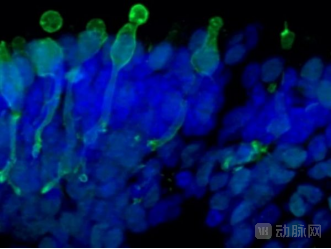
Cone cells labeled with anti-opsin (red/green) antibodies
The retinal pigment epithelium (RPE) cell model consists of a monolayer of RPE cells cultured in 24-well plate format Transwell® inserts. RPE characterization includes: morphological assessment, pigmentation, RPE-specific expression at the protein level (BEST1, TYRP1), phagocytosis assay of photoreceptor outer segments, transepithelial electrical resistance (TEER), and polarity of apical secretion of pigment epithelium-derived factor (PEDF) and basolateral secretion of vascular endothelial growth factor (VEGF).
Newcells’ in vitro retinal models support customization. Uniquely, Newcells’ retinal pigment epithelial (RPE) cells and retinal organoids are derived from the same healthy donor, enabling joint assessment of the RPE and neurosensory retina using cells with identical genetic backgrounds.
Advantages of Newcells Kidney Tissue Models:
1. Express all major renal transport proteins and other functional characteristics
2. Provide versions for all preclinical species
3. Extensive validation was conducted on DOI and nephrotoxicity test compounds
aProximate™ is a renal transporter model for drug transport and nephrotoxicity studies.
aProximate™ is one of the most physiologically relevant in vitro models of renal proximal tubule cells (PTCs) currently available. aProximate™ PTCs are derived from fresh human kidney tissue and cultured on Transwells®, where they form tight junctions as a functional, polarized cell monolayer.
Compared with other primary and immortalized renal proximal tubule cells in culture, aProximate™ PTC retains high expression of key transporters involved in drug handling, including Megalin and Cubilin, making it an ideal choice for drug transporter research: learn more about how new drugs are transported and eliminated by the kidneys, and how they interact with other medications taken by the target patient population, to help reduce the risk of nephrotoxicity.
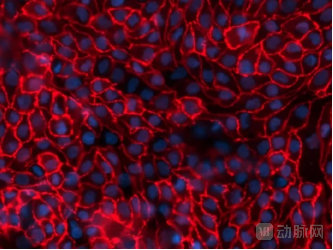
ZO-1 Staining Shows Tight Junctions Between aProximate™ Proximal Tubule Cells
Fully differentiated primary podocyte (also known as visceral epithelial cell) models isolated from fresh kidney tissue for assessing drug-induced nephrotoxicity and glomerular permeability.
This is the first fully differentiated primary podocyte model derived from renal tissue provided by Newcells, designed for in vitro assessment of drug-induced glomerular toxicity and disease modeling. It now enables the in vitro evaluation of drug effects on the glomerular filtration barrier and podocyte-mediated glomerular permeability.
Podocyte injury and proteinuria can be modeled in vitro in a high-throughput (96-well plate) format and assessed by measuring podocyte injury biomarkers and podocyte permeability.
Podocytes maintain the glomerular filtration barrier and, similar to proximal tubular cells, are susceptible to drug-induced injury. Drug-induced glomerular toxicity develops progressively. Initially, podocyte injury leads to cellular dedifferentiation, causing disruption of the podocyte monolayer structure. This process, in turn, results in protein leakage and elevated urinary protein levels (proteinuria), thereby leading to secondary tubular injury and chronic kidney disease (CKD).
Human lung fibroblasts form the basis of the Newcells high-throughput assay for fibroblast-to-myofibroblast transition (FMT), enabling high-throughput in vitro evaluation of antifibrotic therapies.
Following injury, fibroblasts are activated and differentiate into myofibroblasts, characterized by the incorporation of α-smooth muscle actin (α-SMA) into cellular stress fibers, which promotes increased synthesis and deposition of extracellular matrix (ECM) proteins, such as type I collagen, thereby facilitating wound repair.
Newcells’ Small Airway Epithelial Cell (SAEC) Air-Liquid Interface Model Closely Recapitulates Lung Epithelial Physiology. Derived from differentiated small airway basal cells, the model comprises major epithelial cell types, including basal cells, club cells (Clara), goblet cells, and ciliated cells. Featuring an established epithelial barrier, active mucus production, and functional cilia, this model serves as an efficient tool for drug discovery.
It is worth noting that the small airways of the lungs are the terminal bronchioles, which are essential for conducting air from the larger airways to the alveolar regions for gas exchange. Unlike the large airways, the small airways are non-cartilaginous and have a diameter of < 2 mm, making them a key site of airway resistance. Excessive mucus within the small airways typically leads to airway obstruction, as seen in conditions such as chronic obstructive pulmonary disease (COPD), asthma, and other respiratory diseases.
Recent studies have also indicated that small airways play a role in the onset and progression of pulmonary fibrosis. Due to limitations in studying small airways in vivo arising from their fragility, size, and location, Newcells’ small airway epithelial cell model provides more robust support for investigating lung physiology, drug toxicity, and responses to epithelial injury.
Partnering with Pfizer: Early Commercialization Considerations
For organoid research and its practical application in pharmaceutical companies, such as those offered by Newcells, there is still a long way to go.
One of the challenges is the limited maturity of organoid technology itself. The progression from cells to organs requires, first, the construction of a system composed of multiple cell types; second, the refinement and validation of single-organ functions; and finally, the interconnection of multiple organs to simulate complete human physiological processes. This process involves complex technical details, and most commercial organoid companies still have technological capabilities that are transitioning from the first stage (cell lines) to the second stage (single-organ development).
This may explain why Newcells did not settle for developing single-organ models; instead, it began with retinal organoids to gradually establish a comprehensive retinal model system, which was later expanded to include lung and kidney model systems. Furthermore, since the pluripotent stem cells within the same model system are derived from a single donor, this approach further facilitates the construction of more complex multi-organ physiological and pathological models while ensuring controllability and reproducibility.
In terms of business model, during the first phase, organoid companies typically focus on developing organoid models and chips, establishing a presence in the field of drug sensitivity screening. In the second phase, leveraging data accumulated from drug sensitivity screening, they gradually collaborate with pharmaceutical companies to expand drug indications or venture into new drug development. Finally, some companies proactively reserve capacity and strategically position themselves in the field of regenerative medicine.
Newcells’ current clientele includes large pharmaceutical companies that utilize its products for applications ranging from gene therapy efficacy to toxicity screening, as well as a research consortium. According to official disclosures from Newcells, the company has established collaborations with over 100 clients, including many major pharmaceutical and biotechnology firms.
Newcells, with its strong foundation in research institutions and universities, shows no signs of slowing down. In November 2023, Newcells announced a milestone achievement for the company—a collaboration with Pfizer to further investigate the roles of organic anion transporter 2 (OAT2) and organic cation transporter 2 (OCT2) in creatinine clearance, employing freshly prepared human renal proximal tubule cell lines for mechanistic assessment.