

Biosurf Founder Professor Chen Hong: Foundational Innovation Is the Core Competitiveness of Surface Modification Technology Platforms
Since 2022, those familiar with China’s healthcare industry have likely noticed a prominent trend in the investment sector: a rush to back startups founded by professors. The underlying reasons are complex, but ultimately, they all boil down to one concept: domestic innovation.
In recent years, as the waves of domestic substitution and indigenous innovation have continued to evolve, the power of upstream original innovation in the industry has gradually gained widespread recognition: only source innovation can bring about fundamental product innovation. Consequently, a wave of professor-led startups has emerged across various industrial sectors, with the capital market demonstrating a growing acceptance of such ventures.
It is not difficult to guess why this is referred to as “a certain degree of acceptance”; to some extent, it has even reinforced the stereotype of professor-led startups—pursuing product perfection while lacking sufficient business acumen. However, one company founder has broken this stereotype.
She is Professor Chen Hong, the founder of Jiangsu Biosurf Biotech Co., LTD (hereinafter referred to as “Biosurf”). With over two decades of fundamental research in the field of surface and interface science of biomaterials, Professor Chen has become a renowned expert in this domain. Her numerous titles—including National Distinguished Young Scholar, Lifetime Honorary Fellow of the International Union of Societies for Biomaterials Science and Engineering, Fellow of the Royal Society of Chemistry, and Fellow of the Chinese Society for Biomaterials—attest to her remarkable academic prowess. The establishment of Biosurf marks Professor Chen’s transition from academic research to industrial application.
It is worth noting that Biosurf, founded by a professor who previously specialized in basic research on biomaterials, not only ranks among the industry leaders in patent holdings but has also achieved remarkable commercial success. The company boasts hundreds of medically approved coating products, collaborates with over 500 healthcare enterprises, and has attracted investment from prominent firms such as Huatai Zijin, Jiuzhao Investment, Yuansheng Venture Capital, Linghang Xinjie, and the Suzhou Industrial Park Science and Technology Innovation Fund. Biosurf’s commercial achievements and capital market performance have shattered the stereotype that professors lack the capability to successfully commercialize their ventures.
One afternoon in March, VCBeat called Professor Chen Hong to hear her stories about entrepreneurship after having been a scientist focused on fundamental research in biomaterials.
“In fact, there is little disparity between China and other countries in basic research on surface modification technologies for biomaterials. However, in terms of applied research, domestic development still lags significantly behind that of overseas counterparts,” said Chen Hong during the interview.
Application of Biomaterial Surface Modification Technology in the Medical Field: A Case Study of Medical Coatings. Compared with overseas markets, China’s high-end implantable and interventional medical device industry started later, which has consequently constrained the development of medical coatings at the application level. In Chen Hong’s own words, “As one of the core raw materials, the field of medical coatings has grown alongside the entire industry.”
In recent years, as China has vigorously promoted the domestic substitution and independent innovation of medical devices, a large number of competitive domestically produced medical devices have emerged in the market, with a substantial number of approvals granted annually. As an indispensable component for achieving innovation in medical devices, medical coatings have consequently ushered in a period of rapid development.
However, as previously mentioned, at the application level, the development of surface modification technology for biomaterials in China lagged behind overseas counterparts at that time. Consequently, in the field of medical coatings, China still faced the predicament of being constrained by foreign enterprises—a situation often referred to as having its “neck choked.” This very challenge spurred Chen Hong to establish Biosurf.
“Medical devices come into direct contact with the human body through their coatings, and coating performance directly impacts the functional efficacy of medical devices. In such a critical field, we must achieve independent control.” Chen Hong’s determination was unwavering—so much so that she made extensive psychological preparations before embarking on her entrepreneurial journey.
It is often said in the industry that professor-led startups “neglect” commercialization. In response, Chen Hong established her own set of guiding principles: What products does the market need? Product design should revolve around market demands. She clearly delineated the proportions allocated to R&D investment versus commercialization expenses. Is it true that professor entrepreneurs lack management expertise? Chen Hong adopted a beginner’s mindset, systematically learning how to optimize team management and engage with investors. More importantly, she has assembled a team of professionals essential for corporate operations and management. By respecting professionalism and adhering to the belief that “professionals should handle professional tasks,” Jiangsu Biosurf Biotech Co., LTD has achieved its current commercial success.
However, while sound commercial acumen is undoubtedly important, the intrinsic strength of the product itself is equally indispensable. Chen Hong is well aware of this principle. During the interview, she repeatedly emphasized the importance of product quality: “Products intended for human use are a matter of life and death; they demand rigorous standards, with product quality serving as the non-negotiable baseline.” She added, “Entrepreneurship also requires a sense of mission. This mission means staying true to our original aspirations despite any difficulties encountered, and delivering high-quality products to the market.”
Today, Jiangsu Biosurf Biotech Co., Ltd. boasts a 5,000-square-meter standalone building, a 9,000-square-meter new production facility, and a 20-mu state-of-the-art R&D and manufacturing base for raw materials and components. The office spaces are adorned with employees’ pastel drawings, creatively echoing the company’s expertise in coating technologies for medical devices.
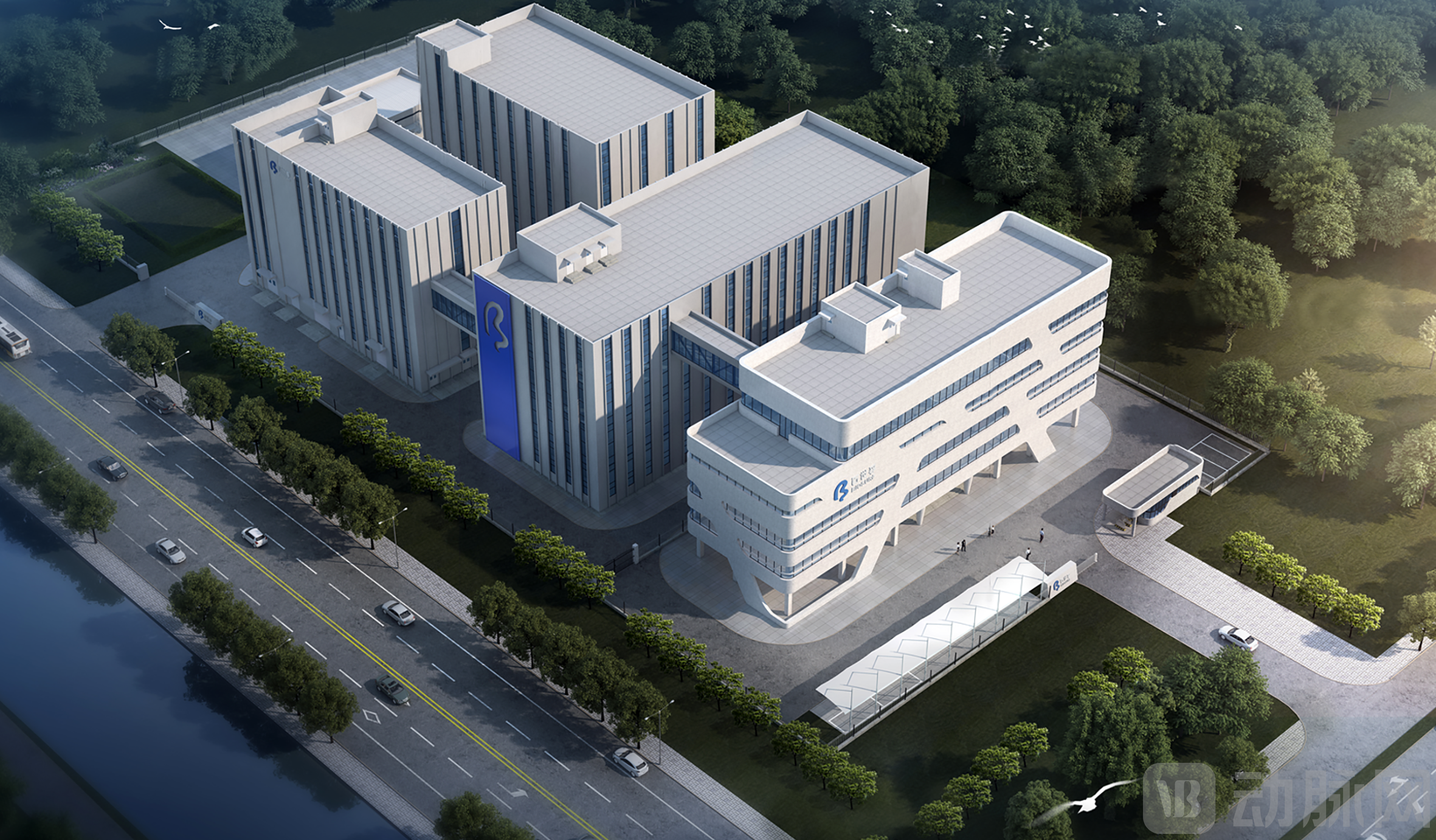
Biosurf Raw Materials and Components R&D and Production Base
However, in 2017, when Biosurf was first established, the team members had to squeeze into a windowless 150-square-meter “dark room” along with office equipment, laboratory instruments, and clean booths. Despite these challenging conditions, when the Biosurf team attended a medical device exhibition for the first time a year later with its inaugural products developed through dedicated R&D efforts, their booth attracted a continuous stream of visitors who were kept constantly busy. This success enabled Biosurf to secure orders worth millions during the exhibition. This outcome also indirectly reflects the urgent market demand for medical coating products and the recognition of Biosurf’s offerings.
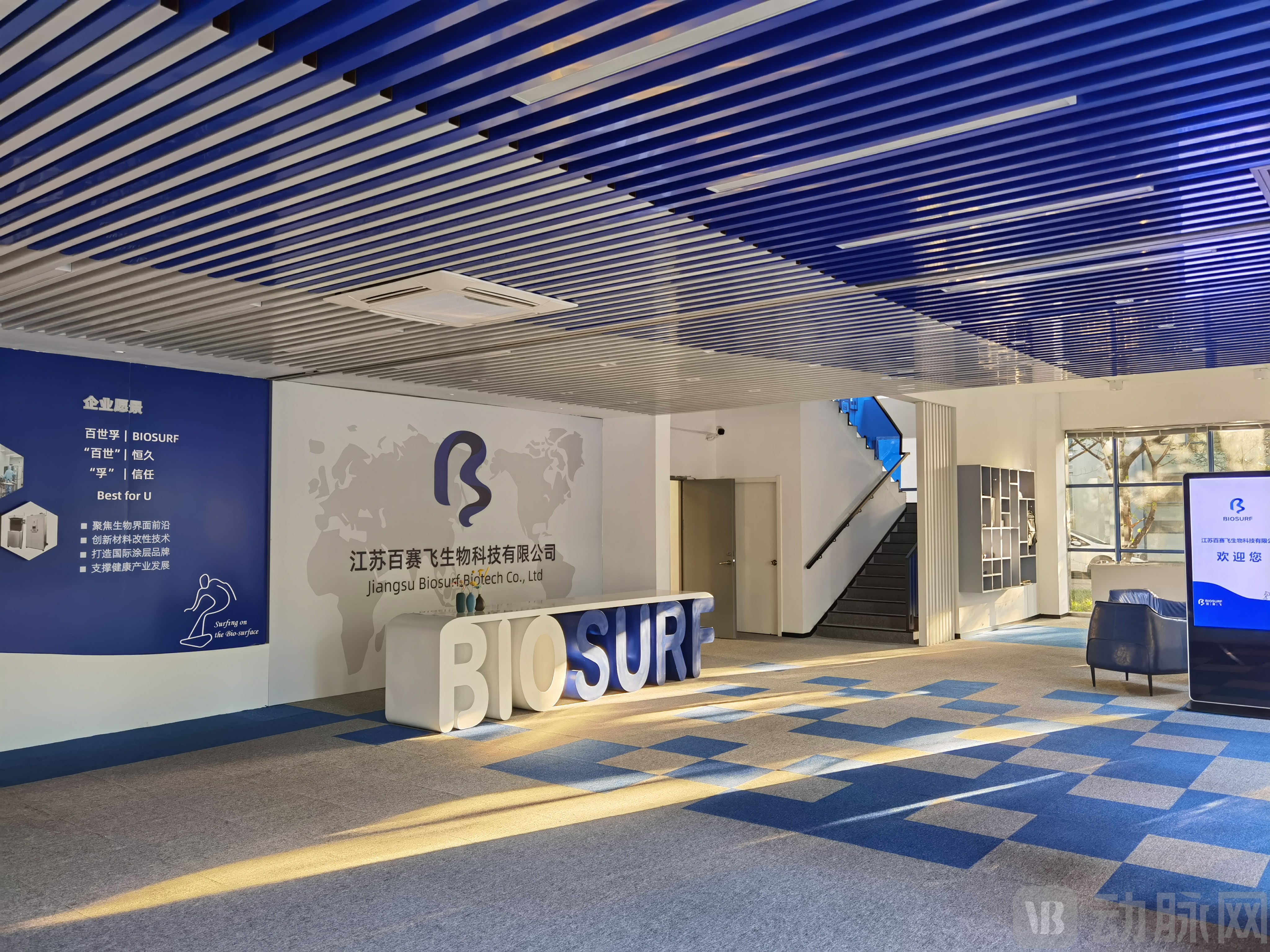
Biosurf Office Building
When VCBeat asked Chen Hong how to evaluate a medical coating company during an interview, she responded: “Medical coatings may appear simple, but they are in fact a complex systems engineering endeavor. This first requires the company to possess substantial research accumulation and a robust technical support team. Without a thorough understanding of the fundamental principles and without systematic engineering approaches, how can one address the diverse variations in materials and the wide range of application scenarios? How can one resolve the challenges encountered in clinical practice?”
As a result, Biosurf has assembled a research team comprising dozens of PhDs and master’s degree holders in relevant fields, structured into specialized units dedicated to foundational research (from 0 to 1), practical application translation and technical support (from 1 to 100), and professional intellectual property management. Consequently, Biosurf has not only overcome the coating challenges that have plagued the industry for years but also filed more than 200 patents to date, making it the platform enterprise with the largest number of medical coating-related patents in China.
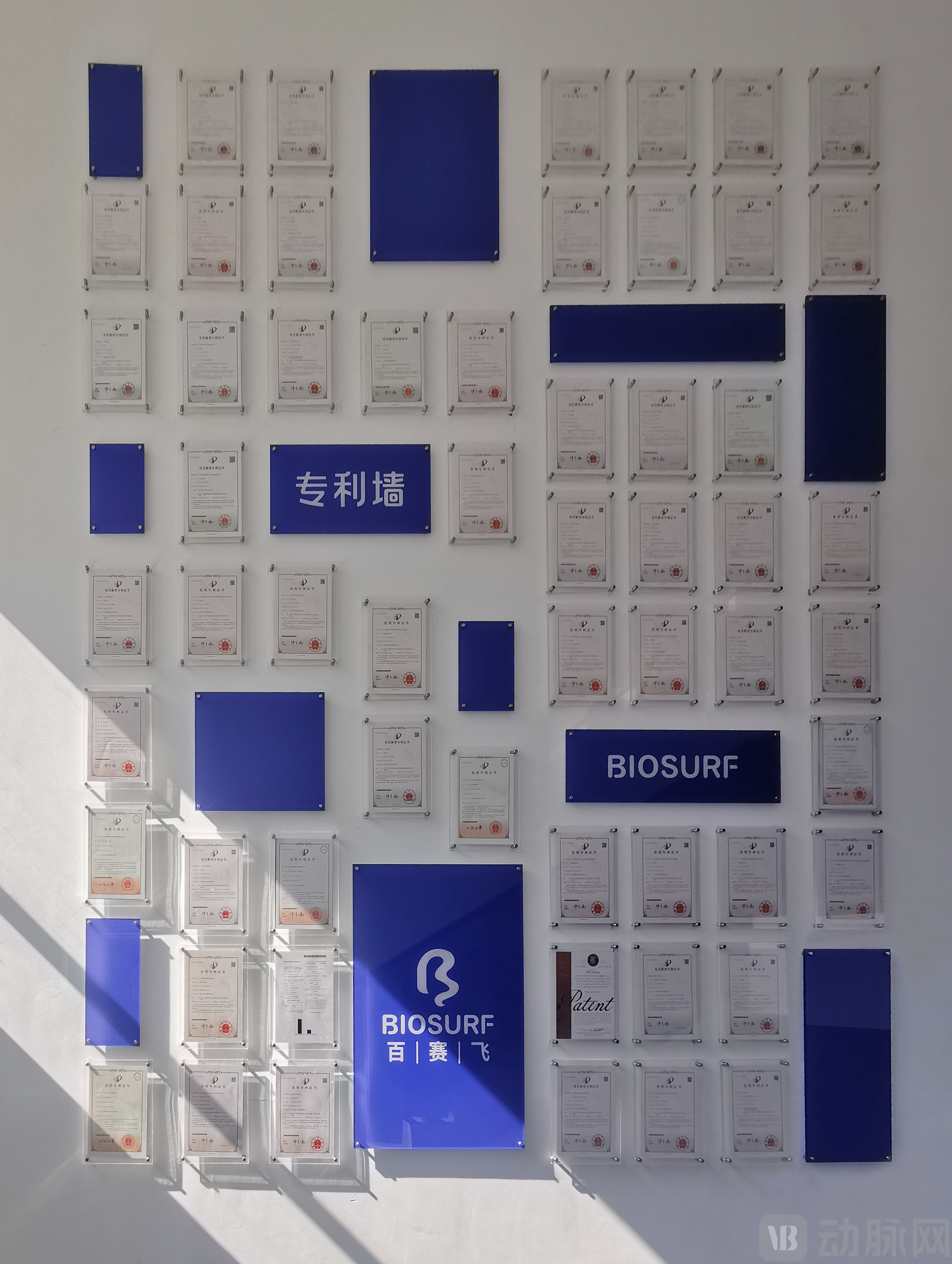
Biosurf Patent Wall
Moreover, in February this year, the National Medical Products Administration (NMPA) officially released the first industry standard in China’s medical coating sector: Test Method for Adhesion Strength of Hydrophilic Coatings on Intravascular Catheters and Guidewires. Professor Chen Hong served as the lead drafter of this standard, with Jiangsu Biosurf Biotech Co., LTD listed as a key drafting organization. This further demonstrates the research capabilities and industry influence of the Biosurf team.
Building on a solid foundation of basic research, the diverse application scenarios and increasingly complex clinical demands of medical coatings necessitate that companies develop comprehensive and diversified product and service systems.
In response, Biosurf’s product portfolio has long since expanded from its initial hydrophilic coatings to include a diverse range of multifunctional categories, such as anticoagulant, antibacterial, hydrophobic, anti-crystallization, antifouling, drug-eluting, and customized coatings. Its applications extend beyond interventional devices for neurointerventional, cardiovascular intervention, non-vascular intervention, drainage, and cardiovascular implantation procedures, to also encompass health-related areas including extracorporeal life support and life sciences consumables.
Moreover, Biosurf’s business model has long evolved from merely selling coating solutions to providing comprehensive medical coating solutions that encompass the sale of coating solutions, coating application equipment, and testing instruments; coating ODM services; inspection and testing services for coated products; customized coating R&D services; and even regulatory registration services for devices with specialized coatings.
As for why the company ventured into the coating equipment business, Chen Hong patiently explained during the interview, “This is the result of a game between academic thinking and commercial thinking. The coating process for medical coatings often involves very complex chemical reactions, and it faces various substrates and device products. To truly make good products, in addition to adapting the coating solution formula, the process and equipment are equally crucial. Before we entered the market, many suppliers only provided coating solutions or coating equipment, and there was a lack of coating detection methods. This led to many device manufacturers spending a lot of time and energy during the product development stage.”
Therefore, in the early stages of Jiangsu Biosurf Biotech Co.,LTD’s establishment, we deliberately laid out plans for building an R&D and manufacturing team for automated equipment, as well as developing testing methods and instruments. “From coating solution formulations to coating processes, coating equipment, testing methods, and testing instruments, every link is indispensable to both the R&D chain and the corresponding commercialization chain. It is this comprehensive investment and development across the entire value chain that has enabled us to meet customer needs more rapidly and precisely. Although this requires substantial investments in time, effort, and capital, we are pleased to see that our surface modification technology platform, built with a commitment to long-term sustainable development, is now generating a flywheel effect, accelerating our pace of innovation,” explained Chen Hong with a smile. “At Biosurf, the time required for an idea to progress from conception to product realization and then to large-scale mass production may be only one-third of the conventional timeframe.”
Furthermore, in an interview with VCBeat, Chen Hong revealed that amid the current industry-wide drive for cost reduction and efficiency improvement, a growing number of companies are inclined to entrust specialized tasks to experts. By integrating professional resources within niche segments of the supply chain, these companies aim to maximize their advantages in both cost and quality. The same trend applies to coatings: coating ODM (Original Design Manufacturer) services and collaborative custom R&D arrangements are increasingly being accepted by companies that apply coatings.
Furthermore, Chen Hong has repeatedly emphasized the importance of innovation. This is because the medical device industry, a key downstream application area for surface modification technologies of biomaterials, is undergoing rapid changes and facing intense competition. In response, Jiangsu Biosurf Biotech Co., LTD has leveraged its strong R&D capabilities to deploy multiple forward-looking coating technologies, assisting and even driving upgrades and innovations in downstream products, thereby contributing to the development of the entire industry.
Surface modification technologies for biomaterials are widely applicable in fields such as healthcare and consumer goods, making it difficult to estimate the market size for this technology. Jiangsu Biosurf Biotech Co., LTD has been continuously exploring the application potential of this technology and expanding its boundaries, extending from the field of functional coatings for high-value implantable and interventional medical consumables, as previously mentioned, to areas such as life science consumables and key components of medical devices.
Specifically, in the field of life sciences consumables, in addition to continuing its consistent technology empowerment, Jiangsu Biosurf Biotech Co.,LTD will directly target market segments with gaps in domestic production by launching high-end terminal life sciences consumable products. Examples include a series of consumables featuring ultra-low adhesion or specific adsorption functional surfaces. This product line will provide high-quality tools for the fields of biochips, biological detection, and pharmaceuticals. Among these, ultra-low adhesion cell culture plates have been widely applied in suspension cell culture, 3D cell culture, organoid culture, tumor spheroid generation, and stem cell differentiation regulation.
In the field of key medical device components, Jiangsu Biosurf Biotech Co.,LTD has entered the sectors of medical guidewire processing and medical PTFE-lined tubing through acquisitions and incubation. The company has already achieved large-scale, stable mass production and is continuously expanding its capacity. Regarding the rapid product commercialization and mass production, Chen Hong stated: “We have fully mastered the most efficient model for project translation and implementation. The speed at which each key project advances and is implemented never fails to surprise me.”
However, it should be further clarified that when asked about future expansion strategies, Chen Hong emphasized that, compared to the acquisition-driven approach of buying up companies, Jiangsu Biosurf Biotech Co., LTD will continue to favor expanding its business scale through technological development and commercial partnerships in the current stage and for a considerable period in the future.
“In the future, Biosurf will continue to focus on developing key areas where we have already established technical barriers, while gradually addressing our potential development weaknesses. We welcome industry partners to collaborate with us in jointly advancing the development of surface modification technologies for biomaterials in China, and we thank our capital partners for accompanying us throughout our growth journey,” summarized Chen Hong.