

Ultra-Thin Electrodes Finer Than Human Hair Power the $10B+ Brain-Computer Interface Market
Brain-computer interfaces, as a key technology that establishes an information channel between the human brain and external devices, integrating biological intelligence with machine intelligence, are widely recognized as one of the most representative forms of new-quality productive forces.
Following the series of development implementation recommendations and research ethics guidelines issued by the Ministry of Industry and Information Technology (MIIT) and the Ministry of Science and Technology (MOST) in early 2024, China’s substantial accumulation of brain science research has erupted in recent years, undoubtedly representing a global leading position in both scientific research and industrialization of brain-computer interfaces (BCI).
At present, the pursuit of safer, more durable, and higher-quality electroencephalogram (EEG) signal acquisition is guiding the direction of technological development across the entire brain-computer interface (BCI) value chain, from software to hardware. As the front-end component for signal acquisition and stimulation modulation, electrodes serve as a critical foundational tool in the BCI sector.
In this race where the gap has yet to widen, whoever achieves a breakthrough in electrode performance first will secure a leading position and command industry influence.
Consistent with the classification of brain-computer interfaces based on invasiveness, electrodes are typically categorized into non-implantable and implantable types according to their implantation location.
Non-implantable Electrodes
Non-invasive electrodes are attached to the scalp surface to record and analyze electroencephalogram (EEG) signals. Signal output is obtained through corresponding signal processing algorithms, enabling control of external devices. The primary advantage is the high safety profile due to the non-surgical nature of signal acquisition. However, due to interference from the scalp and hair, EEG signals suffer from a low signal-to-noise ratio, low spatial resolution, and a limited frequency range for signal acquisition.
The primary breakthrough for non-implantable electrodes lies in significantly enhancing the quality of signal acquisition. This involves improving materials to increase conductivity and optimizing structures to promote full contact between the electrodes and the skin.
1Conductivity Gradually Enhanced Through Material Improvements
Domestically, in 2023Key Laboratory of Medical Devices and Advanced Materials, Taizhou Institute of Zhejiang UniversityA novel nanoclay was developed to reinforce hydrogel wet electrodes. This electrode simultaneously enhances mechanical properties and self-adhesiveness, enabling tight coupling with human skin, stable impedance, and resistance to motion artifacts, thereby achieving high-sensitivity and long-term stable acquisition of electrophysiological signals.
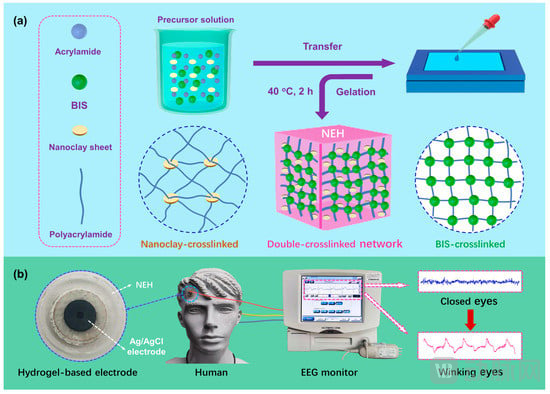
Image source: Zhejiang University Taizhou Research Institute
Internationally,Japanese Electronic Component Manufacturer Murata Manufacturing(A publicly listed company, founded in 1944) employs a specialized process to coat electrodes with a thin film. The film contains metal cations, which optimize charge transfer, thereby reducing impedance at the electrode surface and enhancing conductivity.
2More Stable Electrode-Skin Contact Method
In addition to the electrical conductivity of the electrodes, companies are also exploring ways to enhance skin conformity and maintain stable adhesion to ensure consistent impedance.
In China,Suzhou Yiyiji TechnologyPreparation of Highly Elastic Hydrogel Electrodes Using Polysaccharides. The specialized conical structure at the top of the electrode is suitable for use in hair-bearing areas. This design balances the reduced convenience and impedance variations associated with conductive paste in wet electrodes, as well as the uneven pressure caused by the inability of rigid dry electrodes to accommodate diverse head circumferences and shapes. The company has achieved dual innovation in both materials and structure.
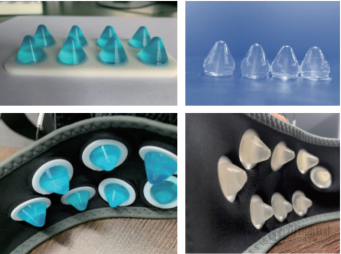
Image source: Suzhou Yiyiji Technology Product Introduction
Internationally,Apple, Google subsidiary X DEVELOPMENT, U.S. startup NIURA CORPDeng et al. have made significant advancements in in-ear EEG acquisition technology. Apple has integrated EEG signal acquisition into the AirPods hardware platform and filed a patent (US-20230225659-A1). X Development designed a C-shaped elastic support with an arched curvature to prop up in-ear electrodes, thereby enhancing their contact stress with the skin. The NIURA strategy involves wrapping the silicone body of the EEG-acquiring earbuds with electrode pads made of coiled conductive wires, increasing the contact surface area of the electrodes within the ear.
Implantable Electrodes
Although ear-EEG, which involves shaving hair or bypassing it, can avoid signal interference caused by hair, the skull and scalp still cause some degradation in signal quality.
To obtain higher-quality signals, it is necessary to some extent to employ invasive, implanted electrodes. These can be categorized from superficial to deep as cortical microelectrodes and depth microelectrodes.
1Cortical Microelectrode
Cortical microelectrodes can effectively acquire electrocorticography (ECoG) signals, offering superior signal-to-noise ratio, resolution, and sampling frequency compared to electroencephalography (EEG). Cortical microelectrodes can be placed either epidurally or subdurally, primarily capturing intermediate-frequency rhythmic signals.
Most cortical microelectrodes are fabricated on thin-film substrates based on silicone or flexible polymers.Current research efforts on cortical microelectrodes are primarily focused on two areas: reducing implantation-induced injury and improving spatial resolution.
Smaller implantation trauma further solidifies the safety advantages of semi-invasive brain-computer interfaces, while high spatial resolution enables signal quality to match that of more deeply invasive implantation methods.
Given the necessity for invasive surgery, minimally invasive techniques to minimize wound trauma and methods for electrode insertion are particularly critical.
Currently, representative innovative implantation techniques involve creating minimally invasive slits in the dura mater and skull, followed by the insertion of flexible microelectrodes using guide strips or similar tools to mitigate the risk of brain tissue damage, such as edema.
In China, recent announcements of clinical trial progressProfessor Hong Bo’s Neuracle Team at Tsinghua University, it acquires signals from the epidural space in a semi-invasive manner and achieves bidirectional communication and power supply through near-field wireless technology, eliminating the need for batteries in the implanted device. Its power supply technology leverages the mature transcutaneous power transfer system used in cochlear implants, which will accelerate its clinical adoption and implementation in China.
Internationally,Precision Neuroscience, a U.S. startupA 400-micron-wide incision was made in the skull using an oscillating blade via a slit-insertion technique to facilitate electrode implantation. The electrode has received FDA “Breakthrough Device” designation.
When the wound size and electrode size reach a trade-off limit, obtaining more information from electrodes of the same size has become a breakthrough.
One of the key directions for upgrading cortical microelectrodes is to increase signal acquisition per unit area, balance channel count with power consumption and battery size, and minimize brain tissue damage. Micro-electrocorticography (μECoG) electrodes, capable of recording intracranial electrical activity at a submillimeter scale, offer a breakthrough for hardware advancements.
In China,Professor Ji Bowen's Team at Northwestern Polytechnical UniversityDevelopment of a high-hydration, ultra-soft micro-ECoG device based on bacterial cellulose, with the potential to replace polyimide or parylene flexible electrodes.
Image source: Microsystems & Nanoengineering
MicroMind MedicalThe high-density, mesh-like, ultra-compliant micro-ECoG electrode array is in the engineering prototype stage, has met clinical requirements, and is advancing ethical approval and clinical testing in collaboration with the clinical research team.
Internationally,Shadi A. Dayeh's Team at the University of CaliforniaA high-density mesh electrode array based on surface-modified platinum nanorods was designed, increasing the number of recording sites per unit area by 100-fold compared to traditional ECoG and improving spatial resolution.
2Rigid Implantable Electrode
Compared with cortical electrodes, implantable electrodes are inserted at greater depths, thereby enabling the acquisition of neural signals with higher resolution. Since rigid electrodes are readily recognized as foreign bodies by the brain and become encapsulated for protection, silicon-based electrodes gradually become electrically insulated due to glial cell encapsulation within six months to one year.At present, the development trend of rigid electrodes focuses on advanced manufacturing processes and implantation methods that minimize tissue damage.
Domestically,Suzhou Kedou Brain-Computer InterfaceBuilding upon metal electrodes, semi-flexible and semi-rigid electrodes were developed using highly elastic nickel-titanium shape memory alloy. This design extends the implantable lifespan of the electrodes while offering superior softness and elasticity compared to traditional Utah arrays.
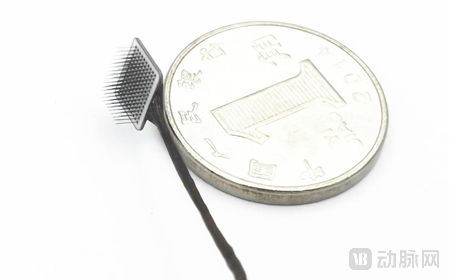
Image source: Suzhou Kedou Brain-Computer Interface official website
Wuhan Zhonghua Brain-Computer IntegrationBy leveraging through-silicon via (TSV) high-density packaging technology and flip-chip bonding processes, an array electrode with 65,536 channels was fabricated, which, when paired with a pneumatic implantation device, enabled one-time implantation of the electrodes.
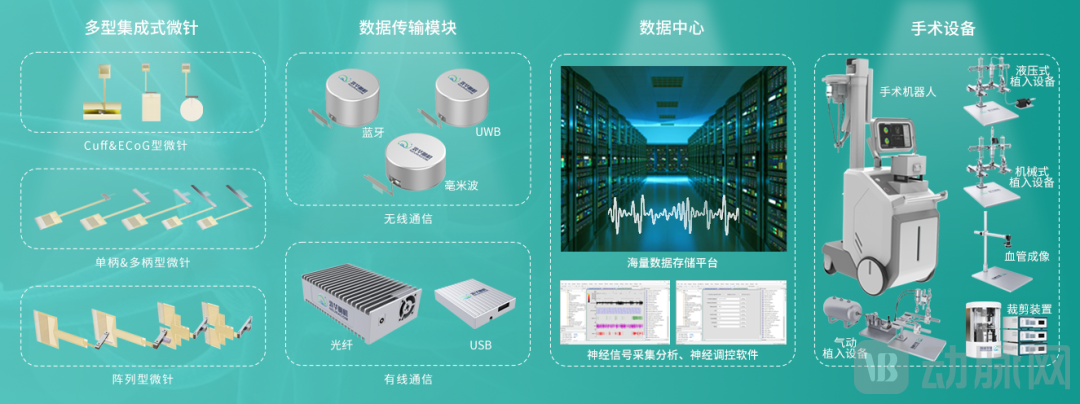
Image source: Official website of Wuhan Zhonghua Brain-Computer Integration
Internationally,NeuroNexus, a U.S. Manufacturer of Implantable ElectrodesThe technical approach is to maintain the consistency and reliability of implantation through the mechanical properties and geometric characteristics of the electrodes.IMEC, the Belgian Microelectronics Research CenterIntegrating electronic components onto probes using complementary metal-oxide-semiconductor (CMOS) technology, with the technical feature of enabling electrode multiplexing.
A long-standing concern in the market regarding rigid electrodes is their invasiveness. To mitigate the damage inflicted by rigid electrodes on brain tissue, the scientific community has proposed numerous innovative implantation methods.
In China,The team led by Liu Jingquan at Shanghai Jiao Tong UniversityUltrasound vibration (Patent No. CN112370064B) is employed to reduce implantation resistance and minimize damage to brain tissue. Post-implantation, ultrasound vibration can also be utilized to remove glial cells encapsulating the electrodes, thereby slowing down the insulation process.
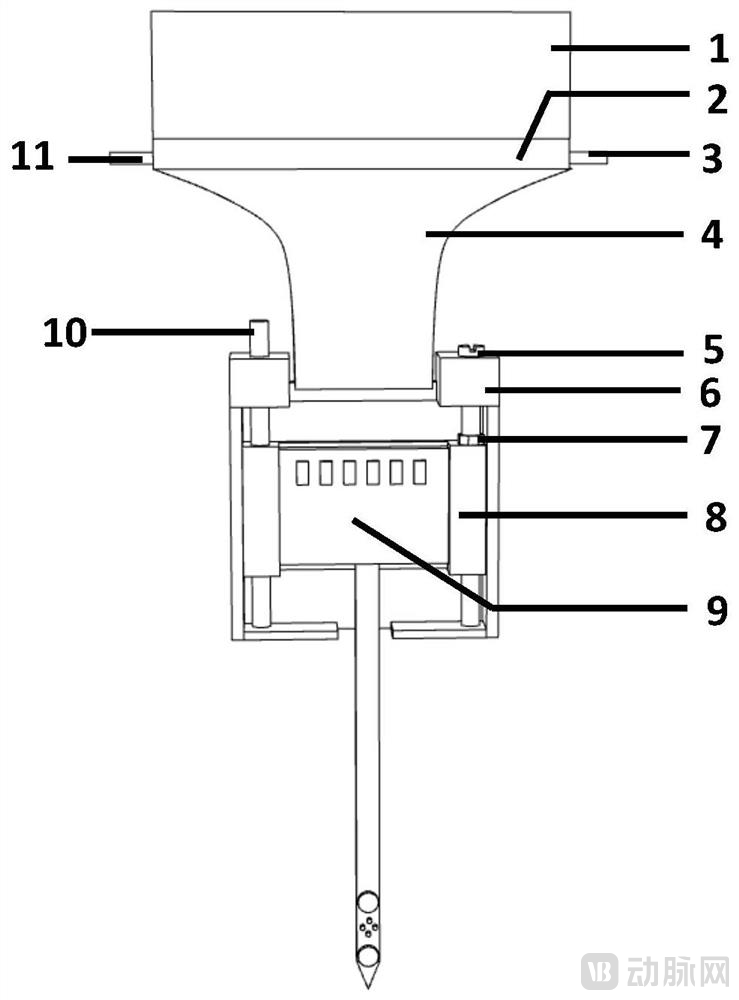
Image source: China National Intellectual Property Administration
The Wang Minghao Team from Hangzhou Dianzi UniversityInvented a neural probe structure with a rigid backbone and a flexible substrate (Patent No. CN114795224A), which enables the rigid backbone to fracture via ultrasonic stimulation after implantation, leaving only the flexible probe structure in the brain to minimize cerebral injury.
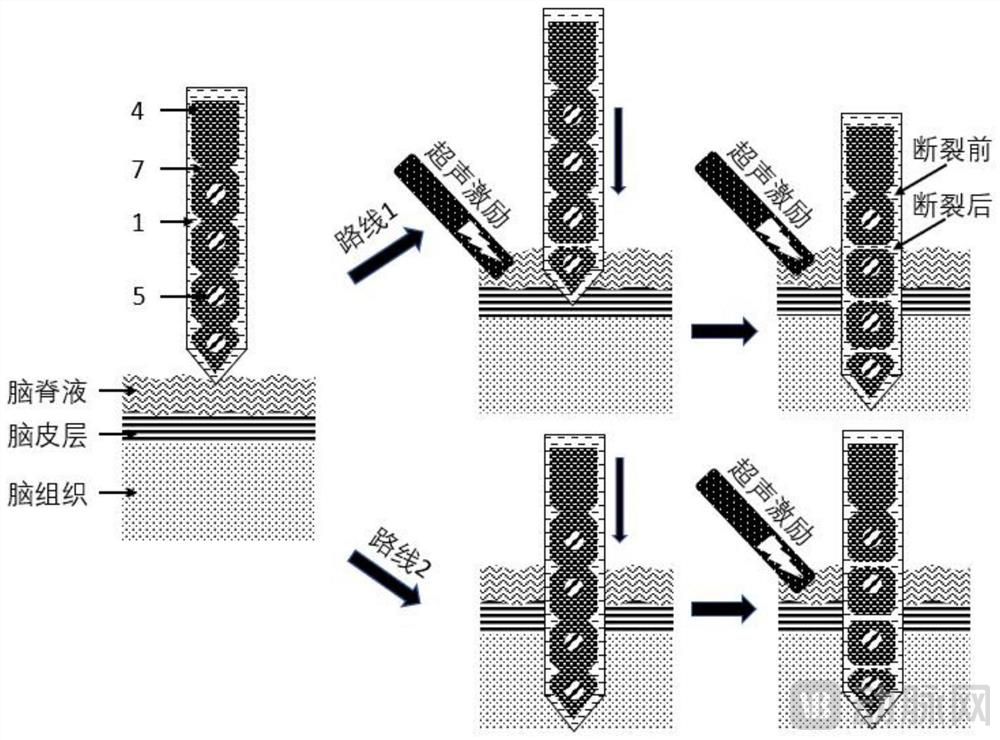
Image source: China National Intellectual Property Administration
Nankai University's Duan Feng Teamis withShanghai Xinwei Medical TechnologyWe jointly developed an implantable jugular vein electrode for signal acquisition (Patent No. CN117220692A). Although the acquired neural signals are relatively limited, stent implantation, as an established clinical surgical procedure, is easier to advance and popularize.
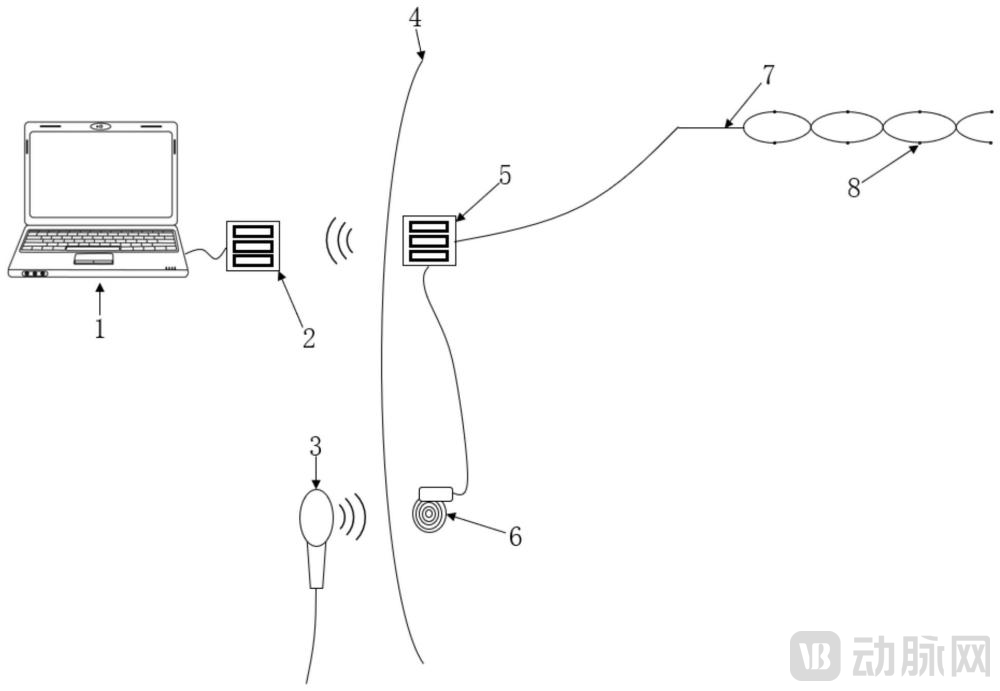
Image source: China National Intellectual Property Administration
3Flexible Implantable Electrodes
Given their greater potential in mitigating brain tissue injury and improving signal acquisition, flexible electrodes have become a key focus of R&D investment in both the scientific community and industry. Currently, the primary directions for breakthroughs are ultra-flexibility and high density.
Due to the extremely low Young’s modulus of brain tissue (0.4–15 kPa), the selection of electrode materials becomes particularly critical. Silicon-based materials, with their excessively high Young’s modulus, are no longer mainstream in China. In addition to polymers amenable to micro- and nanofabrication, such as polyimide and parylene, elastic silicone materials and ultra-flexible hydrogel materials have also garnered significant attention. The trade-offs involved are as follows:The softer the material, the better its mechanical compatibility with brain tissue, and the greater the difficulty in performing precise micro- and nanofabrication.。
In terms of hydrogels, in 2023,Researcher Zhang Qiang, Changchun Institute of Applied Chemistry, Chinese Academy of SciencesThe developed hydrogel electrodes, by incorporating polyrotaxane structures as crosslinkers, successfully achieved long-term recording of rat brain neural signals. In 2022,Professor Lu Xiong and Associate Professor Xie Chaoming’s team from Southwest Jiaotong University, Associate Professor Pan Taisong from the University of Electronic Science and Technology of China, Professor Han Lu from Ocean University of China, and Associate Researcher Jiang Xiaoxia from the Beijing Institute of Basic Medical SciencesCo-developed hydrogel electrodes with mechanical and biological compatibility to brain tissue, featuring immune evasion properties.
In terms of elastic silicone materials, polydimethylsiloxane (PDMS) demonstrates significant potential due to its excellent optical transparency, chemical stability, thermal stability, biocompatibility, and, most importantly, processability. However, practical challenges remain: the patterning processes for PDMS are not yet mature and offer limited precision, while its high water vapor transmission rate can lead to oxidation and corrosion of implanted conductive materials. Improving processing precision and long-term reliability will be the focus of future research and development.
As previously mentioned, the challenge posed by softer electrodes lies in the increased difficulty of precision micro- and nanofabrication. From the perspective of balancing technical trade-offs (including flexibility, fabrication complexity, and cost), increasing density will introduce entirely new reference variables.
The human brain contains approximately 86 billion neurons, and the throughput of current brain-computer interfaces (BCIs) is clearly insufficient to handle such massive input. Increasing the number of electrode channels introduces a series of challenges, including circuit connectivity, high-fidelity amplification and filtering of neural signals, data algorithm processing, and, most practically, issues related to data transmission, power supply, and heat dissipation. Enhancing density represents a viable direction prior to disruptive hardware iterations.
In China, both the research and industrial sectors have developed highly distinctive technological pathways.
Shanghai Jieti MedicalHigh-throughput, ultra-flexible micro/nano electrodes enable scar-free implantation with up to 2,304 channels and maintain stable EEG signal acquisition for over 300 days post-implantation. The team’s design strategy minimizes bending stress by reducing electrode thickness within the intrinsic flexibility limits of the material, achieving force levels comparable to intercellular interactions, thereby rendering the electrodes imperceptible to cells.
Researchers Fang Ying from the Center for Excellence in Brain Science and Intelligence Technology, Chinese Academy of Sciences (CAS), and the National Center for Nanoscience and Technology, and Li Chengyu from the Institute of Neuroscience, CAS, along with their teamsA technology named “Neural Tassel” has been developed, which involves immersing over a thousand flexible neural fiber electrodes—comparable in size to neuronal synapses—into polyethylene glycol (PEG) liquid. Surface tension is utilized to aggregate the electrodes into a “tassel” configuration. Upon successful implantation and subsequent degradation and metabolic clearance of the PEG, the flexible neural fiber electrodes are automatically released. This approach increases the number of intracranial fiber electrodes by optimizing the implantation method.
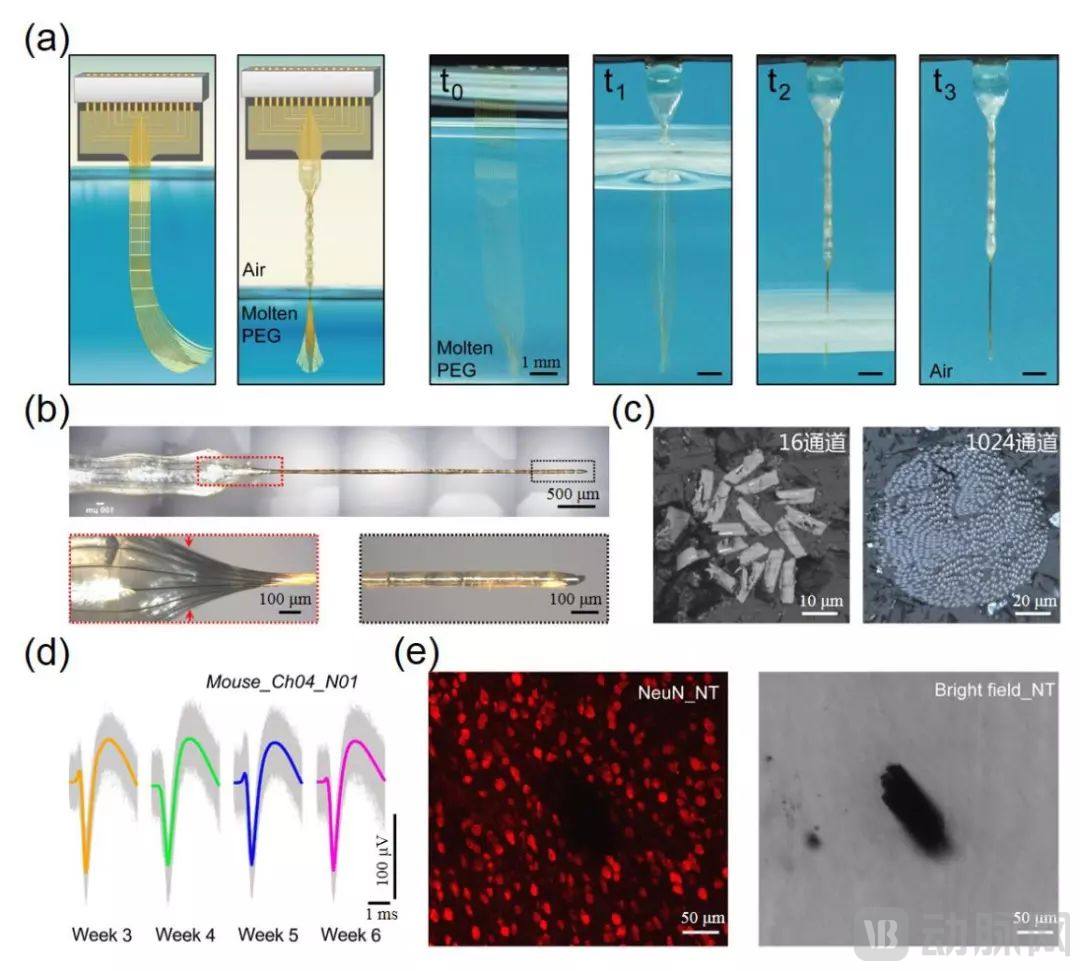
Image source: National Center for Nanoscience and Technology, Chinese Academy of Sciences
Also leveraging innovative implantation methods areShanghai BrainCo Technology. The team leveraged the antibacterial, biodegradable, biocompatible, and mechanically robust properties of silk fibroin by encapsulating high-density flexible electrodes fabricated via MEMS integrated circuit processes within it. Upon solidification, the stiffness was tuned to an intermediate level between that of blood vessels and brain tissue. After implantation, the silk fibroin degrades and releases the flexible electrodes. Currently, this technology remains at the laboratory stage, with relevant patents filed and product regulatory submissions initiated.
As a batch of technologies gradually advances into clinical practice, their impact will soon reverberate across the industry.
Outlook
By integrating cutting-edge technologies with established clinical applications in China, local practitioners are adeptly accelerating the domestic implementation of brain-computer interfaces (BCIs). In the foreseeable near future, the primary upgrade trends for BCI electrodes will focus on high density, ultra-flexibility, and safety.
The channel count of existing electrodes will soon struggle to balance a series of issues related to power consumption, bandwidth, heat dissipation, and electromagnetic interference. One approach to achieving high density is to increase the number of signal readout points or acquire new types of signals (such as optical signals) through improvements in material processes, and to interpret non-electrophysiological neural signals using novel algorithms.
To achieve ultra-flexibility, new materials or novel fabrication processes that offer superior performance in terms of stability, biocompatibility, and ease of patterning represent a more feasible approach than merely pursuing extreme dimensional scaling.
The new manufacturing process also addresses safety concerns. Bioactive coatings further enable enhanced water resistance, reduced inflammation, and extended service life.
Recently, several novel approaches have demonstrated considerable potential: liquid crystal material electrodes that convert electrical signals into changes in optical transparency for readout; neural dust and neural particle electrodes developed by UC Berkeley and Brown University; and coating technologies utilizing macromolecular proteins, bioactive peptides, growth factors, and sustained-release anti-inflammatory drugs.
As the performance of brain-computer interface electrodes achieves comprehensive enhancement, it is believed that they will inevitably benefit a broader range of patients with neurological disorders and unlock a vast market full of potential.