

A 'Zero-Profit' Bet on the Brain: Tencent and Alibaba Back Groundbreaking Neurotech Venture That Just Filed for IPO

Tencent
Internet Comprehensive Service Provider

“Brain Talk Relay” Interview Series: To date, VCBeat’s Chengguo Bureau has engaged in discussions with numerous brain science researchers. Some are deeply committed to frontier research, exploring the mysteries of the brain’s most fundamental functions, while others are industry-oriented, launching assaults on clinical brain diseases.
During the discussions, Orange Bureau observed that major internet companies are becoming increasingly active in the field of brain science. For instance, in the research project on the “Spatial Distribution Atlas of Cortical Cells in the Macaque Brain,” organized and participated in by Professor Li Chengyu, the Tencent AI Lab team demonstrated robust scientific research capabilities in data analysis.
This not only prompts us to begin reflecting,When did internet giants start paying attention to brain science?
I. They Have All Boarded the “Brain Science” Bandwagon
When exactly did major tech companies begin to favor the neuroscience sector? The origins are now difficult to trace. What is certain, however, is that both domestic and overseas tech giants regard it as a strong potential growth area.
As early as 2011,IBMbegan collaborating with major laboratories to research neuromorphic chips. Three years later, the team developed a neuromorphic chip featuring 1 million “neurons” and 256 million “synapses.”TrueNorth, which can simulate the way the brain processes information. Meanwhile, IBM has also drawn on key features of how neural networks operate in the biological brain to design a suite of analog in-memory computing/analog AI methods for optimizing data processing.
At this juncture, major Chinese tech companies also sensed the first-mover advantage offered by brain science. In 2016, Tencent collaborated with 70 world-class scientists and over 300 application engineers from both China and abroad to establish in ShenzhenTencent AI Lab, specializing in four major areas: computer vision, speech technology, natural language processing, and machine learning.
 Tencent AI Lab (Image source: Tencent AI Lab official website)
Subsequently, the team participated in multiple foundational brain science research projects, including scBERT and the macaque brain atlas. In collaboration with Imperial College London and Sun Yat-sen University, the team also completed research on EquiVSet, a neural set function learning method based on optimal subsets. This research effectively enhances the performance of anomaly detection and molecular screening instruments.
Alibaba’s connection with brain science can be traced back to a “hidden master.” In 2017, shortly after Alibaba established the DAMO Academy,Professor of Genetics, Harvard UniversityGeorge Churchvisited in person and proposed a research initiative on brain-computer interface technology. A few years later, DAMO Academy successfully achieved independent R&D of"World's First RISC-V Architecture-Based Neural Network Processor Chip 'Hanguang 800'". This chip can be used in scenarios such as speech recognition and image processing, providing robust hardware support for subsequent computing tasks related to brain science.
By 2020, Alibaba and Zhejiang University announced the establishment of"Cognitive Intelligence Laboratory", focusing on cutting-edge technologies such as self-learning causal reasoning and multimodal human-computer interaction, with the aim of achieving breakthroughs in cognitive intelligence.
AndAlphabet, Google's parent companyBy optimizing distributed reinforcement learning algorithms, a new theory regarding the reward mechanisms within the human brain is proposed, namelyThe Human Brain Utilizes a Distributed Reward Mechanism Similar to That of AIThis study, which elucidates the impact of dopamine neurons on behavior, emotion, and other aspects of brain function, was ultimately published in Nature.
Unlike other major tech giants, Baidu has not directly invested in basic research in brain science; instead, it has focused on the intersection of artificial intelligence and brain science.“Baidu Brain”The project is a prime example. It is reported that Baidu Brain has built the capability to support deep neural networks with up to 20 billion parameters, making it one of the largest deep neural network systems in the world today. Meanwhile, by simulating brain mechanisms, Baidu Brain has achieved significant breakthroughs in deep learning, natural language processing, and image recognition.
In addition to establishing their own brain science research institutes and conducting R&D, some tech giants are keen on investing in and acquiring related companies. For instance, in 2019, Facebook spent $1 billion to acquire a company specializing in the development of non-invasive brain-computer interface technology.CTRL-Labs, doubling down on their commitment to the brain science sector.
II. Three Layers of Consideration by Tech Giants Amid the Neuroscience Boom
The fervor of tech giants for brain science is by no means accidental; it is underpinned by multi-layered considerations.
Brain science mainly comprises three aspects, namelyBasic Neuroscience, Computational Neuroscience, and Clinical Neuroscience, which can also be vividly described as understanding the brain, simulating the brain, and protecting the brain.
Understanding the brain means elucidating the neural basis and working principles of brain functions. Simulating the brain involves developing neuromorphic computers and artificial intelligence systems. Protecting the brain entails promoting intellectual development, as well as preventing and treating brain diseases and injuries. The interest of major tech companies in brain science can also be analyzed from these three perspectives.
1Understanding the Brain: Inspiring AI R&D
First, understanding the brain can reveal the interactions and information transmission mechanisms between different brain regions, thereby providing a better understanding of how the brain works. This in-depth understanding can not only drive the development of neuroscience but also potentiallyInspiring innovation in technologies such as artificial intelligence and machine learning.
Secondly, the investment by major tech companies in foundational brain research also indirectlyEnhanced corporate imageIn 2023, three studies involving Tencent AI Lab were selected for publication in the prestigious international journals Nature Methods and Nature Communications: Spatial-ID, a method for cell type annotation in spatial transcriptomics based on transfer learning and spatial embedding; SOTIP, a generalizable approach for microenvironment modeling using spatial omics data; and a spatial omics database comprising over 50 million cells across 26 categories.
All three studies have demonstrated accuracy, data scale, and methodological innovation that surpass industry standards. This achievement is attributable to Tencent AI Lab’s substantial financial strength and abundant data resources. Although Tencent AI Lab has never publicly disclosed the exact amount of its investment in brain science, industry insiders estimate that the expenditure—covering advanced instrumentation and the recruitment of top talent—has long reached the hundred-billion-yuan level.
However, Tencent AI Lab, established at tremendous cost, remains one of the few “non-profit” departments within Tencent. Its primary role may be to bolster Tencent’s reputation in neuroscience and even AI scientific research, thereby facilitating the development of products that drive scenario-based applications within Tencent’s ecosystem. Moreover, its strong scientific research capabilities serve as Tencent’s entry ticket for collaborating with leading laboratories on fundamental brain research.
2Simulated Brain: Laying the Groundwork for Technological Upgrades
Indeed, the development of the modern internet is inseparable from the empowerment of artificial intelligence. The essence of artificial intelligence lies in simulating human intelligence, and the brain is undoubtedly the most critical organ underlying human intelligence. Major tech companies are sparing no effort to make breakthroughs in brain science research, which in effect isStrategically plan for future technological development.
Just as IBM chose to study the mechanisms of neuronal transmission in the brain and developed neuromorphic chips, the team deepened its understanding of the brain and, in 2023, extended TrueNorth into NorthPole. These chips have nearly transformed the operational model of traditional “Von Neumann architecture” computers and are regarded as the ultimate form of computing.With this technology, IBM maintained its leading position in the global computer industry for nearly 20 years.
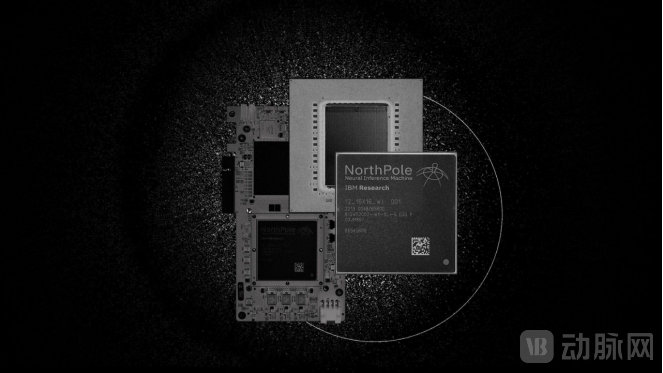 NorthPole (Image source: IBM official website)
Looking downstream, brain science also plays a crucial role in optimizing user experience. In the internet market, user attention is the most valuable resource, and major platforms are striving to retain users by precisely catering to their preferences.
By understanding the mechanisms through which the brain processes information, perceives the environment, and makes decisions, major tech companies design products that better align with human cognitive characteristics and behavioral patterns, thereby enhancing user experience and satisfaction.Much like the “personalized recommendation” algorithms prevalent across major websites, their underlying logic is also closely tied to brain science research.
3Protecting the Brain: Entering the Biomedical Sector
Biomedicine is a new direction that many major companies are closely monitoring.As an interdisciplinary field bridging engineering and medicine, brain science research has naturally become the optimal entry point for major tech companies, which are flocking to the battlefield of “brain protection.”
In the field of brain protection, some major companies focus on leveraging their core strengths,Co-building a Brain Health Platform with the Medical TeamFor instance, Baidu has partnered with IBT Wujiang Technology to establish a specialized service platform for attention-deficit/hyperactivity disorder (ADHD), commonly known as hyperkinetic disorder, integrating “science popularization and education, professional assessment, and digital intervention.” This platform provides comprehensive and convenient health solutions for patients and their families.
Whereas some major tech companies focus on the front end,To Secure a Foothold in the Upstream Sector of Brain ScienceIn 2022, ByteDance collaborated with the National University of Singapore to introduce meta-learning methods from the field of artificial intelligence into neuroscience and healthcare, developing precision medicine for brain imaging, and published their findings in *Nature Neuroscience*.
 Screenshot of the paper (Image source: Nature Neuroscience)
In addition, there are many others such asCai Lei, Zhang Yiming, Chen TianqiaoFormer entrepreneurs chose to leave major tech companies and devote themselves to research on “brain protection.” Through their actions, they are also influencing society to pay greater attention to brain health.
Overall,Whether expanding one’s business scope, enhancing the quality of existing services, or building a strong reputation,Focusing on brain science has become an essential strategy for major tech companies. Consequently, an increasing number of internet companies have joined the ranks of brain science research, intentionally or unintentionally fueling the growth of this sector.
IV. “Catfish Effect”
Well-funded and powerful tech giants have joined the brain science race with great sincerity, rapidly “inflating” this field.
First, it has deepened the public’s understanding of brain science.Since major tech companies began focusing on brain science, they have intentionally or unintentionally increased its visibility to the public. For instance, Baidu launched a service platform dedicated to ADHD and specifically strengthened the rigor of ADHD-related information in its search results. This has helped more parents and patients recognize that ADHD is a neurological disorder, not merely a matter of being “lively” or “energetic.” In addition, companies such as JD.com and Alibaba have intensified their public education efforts in areas including amyotrophic lateral sclerosis (ALS), Alzheimer’s disease, and depression, inadvertently raising both the screening rates and clinical consultation rates for these brain disorders.
This initiative has not only provided brain science researchers with a larger pool of samples but also sparked the interest of young scientists, injecting fresh talent into the field of brain research.
Secondly, the “hard power” of major tech companies has also boosted the development of brain science research.Numerous tech giants have formed consortia to directly participate in brain science research, a trend that needs no further elaboration. In addition, these companies are fostering development by incentivizing talent in the field of brain science.
Since 2018, Alibaba has established the “Qingcheng Award” to encourage young scientists, many of whom are researchers focused on brain science. Notable recipients include Professor Gao Lianli and Professor Liang Xiaodan in 2019, Professor Deng Yue in 2020, and Professor Chen Xun in 2022. In addition to providing a cash prize of RMB 1 million, the “Qingcheng Award” grants recipients unrestricted access to Alibaba’s global R&D facilities, allowing them to directly utilize research resources such as data, scenarios, and computing power provided by Alibaba’s research institutions. This support enables these brain science researchers to thrive organically, thereby driving the enhancement of China’s original innovation capabilities in brain science.
 Qingcheng Scholars in the Field of Brain Science (Source: Alibaba DAMO Academy; Chart by VCBeat Orange Bureau)
Finally, corporate participation signifies the involvement of market forces, which helps facilitate the commercialization of more brain science-related application products.The ultimate goal of brain science research is to enhance human health and quality of life. The involvement of enterprises is essential to establishing a complete closed loop for the translation of research findings into practical applications. Just as Neuralink develops brain-computer interfaces and Google researches brain signal receivers, companies that independently develop and manufacture brain science application products can shorten the time required for product commercialization and accelerate the conversion of scientific achievements into real-world solutions.
V. Unlocking the “Black Box” of Brain Science
Research on the human brain is undoubtedly one of the most complex and profound subjects in the field of science. This mysterious “black box” holds the keys to human memory and emotional expression, while also concealing the enigmas of neuropathological mechanisms and the hope for therapeutic interventions. Consequently, a dedicated group of researchers persists in their pursuit of the unknown.
They are researchers pursuing cutting-edge breakthroughs, striving to elucidate the fundamental principles of the brain and map the intricate networks of interactions between individual neurons and cells. They are also major tech companies driven by market commercialization goals, recognizing the immense potential of human brain research and aiming to translate scientific achievements into practical products to meet societal needs.
However, both researchers and major tech companies face significant challenges and difficulties: progress in brain science research has been relatively slow, requiring long-term accumulation and consolidation; meanwhile, studying the human brain also involves ethical, legal, social, and other multidimensional issues.
Yet these challenges and difficulties also fuel people’s desire to explore the unknown. It is believed that in the near future, through collaboration between scientific research and the market, the mysteries of the brain will ultimately be unveiled.