

Chengdu-based Genpure Bio, a Rising Star in Cosmetic Ingredients, Files for IPO After Nearly RMB 100 Million Series A Round
“We initially aimed to build a compound library to address the challenges of innovative drug development, using as many compound ‘keys’ as possible to unlock different innovative drug ‘locks.’ The more ‘keys’ we had, the higher the probability of success. However, as we progressed, we found that certain products were well-suited for scale-up, so we gradually shifted our focus to cosmetic ingredients,” reflected Chen Jianming, founder of Gechun Biomedical, when discussing his entrepreneurial journey.
At the recently concluded 2024 Personal Care and Home Care Ingredients China (PCHi), Chengdu Gechun Biomedical Co., Ltd. showcased 14 innovative ingredients, including supramolecular bimodal Pro-Xylane, fully acetylated sodium hyaluronate, tocopheryl succinate, deep eutectic ceramide PRO, supramolecular pentapeptide collagen, white peony root extract, and purslane extract, attracting a steady stream of inquiries from attendees.
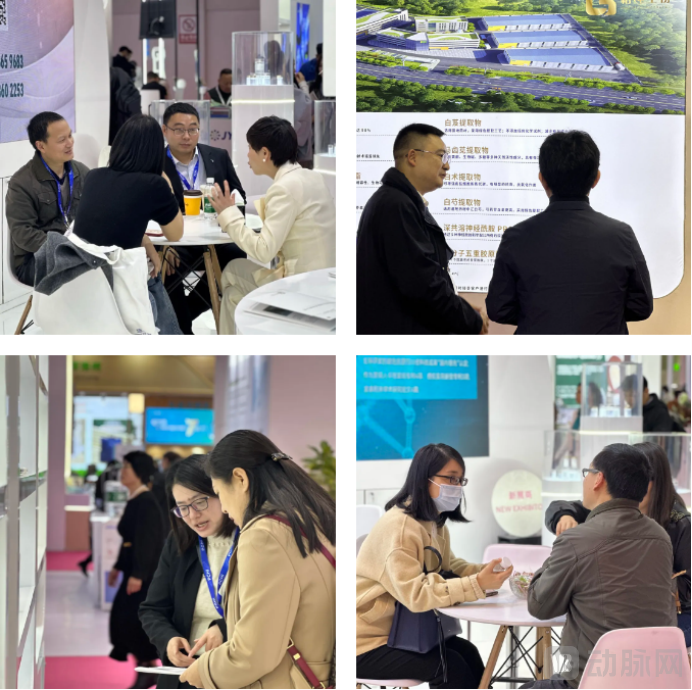
Gechun Biomedical at 2024 PCHi
Chengdu Gechun Biomedical Co., Ltd., established in 2017 and headquartered in the Chengdu Tianfu International Bio-town, operates three specialized R&D centers in Chengdu, Leshan, and Yanting, one postdoctoral workstation, and one large-scale production base. The company is recognized as a National High-Tech Enterprise and a Sichuan Province “Specialized, Refined, Differential, and Innovative” Enterprise. To date, it has been granted more than 30 invention patents, with one provincial-level scientific and technological achievement appraised as domestically advanced. It owns well-known trademarks in the cosmetic ingredients sector, including “Xisaiyin,” “Beileyin,” and “Meilinyi.”
In October 2023, Chengdu Gechun Biomedical Co., Ltd. completed its nearly RMB 100 million Series A financing round, led by Sichuan Venture Capital and Yuansheng Venture Capital. In March 2024, the company’s production base commenced operations. Established in strict accordance with FDA, EU, and Chinese GMP certification standards, the facility houses an R&D center, a quality control center, a functional evaluation center spanning over 2,000 square meters, a small-molecule synthesis platform, a plant extraction platform, and a synthetic biology platform. Currently, the annual output for many of the company’s single-product lines ranges from 10 to 20 metric tons.

In the vast landscape of entrepreneurship within China’s healthcare industry, there are countless legendary tales of “Chinese Partners,” among which Gechun Biomedical stands out as a unique and distinctive presence.
Unlike the typical co-founding models based on spousal, parent-child, hometown, alumni, or colleague relationships, Gechun Biomedical’s founding team is somewhat unique.
“Both partners are my mentors.” Chen Jianming spoke with great reverence when referring to the founding partners, Chen Fengzheng and Xie Qilin.
He told VCBeat that Professor Chen Fengzheng was his biology professor in college, while Xie Qilin was the mentor who guided him after he joined Shengnuo Biotechnology.
Professor Chen has accumulated profound academic expertise and practical experience through more than 30 years of in-depth research on natural products. Xie Qilin brings decades of industrial experience in synthetic biology, bridging synthetic biology with small-molecule chemistry technologies. Meanwhile, Chen Jianming possesses nearly 20 years of experience in drug scale-up manufacturing and commercialization, with deep insights into the critical know-how involved in process scale-up. Each excels in their respective domain, forming a robust capability triangle.
Recalling the early days of their startup, Chen Jianming joked that they wore multiple hats, serving as both R&D directors and hands-on operators—“acting as both the chef and the one wielding the ladle”—as they jointly strove for the birth and growth of Gechun Biomedical.
Leveraging the expertise of its three founders, Gechun Biomedical has established core competencies in small-molecule chemistry, plant extraction, and synthetic biology, thereby developing over a hundred raw materials. Among these, supramolecular bimodal Pro-Xylane and fully acetylated sodium hyaluronate are the company’s flagship products.
Pro-Xylane is widely recognized in the industry as one of the “big three” anti-aging ingredients. Bimodal Pro-Xylane, as the name suggests, refers to Pro-Xylane that simultaneously contains both S- and R-configurations. As a long-time advocate of bimodal Pro-Xylane, L’Oréal has incorporated this ingredient across its brand portfolio, ranging from affordable to premium lines, with over 20 years of application experience.
The synthesis method for Pro-Xylane is no longer a secret; however, producing Pro-Xylane of optimal quality and highest purity requires overcoming key technical challenges. Due to its high water solubility, acetic acid and borates are easily generated during production. Excessive residues of these substances can lead to undesirable acidic odor and discoloration of the product. Furthermore, the purity of the raw material directly impacts the final quality. In simple terms, darker-colored Pro-Xylane raw materials (e.g., yellow or brown) with a more pronounced acidic odor indicate higher impurity levels, lower purity, and inferior quality.
Through years of technological innovation, Chengdu Gechun Biomedical Co., Ltd. has upgraded its supramolecular bimodal Pro-Xylane™ to the 6th generation. The raw material is colorless and odorless, free from borates, allergens, and impurities, with a purity exceeding 99%, eliminating the need for added fragrances or colorants to mask odor and color. The company has obtained three invention patents (one granted) and received one scientific and technological achievement certification (classified as domestically advanced). Furthermore, it possesses comprehensive third-party test reports covering pharmacology and toxicology, anti-aging efficacy, repair efficacy, isomer consistency evaluation, safety certificates, and quality standards.
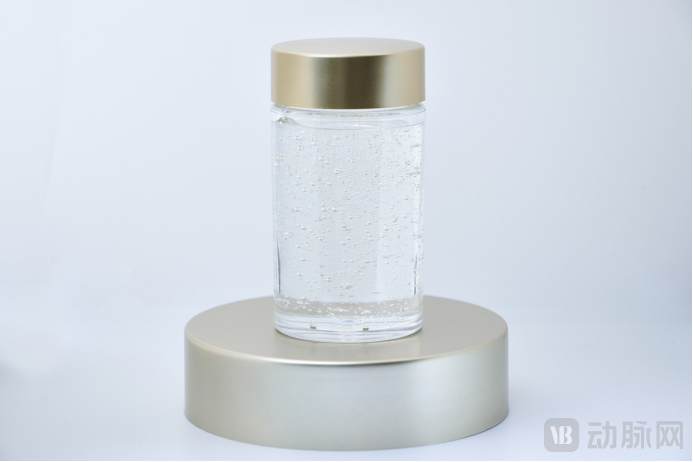
Supramolecular Bimodal Pro-Xylane Raw Material
Sodium hyaluronate fully acetylated is another flagship raw material of Gechun Biomedical.
Hyaluronic acid, also known as sodium hyaluronate. Sodium acetylated hyaluronate is a derivative of hyaluronic acid with improved lipophilicity and moisturizing effects, offering more significant efficacy advantages compared to traditional moisturizing ingredients. Fully acetylated sodium hyaluronate is a derivative with a higher degree of acetylation, boasting high skin affinity, long-lasting moisturization, stratum corneum softening, potent skin-softening, enhanced skin elasticity, and improvement of rough skin texture, while providing a fresh, non-sticky feel.
After two years of intensive research and development, the company’s technical team has fully mastered a proprietary preparation process with independent intellectual property rights and has secured one invention patent. Anti-wrinkle efficacy tests demonstrated that, compared to traditional sodium hyaluronate, the fully acetylated sodium hyaluronate produced by Gechun Biomedical increased collagen fiber content by 126.09%, type IV collagen content by 121.74%, and hyaluronic acid content in the skin by 104.65%. With an acetylation substitution rate as high as 97.2%, the product is pure in color and odorless, making it widely applicable in cosmetics such as lotions, facial masks, and serums.
According to Chen Jianming, high-purity sodium acetylated hyaluronate currently sells for approximately RMB 30,000–50,000 per kilogram on the market. Chengdu Gechun Biomedical’s fully acetylated sodium hyaluronate offers superior quality at more than 50% lower cost.
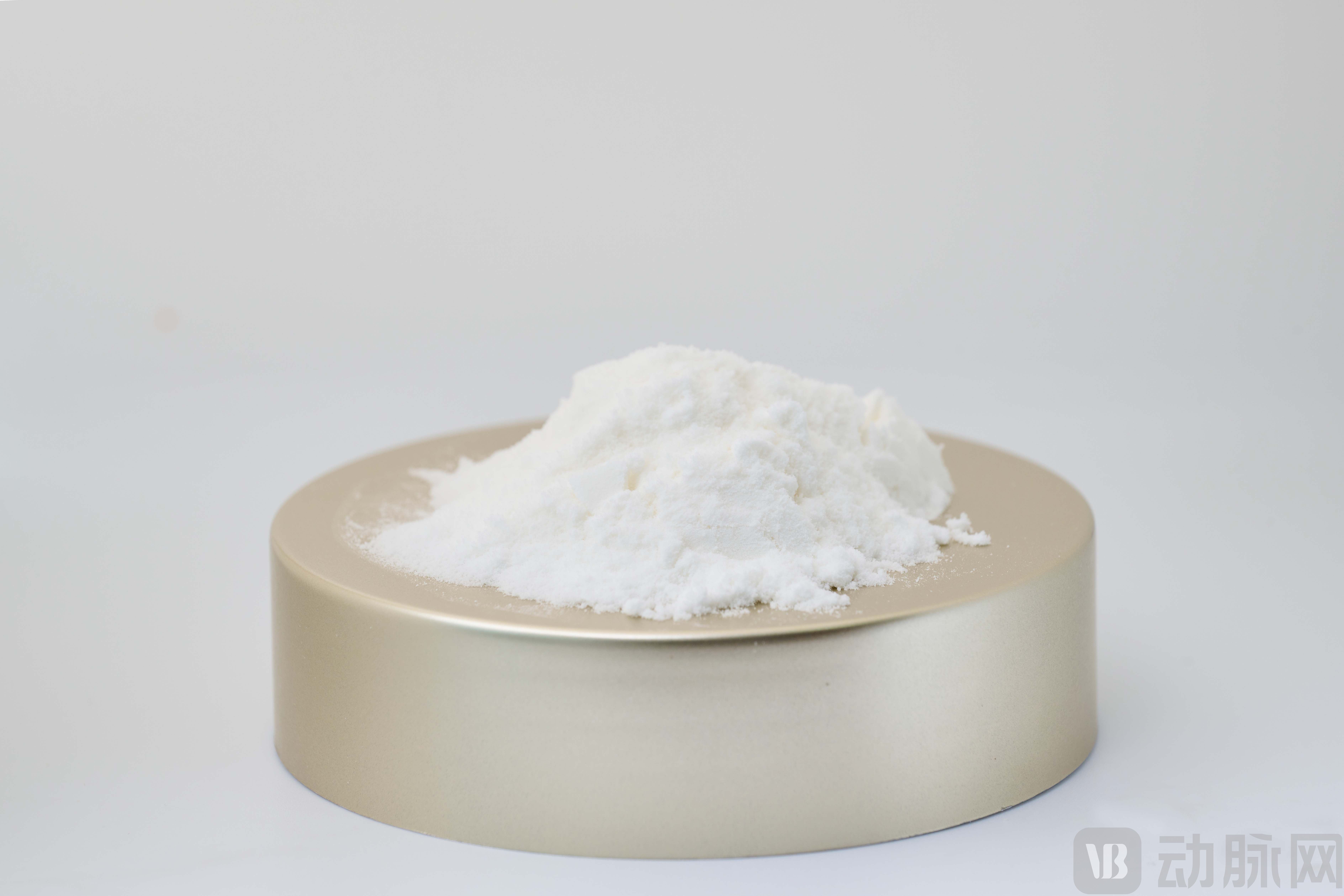
Fully Acetylated Sodium Hyaluronate Raw Material
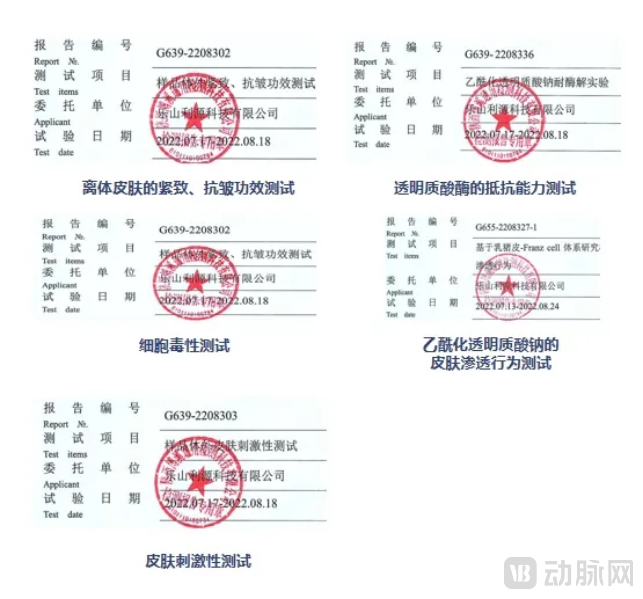
Third-party efficacy evaluation results have demonstrated that Chengdu Gechun Biomedical’s fully acetylated sodium hyaluronate exhibits no cytotoxicity, causes no irritation, achieves a transdermal penetration depth of 100 micrometers, and shows significant resistance to enzymatic degradation.
“With such a perfect ingredient, any additional structural modifications would be superfluous,” Chen Jianming told VCBeat. Gechun Biomedical had previously explored modifications to Pro-Xylane, such as acetylation and silanization, or the introduction of amino and carboxyl groups, as well as modifications using natural products, but ultimately abandoned these approaches. “We believe that any modification is redundant. Unless it involves formulating combinations with other substances—for instance, combining Pro-Xylane with acetylated hyaluronic acid—which might create superior supramolecular effects. Furthermore, synergistic interactions between hyaluronic acid and other compounds in enhancing penetration represent a key area for future research. The same principle applies to sodium acetylated hyaluronate.”
In addition to the two ingredients mentioned above, Chengdu Gechun Biomedical Co., Ltd. also offers hundreds of cosmetic raw materials, including tocopheryl succinate, Deep Eutectic Ceramide PRO, supramolecular pentapeptide collagen, dimethylsilanol hyaluronate, EUK-134, white peony root extract, purslane extract, and aescin. The company is also capable of custom R&D for new ingredients based on customer requirements.
Chen Jianming revealed that Gechun Biomedical currently adopts a dual cooperation model combining agency and self-operation, with a broad customer base spanning multiple sectors including cosmetics, skincare products, flavors, fragrances, and e-cigarettes.
Notably, some of the company’s raw materials have successfully entered the Japanese and South Korean markets, achieving an impressive annual growth rate exceeding 100% for three consecutive years since 2021.
Chen Jianming believes that as the technology and preparation of domestically produced Pro-Xylane continue to improve, “the main challenge in the future will be how to reduce production costs, enabling more products to incorporate Pro-Xylane and gradually increasing its concentration in formulations.”
Addressing the current trend of “ingredient concentration wars” in the skincare industry, he emphasized that the efficacy of skincare products is not determined solely by the concentration of a single ingredient, but rather by a combination of factors including formulation compatibility, emulsification technology, and skin absorption. Instead of excessively pursuing high concentrations of individual ingredients, attention should be focused on the product’s overall absorption rate and actual performance to better meet consumer needs.
References:
1. Raw Material Science Column | Not All Hydroxypropyl Tetrahydropyrantriol Is Called Pro-Xylane, Gechun Biomedical
2. Ingredient Science Column | Topical Fillers: Fully Acetylated Sodium Hyaluronate, Gechun Biomedical