Professor Ma Fei on Standardization of Clinical Cancer Organoids in China: Advancing Precision Oncology Through Consistency and Collaboration
On March 31, 2024, the highly anticipated special session on “Standardized Laboratory and Biobank Construction for Clinical Tumor Organoids in China” was successfully held at the First Academic Conference of 2024 of the State Key Laboratory of Molecular Oncology. Following the national project launch meeting held on January 6, this conference saw the major release of“Standard Operating Procedures for Clinical Tumor Organoids in China, Quality Control Standards for Sample Management, and Recommended Construction Guidelines”and“Standardized Operations and Application Capability Enhancement Program for Clinical Tumor Organoids in China”Two Key Initiatives Mark a Significant Step Forward in Standardizing the Development of Clinical Tumor Organoids in China
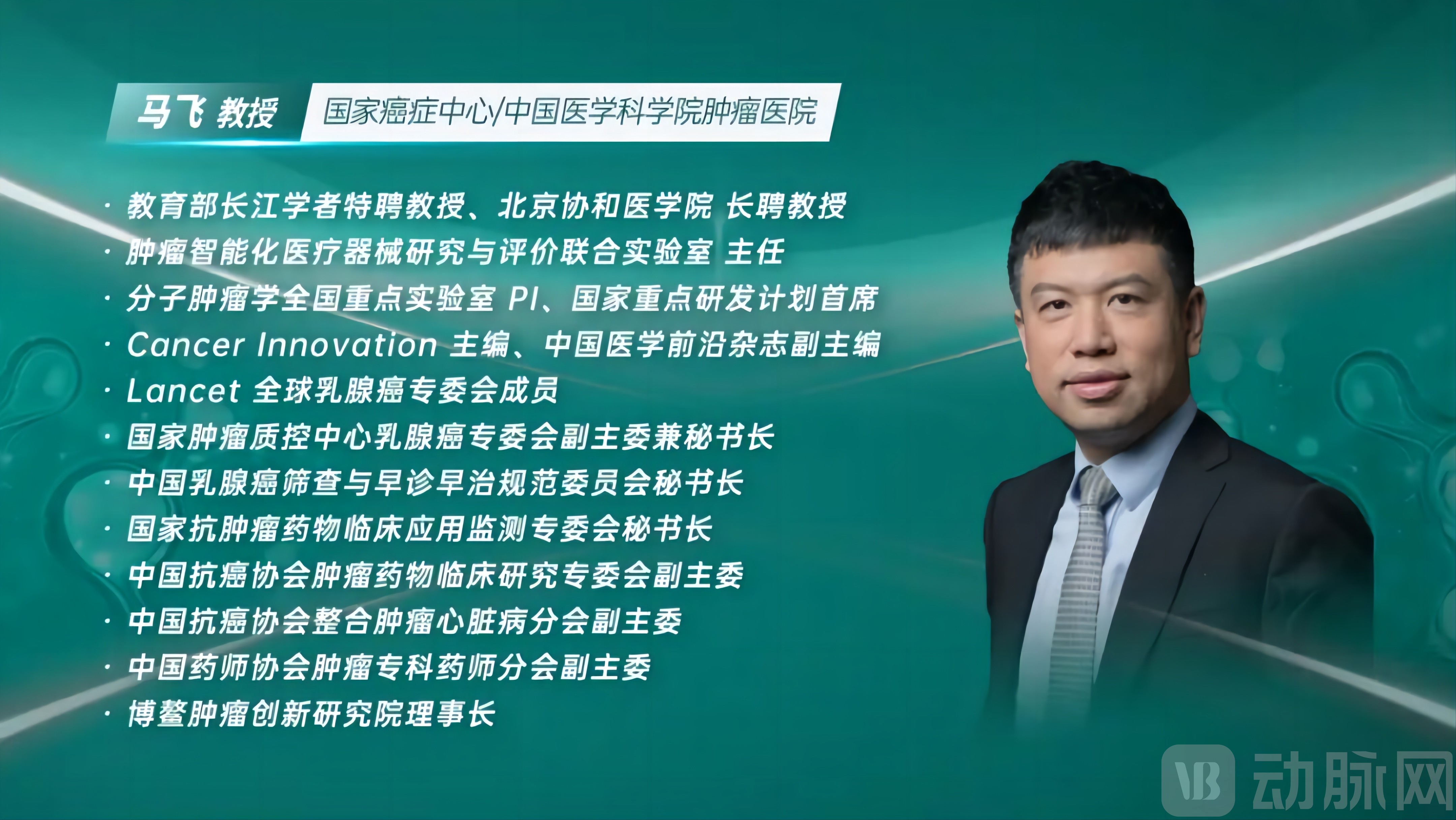
To this end, the Boao Institute for Cancer Innovation has specially invitedProfessor Ma Fei, National Cancer Center/Cancer Hospital, Chinese Academy of Medical SciencesAn authoritative analysis of the current application status of clinical tumor organoids in China and the significant role this project plays in advancing precision diagnosis and treatment of oncology in China. Republished with permission by VCBeat for the benefit of our readers.
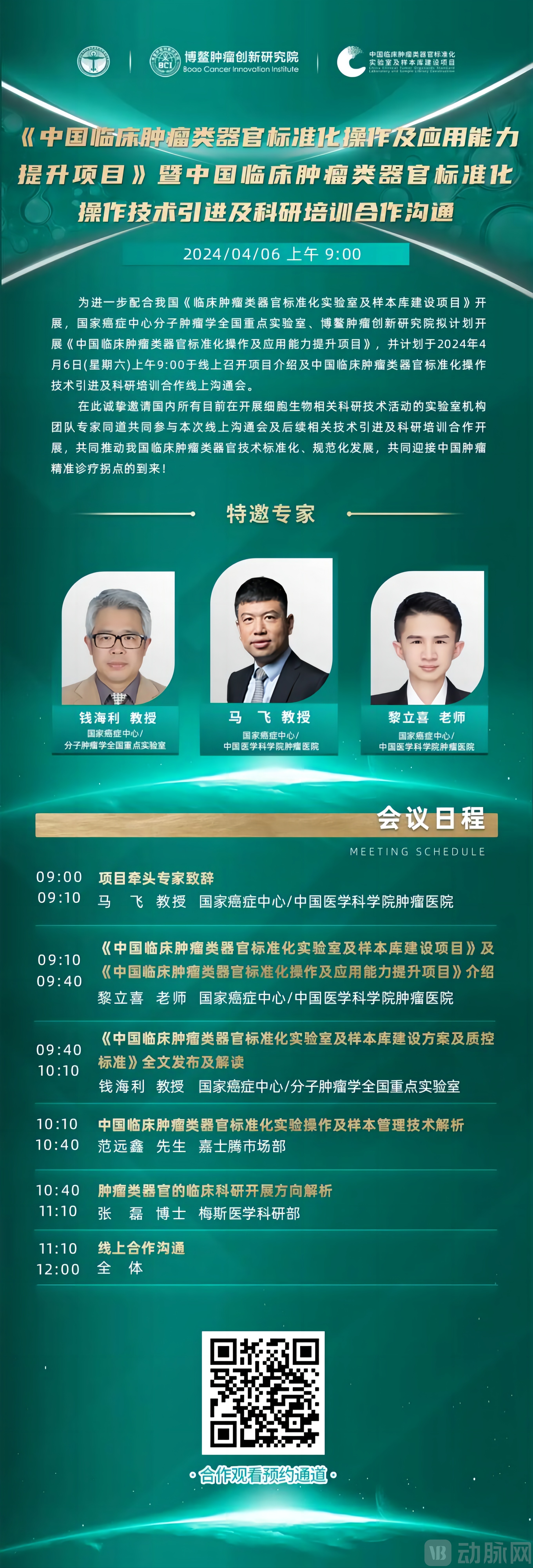
On April 6, the Boao Institute for Innovation in Oncology will hold an online briefing session on project introduction, the introduction of standardized operational techniques for clinical tumor organoids in China, and research collaboration and training. Please scan the QR code at the end of this article to register.
1Q: In recent years, 3D organoid technology has swept through the scientific research community like a wave. Tumor organoids are hailed as “surrogates for drug testing.” Please discuss the application prospects and value of tumor organoids in optimizing the clinical oncology ecosystem.
Professor Ma Fei:The field of oncology research currently faces two common challenges—heterogeneity and tumor evolution—and related clinical diagnosis, treatment, and scientific research activities are primarily centered on these two aspects. Organoids are tissue-like structures with defined spatial architecture formed through in vitro 3D culture of tissue samples or pluripotent stem cells. They can simulate real organs in both structure and function, possess organ-specific functionalities, and can be stably passaged, hence they are also referred to as "mini-organs."
Tumor organoids represent a concept that integrates organoid technology with oncology. Derived directly from patient tumor samples, these organoids highly recapitulate the tissue architecture and genetic lineage of human tumors while preserving tumor heterogeneity. Tumor organoids provide a more effective assay model for cancer research and high-throughput in vitro drug screening than traditional 2D cell lines or mouse models. Furthermore, they offer significant advantages over indirect methods such as conventional next-generation sequencing (NGS) in terms of precision, turnaround time, accuracy, and cost.
Currently, the value of tumor organoid technology is becoming increasingly prominent in three application areas: precision oncology treatment, basic medical research, and new drug development. For instance, it enables faster and more precise formulation of treatment plans for cancer patients, along with efficacy assessment of clinical medication regimens; facilitates the construction of more accurate tumor disease models; and creates more efficient experimental tools for new drug discovery. These three applications represent the most critical value domains in the era of precision medicine. Furthermore, with the rapid advancement of biotechnology, tumor organoid technology not only serves as an important supplement to current evidence-based medicine but also offers irreplaceable advantages in pharmacoeconomics, as well as in the translational application of clinical and scientific research.
2Q: Currently, how does China’s organoid technology compare with the international landscape? What are the main challenges?
Professor Ma Fei:Currently, organoid culture technology in China is experiencing a technological explosion and a surge in scientific research achievements. In terms of the number of published papers, China accounted for 14% of global publications in 2022, second only to the United States, placing it at a globally leading level. Furthermore, strong support from national policies in recent years has ushered in a new era for the development of tumor organoids in China.
In 2021, organoid technology was included in the first batch of key special projects under the 14th Five-Year Plan to strengthen research on organoid models for major refractory diseases. The State Council issued the Regulations on the Supervision and Administration of Medical Devices, clarifying that medical institutions may independently develop and use testing items with clinical needs (LDT model). In 2023, the Center for Drug Evaluation of the National Medical Products Administration released the Technical Guidelines for Non-clinical Studies of Human Stem Cell Products (Draft for Comment), specifying that organoid models can be applied as alternative models in non-clinical studies.
Although organoids represent a revolutionary in vitro disease model, with rapid advancements in applications across stem cell and developmental biology, regenerative medicine, oncology research, drug development, and precision medicine, the absence of quality control standards for the construction, characterization, preservation, and application of tumor organoids in China, coupled with a lack of standardized operational procedures and platform development frameworks for technical specifications, has significantly hindered the translational and industrialization progress of tumor organoid technology.
In terms of clinical application and translational research, whether in routine clinical drug susceptibility testing services or in clinical research (particularly multi-center clinical studies), the requirements for Clinical Patient-derived Organoids (CPDOs) regarding culture stability, cultivation cycle, throughput, and cost are significantly higher than those for conventional basic laboratory research. This disparity is akin to the difference between military-grade and civilian-grade standards. Therefore, standardization is imperative for the widespread adoption and full value realization of CPDO technology.
On this basis, on January 6, we officially launched the “China Clinical Tumor Organoid Standardized Laboratory and Biobank Construction Project” in Beijing. At this Oncology Health Management Conference, we also grandly released China’s first universal construction plan and quality control standards for standardized clinical tumor organoid laboratories and biobanks. This will provide pioneering guidance for the large-scale clinical adoption of tumor organoid technology, ushering in a new era of standardization, normalization, and scalability for clinical patient-derived organoids (CPDOs) in China.
3Q: As you mentioned earlier, we have also observed that since the nationwide launch of the “China Clinical Oncology Organoid Standardized Laboratory and Biobank Construction Project” on January 6, it has generated significant resonance in the fields of clinical oncology diagnosis, treatment, and scientific research across China. Could you please provide a more detailed introduction to the project’s phased objectives and main components?
Professor Ma Fei:“China Clinical Standardized Laboratory and Biobank Construction Project” is jointly carried out by the National Key Laboratory of Molecular Oncology at the National Cancer Center and the Boao Institute for Cancer Innovation. Adhering to the principle of homogeneous collaboration, this project incorporates the most advanced domestic and international organoid technologies, striving to assist all participating units in mastering relevant technical operations and enhancing their scientific research capabilities.
Under the leadership and guidance of the National Cancer Center, the State Key Laboratory of Molecular Oncology and the Boao Institute for Cancer Innovation jointly initiated this effort, inviting clinical and scientific research expert teams from authoritative medical centers across various provinces and cities in China to participate. With support from corporate entities including Jiateng, the initiative provides end-to-end assistance—from theoretical foundations to technological applications—to help participating centers enhance their relevant technical capabilities.
The primary objectives of this project are to unify technical standards, build a standardized platform, foster industry consensus, and facilitate value conversion. The Phase I objectives are to be achieved across multiple dimensions through approximately one year of development:
1) Establish a set of scientific and standardized criteria for the construction of tumor organoid standard laboratories and biobanks, certified by the project’s expert committee (covering personnel competencies, equipment configuration, procedural specifications, and quality control systems);
2) Develop a series of expert consensus statements, quality control standards, guidance manuals, and training and acceptance systems for the development and translational application of organoid technology;
3) Establish several high-caliber organoid laboratory research teams of international standard;
4) Establish several national or regional standard biobanks for tumor organoids.
Meanwhile, we have taken the lead nationwide in establishing at least 15 standardized laboratories and biobanks for tumor organoids that meet project construction standards. These facilities are located in authoritative medical centers across multiple regions, including Beijing-Tianjin-Hebei, the Yangtze River Delta, Sichuan-Chongqing, Central China, and South China, working together to drive regional adoption. Furthermore, key project deliverables were produced in 2024, such as the *Operational Manual for the Construction of Standardized Laboratories and Biobanks for Clinical Tumor Organoids in China (2024, First Edition)*, the monograph *Standardized Construction and Application of Malignant Tumor Organoids* (published by Tsinghua University Press), and the *Quality Control Standards for Standardized Operations and Sample Management of Clinical Tumor Organoids in China (2024, First Edition)*, all aimed at promoting the widespread adoption of this technology through unified standards.
Following the completion of the critical Phase I construction, comprehensive nationwide implementation will commence in 2025, marked by the large-scale establishment of the second batch of standardized centers across China to achieve full clinical adoption of this technology. Meanwhile, we encourage more leading medical centers and research teams throughout China to actively register now for participation in Phase I technology introduction and platform development, jointly promoting the standardization and normalization of tumor organoid technology.
4Q: In recent years, the number of domestic enterprises involved in promoting organoid technology has continued to grow. However, China still lacks relatively unified technical and quality control standards. The culture systems and reagents/consumables are diverse and complex, leading to variable reliability and stability across different systems and reagents. In this regard, have there been any explorations into standardized training for clinical tumor organoids?
Professor Ma Fei:With the increasing output of translational clinical research achievements in China, clinicians and researchers are paying growing attention to organoid technology, and domestic clinical medical institutions have an increasingly urgent demand for training in Clinical Patient-Derived Organoids (CPDOs) technology. Based on the “Project for the Construction of Standardized Laboratories and Biobanks for Clinical Oncology Organoids in China,” a “Training System for the Establishment and Application of Standardized Laboratories for Clinical Oncology Organoids” has been established.
By adopting an integrated online-offline model, we conduct “Standardized Training on Clinical Patient-Derived Organoids (CPDOs),” which includes nationwide live-streamed lectures, hands-on offline training, and offline research training. This initiative aims to help clinical and research teams across China understand the principles and methodologies of tumor organoids, master standardized procedures for culturing organoids of major clinical cancer types, manage samples, and carry out related scientific research, thereby promoting the establishment of a national-level standardized tumor organoid biobank, advancing precision diagnosis and treatment in clinical practice, and facilitating the translation of technological and research achievements.
Finally, in conjunction with the “Standardized Operating Procedures and Quality Control Standards for Biobank Management of Clinical Tumor Organoids in China, along with Recommended Construction Guidelines” released at the China Cancer Health Management Conference, an online event titled “Clinical Tumor Organoid Standardization and Application Capacity Enhancement Project in China” and the “Exchange and Communication Meeting on the Introduction of Standardized Technical Operations for Clinical Tumor Organoids in China and Collaborative Research Training” is planned for Saturday, April 6. This event will be led by the Boao Oncology Innovation Research Institute, with support from more than 20 medical media outlets and related organizations.
We hereby invite all domestic laboratories, institutions, teams, and experts currently engaged in cell biology-related scientific research and technological activities to participate in this online symposium and to collaborate on subsequent technology introduction and scientific research training. Together, let us promote the standardization and规范化 development of clinical patient-derived organoids (CPDOs) technology in China and jointly usher in the turning point for precision diagnosis and treatment of cancer in China.