

TAXUE Tech Launches Integrated Digital Solutions for Pharma Commercialization and Medical Affairs, Files IPO Prospectus
Unlike typical startups, CrossNow, founded in 2022, stands out distinctly.
In the early stages of their venture, they did not follow the conventional approach of refining products through project-based work and then revitalizing those products via further projects. To provide customers with higher-quality products and services,CrossNow has chosen to focus on dedicated research and development,Starting with infrastructure to build a vertical platform tailored to the needs of the life sciences industry, and then developing specialized solutions based on that platform.
And this “head-down” hard work lasted for more than a year.
Burning through years of savings, most startup teams would inevitably exhibit palpable anxiety. However, the team at CrossNow appears remarkably composed. They recognize the importance of early-stage investment in foundational platforms and firmly believe that substantial “returns” will be realized in the future.
If it weren’t for the planned launch of a new product to the public in late March, CrossNow might have continued to maintain a low profile, steadily advancing its high-quality projects. Perhaps this story illustrates it best: when CrossNow signed its first client, the team initially considered celebrating and promoting the milestone. However, after discussion, the CrossNow team unanimously agreed that celebration would only be warranted once the client’s system was deployed, operating stably, and had successfully completed monthly and annual cutover processes, thereby demonstrating its ability to deliver long-term value to the enterprise. The idea of celebrating was ultimately abandoned.
“Doing things that are meaningful to society, and adhering to a win-win outcome for customers, employees, and shareholders.” This is the philosophy of CrossNow. This philosophy also supports CrossNow in steadily advancing toward its ultimate goal—becoming a leader in digital services for the life sciences industry.
This confidence stems from “refined operational management” and “the experience of building similar platforms more than once.”
As a startup, CrossNow undoubtedly demonstrates a far greater level of sophistication. Its mature management system and the team’s seamless collaboration not only reduce communication costs but also further enhance productivity. Clearly defined roles enable the CrossNow team to maintain consistent, high-quality output.
“For R&D investment, we can precisely identify which components incur the majority of R&D expenses, quantify the manpower consumed and its corresponding cost, and even allocate costs with precision down to the hundred-yuan level.”On CrossNow’s internal management dashboard, even an outsider can gain immediate clarity on its contents. The “stories” behind the development of each functional module are presented in the form of accumulated data, laying bare such details as the rationale for development, manpower invested, time spent by each individual, and costs incurred.
Such a fine level of management granularity is difficult to achieve even in many multinational corporations and major internet companies. It can only be the result of years of collaboration and accumulated management systems by the CrossNow team.
In late March, at the AWS Life Sciences and Healthcare Digital Enablement Center in Shanghai’s Fenglin International district, this two-year-old company addressed an audience comprising dozens of leading pharmaceutical and medical device enterprises, including Zhongmei Huadong, China Resources Double-Crane, and Servier.
"This is a story that has spanned 22 years."
As early as 2002, some members of the current CrossNow team assisted Pfizer in developing SDS, a CRM-type project, and a series of digital marketing systems. Subsequently, Pfizer’s well-known FACE system was developed and maintained by another group of CrossNow team members. These members later went through various collaborations and separations, eventually reuniting at Veeva China in 2016. Veeva is a leading global SaaS enterprise playing a pivotal role in the life sciences industry. The CrossNow team participated in the research and development of China SFA, a product tailored to meet the demands of the Chinese market, and successfully launched it.
Now, this founding team—with clear insights into market development potential and a proven track record of success—has embarked on a “new venture” in the life sciences sector: CrossNow.Well-versed in industry best practices, they are intimately familiar with the challenges pharmaceutical companies face in commercialization and medical affairs management, and possess the capability to provide effective solutions. Their deep understanding of clients’ business scenarios further reduces communication costs, thereby enhancing project stability and success rates.
Perhaps it is not an exaggeration to refer to them as “a group of long-term practitioners in the digitalization of life sciences.”
WhereasAt the two-year anniversary celebration and new product launch, CrossNow officially unveiled a comprehensive digital solution for marketing and medical affairs management tailored to pharmaceutical and medical device companies.
At the conference, Li Xiaofei, CEO of CrossNow, presented a comprehensive overview of the solution and listed a series of performance metrics. For instance, exporting 40,000 meeting records with complex logic takes no more than 200 seconds; monthly job-transition data for teams of 1,500 employees exceeds one million entries and requires complex computations, all of which can be completed by these automated programs within 1.5 hours. The ingeniously designed caching architecture significantly boosts query efficiency and substantially reduces the probability of deadlocks. It was revealed that these performance metrics are fully comparable to, and even surpass, those of leading international vendors.
A superior SaaS product is not merely about fulfilling functional requirements; more importantly, it involves continuous and stable iterations that are automatically deployed to each customer instance, thereby consistently creating new value for customers. CrossNow is undoubtedly a practitioner of this philosophy. On the same day, while core team members attended the new product launch event, CrossNow’s Beijing team was also methodically releasing the second version of its 2024 product. In fact, within CrossNow’s planning framework, the release dates for each version are locked in advance, with the company serving every customer through an average of 12 product iteration updates per year.
Perhaps it was also because they recognized the philosophy of CrossNow,In September 2023, Legend Capital, which had cumulatively invested over RMB 13 billion in the healthcare sector and backed more than 150 companies, made a strategic investment in this enterprise with significant growth potential.
The impact of policies such as centralized drug procurement on the industry is evident.
Dr. Yang Shujun, Director at Legend Capital, noted that despite the impact of policies such as centralized volume-based procurement, China’s overall pharmaceutical market continues to grow steadily. “The total market size increased from $103 billion in 2014 to $163 billion in 2023, and is expected to reach $197 billion by 2028.”
In a rapidly growing market, the pharmaceutical industry has undergone structural adjustments.
Driven by factors such as declining generic drug prices, many companies have shifted their growth focus to innovative drugs. According to data compiled by VCBeat Research Institute, a total of 373 innovative drug products were launched in China from 2016 to 2021, including 234 chemical drugs, 114 biological drugs, and 25 traditional Chinese medicines.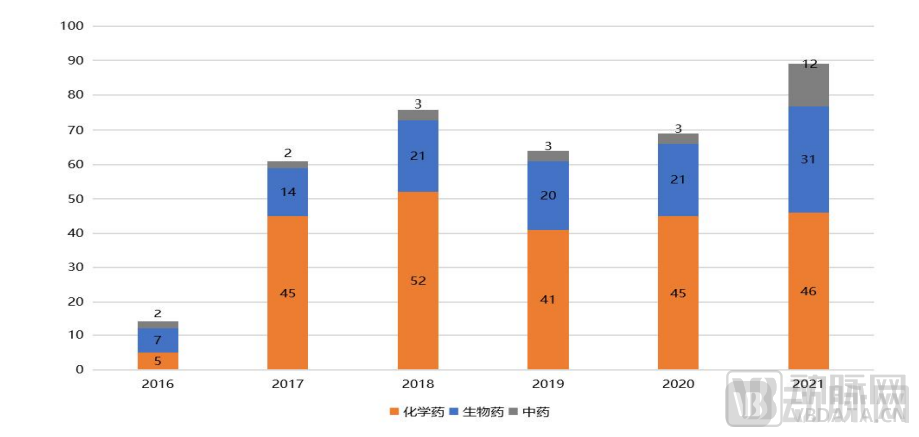
Number and Types of Innovative Drugs Approved in China, 2016–2021; Data Source: NMPA, Compiled by VCBeat
“The proportion of innovative drugs has increased from the previous 20% to 29%,” mentioned Dr. Yang Shujun, adding that with the normalization of updates to the National Reimbursement Drug List, the accessibility of new drugs continues to improve further.
However, influenced by payers and other factors, rapid growth in this fiercely competitive market undoubtedly requires pharmaceutical and medical device companies to provide high-quality, affordable products and services. This has inevitably driven demand for cost-effective digital marketing and R&D SaaS applications.
For instance, from the R&D perspective, the need to reduce labor input and improve experimental accuracy is driving the development of laboratory automation. In the manufacturing sector, where pharmaceutical industrial automation and informatization levels were previously low, digital transformation is accelerating. In the pharmaceutical commercial sector, commercial logistics and supply chains are moving toward intelligent decision-making. Furthermore, as the product life cycles of pharmaceuticals and medical devices shorten, companies are required to enhance quality and efficiency—shifting from extensive operational models to more effective operations. Focusing solely on the laboratory automation market, relevant estimates suggest it could be a market worth tens of billions, or even hundreds of billions, of yuan.
However, a comparison between the Chinese and U.S. markets reveals that China’s SaaS sector remains in its nascent stage, with significant room for growth in terms of both market size and IT spending. Furthermore, influenced by the international landscape, the localization of digital platforms has emerged as a major trend.
Naturally, the development and application of SaaS in the healthcare sector is no exception.
Driven by both growing demand and compliance requirements, the entire industry is further accelerating the digital transformation of pharmaceutical and medical device companies, thereby spurring greater demand among these enterprises for the adoption of domestic cloud services.
This, clearly, represents an opportunity for CrossNow and a host of other enterprises.
However, for a startup, the dilemma lies in whether to invest in the digitalization of R&D tools or marketing tools. Countless past experiences have undoubtedly shown that overreaching can easily lead to a fate similar to that of LeEco. There are many underlying logics behind this “choice.” But when summarized within the context of the Chinese market, the situation is simply this: spending in the marketing sector remains persistently high; the prospects for digital marketing are looking promising; while the digitalization of R&D is only slowly gaining momentum.
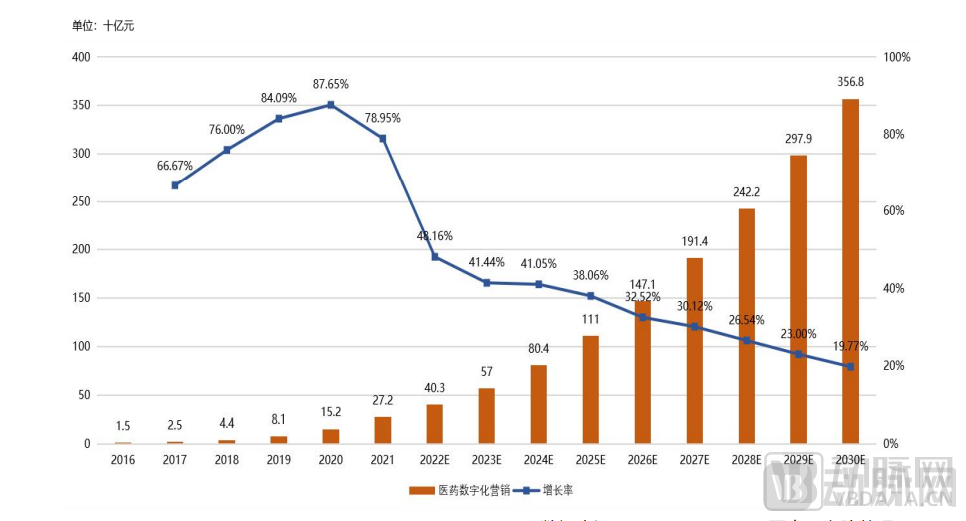
Market Size Trends of China’s Pharmaceutical Digital Marketing Industry, 2016–2030; Data Source: Frost & Sullivan, compiled by VCBeat
Implementing one initiative first and then planning another is undoubtedly a more prudent approach. CrossNow, however, has chosen:
“Starting with commercial promotion, medical digitalization, and digital doctor-patient services, we aim to rapidly enter the market and refine our platform, with the expectation of creating long-term digital value for pharmaceutical companies.”
“Why is digital empowerment necessary? What challenges can it help pharmaceutical companies address?”
This is a question that pharmaceutical and medical device companies need to consider in the process of promoting digital transformation: one is whether or not to do it, and the other is whether or not they can do it.
Fortunately, the pioneers who have already navigated these uncharted waters offer mature lessons and experiences to draw upon.
A leading domestic pharmaceutical company has further alleviated corporate concerns by analyzing the integration of CRM and SFE. To make marketing decisions regarding business models, senior management can rely on digital systems to provide intuitive data. To prevent decision-making based on mere intuition, the collection of marketing behavioral data and the analysis of real-world business scenarios will help implement actionable marketing strategies. Meanwhile, sales representatives can clearly understand how to achieve their targets...
Large pharmaceutical groups often grapple with the challenges of extensive, inefficient operations due to their unwieldy scale. A senior executive at a leading pharmaceutical company has further concretized this prevalent industry issue: subsidiaries and business units operate in silos, resulting in redundant marketing personnel and soaring expenses; duplicated investments in market strategies lead to resource wastage; overlapping customer coverage causes internal friction and weakened bargaining power; and inefficient data collection fails to effectively support marketing decision-making.
Obviously, the money “wasted” by not spending is even greater than the cost of investing in marketing digital transformation.
In this data-driven era, while data serves as a strategic resource reserve, it may also give rise to certain challenges. One company highlighted the data-related obstacles it faces, such as data silos between system applications during operations and maintenance, duplication of critical data, and poor data quality. These issues severely hinder precise user recommendations, thereby adversely affecting marketing effectiveness.
Pharmaceutical and medical device companies have raised the issues currently facing the industry, while CrossNow aims to become the “one” that solves these problems.
This newly launched comprehensive suite of marketing and medical digitalization solutions, in brief, encompasses a CRM system, a conference management system, a digital employee system, and master data services—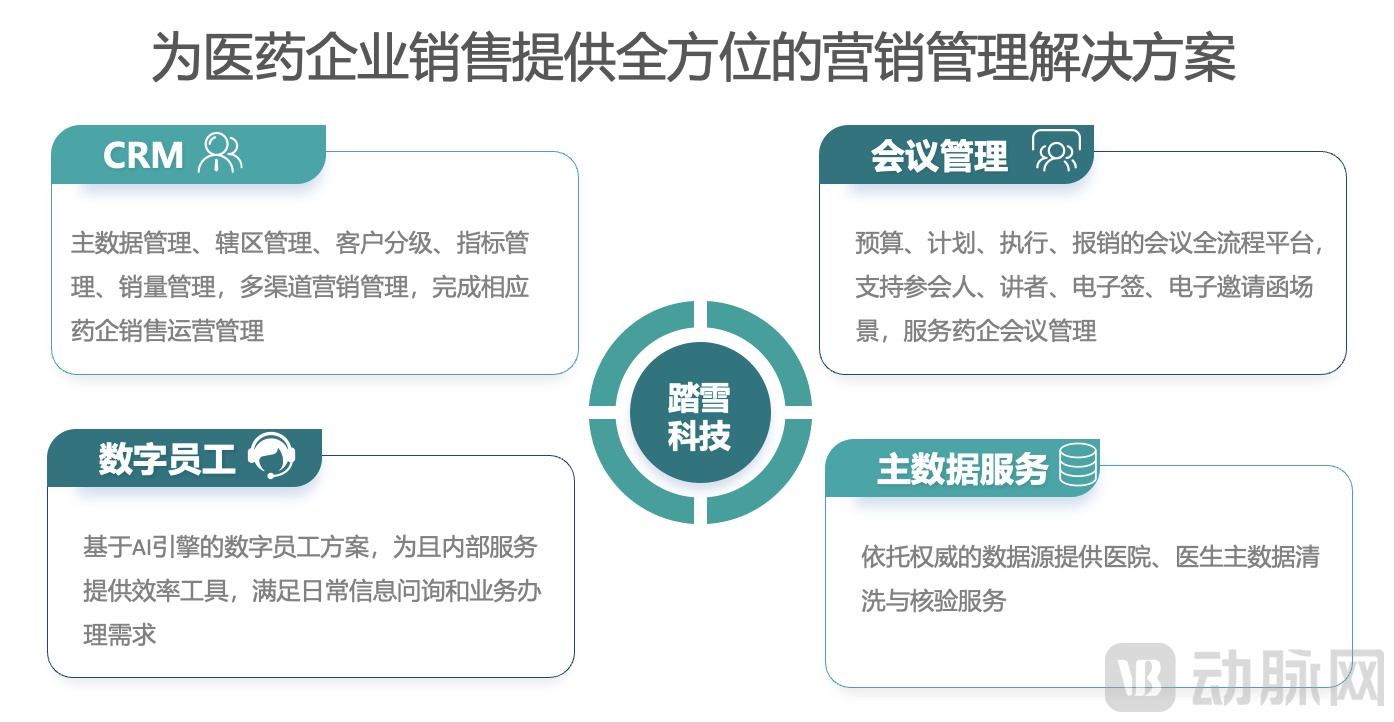
CRM System (Sales Operations Management), primarily aimed at enhancing operational efficiency and quality, making management easier while facilitating sales and promotion;
Conference Management System,Helps enterprises manage various academic conferences, making conference execution more convenient, orderly, and compliant;
Digital Employee System, CrossNow leverages open-source large AI model technology to help enterprises build a “24/7 online” employee, addressing the challenge of repetitive tasks. Enterprises can also customize features such as knowledge Q&A management, model library management, prompt engineering management, and message notification management according to their specific needs;
Master Data Service, it is dedicated to meeting enterprise needs such as data diagnostics, data operations and maintenance, cleaning and enrichment, data matching, and data insights, helping businesses achieve accurate and timely data updates.
While products are undoubtedly important, what matters even more is anticipating customers’ needs—for instance, how to handle hospital data mergers. Drawing on years of industry experience, CrossNow has long recognized that such issues may arise from time to time. By rigorously managing internal operational and product development processes, the company has proactively addressed this challenge. It offers comprehensive pre-emptive solutions from multiple angles, including updating master data, refreshing business data, handling business consolidations, and addressing customized requirements, thereby ensuring adequate preparedness before any issues occur.
Furthermore,In today’s era of mobile office work, to better meet the usage needs of different scenarios, CrossNow has chosen to adapt to various terminals such as smartphones, tablets, and PCs. Its solutions can also be embedded into platforms like WeCom, Lark, and DingTalk, as well as enterprise internal portals, apps, and mini-programs.
In fact, it is the CrossNow cloud platform by CrossNow that underpins its commercial solutions, medical solutions, and doctor-patient service solutions.Built on the CrossNow cloud platform, it enables rapid deployment of new applications. Moreover, unlike previous systems that handled concurrent tasks at the scale of hundreds of thousands (e.g., pharmaceutical representatives), the CrossNow cloud platform’s architecture supports real-time processing of tens of millions of concurrent tasks (e.g., users and physicians), making it possible for enterprises to expand their service scenarios.
This achievement is inseparable from deep collaboration with cloud service providers. At CrossNow’s new product launch event, Huang Qingchun, Senior Director for Healthcare and Life Sciences in Greater China at Amazon Web Services (AWS), pointed out that the life sciences industry has demands for compliance, speed, precision, and differentiated products during its transformation. Meanwhile, factors such as declining revenues from pipeline drugs and the shift toward patient- or disease-centric treatment models are accelerating their impact on the commercialization process of biopharmaceuticals. Maintaining business growth through data strategy has become an indispensable component. While AWS acknowledges the advanced nature of CrossNow’s technical architecture, architects from both sides frequently engage in exchanges and close collaboration to explore how to build a highly available cloud platform that meets future application needs, achieve massive data processing, construct multi-tenant architectures for high-concurrency scenarios, and advance frontier AI applications.
The tangible results are evident. One leading pharmaceutical and medical device enterprise, through its collaboration with CrossNow, achieved a significant reduction in costs and provided support for subsequent business development; it even accomplished a seamless, non-disruptive system transition. Meanwhile, another enterprise leveraged AI technology in partnership with CrossNow to identify speaker identity information from massive volumes of non-standard file formats, substantially reducing the cost of manual data validity checks and proactively mitigating compliance risks.
A win-win situation is truly unfolding.
Digitalization will undoubtedly be the main theme of the future in the life sciences sector. CrossNow, with its sights set on this frontier, is already well-prepared.
On one hand, the current industrial transformation is compelling pharmaceutical companies to undergo strategic shifts, with a focus on optimizing sales models and enhancing R&D efficiency.From a product perspective, CrossNow has currently deployed marketing and medical digitalization solutions. This is because domestic enterprises place greater emphasis on the marketing segment, and the market size for marketing digitalization is sufficiently large. Meanwhile, CrossNow is also actively expanding its AI applications and has achieved notable results.
On the other hand, against the backdrop of international geopolitical dynamics and information security concerns, local enterprises are increasingly driven to adopt localized applications. Furthermore, factors such as the lag in iteration of localized products offered by international digital giants compared to their European and American counterparts will inevitably further accelerate the development of domestic digital enterprises.It will undoubtedly further accelerate the development of companies dedicated to digital transformation in the life sciences sector, such as CrossNow.
Moreover, it has become a prevailing trend for innovative pharmaceutical and medical device companies to expand into overseas markets. Digital enterprises that can maximally facilitate this global expansion are bound to attract significant attention.CrossNow is clearly well-prepared. On one hand, the CrossNow team possesses experience in overseas expansion from major international corporations, giving it particular expertise in strategizing for global markets. On the other hand, CrossNow considered the needs of enterprises going global from the initial development of its platform, providing multilingual support that goes beyond mere language translation. Furthermore, its partner, Amazon Web Services (AWS), offers convenient and accessible cloud computing resources to enterprises worldwide.
Setting aside these factors, in contrast to previous market giants that focused solely on leading pharmaceutical companiesCrossNow provides services to the entire Chinese pharmaceutical market, serving pharmaceutical companies, medical device manufacturers, vaccine producers, and CSO enterprises.It will undoubtedly also facilitate its rapid development and drive the digital transformation of the entire industry.
And these, perhaps, are the fundamental reasons why CrossNow can be so confident.