

BiomX Announces Merger with Adaptive Phage Therapeutics and $50M Financing to Advance Engineered Phage Therapies BX004 and BX211

BIOMx
Phage Therapy Developer
On March 6 this year, Israeli bacteriophage therapy company BiomX (NYSE American: PHGE) announced that it had entered into a definitive merger agreement with U.S. bacteriophage company Adaptive Phage Therapeutics (APT)., to establish a brand-new biotechnology company. The new company will retain the name BiomX, with existing shareholders of BiomX holding 55% of the shares in the merged entity, and the remaining 45% held by APT’s shareholders.
According to BiomX, the merged company will also raise an additional $50 million through a private placement to advance its two engineered bacteriophage pipelines, BX004 and BX211. Data from Tiger Brokers shows that BiomX’s stock price surged 197.66% following the announcement.。
The Post-Antibiotic Era,
Bacteriophage Therapy Will Become Mainstream
Compared with the pharmaceutical subfields frequently discussed in recent years, such as cell therapy, gene therapy, nucleic acid therapy, and conjugated drugs, phage therapy mentioned at the beginning of this article may seem less prominent. However, this is not the case. The bestselling book *The Phage Hunter: A True Story of Defeating Deadly Superbugs* recounts the first case in the United States and the first documented case globally in which a patient was successfully saved through intravenous phage therapy, demonstrating the immense application potential behind phage therapy.
This book recounts how infectious disease epidemiologist Steffanie Strathdee and her husband, Tom Patterson, were vacationing in Egypt when Tom was diagnosed with an Acinetobacter baumannii infection. As most antibiotics are ineffective against this extensively drug-resistant superbug, and the bacteria in Tom’s body were gradually developing resistance to the only three remaining effective antibiotics, physicians had no choice but to pin their hopes on containing the lethal bacteria within a cyst. They continuously drained the infected fluid through a catheter, relying on Tom’s own immune system to clear the infection.
But luck was not on Tom’s side. One day, the drainage tube inside the cyst became dislodged, allowing bacteria to leak out of the cyst. Without prompt intervention, Tom would surely have died.
Desperate, Steffanie scoured various treatment options and rediscovered phage therapy, a once-promising approach that had faded into obscurity following the widespread adoption of antibiotics. Upon learning about phage therapy, Steffanie swiftly reached out to relevant researchers for assistance and sought support from the U.S. Food and Drug Administration (FDA). This spurred rapid collaboration among academics, the U.S. Navy, and government officials. Within three weeks, they identified a matching bacteriophage, which was administered intravenously directly into Tom’s bloodstream, pulling him back from the brink of death.
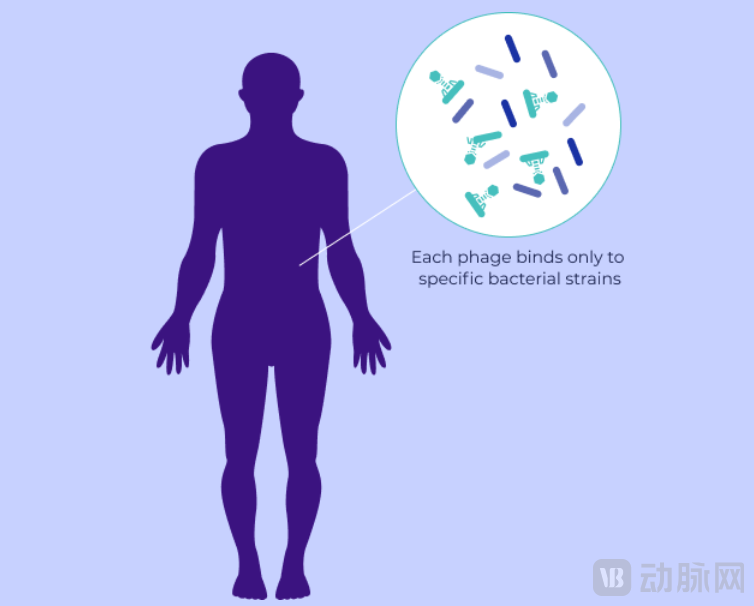
Bacteriophages treat diseases by killing bacteria through binding to specific bacterial strains.
(Image source: BiomX official website)
In the Post-Antibiotic Era, This Couple Successfully Defeated Superbugs Using Phage Therapy, Sounding an Alarm to the World About Human Misuse of Antibiotics.
Antibiotic resistance (ABR), as discussed in this book, refers to the tolerance of bacteria to the effects of antimicrobial agents. Once resistance develops, the chemotherapeutic efficacy of the drug significantly declines. Prolonged use of antibiotics leads to the continuous eradication of the predominant susceptible strains, while resistant strains proliferate extensively, replacing the susceptible ones and thereby causing a steady increase in the resistance rate of bacteria to that particular drug.
Antimicrobial Resistance (AMR) refers to the ability of pathogens (such as bacteria, viruses, and fungi) to resist being effectively killed by antibiotics and other anti-infective agents.In recent years, this concept has gradually replaced the earlier notion of antibiotic resistance, comprehensively encompassing drug resistance in most infectious diseases, and has thus been adopted by major international health research organizations.
To the average person, these concepts may seem official and unfamiliar. However, the polarizing shift—from the earlier widespread misuse of antibiotics like amoxicillin and norfloxacin as panaceas to the current fear-mongering surrounding their use—is the bitter consequence of public antibiotic abuse driving antimicrobial resistance.
According to a report released by the United Nations Interagency Coordination Group on Antimicrobial Resistance as of 2019, at least 700,000 people worldwide die annually from infections caused by drug-resistant bacteria. If left unchecked, this figure is projected to rise to 10 million by 2050, equivalent to the current annual number of cancer deaths globally, with economic damage comparable to that of the 2008–2009 global financial crisis. Additionally, the World Health Organization estimates that this issue incurs annual costs of up to €7 billion in Europe and €6.5 billion in the United States.
Antimicrobial resistance has gradually become an increasingly serious public health issue, and phage therapy will be the key to breaking this impasse.
Bacteriophages are a class of viruses that specifically kill bacteria. They are found in most prokaryotes and are primarily composed of proteins and nucleic acids. Bacteriophages are likely the most abundant biological entities in the biosphere, outnumbering other members of the microbial community, such as bacteria, by a factor of 10^4. Theoretically, the total number of bacteriophages is approximately 10^31, exceeding the sum of all other organisms combined, making them a decisive force in maintaining bacterial populations within ecosystems. This implies that each type of bacteria can be killed by multiple types of bacteriophages.
Beyond treating bacterial infections, bacteriophage therapy has been expanding its frontiers in recent years into drug discovery, diagnostics, and materials science, driven by the rise of synthetic biology, bioinformatics, big data, and artificial intelligence. This expansion enables the development of applications such as inorganic nanostructures, platforms for inducing stem cell differentiation, biomarkers for disease detection, and structural scaffolds for tissue regeneration.
According to a research report published by Databridge MarketResearch, the global phage therapy market is projected to grow at a compound annual growth rate (CAGR) of 16.76% from 2021 to 2028. Another consulting firm, Coherent Market Insights, has also released similar forecasts, indicating that the phage therapy market will experience significant development in the coming years.
"Strong 'Israeli' background,"
CEO Participated in the “Talpiot” Program
Not only have multiple institutions within the industry released data predicting a promising market outlook for phage therapy, but this sector has also repeatedly garnered attention from official agencies. The BiomX company discussed in the article is backed by numerous renowned investment firms, pharmaceutical companies, and official organizations.
As a leading phage therapy company, BiomX was founded in 2015 and went public in 2019, with its headquarters located in Israel. The development of BiomX’s phage therapies is primarily based on advanced Phage Display Technology, phage cultivation, computational biology, and synthetic biology. Additionally, BiomX has expanded into areas such as cosmetics and gastrointestinal therapeutics.
BiomX develops novel phages based on cutting-edge innovative research by scientists including Dr. Rotem Sorek, Dr. Eran Elinav, and Dr. Timothy K. Lu, in collaboration with the Weizmann Institute of Science in Rehovot, Israel.
In addition to its all-star founding team, BiomX’s management team is equally impressive. Take Jonathan Solomon, the CEO and board member, as an example.
Prior to joining BiomX, Solomon was the co-founder, president, and chief executive officer of ProClara (formerly NeuroPhage), a pioneer in the central nervous system (CNS) sector. Under his leadership, the company raised over $100 million and initiated an ongoing clinical trial related to Alzheimer’s disease.
Previously, Solomon was also selected for the Israel Defense Forces’ elite “Talpiot” program, served as the class valedictorian at graduation, and spent 10 years serving in a classified military unit.Solomon holds a Bachelor’s degree in Physics and Mathematics from the Hebrew University, a Master’s degree in Electrical Engineering from Tel Aviv University, and an MBA from Harvard Business School.
The “Talpiot” program annually selects the top 2% of high school graduates to pursue studies in science and engineering at universities., and then continued to pursue in-depth studies in this field during his two-year military service,Nearly two-thirds of the program’s graduates have become Israel’s top academic experts and founders of successful enterprises. Israel’s mandatory military service system is a perfect example of “mission-oriented” education, which is also the primary reason for Solomon’s dual prowess in both civil and military domains.
A large number of veterans in the country have established over 1,000 companies after receiving relevant education and training, including ICQ, the pioneer of instant messaging; security giant Palo Alto Networks; Onavo, a mobile data company acquired by Facebook; and PrimeSense, the 3D vision company behind Microsoft’s Kinect technology, which was acquired by Apple.
According to VCBeat,Israel is home to more than 5,000 high-tech enterprises, with technological innovation contributing over 90% to its GDP. Eric Schmidt, former chairman of Google, once praised Israel as “the world’s most important high-tech hub after the United States.”
In the field of life sciences, Israel stands out prominently.Over the past decade, Israel has seen an average of 139 new life sciences companies established annually, reflecting rapid growth. Among these, the medical device sector stands out as one of Israel’s most developed and highly commercialized industries. Data shows that Israel is home to 725 medical device companies, accounting for 53% of all companies in the life sciences sector. This substantial market scale has positioned Israel as the world’s second-largest supplier of medical devices.
As a company based in a global powerhouse of medical innovation, BiomX has naturally experienced rapid growth. According to Crunchbase data, BiomX has completed six rounds of funding since its inception, raising a cumulative total of over $130 million. Investors include prominent institutions such as Takeda Ventures, OrbiMed, Johnson & Johnson, Deerfield Management, Japan’s SBI Investment Fund, and Seventure Partners.
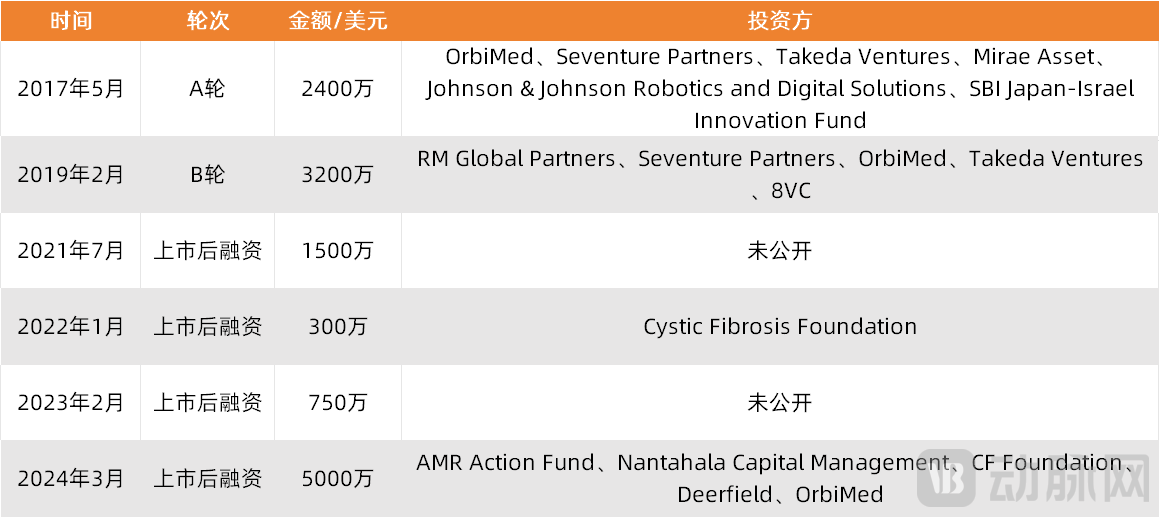
BiomX Funding History, Data Source: Crunchbase
Moreover, the background of APT, the company acquired by BiomX, is not to be underestimated; its phage library originates from the U.S. Naval Research Laboratory. According to Crunchbase data, its investors include well-known institutions such as the U.S. Department of Defense, the Defense Health Agency, and the Mayo Clinic. In 2023, APT was also selected for the “Top Biotech Companies” list.
Establish two major technology platforms,
Collaboration with Johnson & Johnson and BI
With the combined support of its team and capital, BiomX has established the XMarker biomarker discovery platform and the BOLT phage therapy platform (BacteriOphage Lead to Treatment).
XMarker PlatformEmploying a unique metagenomics-based approach to discover predictive microbial genomic features, which can be further developed into biomarkers. This platform integrates ultra-high-resolution DNA analysis, artificial intelligence technologies, and large-scale cloud computing infrastructure to construct a taxonomic database with high sensitivity and specificity.
The platform’s artificial intelligence technology is derived from algorithms developed by Professor Eran Segal of the Weizmann Institute of Science. In 2017, BiomX acquired a company named RondinX to further refine these algorithms.
Currently, Johnson & Johnson and Boehringer Ingelheim are collaborating with BiomX based on the XMarker platform; the former is jointly developing diagnostic biomarkers for inflammatory bowel disease (IBD) with BiomX, while the latter is focusing on the development of IBD-related biomarkers.
BOLT PlatformComprising modules such as computational tools, automated screening, and synthetic engineering, this platform enables the development of natural or engineered phage therapies targeting specific pathogenic bacteria. The specific development pathways are as follows:
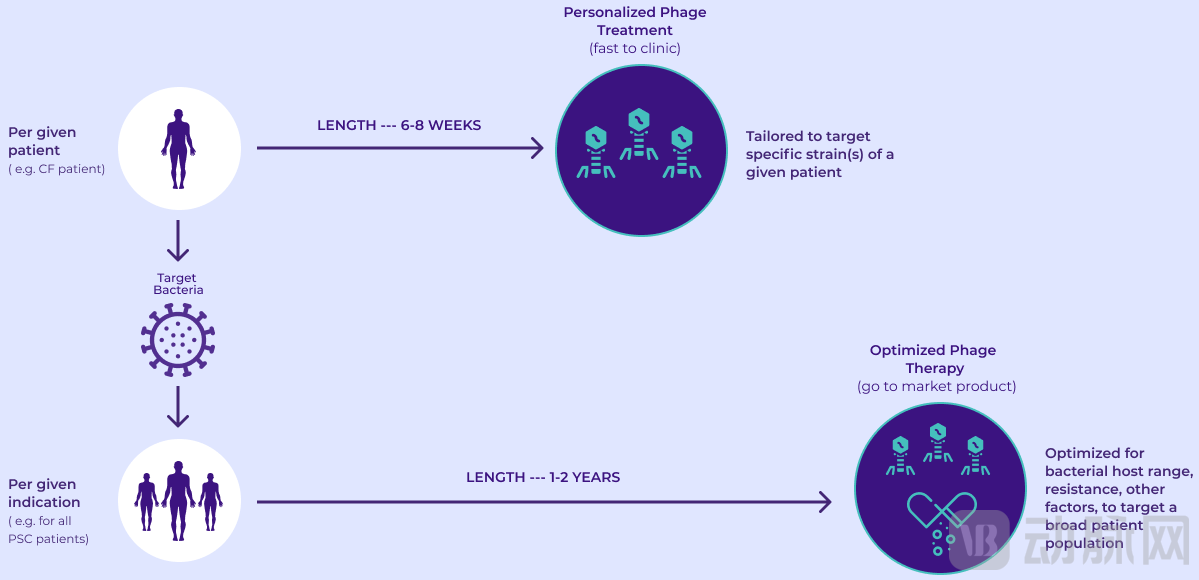
BOLT Platform Development Pathway, source: BiomX official website
Personalized Phage Therapy, which refers to customizing the therapy for a specific patient's target strain within 6–8 weeks. This approach enables parallel execution of such production kits for multiple patients, allowing for clinical proof-of-concept of personalized therapy within 12–18 months after project initiation.Universal Phage Therapy, which refers to optimization targeting bacterial host range, drug resistance, and other factors, in order to develop corresponding products for a broad patient population.
Based on the aforementioned technological platform, BiomX is currently capable of carrying out a series of tasks, including target bacterial discovery, phage synthesis, product development, and biomarker discovery.
Following the merger with APT, BiomX has attracted substantial non-dilutive government funding, securing over $40 million from agencies including the U.S. Defense Health Agency, the National Institutes of Health, and other institutions, as well as gaining access to various resources such as extensive phage libraries.Leveraging these resources, BiomX will prioritize the advancement of its two engineered bacteriophage pipelines, BX004 and BX211.

Key Pipeline Under Development, Source: BiomX Official Website
Among them, the BX004 pipeline is a phage cocktail drug pipeline developed by BiomX for the treatment of chronic Pseudomonas aeruginosa infections in patients with cystic fibrosis (CF). In August 2023, the FDA granted BX004 Fast Track designation. Prior to this,
In Phase Ib/IIa trials, data demonstrated that BX004 has a favorable safety and efficacy profile. In late November 2023, BiomX announced positive results from Part 2 of the trial. The drug received FDA Orphan Drug Designation earlier this year, and data from its Phase IIb study are expected to be released in the third quarter of 2025.
BX211 (formerly coded as APT.DFI.001) is a personalized phage library therapy developed by APT for the treatment of Staphylococcus aureus infections in diabetic foot osteomyelitis (DFO). According to estimates from the American Diabetes Association, among the vast population of individuals with diabetes, 20% suffer from diabetic foot infections (with over 60% of these cases being severe), and if left untreated, severe cases may require amputation. In response to this substantial market, BiomX is accelerating the development of its BX211 pipeline, with preliminary results from studies on safety, tolerability, and efficacy expected to be announced in Q1 2025.
Frequent Domestic Policy Releases,
Global Transactions Continue
When only one company is striving to advance within a therapeutic sector, it invariably indicates the presence of certain constraints hindering development; only the coordinated growth of the entire industry chain can positively drive the sector forward. Compared with emerging fields such as antibody-drug conjugates (ADCs) and cell and gene therapy (CGT), which frequently see blockbuster deals, the bacteriophage sector also has its own share of niche yet promising industry developments.
Last November, phage therapy was included in the International Union of Pure and Applied Chemistry (IUPAC)’s list of “Top Ten Emerging Technologies in Chemistry.”Furthermore, in addition to the recent merger between BiomX and APT, several acquisitions and mergers involving phage therapy companies have drawn significant attention within the industry in recent years.
In June 2023, French phage therapy company Pherecydes Pharma merged with Erytech, a developer of red blood cell-based anti-cancer therapies, with the respective parties holding approximately 49.5% and 50.5% equity stakes in the newly formed entity. The merged company was renamed Phaxiam and will focus on advancing phage therapies targeting Staphylococcus aureus, Escherichia coli, and Pseudomonas aeruginosa.
In November 2021, BioNTech acquired the Austrian phage therapy company Phagomed for €150 million. This landmark deal in the field of phage drug development underscores the growing recognition of phage technology by major pharmaceutical companies.
In May 2019, U.S. phage therapy company AmpliPhi Biosciences completed a merger with antimicrobial peptide company C3J Therapeutics, with the respective parties holding 76% and 24% equity stakes in the newly formed entity. The merged company was renamed Armata Pharmaceuticals, focusing on advancing phage therapies targeting Pseudomonas aeruginosa and Staphylococcus aureus.
Currently, overseas, in addition to the three companies mentioned above and BiomX, several other enterprises such as Intralytix, Locus Biosciences, EnBiotix, and Micreos have entered this sector. In China, companies including Nuobaiter, PhageTech, Shanghai Gaoke, Imunopharm, Abiosen Biotech, and Xituo Biotech are also active in this field.
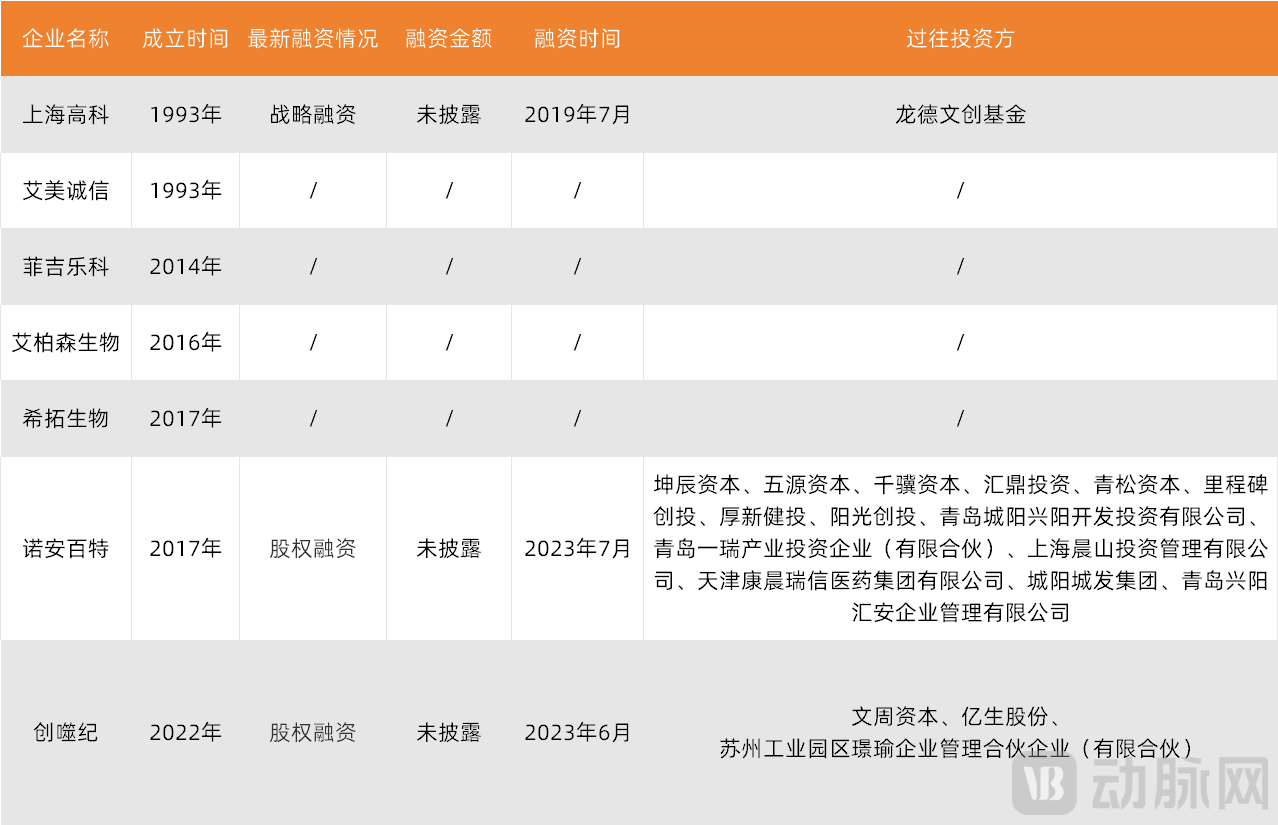
According to incomplete statistics based on publicly available information, the companies currently positioning themselves in the phage therapy sector in China
In addition to the aforementioned companies, many domestic enterprises in the agricultural sector have also entered this field, and the government has successively introduced numerous supportive policies.
August 2023,The Chinese Phage Research Alliance, the Phage Technology Professional Committee of the Chinese Society for Biotechnology, and the Medical Microbiology and Immunology Professional Committee of the Chinese Society for Microbiology organized leading domestic phage researchers, clinical experts, scholars, and industry representatives to jointly discuss and authorChina's First Expert Consensus on Bacteriophages.
Furthermore, in order to better serve the therapeutic and prophylactic applications of bacteriophages, meet the scientific research needs of phage studies, and achieve the sharing of phage resources,Experts in related fields in China have also jointly drafted the “Expert Consensus on Quality Standards for Phages Used in Prevention and Treatment”, provides recommendations on the source, host, biological characteristics, packaging, and labeling of banked bacteriophages, aiming to accelerate the research, translation, and clinical application of bacteriophages. This consensus was first published online in the Chinese Journal of Biotechnology on November 17, 2023.
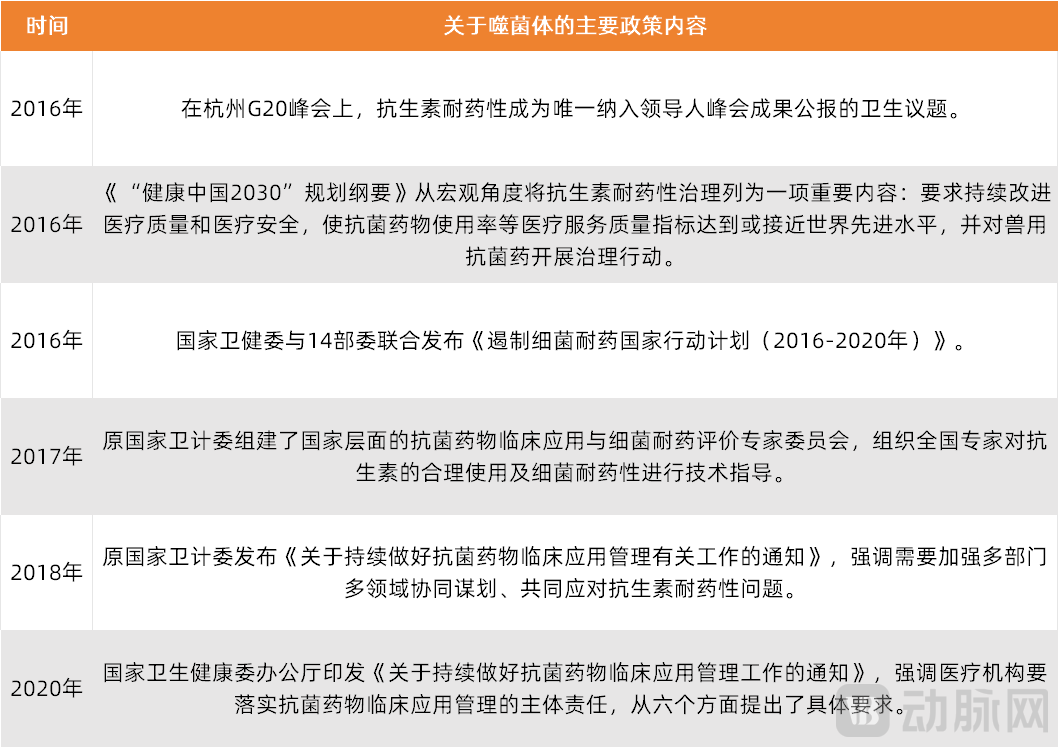
An Incomplete Statistical Overview of China’s Recently Issued Policies Related to Bacteriophages, Based on Publicly Available Data
With coordinated efforts across all segments of the industrial chain, China’s phage therapy industry has indeed experienced rapid development in recent years.
However, it is undeniable that China currently lacks specific regulatory frameworks for phage therapy.In China, phage therapy is primarily conducted through investigator-initiated clinical trials at qualified medical institutions. Currently, only a few hospitals across the country, such as Shanghai Public Health Clinical Center, Zhongshan Hospital, Shanghai Jiahui International Hospital, and Shenzhen Third People’s Hospital, have launched clinical trials on phage therapy.
The path to advancing phage therapy remains long and arduous. Yet in an era plagued by various bacterial diseases, phage therapy will surely usher in its own industrial dawn.
References:
1. “How Did the ‘Tiny Nation’ of Israel Become a Global Innovation Powerhouse?”
2.《Chinese expert recommendation on phage therapy in the clinical practice》