

Founders Who Play Guandan Gain Early Funding Edge Amid Rising Popularity of the Card Game in China's Venture Capital Circle
If we were to rank the most popular social entertainment activities in today’s venture capital and private equity circles, Guandan would undoubtedly make the list.
VCBeat has observed that recently, from Huai’an to Shanghai, and then to Beijing and Shenzhen, the number of people playing Guandan is increasing across various regions; andIn the medical venture capital circle, investors in both primary and secondary markets, as well as entrepreneurs, are either playing Guandan or on their way to learning how to play it.
“During previous meetings with our investors, we used to play Texas Hold’em before dinner. Starting in the second half of last year, everyone switched to playing Guandan,” the CEO of a digital health startup told VCBeat. “Before founding my company, I barely knew how to play cards, except for Dou Dizhu (Fight the Landlord). After starting my venture, I found that many investors enjoy card games. I picked up the game by occasionally joining their gatherings, so that no one would feel bored when we were together.”
An investor who has been in the industry for about two years also stated that she did not play cards much when she previously worked in media, and only learned Texas Hold'em and Guandan together in mid-last year. “Guandan is indeed becoming increasingly popular; just last month, I received invitations to several Guandan games in Beijing.”
It is no exaggeration to say that Guandan has become the “hard currency” of venture capital and private equity socializing.One investor even remarked to VCBeat, “Although it’s a common joke in the industry that ‘being good at Guandan shows you have brains,’ butInvestors do tend to favor savvy entrepreneurs, which has made Guandan a game used during investment due diligence to observe certain traits of the founding teams of target companies.”
Nevertheless, when it comes to the topic of Guandan (a popular Chinese card game), most investors and entrepreneurs exhibit ambivalent attitudes. On one hand, the surge in Guandan’s popularity has become an undeniable fact, with a fervor for the game sweeping through the venture capital and startup community. On the other hand, “playing cards” seems incongruent with the busy, focused nature inherent to venture investing, easily inviting perceptions of “neglecting one’s proper duties.” When VCBeat reached out for interviews, the vast majority of industry professionals declined to be named. One investor joked, “I’m fine having a casual chat, but please do not attribute my comments to me or my firm. It feels somewhat negative; otherwise, our PR team would ‘kill’ me.”
Why Has Guandan Become So Popular? What Drives the Venture Capital Community’s Enthusiasm? Why Do Investors and Entrepreneurs Harbor Ambivalent Feelings? What Industry Shifts Does This Phenomenon Reflect? In response, VCBeat has reconstructed the authentic experiences and perspectives of three industry professionals—representing a financial advisor (FA), a venture capitalist (VC), and an entrepreneur—based on interviews, and appended insights from other invited guests on Guandan.
First Speaker:
Zou Guowen, Founder of Kaicheng Capital
All of a sudden, the game that had been sweeping the Jiangsu and Anhui regions“Guandan” has swept across China, becoming a popular activity among social organizations such as business schools, entrepreneur alliances, hometown associations, and alumni groups., everyone has been playing with it recently.
As a highly active financial advisor in the healthcare venture capital sector, Kaicheng Capital frequently interacts with investors and entrepreneurs. Consequently, we have been playing Guandan more often recently. In my view, playing Guandan helps parties deepen mutual understanding, harmonize personalities, and share industry insights. Most importantly, it facilitates communication in a relaxed atmosphere.
Of course, during a game of Guandan, we generally avoid discussing financing matters directly. In Chinese culture, it is preferred to approach topics indirectly rather than bluntly. Mixing serious business with play would disrupt the overall atmosphere.
However, it is important to note that during the card game, participants will exchange information intermittently. Therefore, it is essential to lay the groundwork and pay close attention to the underlying implications.For instance, I once arranged a card game with a leading figure in the industry. I accompanied him for an afternoon of play (approximately five to six hours), which greatly pleased him. At his departure, I seized the opportune moment to exchange some substantive insights, and he shared with me some critically important information. That was sufficient.
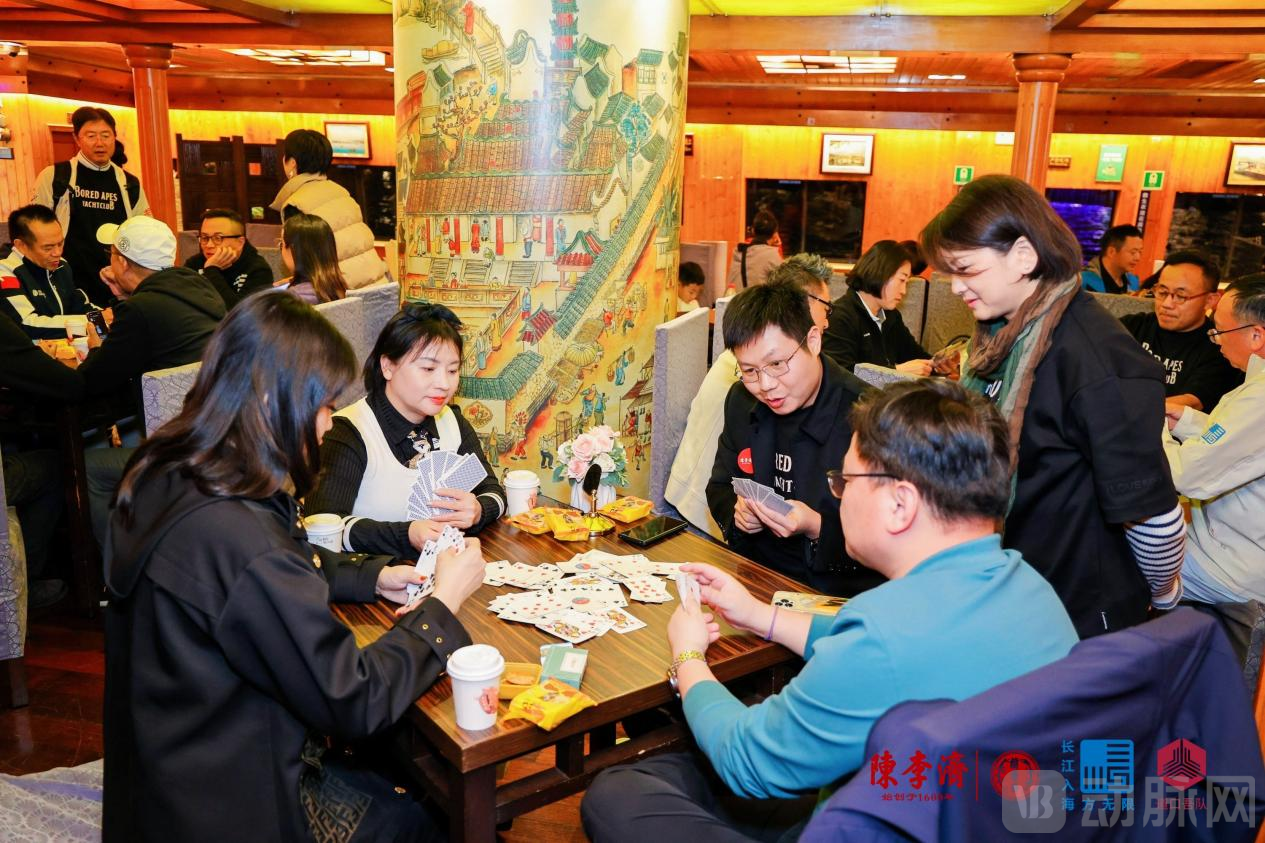 (Zou Guowen, founder of Kaicheng Capital, playing Guandan with industry insiders. Photo provided by the interviewee)
As for the similarities between card games and investment, I believe they share many underlying logics. From a certain perspective, investment is also a “game” in human society—a game of money. AndPlaying Guandan can reflect an individual’s intelligence and personality, as well as a team’s ability to coordinate, collaborate, and allocate resources.Because Guandan emphasizes adaptability, card counting and calculation, and psychological warfare.
There is a saying: “Those who play Guandan well are sharp-minded; those who play it skillfully have clear thinking; those who fear no bombs in Guandan are bold; and those who remain silent after winning possess great shrewdness.” Personal observations suggest that individuals who excel at this game within their social circle generally perform well in their professional endeavors.
However, real investing is far more complex than playing cards; it involves genuine stakes amounting to hundreds of millions in hard cash!Games are simulations; investment requires hands-on practice.
From the perspective of those in the venture capital and private equity community who play Guandan,Some founders occasionally engage in recreational activities, but this is not common.After all, most entrepreneurs devote their energy to core matters such as corporate strategy and governance; they are extremely busy and often unable to complete all their work tasks, whereas playing Guandan is quite time-consuming.
Therefore,“Guan Dan” is, in many respects, one of the games entrepreneurs choose to play during occasional breaks from their busy schedules.Some of our clients are serial entrepreneurs with a track record of success. Having already built up their resources and experience, they tend to prioritize work-life balance when launching new ventures, striking a healthy rhythm between diligence and relaxation. They occasionally play Guandan (a popular Chinese card game) to strengthen interpersonal bonds. Among younger entrepreneurs, some may start learning Guandan to meet social networking needs, but their frequency of play remains relatively low.
At present, the core demographic playing Guandan is primarily within the fundraising community.This shift is linked to current changes in the venture capital and private equity (VC/PE) market. Previously, the market was dominated by US dollar-denominated limited partners (LPs), who favored Texas Hold’em—a game perceived as “upscale” and sophisticated. Today, however, state-owned capital and corporate venture capital (CVC) firms have become the main players. Guandan, a card game that is easy to learn and carries a more “down-to-earth” image, has gained popularity. Of course, Guandan is not the only leisure activity; board games and mahjong are also available, but they attract far fewer participants compared to Guandan.
It is precisely this shift in the LP structure from a US dollar-dominated model to an RMB-dominated one that has led to significant changes in fundraising models:In the past, fundraising involved drinking red wine, playing Texas Hold’em, and speaking English; now, it entails drinking baijiu, playing Guandan, and speaking local dialects.
In other words, the operational model of the entire venture capital and private equity community is increasingly aligning with the rules of conduct prevalent within China’s state-owned sector. Moreover, as fundraising pressures intensify, the trend of “all-hands fundraising” among investment firms is gaining momentum, further fueling the spread and popularity of Guandan.
Look Beyond the Surface to the Essence. Guandan is, in fact, a form of entrepreneurial socializing, and entrepreneurship itself is a continuous process of building friendships.In this process, entrepreneurs must clearly recognize one thing: on the entrepreneurial journey, it is essential to continuously attract a diverse network of allies, inspiring them with genuine interest and motivation to help you achieve your goals. A thousand friends are too few; even one enemy is too many.
Therefore, the founder's social skills constitute a significant advantage: only by gaining broader personal recognition can one secure further endorsement of their work, thereby fostering collaborative progress.
On the other hand,A company's core competitiveness should be built on its ability to better meet customer needs and create unique barriers, rather than relying solely on entrepreneurial networking.For instance, although I greatly enjoy playing Guandan, it is unrealistic to devote the majority of my time to mastering card-playing techniques. Instead, I must remain focused on client visits, resolving transactional issues, and engaging in continuous learning and reflection.
Overall, gaming is merely a tool for strengthening interpersonal bonds on certain special occasions. Similarly, while we give extra credit to founders with strong social skills, we also have reservations about those who are overly extroverted.
Because true entrepreneurial networking is about attracting more people to join you on your journey and ensuring that everyone who walks alongside you reaps rewards. I believe the phrase “Doing what you love with people you love, and making it our shared venture” more accurately captures the essence of entrepreneurship.
Second Speaker:
Li Zhi, Vice President of Investment at a VC Firm
I have been playing Guandan for over six years, making me a seasoned enthusiast. Whenever my work schedule permits, I meet up with friends offline to play and socialize.
It’s hard to recall exactly when Guandan became popular in the venture capital and private equity circles. ButOur organization first introduced Guandan to the team during a team-building event in early 2023. Since then, we have occasionally organized games, and it has become a must-know game for everyone., it's just that everyone's card-playing skills vary in proficiency。

(Posters and news coverage of Guandan tournaments in the venture capital community. Image sources: interviewees, internet)
Apart from playing Guandan more frequently within my private circle of friends and at my workplace, I actually play it quite rarely with LPs or entrepreneurs. Previously, the founder of a certain institution remarked in a stand-up comedy routine, “I learned to drink to win projects, and I learned to play Guandan to raise capital.” This is true, but not as exaggerated as some media outlets later portrayed it—claiming that everyone must play Guandan to socialize effectively.
However, the fact remains that a large number of GPs are learning to play Guandan. After all, fundraising is currently difficult,To build closer ties with state-owned limited partners (LPs), you need to master this skill. Otherwise, initial interactions may feel dull if you lack shared interests; playing Guandan can help break the ice.
A bit of background: Guandan is a competitive sport officially recognized by the General Administration of Sport of China, which explains its popularity among leaders in state-owned enterprises and why employees in such organizations are keen on playing it.
From the perspective of investors and entrepreneurs, playing Guandan is not a mandatory activity. However, as this card game has gained significant popularity—much like media outlets chasing trending topics—we have also adapted to the trend. When engaging with project founders, we often arrange casual games to facilitate informal conversations. Consequently, the frequency of playing Guandan has risen sharply, now approaching that of Texas Hold'em.
Generally, people rarely discuss investment matters while playing cards, butDuring a game of Guandan, an entrepreneur’s conduct often serves as a key factor influencing whether investors will pursue the project further and decide on investment.
To illustrate with a brief example, there was a medical device company (whose name will remain undisclosed). Late last year, through the introduction of a financial advisor (FA), we met with its founding team. During a break before dinner, we spent about an hour playing Guandan, a popular Chinese card game. Throughout the game, the founder exhibited significant personality flaws: he was impatient, wore his emotions on his sleeve, and hesitated excessively when making moves. By the end of the game, the atmosphere had become quite unpleasant. Following our due diligence, we subsequently downgraded the priority of further investment evaluation for this company.
Why do we do this? To put it bluntly, investors’ money does not come easily. General Partners (GPs) raise funds from Limited Partners (LPs), and we are accountable to our LPs. No matter how promising a startup may appear, its management team, especiallyAs the helmsman, a founder who is prone to irritability and indecisiveness can easily make fatal mistakes during the company’s development."Character is revealed through card play; conduct is reflected in drinking habits." This holds considerable truth.
Entrepreneurs with a strong reputation are sure to gain favor from investors and receive greater attention when seeking financing.We have always believed that people are the soul of an enterprise, and investment is essentially an investment in people. If the founder is exceptional, the company will demonstrate resilience even when its sector faces severe storms, much like New Oriental’s successful pivot from education and training to live-stream e-commerce—a transformation inextricably linked to Yu Minhong. In the field of medical innovation, where difficulties are greater and challenges more arduous, it is even more critical for founders to possess a steady and composed character.
However, investment is a serious matter; one cannot invest in someone simply because they display good sportsmanship. It is merely a plus factor, so the role of games like Guandan and Texas Hold'em should not be mythologized.For investors, the ultimate decision to pull the trigger on an investment hinges on the innovativeness and commercial value of the startup project, as well as the overall capabilities of its team.
Third Narrator:
Founder of Fumilei, Xia Yuqing
Guandan originated in Huai’an. My hometown is Yancheng, which is quite close to Huai’an—approximately 100 kilometers away—so I am very familiar with Guandan. From what I recall, the game suddenly emerged around 2008–2009. At that time, having just completed the National College Entrance Examination (Gaokao), I learned how to play Guandan through friends.
In terms of gameplay, Guandan is primarily a recreational card game played by four participants forming two partnerships. In Jiangsu Province, Dou Dizhu (Fight the Landlord) was traditionally the preferred game; however, the local variant typically uses two decks and involves four players, unlike the version in Northeast China, which uses a single deck and three players. Guandan can be seen as an evolution of Dou Dizhu, incorporating additional rules.
Since Guandan became popular in Jiangsu, whether for studying or working, every year when returning home for the Spring Festival, relatives, friends, and classmates would occasionally gather to play it.
Interestingly,Around 2022, people outside Jiangsu province also began playing Guandan. Unexpectedly, it has now surged in popularity across China, becoming a topic of everyday conversation, with an increasing number of participants in the venture capital and investment community.
From my observation, there are more investors who play Guandan. This may be because Guandan shares similarities with investment: it is a two-person team game that emphasizes coordination, often requiring players to observe their opponents and the overall situation, involving a certain degree of strategic consideration. This differs from Mahjong, which is essentially an individual game with minimal need for teamwork.
Additionally, playing Guandan can reveal quite a bit about a person, including their judgment of the game and their analysis of the overall situation.
However, few investors usually join me for Guandan card games, as the startup journey leaves little time for such leisure. When we do play, it is typically a casual session of a few hands during the half-hour before dinner, serving as an opportunity to chat.
"In the industry, there are indeed more and more Guandan competitions now.", for instance, the Suzhou Medical Device Industry Association recently held one. Other associations have also organized similar events; for example, my alma mater, the Yancheng High School Alumni Association, hosted a Guandan tournament in Shanghai.
As for whether Guandan can serve as an icebreaker for business interactions, there are no signs of this yet. Our initial contact with clients primarily occurs at various industry events and exhibitions, as well as through WeChat Moments. Even during client visits, there have been no instances of arranging Guandan games.
In my opinion,Playing Guandan is, in essence, a form of communication. The very act of sitting down to play the game with stakeholders from across the industry demonstrates harmonious relationships and a willingness to maintain them.
Over the years of entrepreneurship, certain phenomena have frequently emerged around us. For instance, some founders experience a rift with their shareholders, unsure of how to communicate openly for fear that expressing their views might lead to disagreements and escalate conflicts. In reality, such concerns are unnecessary, becauseInvestment firms are putting tens of millions of yuan in real money to support your growth; they undoubtedly want you to succeed, as their returns depend on the company’s strong performance.
Therefore, I believe it is essential to maintain open and candid communication with investors. The challenges your company faces are common across the industry; investment institutions, having extensive experience with such scenarios, can often provide pertinent advice and support, such as assisting with management upgrades and personnel optimization.
Therefore, it is advisable to engage in more offline interactions with investors, occasionally enjoying recreational activities such as Guandan (a popular Chinese card game), while discussing industry trends and providing an authentic overview of the company. Only through internal harmony and efficient communication can a company achieve robust development.
Especially in the current market environment, where the frenzy of venture capital and startup investment has subsided, it is crucial to first build internal consensus and instill confidence in shareholders regarding the management team. Only then can all parties focus on collaborating to solve problems when difficulties arise, rather than engaging in mutual blame.
For instance, as a startup, Fumilei has positioned itself as a domestic high-end platform for medical aesthetic devices. This is not an easy path; commercialization has only just begun, and the company will gradually scale up its commercial operations this year. Inevitably, the company will encounter certain challenges during this process, but we will maintain strong relationships with our shareholders and investors through full communication and ongoing dialogue.
Beyond investors, it is equally important to be honest with clients. Clearly and candidly articulate what your company can do and the specific value it can deliver. Only then will clients trust you, choose your services, and enable your company to achieve sustainable growth.
Furthermore, in collaborating with the government, enterprises should offer support without causing disruption. Companies must focus on their core responsibilities and operate in compliance with regulations, rather than seeking undue closeness to government officials or attempting to find shortcuts through questionable means. Such practices are not sustainable in the long run.
In summary, entrepreneurial networking is crucial. Occasionally playing Guandan to strengthen relationships with industry investors, upstream and downstream partners, and clients can be quite beneficial. However, entrepreneurship is not for oneself but for the company, shareholders, and employees; therefore,Entrepreneurs must identify their unique value proposition and engage with sincerity in social interactions, so that others will be willing to support them.
It’s like playing Guandan; why do players form teams of two?
Because the core of the game is team-based combat, not individual showboating!
I. Who in the Medical Venture Capital Circle is Playing Guandan?
· ChinaA certainFA Partner: Companies that are genuinely focused on business operations rarely play Guandan. We more frequently play Guandan with industry professionals who have state-owned enterprise backgrounds, as most companies do not interact with them as often.
· Investment Director of an Investment Group: Guandan is a game more commonly played by medical device companies and investors. In our pharmaceutical investments, we rarely even share meals with portfolio companies, let alone play Guandan together. Why? Because the founders are almost all overseas returnees who do not subscribe to dining-table culture.
· CEO of a digital health startup: Before starting my business, I barely knew how to play cards, except for Dou Dizhu. After becoming an entrepreneur, I noticed that many investors enjoy card games. To avoid awkwardness during occasional social gatherings, I learned to play along so that we wouldn’t feel bored when spending time together. The types of card games played have indeed changed. Previously, we would play Texas Hold’em before meals when meeting with our investors. Starting in the second half of last year, everyone began switching to Guandan. Currently, many entrepreneurs around me have learned Guandan, but actual get-togethers to play are still infrequent.
II. When to Play Guandan?
· Vice President of Investment at a Healthcare Fund: I first played Guandan eight years ago. At that time, I was working in the marketing department of my former employer. Since I frequently traveled to Jiangsu to meet clients, who were avid players of the game, I learned how to play. After I transitioned away from business development, my visits to Jiangsu became infrequent, so I rarely played Guandan and eventually forgot the rules. The last time I played was during our company’s team-building event last year, where I relearned the game as my colleagues were playing.
· Co-founder of a medical device company: Opportunities to play Guandan are actually quite limited within the industry. We generally only play occasionally during company team-building events or gatherings with investors. Additionally, we receive invitations to Guandan tournaments organized by certain industry associations, and our management team decides whether to participate based on their actual work schedules.
· An investor who has been in the industry for about two years: “I previously worked at a media outlet and didn’t play cards much. Two years ago, I joined my current firm, which gave me more opportunities to play. In mid-last year, I learned both Texas Hold’em and Guandan (a popular Chinese card game). I now often play with industry peers during meetings, and just last month, I received several invitations to Guandan games in Beijing.”
· A partner at a USD-denominated fund: When gathering with founders of our portfolio companies, we occasionally play Guandan, but more often than not, we play Texas Hold’em. Although it is jokingly said in the industry that “being good at Guandan indicates sharp intellect,” investors do indeed favor smarter entrepreneurs. This has made Guandan one of the games used during investment due diligence to observe certain traits of the founding teams of target companies.
3. How Should We View Playing Guandan During the Entrepreneurship and Investment Process?
· A Vice President at a Certain CVC: When playing Guandan, moderation is key. Entrepreneurship is inherently demanding, requiring founders to focus on their core business rather than squandering time on socializing or gaming. We have often observed executives in startup teams frequently playing Honor of Kings, which raises concerns about “neglecting their duties” and significantly damages their professional image.
· Co-founder of a medical device company: Moderation is key in any game. Entrepreneurship is an exceptionally energy-draining endeavor; occasionally playing Guandan (a popular Chinese card game) is perfectly fine and can help strengthen interpersonal communication. However, entrepreneurs must not mistake Guandan for a bridge to communicate with investors. I believe that investors will not invest capital or resources in you simply because you are skilled at the game.
· A venture capital investment manager based in Beijing: “There are quite a few people in the venture capital and startup community who play Guandan (a popular Chinese card game). It’s indeed an interesting topic. I’m happy to share some casual thoughts, but please do not attribute my name or my firm. Mentioning Guandan carries a somewhat negative connotation, and otherwise, our PR team would ‘kill’ me.”
· A partner at a U.S. dollar fund: Entrepreneurship is entrepreneurship, and Guandan is Guandan; the correlation between the two is not actually that high. It is perfectly plausible that while Guandan is popular now, escape rooms could become the next trend. What matters is that investors maintain close ties and open communication with entrepreneurs, so that all parties can work together with one heart to propel the enterprise to new heights.
(At the interviewee’s request, Li Zhi is a pseudonym.)