

Exclusive Interview with Professor Huang Yinghui of Yinghui Medicine: Emphasizing Direct Oncolytic Activity to Restore the True Nature of Oncolytic Viruses

CG Oncology
Oncolytic Immunotherapy Developer
In early 2024, oncolytic virus company CG Oncology became the first biotech firm to go public on Nasdaq that year, with its stock price surging 96% on the first day of trading and its market capitalization reaching $2.25 billion.A key factor in garnering investor favor was the data presented at the 2023 American Urological Association (AUA) Annual Meeting for CG Oncology’s Phase III monotherapy candidate, CG0070 (a genetically modified adenovirus type 5): among 66 patients, 75.5% of those evaluable for efficacy achieved complete response (CR) at any time point.
Oncolytic Virus (OV), a class of natural or recombinant viruses that selectively infect and kill tumor cells without damaging normal cells, possesses specific replication capabilities and stimulates the body to generate an anti-tumor immune response.
From the discovery of the oncolytic mechanism of viruses a century ago to the launch of four products in the early 21st century, which subsequently withdrew from the market due to efficacy or commercialization challenges, oncolytic viruses have made a sensational debut only to endure a long period of anticipation. Quietly gaining momentum, oncolytic virus candidates are progressively entering clinical trials, with high expectations placed on subsequent industrial and market development. In February 2023, the Center for Drug Evaluation (CDE) of the National Medical Products Administration (NMPA) issued the Technical Guidelines for Pharmaceutical Research and Evaluation of Oncolytic Virus Products (Trial), providing clear standards and guidance for the pharmaceutical research and development, manufacturing, and registration of oncolytic virus products.
“To forge iron, one must be strong oneself! As long as the therapeutic efficacy is sufficiently robust and the oncolytic nature is enhanced, oncolytic virus monotherapy will undoubtedly succeed.” This was stated by Professor Huang Yinghui, Chairman of Suzhou Yinghui Medical Technology Co., Ltd. (hereinafter referred to as “Yinghui Pharma”) and Yinmei Future Pharmaceutical Technology Co., Ltd., in an exclusive interview with VCBeat. Focusing on first-in-class Class I innovative drugs in the field of oncolytic viruses, Yinghui Pharma’s core candidate YH01 has partnered with the Cancer Hospital of the Chinese Academy of Medical Sciences and entered Phase I clinical trials.
During his doctoral studies at the University of Cambridge, Professor Yinghui Huang studied under Nobel Laureate Sir Aaron Klug and Professor Fitzgerald, a Fellow of the Royal Society. He subsequently conducted postdoctoral research at the Scripps Research Institute in the United States under the supervision of Professor Floyd Bloom, former Editor-in-Chief of Science and a member of four U.S. national academies. In 2013, Professor Huang was appointed as a tenured professor at the Torrey Pines Institute for Molecular Studies in California, USA. He has been invited to deliver lectures at the American Association for Cancer Research (AACR) Annual Meeting for seven consecutive years and has served as chair for two international academic conferences.
Having studied and worked in the United Kingdom and the United States for over two decades, Professor Huang Yinghui focuses his research on oncology, virology, and gene therapy, covering areas such as the molecular mechanisms of tumorigenesis, genetic diagnosis, chemotherapy, and biotherapy. He facilitated the implementation of a tumor biomarker project for the early diagnosis of esophageal adenocarcinoma at Cambridge University Science Park. In San Diego’s biotech hub in California, he led an international R&D team spanning China, the United States, and Europe to develop novel technologies for breast cancer treatment, resulting in the development of multiple potent new anticancer drugs. Internationally, he was the first to definitively elucidate the mechanism underlying the bystander effect in cancer biotherapy and developed various gene-based drugs capable of potently killing tumor cells, which have been granted U.S. patents.
In 2014, Professor Huang Yinghui returned to China through a global recruitment process and served as the Dean of the College of Life Science and Bioengineering at Beijing University of Technology, as well as the Director of the Institute of Oncology. He has presided over more than ten funded projects, including those from the U.S. National Institutes of Health (NIH), the U.S. National Science Foundation (NSF), the National Natural Science Foundation of China (NSFC), the Ministry of Science and Technology’s 863 Program, and major scientific and technological breakthrough projects of Beijing Municipality. He has cultivated four transnational biomedical research teams comprising nearly one hundred researchers, including more than 30 PhDs and postdoctoral fellows, three professors, and doctoral supervisors.
In addition, Professor Huang Yinghui possesses a dual background in basic research and clinical practice. As a Chief Physician, he has accumulated profound technical expertise and interdisciplinary knowledge. “After nearly 25 years of research in the fields of oncolytic viruses, gene therapy, and oncology, I came to realize that developing a product that truly benefits patients may hold greater value than publishing academic papers.” In 2018, Professor Huang successively founded Yinmei Future and Yinghui Medicine, assembling a team comprising overseas-returnee scientists as well as R&D and industrialization professionals.
In the interview, Professor Huang Yinghui mentioned that the primary reason for choosing the oncolytic virus track was its inherent advantages—rapid viral replication and broad-spectrum, universal cytotoxic effects.The rapid proliferation and dissemination of tumor cells represent one of the key challenges in overcoming cancer. However, the inherent biological characteristic of viruses to replicate faster than tumor cells enables them to “outrun cancer cells.”
Oncolytic viruses are engineered by genetically modifying naturally occurring viruses with low pathogenicity to create viruses capable of lysing tumors. Oncolytic viruses possess a dual mechanism of action: they can not only deliver genes or immune factors that kill cancer cells, but also directly lyse cancer cells through viral replication. Furthermore, they can modulate the tumor microenvironment and induce systemic anti-tumor immunity.
Professor Huang Yinghui believes that the design of next-generation oncolytic viruses should return to their fundamental oncolytic nature, focusing on domesticating rather than castrating the virus. This approach emphasizes the direct oncolytic capacity of oncolytic viruses over their indirect immunomodulatory effects, highlighting their characteristics as replicative viruses.Oncolytic viruses can kill cancer cells even without carrying any cytokines; the key lies in effective endogenous engineering of the virus.
The qualitative leap from molecules to organisms signifies an exponential increase in the difficulty of endogenous viral engineering.Viral structures are highly compact with high molecular weights, meaning that any modification can have systemic repercussions. Theoretical design, technical accumulation, and practical experience are all indispensable.Professor Huang Yinghui stated that the Yinghui team’s endogenous engineering involves precise modifications at specific sites, with product design focused on enhancing the virus’s inherent replication and oncolytic capabilities while ensuring its targeting specificity for tumor cells.. To this end, the team has attempted to engineer more than 70 viruses.
“This design philosophy stands in stark contrast to previous approaches to oncolytic viruses, which emphasized their capacity to carry immune factors. ‘I dislike engaging in combinatorial exploration, nor do I follow trends by incorporating popular elements into my products,’ said Professor Huang Yinghui. ‘My design logic is akin to moving stones: all objectives are clearly focused on enhancing anti-cancer efficacy. Therefore, I concentrate on elucidating the mechanisms by which viruses attack and kill cancer cells. Along this path, numerous bottlenecks and obstacles may arise, and I strive to remove them one by one.’”
Guided by the philosophy of returning to the essential nature of oncolytic viruses, Yinghui Medical has established its core OCDP™ design platform and currently maintains a pipeline of five Class I innovative drug candidates. Taking the lead candidate YH01 as an example, it diverges completely from the oncolytic virus design approach represented by T-Vec (a herpes simplex virus carrying exogenous genes), instead employing endogenous engineering of adenoviruses.In late 2023, the FDA approved Adstiladrin, the first adenoviral vector gene therapy for bladder cancer. With 51% of patients achieving complete remission after treatment with Adstiladrin, the superior efficacy of adenoviral vectors was demonstrated.
Professor Huang Yinghui stated,YH01 has demonstrated remarkable efficacy against refractory tumors, such as triple-negative breast cancer and liver cancer, in preclinical studies. The enrolled single-dose, single-injection intratumoral administration regimen has also shown favorable clinical efficacy in humans.
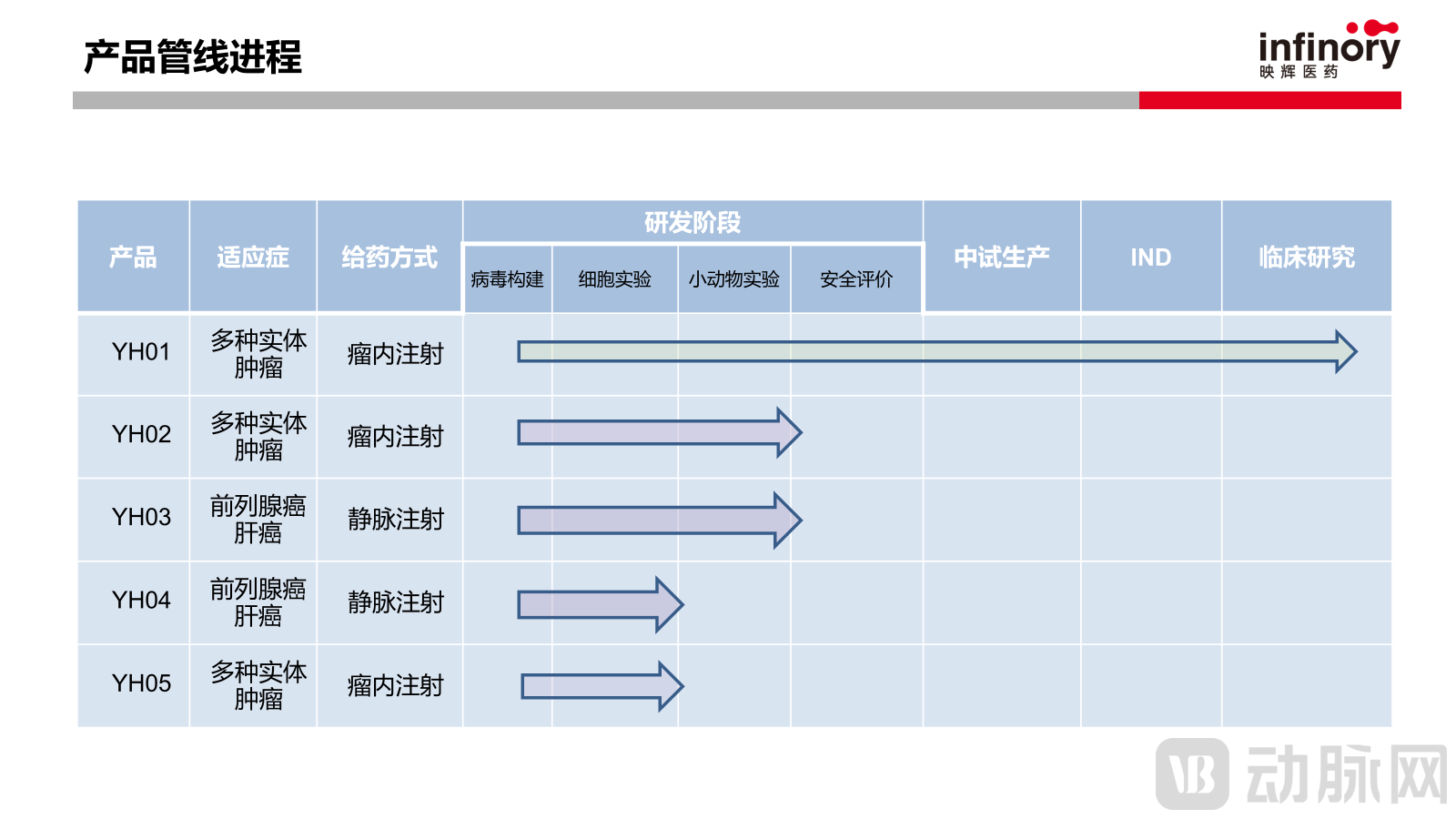
Yinghui Medical possesses both intratumoral injection and intravenous administration technology platforms.The diversification of administration routes allows for the selection of more effective delivery methods at different time points in clinical practice, based on the location and characteristics of the tumor.
In addition to design and R&D, industrialization processes also have a crucial impact on the efficacy of oncolytic viruses. Currently, Yinghui Medical has established a full-chain R&D system covering product design, pharmacology and efficacy, and process development. This system includes platforms for druggability evaluation, serum-free suspension culture, one-step purification, and GMP-compliant industrialization technologies, enabling the production of clinical-grade products. The overall recovery rate across the entire production process exceeds 30%, with active virus yield reaching 70% and purity exceeding 99%.
Over the past decade, immune system activation therapies have revolutionized the field of cancer treatment. However, limited indications, a narrow patient population, and complex administration routes have left substantial clinical needs largely unmet. In the world’s largest pharmaceutical market, oncology treatment still awaits broad-spectrum, universal, and cost-controllable therapeutics.
Tracing back to its origins, the inherent replicative capacity and broad spectrum of oncolytic viruses undoubtedly position them as therapeutic regimens with high efficacy potential. Furthermore, their dual immune-inducing mechanism—directly infecting and lysing tumor cells while indirectly remodeling the tumor microenvironment and stimulating immune responses—offers expanded possibilities for combination therapies.
Nevertheless, before further exploration can take place, the primary hurdle facing oncolytic viruses remains demonstrating efficacy as monotherapies. Professor Huang Yinghui stated, “There are voices within the industry suggesting that oncolytic viruses lack sufficient efficacy and must be used in combination therapies to succeed. This view is incorrect. While combination therapies may serve to expand indications as an added advantage, the fundamental basis lies in the efficacy of monotherapy. I firmly believe that the monotherapeutic efficacy of oncolytic viruses is robust, as evidenced by the recent complete response rates exceeding 50% achieved by Adstiladrin and CG0070 as monotherapies. If a particular oncolytic virus drug demonstrates suboptimal efficacy, it merely indicates that this specific product has been inadequately developed; such outcomes should not be generalized to imply that the entire oncolytic virus field or therapeutic avenue is flawed. Each company’s product represents only itself; overgeneralization could impair individual judgment and undermine investor confidence. As more monotherapies demonstrate outstanding efficacy, the oncolytic virus sector will return to its proper trajectory and usher in the next wave of growth.”
Amid the capital winter and increasingly stringent listing requirements, the biopharmaceutical sector, including the oncolytic virus field, has faced significant headwinds. Nevertheless, Professor Huang Yinghui believes that companies must remain true to their original mission, focusing on technological innovation and therapeutic efficacy. He is confident that neither the government nor investors will overlook technologies and products with genuine breakthroughs. “The current external environment poses challenges to highly commoditized ‘me-too’ and ‘me-better’ products, but it presents an opportunity for ‘first-in-class’ products backed by foundational, hard-core technologies. The state’s recent repeated emphasis on ‘new quality productive forces’ sends a clear signal. I am determined to stay the course in the oncolytic virus track. The success of one or two products does not guarantee success upon entering a particular field, just as the failure of a few products does not mean the field itself is untenable. I hope to see a flourishing diversity of innovations in the oncolytic virus space. Tenacious perseverance can conquer any peak in the world; persistence is victory.”
This moment may not be far off.
In late 2023, based on interim Phase III clinical data demonstrating a complete response rate of 75.7%, CG0070 was granted both Fast Track designation and Breakthrough Therapy designation by the FDA for the treatment of high-risk BCG-unresponsive non-muscle-invasive bladder cancer carcinoma in situ, with or without associated Ta or T1 tumors. Additionally, Replimune is expected to submit a marketing application in the second half of 2024 for its oncolytic virus therapy RP1 for the treatment of melanoma after prior PD-1 inhibitor therapy.