

Aisight Health Targets Primary Eye Care with Launch of Multiple Ophthalmic Devices for Dry Eye and Vision Correction
China has the largest population of eye disease patients globally. According to data from the National Health Commission, there are over 700 million people with myopia, and the prevalence of myopia among adolescents ranks first in the world. Dry eye disease is the most common ophthalmic condition after myopia.The prevalence of dry eye disease in China is approximately 21%–30%.[6], The number of dry eye disease patients is approximately 436 million.(approximately 31.4% of cases were symptomatic)[7]). Driven by factors such as population aging, poor eye-use habits, and prolonged use of electronic devices, the number of patients with eye diseases in China continues to grow.
The vast clinical demand is driving rapid growth in China’s ophthalmic device market. According to Frost & Sullivan, the market size of China’s ophthalmic medical devices exceeded RMB 20 billion in 2023 (excluding contact lenses, orthokeratology lenses, etc.), while the ophthalmic services market surpassed RMB 100 billion in the same year. Meanwhile, consumer-oriented electronic products are gradually entering the market, covering the entire process of eye disease management: prevention, screening, diagnosis, treatment, and rehabilitation.
Due to the large number of ophthalmic patients in China, uneven distribution of medical resources between doctors and patients, and restrictions on product access imposed by centralized procurement in major hospitals, many ophthalmic patients choose to seek medical care nearby. Primary healthcare institutions and home-based care have become the “main force,” prompting ophthalmic devices and products to target the primary care market, with R&D focused on intelligence, portability, and cost-effectiveness.
Guided by the primary eye care needs at the grassroots level, Aisiya develops medical devices and electronic products in the fields of optometry and dry eye diagnosis and treatment. The company’s product portfolio includes meibomian gland therapy devices for dry eye treatment, corneal cross-linking systems for optometric therapy, ocular health monitors for myopia prevention and control, and low-vision aids for individuals with low vision. Multiple products are scheduled to be launched sequentially starting this year.
One in four Chinese people suffers from dry eye disease. Of these cases, 86% are caused by meibomian gland dysfunction (MGD).[8]. According to the "Chinese Expert Consensus on Meibomian Gland Dysfunction: Definition and Classification (2023)"[4], the global prevalence of meibomian gland dysfunction ranges from 21.2% to 71.0%[1,4], the prevalence rate among individuals aged 40 and above in China ranges from 54.7% to 68.3%.[1-5]. The meibomian glands are responsible for secreting lipids, which constitute the lipid layer of the tear film, locking in moisture to keep the eyes lubricated. Meibomian gland dysfunction is a common ocular surface disease that leads to abnormal meibum secretion and reduced tear film stability, causing symptoms such as dry eyes, eye pain, and blepharitis.
The "2020 Chinese Expert Consensus on Dry Eye" proposes that non-pharmacological treatment is the foundational therapy for dry eye disease, which is particularly crucial for lipid abnormality-related dry eye. Meibomian gland massage is a primary and effective physical therapy for meibomian gland dysfunction. It is typically combined with eyelid cleansing and warm compresses to open blocked meibomian gland orifices and melt congealed abnormal meibum, followed by massage to express the meibum. Currently, in clinical practice, especially in primary care outpatient settings, meibomian gland massage is performed manually by physicians or nurses, making standardization difficult; improper technique can also easily cause damage to the meibomian glands.
In recent years, imported meibomian gland treatment devices have been launched in the Chinese market. These devices enable more standardized and automated meibomian gland massage through mechanized operation. The products have received approval from both the U.S. Food and Drug Administration (FDA) and the National Medical Products Administration (NMPA), and their clinical value has been widely recognized. However, due to the high pricing of imported products and consumables, as well as room for improvement in terms of intelligence level and treatment experience, their market penetration rate in China remains relatively low. To further meet the clinical demand for meibomian gland massage therapy,Aisiya to Launch Desktop and Handheld Meibomian Gland Thermal Pulsation Devices in the Near Future。
The Aisiya desktop meibomian gland thermopulsation device offers high cost-effectiveness and significant operational improvements. It provides comprehensive heating of the upper and lower eyelids from the inner aspect of the meibomian glands, ensuring efficient and rapid treatment while automatically compressing the glands. Physicians can customize treatment modes based on individual patient conditions.The desktop unit enables fully automated treatment by independently performing heating and compression steps, thereby improving treatment efficiency.. In addition, the product features a simple user interface, a short learning curve, and the ability to record treatment data, facilitating patient tracking and management. Meanwhile, Aisiya's semi-automatedHandheld Meibomian Gland Thermal Pulsation Therapy Device。
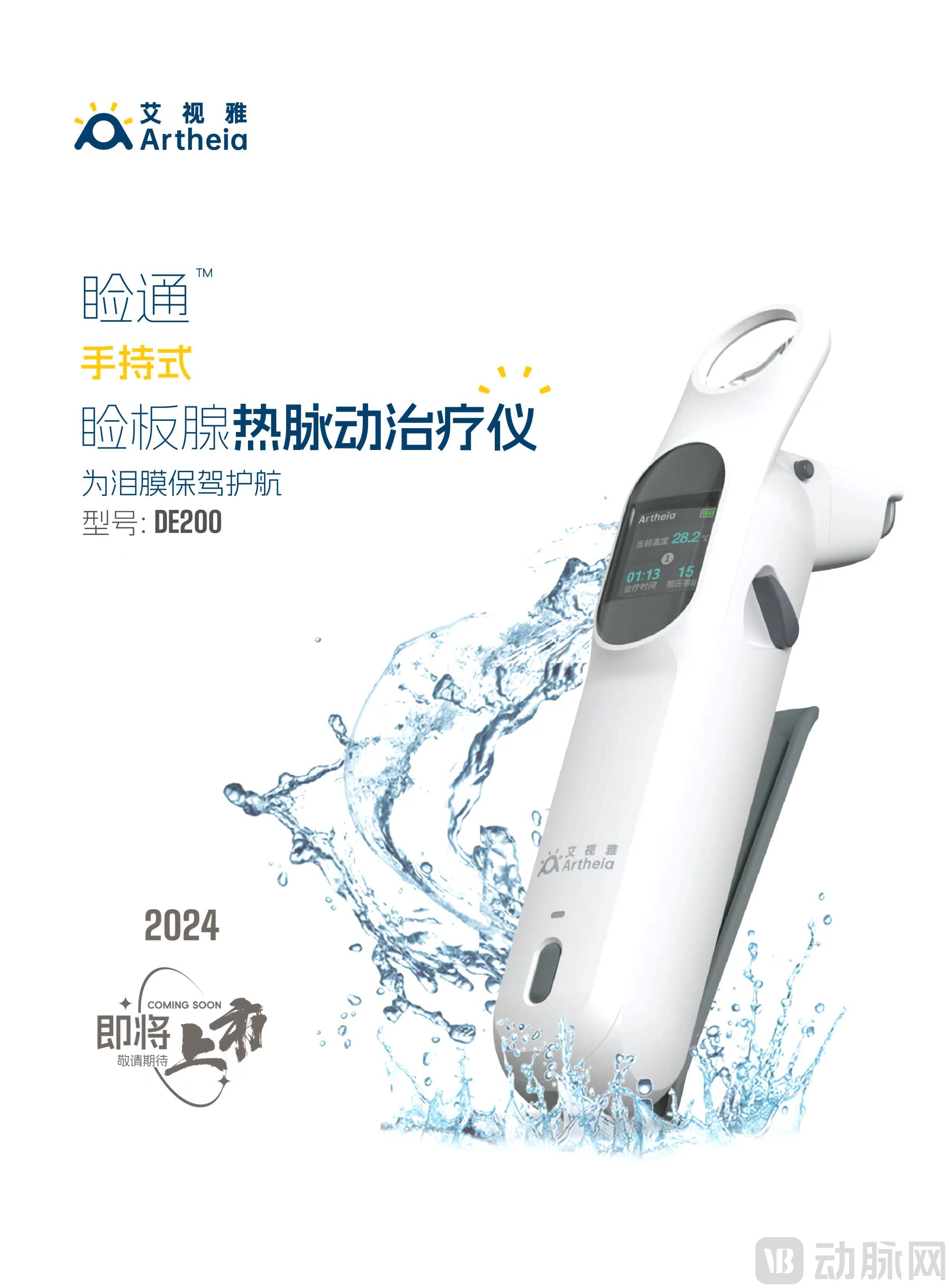
Jiantong Handheld Meibomian Gland Thermal Pulsation Therapy Device
Through its product portfolio of “desktop and handheld” meibomian gland treatment devices, Aisiya can maximize coverage of its target customers, ranging from top-tier tertiary hospitals to community hospitals, clinics, and optometry centers. Meanwhile, leveraging China’s local intelligent manufacturing advantages, the product pricing and cost of use are significantly lower than those of imported products.
Yu Lin, Co-founder and Deputy General Manager of the company, revealed: This year, Aisiya will focus on developing two dry eye treatment devices.The handheld meibomian gland thermopulsation therapy device is expected to obtain its registration certificate by mid-year, while the desktop model will secure certification in the second half of the year.The company has achieved independent R&D and manufacturing, establishing a stable supply chain. In terms of its marketization strategy, Aisiya “focuses on” the primary care market, promoting product penetration into grassroots levels to mitigate the impact of centralized volume-based procurement, while also setting benchmarks in top-tier tertiary hospitals to enhance authoritative recognition of its products. Furthermore, following domestic market launch, the company will pursue overseas registration for its two therapeutic devices to facilitate global expansion, and increase R&D investment to continuously develop new products for dry eye diagnosis and treatment.
In the optometry sector, Aisiya is developing a corneal cross-linking system for the treatment of conditions such as keratoconus. According to the "Chinese Expert Consensus on the Diagnosis and Treatment of Keratoconus (2019)," the global prevalence of keratoconus is approximately 0.05%–0.23%.[9], it predominantly occurs during adolescence, and the younger the age of onset, the more rapid the disease progression. Keratoconus often induces high irregular myopia, astigmatism, and varying degrees of visual impairment, making it one of the significant blinding eye diseases.
Corneal collagen cross-linking can control or slow the progression of corneal diseases such as keratoconus. After years of development, its safety and efficacy have been clinically confirmed, making it the preferred surgical treatment for keratoconus. The procedure uses riboflavin as a photosensitizer and applies ultraviolet light of a specific wavelength to locally irradiate the cornea, stimulating cross-linking reactions in collagen fibers. This improves the biomechanical properties of the cornea, effectively controlling disease progression and stabilizing vision. Traditional methods are limited by the penetration rate of riboflavin, resulting in prolonged preparation time and inconvenient operation, which leads to lower patient tolerance. Patient experience and treatment outcomes remain to be improved.
Aisiya’s corneal collagen cross-linking system can deliver precise ultraviolet (UV) irradiation tailored to each patient’s specific condition. Jiang Haotian, founder of Aisiya, explained, “The human cornea is extremely thin, with a central thickness of only about 0.5 mm, making it highly sensitive to energy exposure. Therefore, energy dosage must be precisely controlled. Additionally, UV light must not extend beyond the corneal area, requiring precise control over the diameter of the energy beam.” The engineering development of corneal collagen cross-linking systems presents certain barriers, involving multiple key technologies such as active energy delivery, displacement sensing, and precision control.
Currently, only two imported corneal cross-linking systems have been approved in the Chinese market, with no domestically produced products available.Meanwhile, existing products require improvement in mechanical operational precision, necessitating physicians to adjust patient positioning during surgery to achieve precise UV irradiation. In contrast, Aisiya has achieved breakthroughs in core technologies and design optimization. Its corneal cross-linking system can accurately and stably output UV power and spot size. Furthermore, the system features an intelligent design that reduces manual operations, thereby shortening the learning curve for physicians.The product is expected to obtain the Class III medical device registration certificate within two years.。
Given the critical role of riboflavin in corneal cross-linking and the current pain point of slow product penetration, Aisiya has not only enhanced the performance of the corneal cross-linking system, but alsoSigned a cooperation agreement with a U.S. pharmaceutical company to jointly develop the world’s first patented riboflavin eye drops. The company has adopted an innovative molecular structure that effectively shortens the pre-infiltration time of riboflavin eye drops on the corneal epithelium, thereby reducing cross-linking surgery duration and enhancing cross-linking efficacy. This pharmaceutical product will benefit from 20 years of patent protection. Aisiya Health Technology (Suzhou) Co., Ltd. and this pharmaceutical company will engage in an exclusive global partnership to bundle and sell their respective pharmaceutical and medical device products.
In recent years, the indications for corneal cross-linking have been continuously expanding. In addition to treating keratoconus and corneal infections, it can be combined with femtosecond laser myopia surgery to improve treatment outcomes and prognosis. Aisiya’s novel drug-device combination will enter the market strongly, leveraging advantages such as shorter surgical times and better patient experience, thereby driving the expansion of the corneal cross-linking surgery market.
In addition to providing innovative medical devices, Aisiya has also developed several electronic products targeting the challenges in optometry prevention and control, rapidly enriching its product pipeline, expanding corporate influence, and enhancing brand recognition. Taking the soon-to-be-launched Jingling Eye Health Monitor as an example, the productMonitors users' eye usage habits and records data, weighs only 4 grams for unobtrusive wear, and offers a 7-day battery life.This product adheres to authoritative clinical guidelines for myopia prevention and control, providing vibration alerts when poor eye-use habits are detected. Through Aisiya’s independent research, development, and manufacturing, the product achieves a significant price reduction compared to similar competitors while delivering enhanced performance.
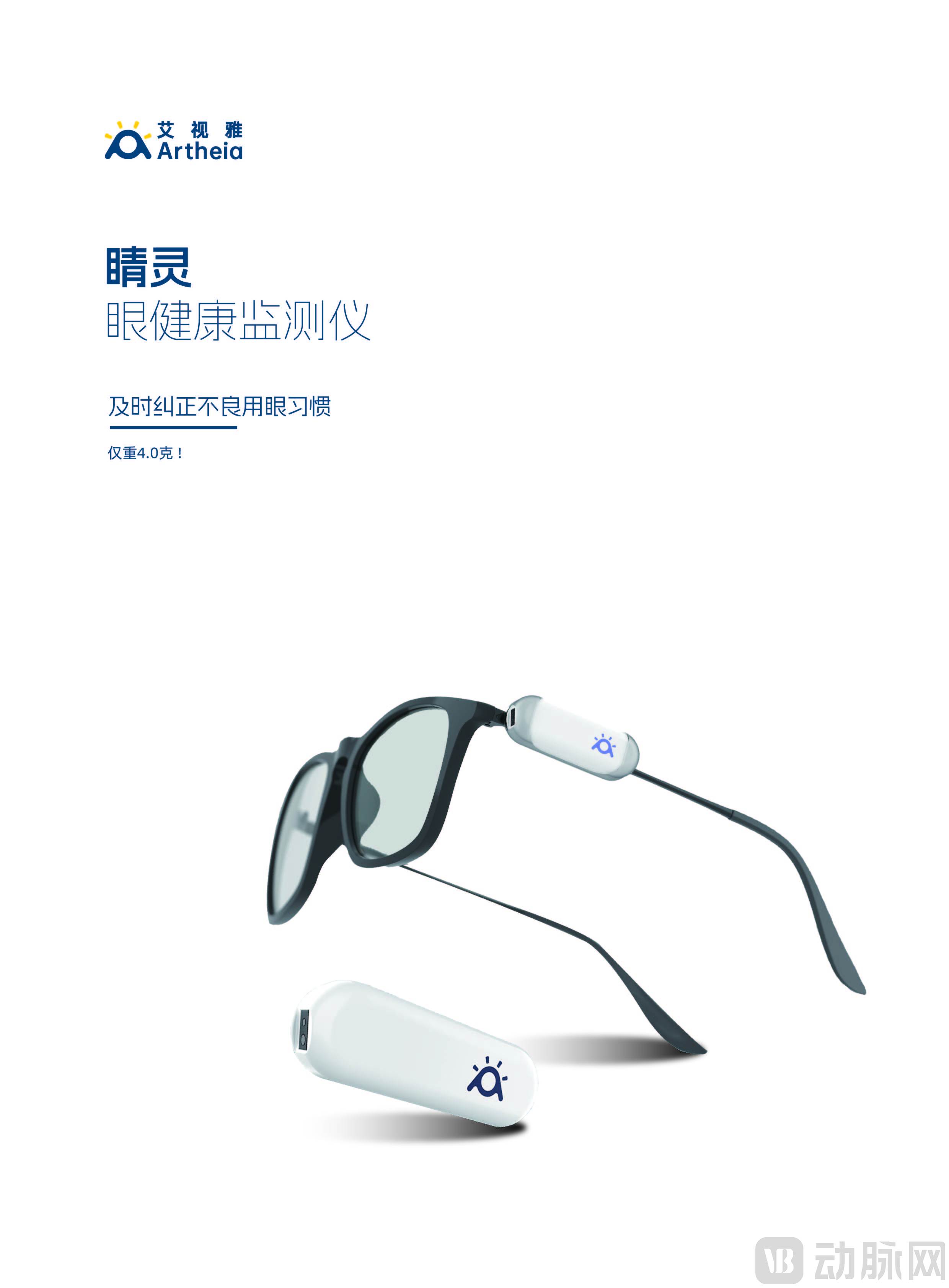
Jingling Eye Health Monitor
In addition, Aisiya alsoDeveloped a visual enhancement device for the 60 million people with low vision, effectively improving visual field defects caused by macular degeneration.. The most common cause of low vision is macular degeneration. Since existing medical technologies struggle to reverse the loss of macular function, interventions that enhance the visual system and improve the quality of life for individuals with low vision have become critical. Visual enhancement devices can capture the portions of the user’s visual field that are impaired via a camera and compensate by overlaying these impaired areas onto the intact visual field through a virtual screen. For low vision caused by other etiologies, six commonly used functional modules have been optimized to address patients’ daily needs in their personal and professional lives, thereby effectively improving the quality of life for those with low vision. Both products will undergo redesign and upgrades in the near future and will be launched sequentially thereafter.
The vision enhancer marked the beginning of Jiang Haotian’s engagement with ophthalmic products and served as one of the catalysts for the establishment of Aisiya.
Jiang Haotian graduated from the University of Rochester in the United States with a degree in Optical Engineering, a program ranked first nationwide. His senior design project focused on developing a low-vision aid. Low vision severely impacts patients’ daily lives and cannot be corrected through conventional treatments such as eyeglasses or surgery. Jiang recalls, “At that time, a professor at a U.S. medical school identified an unmet need and challenged us to leverage optical engineering techniques to improve the quality of life for individuals with low vision. Collaborating closely with clinical professionals, I developed a proof-of-concept prototype, which was subsequently granted a U.S. patent. After multiple iterations, it has now become the most cost-effective product in its category.”
This experience planted a seed in Jiang Haotian’s mind, and over the subsequent seven years, he dedicated himself to the development and industrialization of optometry and ophthalmic devices. After returning to China from the United States, Jiang did not immediately embark on entrepreneurship; instead, he joined an R&D company as the R&D Director of the Ophthalmic Products Department. During his tenure, he observed that, compared with the United States, optometric issues were particularly prominent in China, where a vast population suffers from myopia. Meanwhile, the Chinese government has attached great importance to optometric health, issuing numerous related policies and guidelines, thereby indicating substantial market prospects for the optometry sector.
In 2021, Jiang Haotian co-founded Aisiya with Yu Lin, a senior expert in medical device R&D. With Yu Lin’s extensive experience in frontline R&D management, the two joined forces to drive the development and commercialization of optometry and ophthalmic devices. To date, the company’s R&D team has grown to nearly 30 members, while also attracting seasoned professionals in sales, regulatory affairs, marketing, and management. Furthermore, Aisiya boasts an advisory team composed of clinical experts, scientific researchers, and industry specialists, and has established close collaborations with institutions such as Beijing Tongren Hospital and Shenzhen Eye Hospital. This enables the company to continuously provide solutions tailored to clinical needs and market pain points.
Currently,Aisiya has established three product pipelines for myopia prevention and control, dry eye disease, and corneal cross-linking, with a total of 46 patents applied for and granted (including 4 PCT patents and 29 invention patents).. While breaking through high-end technologies and filling market gaps, Aisiya will closely address the needs of primary healthcare institutions by continuously launching more “grounded” innovative products, while also continuously optimizing and iterating its existing product portfolio. As various products under development are gradually commercialized, Aisiya will continue to expand its sales and marketing team. Within this year, the company will initiate a new round of financing to advance product R&D and regulatory registration, as well as to develop domestic and international markets.
References:
[1] Hassanzadeh S, Varmaghani M, Zarei- Ghanavati S, et al. Global prevalence of meibomian gland dysfunction: a systematic review and meta- analysis[J]. Ocul Immunol Inflamm, 2021, 29(1): 66- 75. DOI: 10.1080/09273948.2020.1755441.
[2] Jie Y, Xu L, Wu YY, et al. Prevalence of dry eye among adult Chinese in the Beijing eye study[J]. Eye (Lond), 2009, 23(3): 688- 693. DOI: 10.1038/sj.eye.6703101.
[3] Hu CL, Wu LP, Zhang Y, et al. Analysis of local characteristics and influencing factors in middle-aged and elderly patients with dry eye disease in Shanghai communities[J]. Int Eye Sci, 2016, 16(9): 1715-1719. DOI: 10.3980/j.issn.1672-5123.2016.9.30.
[4] China Chapter of the Asian Dry Eye Society, Ocular Surface and Tear Film Disease Group of the Ophthalmology Professional Committee of the Cross-Strait Medical and Health Exchange Association, Ocular Surface and Dry Eye Group of the Ophthalmologist Branch of the Chinese Medical Doctor Association. Chinese Expert Consensus on Meibomian Gland Dysfunction: Definition and Classification (2023). Chinese Journal of Ophthalmology, 2023, Vol. 59, No. 4. DOI:10.3760/cma.j.cn112142-20230114-00023
[5] Lin PY, Tsai SY, Cheng CY, et al. Prevalence of dry eye among anelderly Chinese population in Taiwan: the Shihpai eye study[J]. Ophthalmology, 2003, 110(6): 1096- 1101. DOI: 10.1016/S0161- 6420(03)00262- 8
[6] Cornea Group, Ophthalmology Branch, Chinese Medical Association. Expert Consensus on Clinical Diagnosis and Treatment Guidelines for Dry Eye (2013). Chinese Journal of Ophthalmology, January 2013, Vol. 49, No. 1. DOI:10.3760/cma.j.issn.0412-4081.2013.020
[7] Song P, Xia W, Wang M etc. Variations of dry eye disease prevalence by age, sex and geographic characteristics in China: a systematic review and meta-analysis. J Glob Health. 2018 Dec
[8] China Chapter of the Asian Dry Eye Society, Ocular Surface and Tear Film Disease Group of the Ophthalmology Professional Committee of the Cross-Strait Medical and Health Exchange Association, Ocular Surface and Dry Eye Group of the Ophthalmologist Branch of the Chinese Medical Doctor Association. Chinese Expert Consensus on Dry Eye: Definition and Classification (2020)[J]. Chinese Journal of Ophthalmology, 2020, 56(6): 418-422. DOI: 10.3760/cma.j.cn112142-20200316-00190.
[9] Cornea Group, Ophthalmology Branch, Chinese Medical Association. Expert Consensus on the Diagnosis and Treatment of Keratoconus in China (2019)[J]. Chinese Journal of Ophthalmology, 2019,55(12):891-895. DOI:10.3760/cma.j.issn.0412-4081.2019.12.004