

Xieyun Qiyuan Files IPO Prospectus: Building a Specialized Disease Data Alliance to Deliver AI-Powered Precision Medicine Solutions
Precision medicine is a novel healthcare model aimed at personalized care. It accounts for individual differences in genetics, environment, and lifestyle, leveraging omics technologies such as genomics and proteomics, integrating multidimensional biological big data, and applying bioinformatics algorithms to accurately identify disease biomarkers and therapeutic targets, ultimately achieving personalized treatment for specific patients. With the rapid advancement of AI technology, precision medicine has gained new momentum, as the application of AI has effectively enhanced its translational efficiency.
In the ecosystem of precision medicine, clinical testing applications and research translation needs at hospitals are becoming increasingly active.This is not difficult to understand. With the advent of the era of biological big data, the clinical sector possesses the most abundant, complex, and archival-characterized precision medicine data. Correspondingly, development trends such as medical-engineering translation and Laboratory Developed Tests (LDTs) urgently require the full utilization of these resources.
In a broader sense, biosecurity and the lawful and compliant management of biological data have become imperative needs for hospitals.The successive promulgation of regulations such as the Biosecurity Law and the Data Security Law in 2021, the 14th Five-Year Plan for Bioeconomy Development in 2022, and the Detailed Rules for the Implementation of the Regulations on the Management of Human Genetic Resources in 2023 has introduced new requirements for the standardization, management, and filing of biological samples and biological data, while also supporting and encouraging the translation of medical innovations into industrial applications and the development of the bioeconomy.
The critical issue is that such large-scale biological sample data are disordered and insufficient, making them unsuitable for direct application in scientific research and clinical practice. This necessitates specialized platforms with interdisciplinary capabilities in bioinformatics to effectively manage and analyze biological data. Consequently, the BT-IT sector, which integrates biotechnology (BT) and information technology (IT), has emerged.
Beijing Cloudna Technology Co., Ltd. (hereinafter referred to as “Cloudna”) leverages its core competencies in domestically leading, independently developed bioinformatics AI algorithms and BT-IT development capabilities. It provides AI-driven precision medicine solutions for clinical, public health, and research clients, spanning biobanking, clinical cohort management, precision medicine data centers, and clinical decision support systems.CurrentlyHas established over 100 precision medicine data infrastructure and clinical decision support systems in collaboration with more than 80 Grade A tertiary hospitals.
Amid the winter chill of healthcare investment, Cloudna secured two rounds of financing in 2022 and 2023, led by Galileo Capital and Lingyi Capital, respectively. How can we explore the convergent track of BT-IT integration—biological computing? And how can we identify viable commercial pathways for biological computing? VCBeat conducted an exclusive interview with Dr. Zhang Xinlei, CEO and founding member of Cloudna’s founding team.

(With the founding team of Cloudna and Dr. Xinlei Zhang, CEO)
In 2011, Dr. Zhang Xinlei graduated with a degree in Bioinformatics from the Institute of Biophysics, Chinese Academy of Sciences, under the supervision of Professor Jiang Taijiao, a recipient of the National Science Fund for Distinguished Young Scholars. In the same year, he joined the Laboratory of Protein and Peptide Pharmaceuticals as an Assistant Researcher.
In 2015, Professor Jiang Taijiao was appointed as a researcher at the Suzhou Institute of Systems Medicine, Chinese Academy of Medical Sciences. Zhang Xinlei and Professor Jiang co-founded the first industry-academia-research technology transfer enterprise incubated by the institute, focusing on precision diagnosis and treatment of infectious diseases.
Zhang Xinlei introduced, “The idea of starting a business in the field of biological computing emerged during my early research career. We believe that bioinformatics finds its most promising applications in clinical settings, particularly within hospitals where data is highly concentrated. However, in the initial stages, the cost of generating high-throughput sequencing data remained prohibitively high, with most data production reliant on research funding. Hospitals also had an incomplete understanding of data and biobanks, and few undertook the management of precision medicine data resources. Consequently, various conditions failed to meet the data requirements for artificial intelligence in precision medicine. Although our early entrepreneurial efforts focused on the research and development of in vitro diagnostic reagents in the field of infectious diseases, this process allowed us to accumulate valuable entrepreneurial experience and gain insights into the frontline needs of healthcare institutions.”
Amid the prevailing trend of clinical testing becoming increasingly rapid and cost-effective, the cost of acquiring biological data has also decreased, making it more accessible to the general public. This means that hospitals now have the opportunity to collect large volumes of data from a more diverse patient population.By integrating these data with clinical diagnoses, drug efficacy, and socioeconomic impacts through integrated analysis, researchers can investigate disease pathogenesis and identify effective treatment paradigms, thereby providing more robust guidance for clinical practice and drug development, and effectively improving the quality of life for patients.
Over five years of accumulated experience and frontline practice, the founding team has brought together a group of like-minded experts in bioinformatics and artificial intelligence algorithms, including CTO Huang Zechi (Champion of the FDDC 2018 Financial Algorithm Challenge).We have accumulated and built internationally leading capabilities in the original development of bioinformatics algorithms, forming a team of nearly twenty expert advisors specializing in bioinformatics and medical informatics.Independently developed a low-code development framework tailored for the biomedical and healthcare industry, and progressively built multiple BT-IT application platforms.
“Algorithmic capabilities and computing power alone are far from sufficient for the artificial intelligence research required by precision medicine; it must be underpinned by multi-omics data. This imposes stringent requirements on both the volume and quality of data. Therefore, to ensure data validity, efforts must begin at the very source, with rigorous sample management at the point of data origin,” stated Zhang Xinlei.
In traditional hospital information systems, data generation, management, and circulation follow a design pathway centered on clinical diagnosis and treatment processes. Taking the diagnosis and treatment of a single patient as an example, data from each node—including laboratory tests, diagnoses, medication, surgery, and follow-up—are transmitted to the hospital’s information department in the form of data tables. Such data are often characterized by fragmentation and linear, single-path flow, making them difficult to directly apply to translational medical research.
In cloudna’s bio-sample data-centric system design approach, individual clinical diagnosis and treatment data are automatically categorized into multi-dimensional, flexibly integrable data entries—including individual data, sample data, clinical data, daily health data, omics data, and public data. Under this design framework, data are automatically classified and integrated across rich dimensions to form a data matrix ready for direct data mining and analysis. AI technologies are comprehensively embedded throughout the entire lifecycle from data acquisition to application, effectively enhancing data quality and lowering the barrier to utilization.
Furthermore, this data remains unaffected by operational changes at the hospital or departmental level and is directly transferred to entities such as the Hospital’s Center for Precision Medicine Translation and the Biobank, thereby establishing a new data system independent of the hospital’s clinical diagnosis and treatment systems.
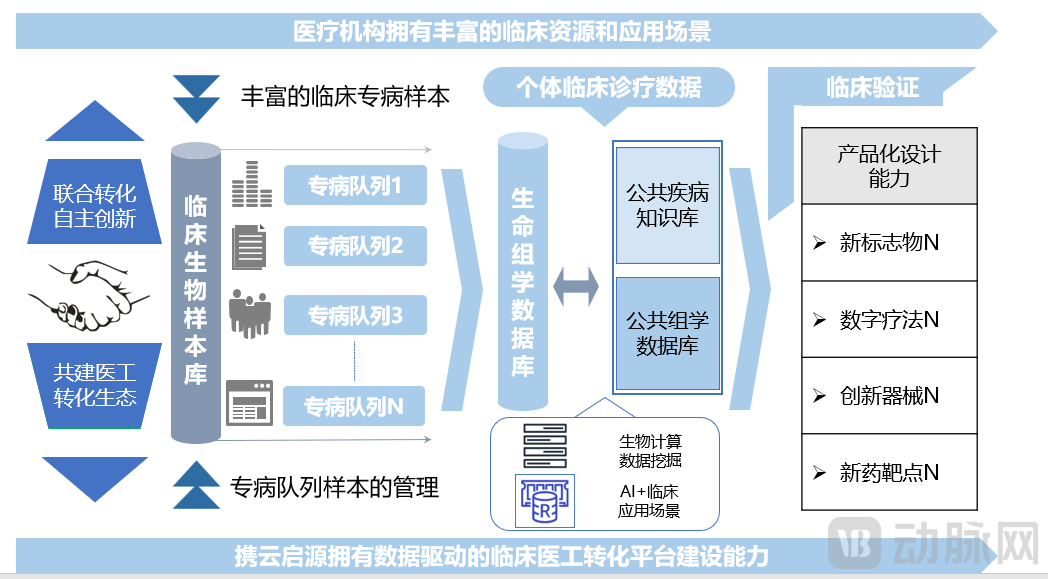
Leveraging this pathway, Cloudna has launched a comprehensive suite of precision medicine products covering the entire lifecycle, including sample management, cohort management, experimental data management, data analysis, mining, and application, while providing integrated solutions for clinical translation of medical innovations. For disease-specific cohorts, population studies require scientifically rigorous design to ensure the completeness of essential data; meanwhile, the experimental management side must maintain strict control over data flow and quality assurance.
Specifically, Cloudna boasts two major product matrices—Shuyuan and Qike—and one extended portal. The Shuyuan product matrix primarily focuses on samples, cohorts, and experiments, offering solutions including biobanks, disease-specific cohort management, and laboratory information management systems (LIMS). The Qike product matrix mainly comprises omics databases, disease-specific knowledge bases, and bioinformatics analysis systems.
It is reported that the two major product matrices share a common underlying low-code framework, enabling seamless integration and coupling. During actual deployment and implementation, product managers perform on-site personalized configurations based on customer requirements, thereby flexibly adapting to diverse business scenarios.
Leveraging public omics data repositories, specialized disease knowledge bases, and its proprietary low-code development framework, Cloudna has established a mature bioinformatics algorithm integration platform and accumulated robust BI-IT development capabilities. It has built over 100 new infrastructure projects for precision medical data at more than 80 Grade A tertiary hospitals, comprehensively supporting clinical biomarker discovery, drug target identification, and digital diagnosis and treatment.
“In our exchanges and collaborations with hospital clients and major IT companies, we have found that the most critical considerations for medical products are whether their design aligns with the most practical clinical or research needs, and whether they demonstrate a high degree of compatibility with clinical specialties,” Zhang Xinlei stated frankly. “At Cloudna, we focus on delivering tangible results. We have steadily accumulated years of R&D capabilities in biological computing, cultivated a team of engineers integrating biotechnology and information technology (BT-IT), and, by serving numerous top-tier clinical medical institutions in recent years, have gradually established substantial competitive barriers in multiple specialized disease areas.”
Since 2022, Cloudna has participated in and completed three precision medicine informatics projects under the Ministry of Science and Technology. In collaboration with Peking Union Medical College Hospital, Chinese PLA General Hospital, China-Japan Friendship Hospital, and Beijing Children’s Hospital, it has co-established sample banks and databases for multiple key specialized diseases, including reproductive aging, thromboembolism, allergic and autoimmune diseases, and childhood autism. Furthermore, Cloudna has built a cross-regional, multi-center alliance for sample and data resources, comprising over 100 member institutions.
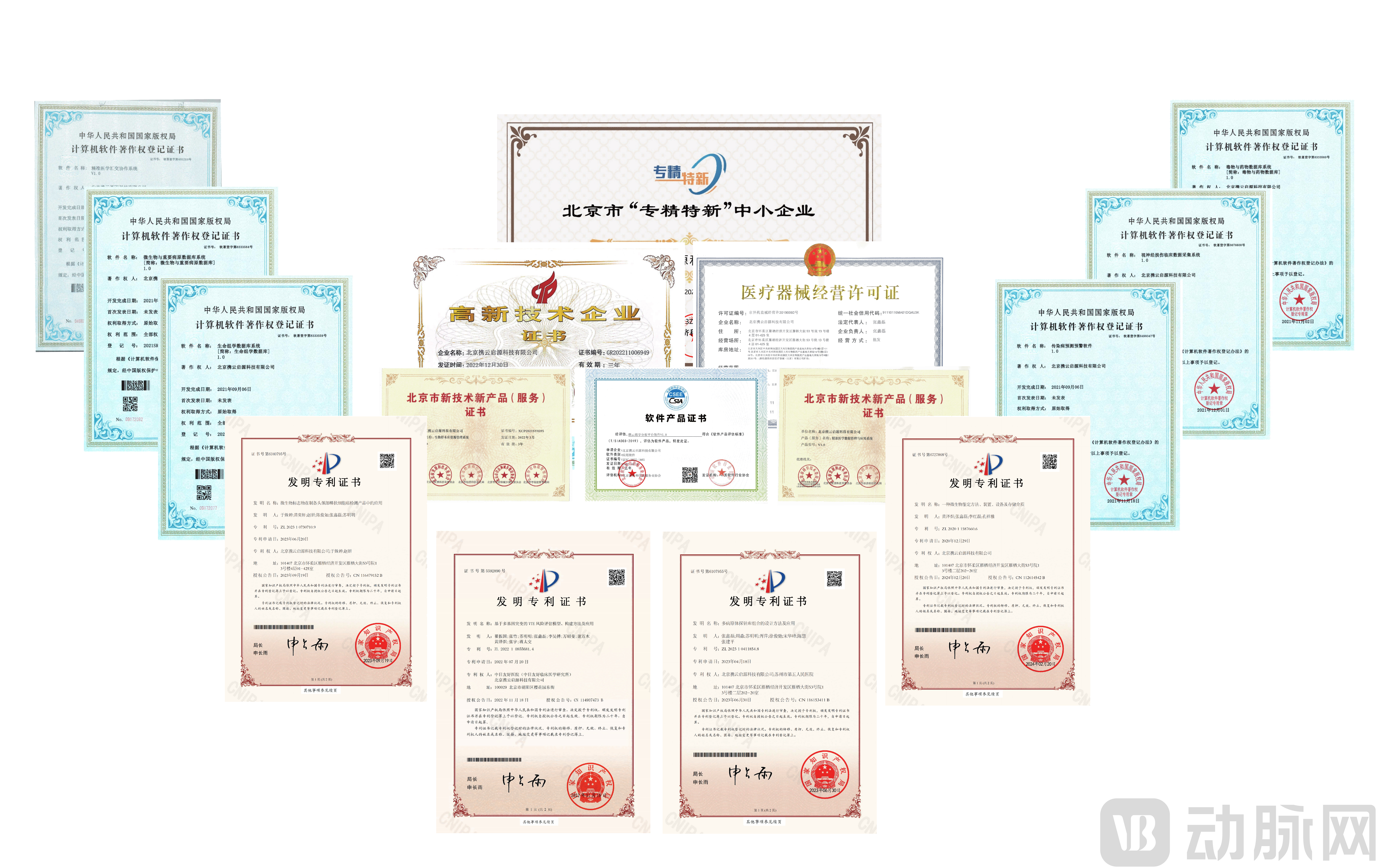
Zhang Xinlei stated, “In our exploration of co-building a multi-regional, multi-center specialized disease sample data system, we have identified a collaborative model centered on joint construction, maintenance, and operation. For instance, we have jointly filed patents for novel biomarkers with several hospital partners, sharing intellectual property rights in agreed proportions. We are also currently advancing the licensed authorization of certain patents. This reflects our vision to establish a data-driven ecosystem for medical-engineering translation.”
During the interview, Zhang Xinlei repeatedly mentioned the concept of “comprehensive market”—Cloudna leverages digital and intelligent management of biological sample resources, integrates multi-omics data, and utilizes a comprehensive bioalgorithm integration platform alongside AI technologies to achieve precise implementation across various commercial scenarios, including precision medicine, smart disease control and prevention, and large-scale BT-IT scientific computing infrastructure.
Therefore, Cloudna’s client portfolio naturally encompasses hospitals requiring precision medicine data infrastructure and management as well as medical-engineering translation; research institutions needing bio-computing infrastructure; pharmaceutical and medical device R&D enterprises seeking derivative services from precision medicine data resources; and public health entities requiring detection, monitoring, and early warning capabilities for emerging and sudden infectious diseases.
In 2023, Cloudna won the bid for the system development project of the proteomics information analysis platform under the “Huiyan” Project; successfully unblinded and conducted a study on the mechanism of action of a drug in collaboration with Yangtze River Pharmaceutical Group; and launched a surveillance platform for COVID-19 and other emerging infectious diseases. This series of initiatives reflects the comprehensive market demand for informatization in precision medicine.
“The market potential for extending precision medicine informatics, centered on multi-omics data and biospecimen data, is vast. Government-led construction of large-scale biological computing infrastructure and state-supported development of high-level disease control and prevention systems are areas traditionally overlooked by medical informatics. Ultimately, this shift is driven by our entry into the era of data-intensive large models, characterized by low costs and easy access to data.”
Cloudna’s upcoming large-model-based precision medicine data analysis platform will significantly lower the barriers to bioinformatics analysis and precision medicine applications. It can automatically identify appropriate tools and datasets from a vast array of analytical resources and databases based on user queries and data, thereby completing analyses or providing recommendations.
Looking ahead, Zhang Xinlei has set expanding market scale and building a solid data foundation as the near-term goals for Cloudna. “We have identified an effective commercial pathway integrating BT (Biotechnology) and IT (Information Technology). The next step is to steadily elevate our data accumulation, laying a robust foundation for long-term data monetization and gradually establishing a data-driven ecosystem for medical-engineering translation.”
Specialized disease sample alliances, medical-engineering translation, and ecosystem development are all initiatives through which Cloudna is building momentum for potential long-tail growth. On another level, establishing China’s own bioinformatics databases and biobanks has become a matter of national importance and public welfare in the field of biosafety.Recently, the United States issued the Executive Order on Preventing Countries of Concern from Accessing Americans’ Bulk Sensitive Personal Data and U.S. Government-Related Data, which may restrict Chinese researchers’ access to U.S. public databases and knowledge repositories; limit NVIDIA’s exports of artificial intelligence chips to China; and prohibit Chinese companies from leveraging services provided by U.S. cloud computing providers to train large AI models, among other measures.
The times are urging China to establish biocomputing infrastructure and a precision medicine ecosystem. Healthcare enterprises and practitioners are the individual screws that build and nurture this ecosystem.
To accelerate the effective implementation of a data-driven paradigm for medical-engineering translational research, the Bioinformatics and Translational Medicine Conference, co-organized twice by Cloudna, will be held at Yanqi Lake in Huairou, Beijing, from April 11 to 13, 2024. Themed “Translational Medicine in the Age of Artificial Intelligence,” the conference will delve into the latest advancements and development trends of AI technologies in the field of translational medicine. It aims to foster effective collaboration among research institutions, clinical hospitals, biopharmaceutical enterprises, and local governments, thereby injecting new momentum into industrial innovation and development.