

Ottobock Unveils High-Performance Carbon Fiber Footplate 1C70 Evanto with Advanced Ankle Biomimicry

Ottobock
Prosthetics and Orthotics Device Developer
From April 7 to 9, the 42nd China International Rehabilitation Assistive Devices Industry & International Welfare Equipment Expo (hereinafter referred to as the “Rehab Expo”) was held at the Wuhan International Expo Center. Themed “Rehabilitation Assistive Devices for a Better Life,” this year’s Rehab Expo focused on new business formats, new models, and cutting-edge trends in the field of rehabilitation assistive devices, striving to build a premier platform for exchange and cooperation in the industry.
As a giant enterprise in the field of rehabilitation devices with a century-long history, Germany’s Ottobock (hereinafter referred to as “Ottobock”) grandly launched its new product at this Rehabilitation Expo—the 1C70 Evanto high-performance carbon fiber foot (hereinafter referred to as the “Evanto Foot”).It resolves the traditional trade-off among flexibility, dynamic performance, and system height in carbon fiber prosthetic feet, enabling their functionality to extend beyond mere energy storage and release.
In recent years, the global prosthetics industry has continued to grow, driven by multiple favorable factors including policy support, strong demand, and technological advancements. According to data from Zhiyan Consulting, the global market size of the prosthetics industry reached USD 8.087 billion in 2022, representing a year-on-year increase of 3.22% compared with 2021. Looking ahead, as living standards and per capita disposable income rise, an increasing number of amputees and orthotic users are expected to opt for mid-to-high-end prosthetic products, which is likely to further expand the market.
Throughout its millennia-long history, prosthetic technology has evolved from early wooden and iron prostheses to mechanical pneumatic and hydraulic devices, and finally to intelligent prostheses. Early prostheses had simple functions, primarily serving decorative or basic supportive purposes. Over time, prosthetic feet have undergone significant innovations in design, materials, and functionality.
Currently, the design of prosthetic feet places greater emphasis on mimicking the functions of human limbs, including providing stability, enabling various types of movement, and even replicating natural gait patterns. However, in specific clinical practice, prosthetic feet still face several urgent challenges, such as insufficient personalized fitting capabilities, inadequate durability and fatigue strength, difficulty in balancing functionality with comfort, and an inability to effectively replicate the natural movements of human limbs.
Carbon fiber prosthetic feet have evolved over more than 40 years, and Ottobock has been deeply engaged in this field for four decades, accumulating extensive technical expertise, mastering advanced core technologies, and continuously driving technological iteration and new product launches.
“Currently, some prosthetic feet on the market are designed with a relatively high system height to emphasize functionality, which may prevent users with longer residual limbs from wearing them. In contrast, the Longyue prosthetic foot features a lower system height, making it suitable for most individuals with transtibial amputations.”Karim Cambie, Technical Director for Asia-Pacific at OttobockTell VCBeat that this product is dedicated to providing high-quality solutions for a larger and broader population with mobility limitations.
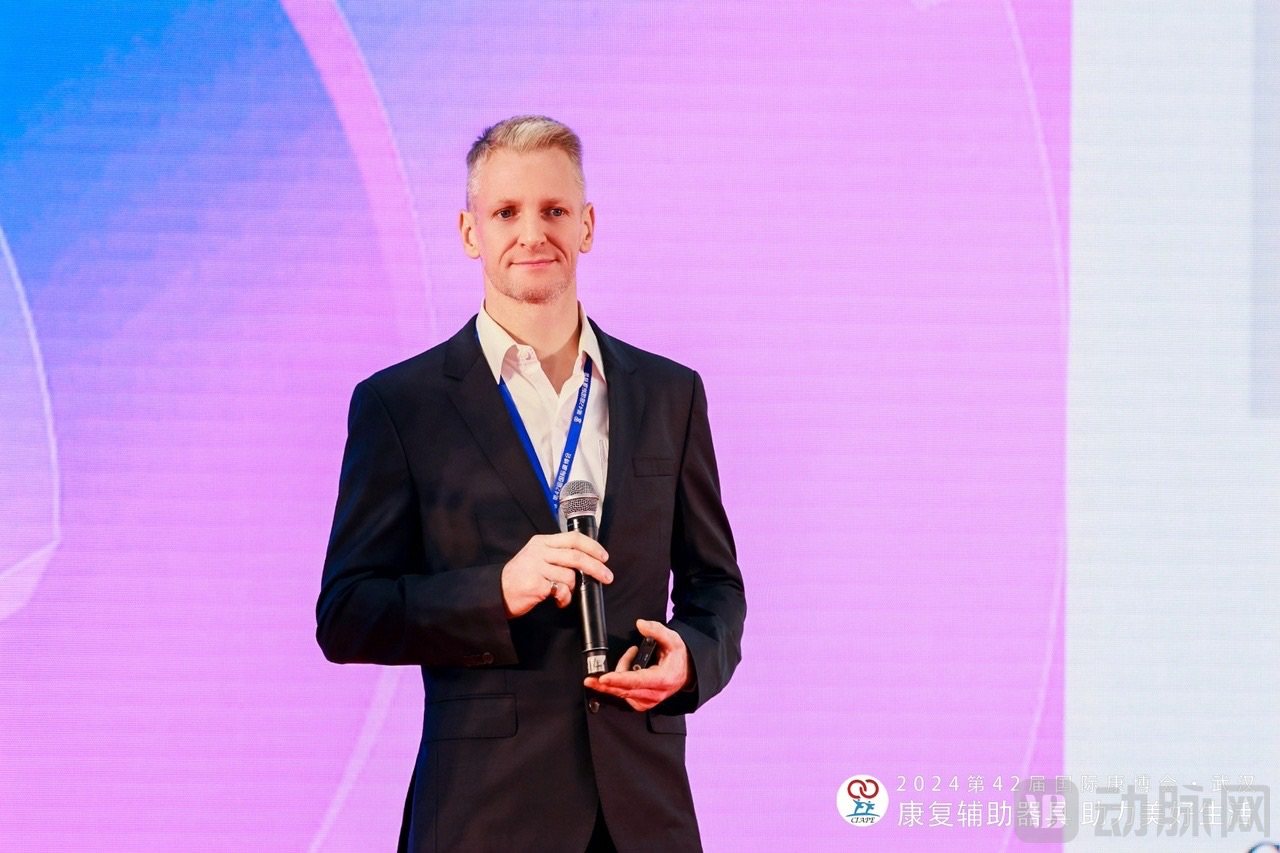
Karim Cambie, Technical Director of Ottobock Asia-Pacific
Overall, the Longyue Foot Plate features four key characteristics: high flexibility, effective shock absorption, natural roll-over, and strong kinetic energy.Its multi-axial device, located in the midfoot region, provides users with stability and comfort on uneven terrain. The flexibly replaceable upper wedge and unique carbon fiber plate design enhance socket comfort, while the interchangeable lower wedge accommodates individualized gait requirements. The innovative energy management system supports natural walking at varying speeds.
It is worth noting that the upper and lower wedges of the Longyue prosthetic foot are made from high-performance elastic materials, which can store a significant amount of energy during heel strike. Compared with traditional carbon fiber prosthetic feet, the energy storage rate is doubled, enabling users to walk farther while conserving physical effort.Additionally, the upper and lower wedges support personalized adjustments, allowing the stiffness of the carbon fiber footplate to be selected based on individual user characteristics such as body weight and foot size.
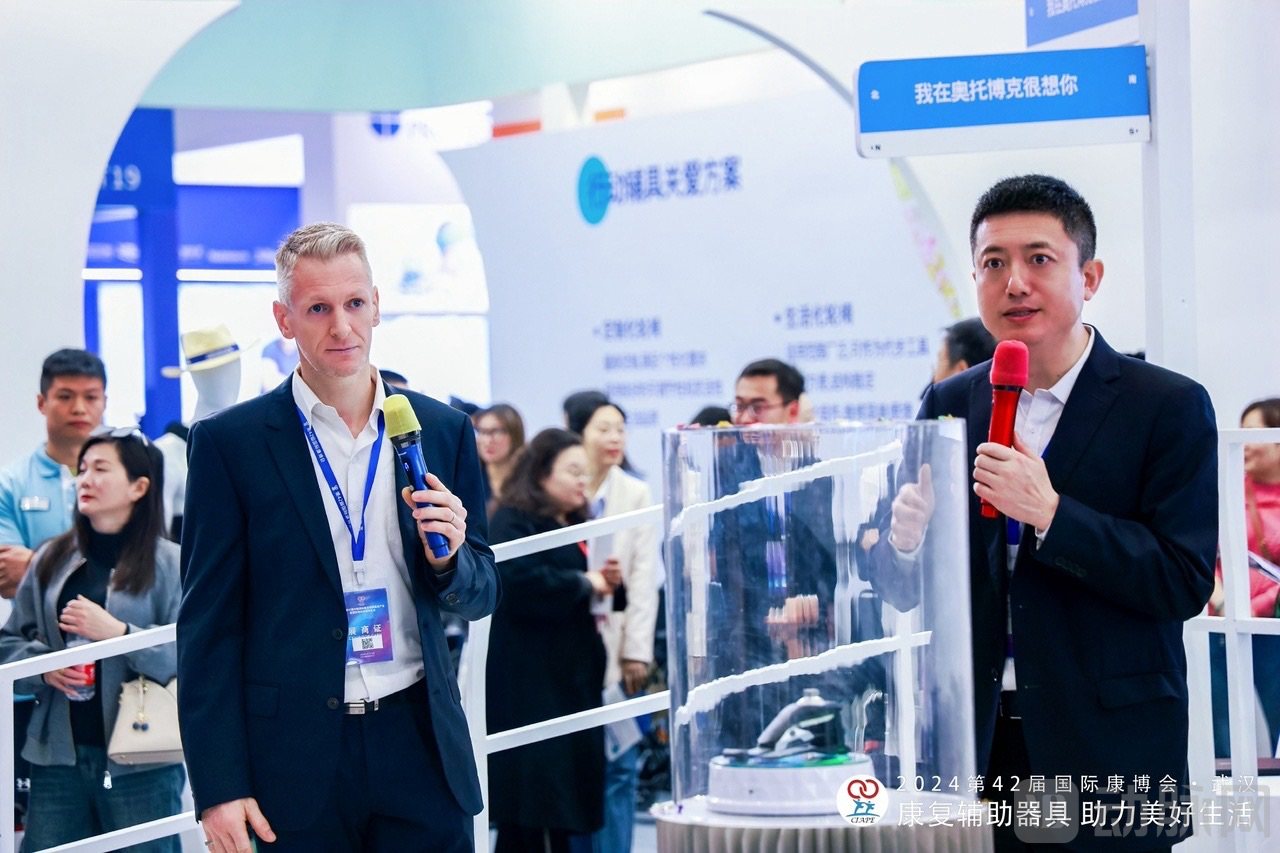
Ottobock Asia-Pacific Technical Director Karim Cambie (left) and Ottobock China GTM Head Li Qianbo (right) introduce new products
“While conventional carbon fiber feet may prioritize the elasticity of carbon fiber materials and lack biomimetic capabilities for the ankle joint, the Longyue foot achieves both.”Karim Cambie introduced to VCBeat, “The greatest highlight of Longyue Foot is its strong bionic capability at the ankle joint, enabling dorsiflexion and plantarflexion, inversion and eversion, as well as internal and external rotation. This effectively addresses the issue of stress concentration within the prosthetic socket, particularly on uneven surfaces such as uphill and downhill terrains, thereby enhancing socket comfort.” Karim Cambie explained that this has significantly improved users’ mobility.
Specifically,Longyue Footplate offers shock absorption of up to 24 mm., providing users with a smooth heel-strike sensation, allowing the footplate to rapidly and naturally achieve full-foot contact with the ground, thereby reducing the impact of ground reaction forces on the body. In terms of flexibility in the frontal plane,Longyue Footplate provides ±10° of inversion and eversion capability, the wide-range inversion and eversion functionality enables users to achieve rapid full-foot contact when walking on slopes, resulting in a stable gait and natural, balanced stride length. This enhances comfort while walking on uneven surfaces and reduces pressure and injury risk to the residual limb.
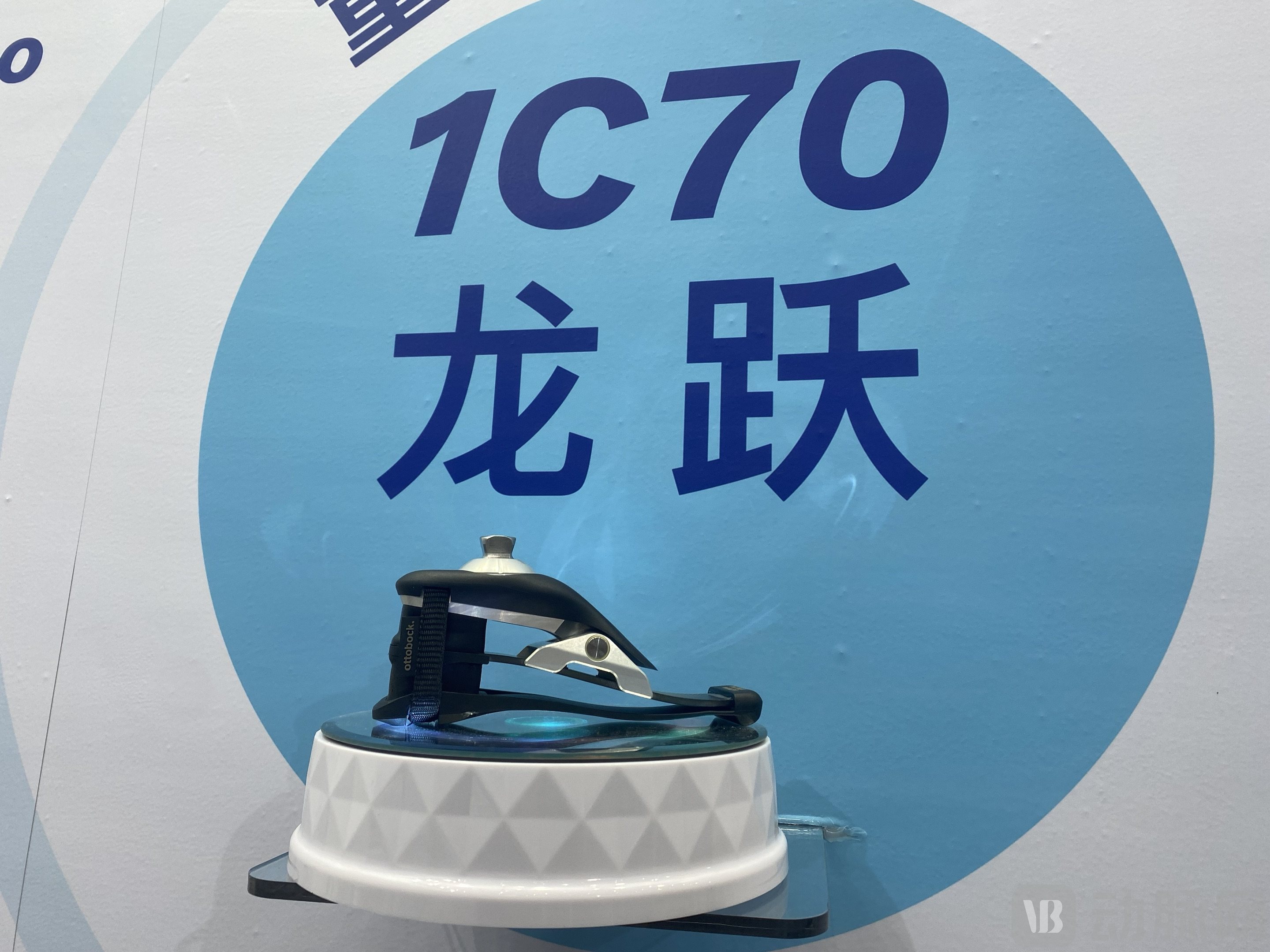
1C70 Evanto Longyue High-Performance Carbon Fiber Foot Plate
From the perspective of sagittal flexibility,This footplate provides up to 20° of ankle plantarflexion and dorsiflexion.. Significant plantarflexion enables rapid full-foot contact with the ground, while dorsiflexion flexibility makes uphill walking easier and more convenient for the user. High-intensity dynamic energy return helps reduce user fatigue, allowing for prolonged walking. Furthermore,Longyue Footplate can provide torsional force of up to ±4°., reducing shear forces within the socket, thereby enhancing socket comfort and facilitating easier, more natural movements such as turning within a limited range.
"Talking about Longyue Footplates,"Chinese trial user Xiao Bei described the wearing experience as “versatile” and “flexible.”“Other prosthetic feet tend to focus either on athletic scenarios or on activities of daily living; a single prosthetic foot is difficult to meet diverse usage needs, but Long”Yuejiaoban can simultaneously cover daily living scenarios and various sports scenarios.”, Xiao Bei shared with VCBeat that he is a sports enthusiast who enjoys outdoor activities such as hiking, playing basketball, cycling, badminton, and skiing. He has high performance requirements for his prosthetic foot, yet cannot opt for a purely athletic model due to the need for convenience in daily life. Longyue provides a “best of both worlds” solution.
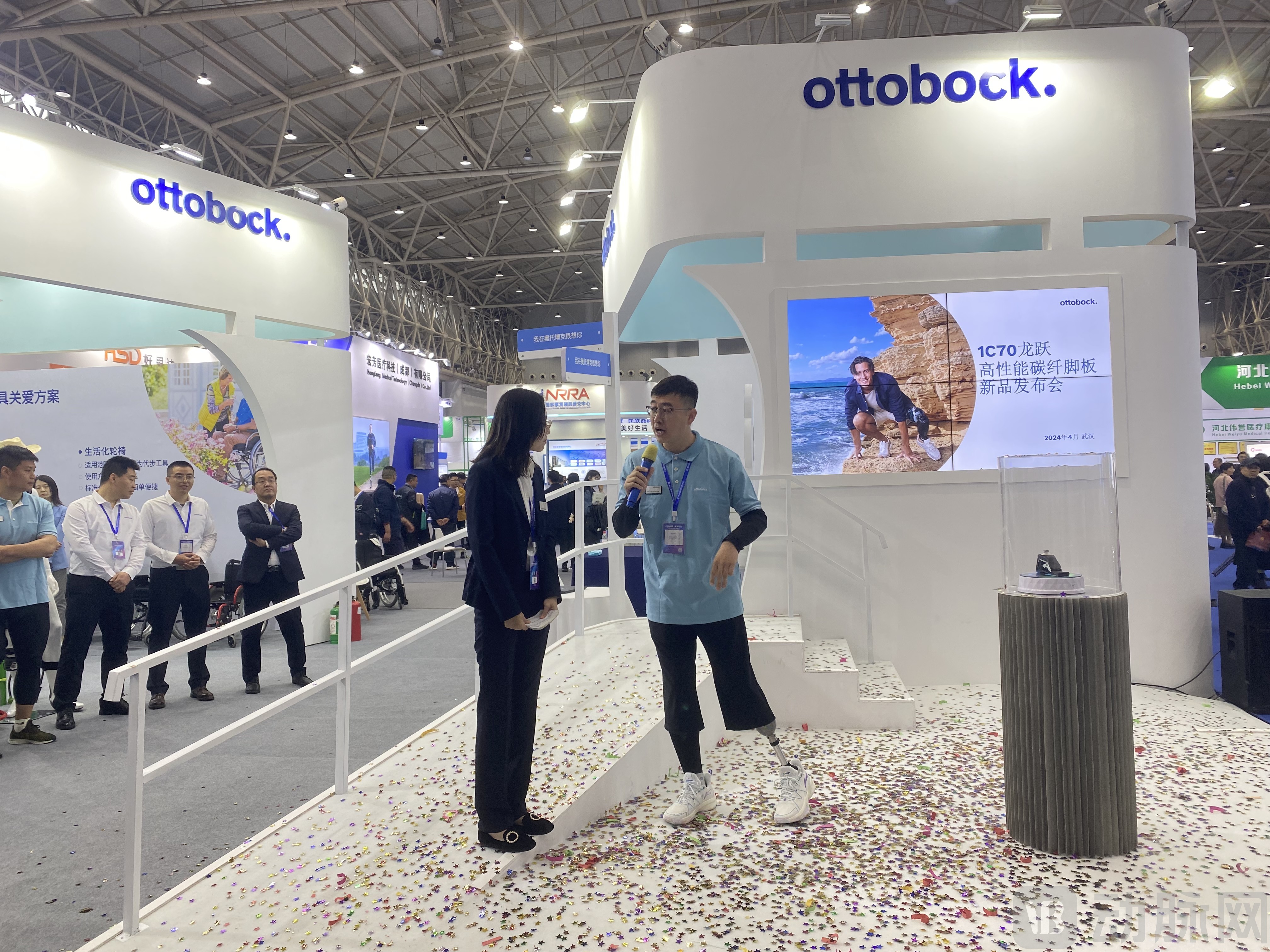
Longyue Footwear China Trial User Representative Xiao Bei Shares Wearing Experience
In terms of flexibility, Xiao Bei stated that the Longyue prosthetic foot feels significantly lighter and more agile than other prosthetic feet he has used, with reduced discomfort during prolonged wear. Drawing on his badminton-playing experience, Xiao Bei shared how the Longyue prosthesis delivers a differentiated user experience. “This prosthetic foot allows me to ‘win brilliantly.’ It provides strong explosive power during the transition from static to dynamic movement, along with excellent grip,” he explained. “It also helps me ‘lose with dignity.’” Xiao Bei added with a smile, “After losing a badminton match, there is usually a tradition of doing push-ups as self-punishment. The Longyue prosthetic foot features a softer forefoot design, which offers powerful push-off capability, enabling me to perform push-ups smoothly and steadily without hesitation. As a result, no one stops me from doing push-ups because I wear a prosthesis, and I truly feel no different from able-bodied individuals.”
Since its establishment, Ottobock has accumulated over a century of technological expertise in the research and development of prosthetics, orthotics, and rehabilitation-related products.“As one of the oldest companies in the industry, Ottobock has been leading the development of the prosthetics and orthotics sector, committed to enabling people with disabilities to fully enjoy life,” said Karim Cambie.
In 1997, Ottobock launched the C-Leg, an intelligent bionic knee joint, which was ranked 31st among the “Top 50 German Inventions That Changed the World” and has since been used by over 100,000 individuals worldwide.
Since the Seoul 1988 Paralympic Games, Ottobock has been providing prosthetic and orthotic devices as well as wheelchair repair services for every Summer and Winter Paralympics. During the Beijing 2022 Winter Paralympics, Ottobock deployed nearly 50 professionals from around the world to offer repair services at the three Paralympic Villages in Beijing, Yanqing, and Zhangjiakou, as well as at major competition venues.
From August 28 to September 8, during the Paris 2024 Paralympic Games, Ottobock, as an official partner of the Paralympics, will deploy 164 prosthetic and orthotic technicians and professional welding specialists from 41 countries worldwide to provide high-quality services to over 4,000 athletes participating in the Games. Ottobock will leverage the industry’s highly acclaimed 3D scanning and printing technologies, along with other advanced digital solutions, to deliver efficient and convenient repairs for athletes, thereby fulfilling its mission of empowering the Paralympics through technology.
Meanwhile, this May, Ottobock will showcase more innovative products at the Orthopaedic Technology & Rehabilitation Trade Fair in Leipzig, Germany.Helping people with disabilities “back to life, back to work, back to best”.