

Pioneer Domestic Endoscope Manufacturer Reshaping Industry Landscape: Jingwei Shida Files IPO Prospectus

viestar
Precision Optical Biopsy Technology R&D and Manufacturer
As the acceleration of domestic substitution continues, the highly concentrated endoscopy landscape is being disrupted.
In recent years, domestically produced endoscopes in China have achieved continuous breakthroughs in product quality, performance, and innovation. As of 2023, nearly 750 models of Chinese-made reusable endoscopes had obtained medical device registration certificates from the National Medical Products Administration (NMPA), maintaining an annual growth rate exceeding 24% for two consecutive years.
Furthermore, through the dedicated efforts of domestic manufacturers in product research and development, Chinese-made medical endoscopes have broken the import monopoly by virtue of their quality. These products now cover nearly all endoscope categories, significantly meeting actual clinical needs and becoming the preferred choice for hospitals. According to data from Zhongcheng Medical Device Research Institute, the total sales revenue and market share of domestically produced medical endoscopes in healthcare institutions across China showed a year-on-year growth trend from 2020 to 2022. The total sales revenue of domestically produced medical endoscopes reached nearly RMB 900 million in 2020 and rapidly increased to nearly RMB 3.7 billion in 2022, with an average annual growth rate as high as 65%.
Clearly, domestically produced endoscope products have gradually moved from the initial stage of imitation to a phase of innovation and upgrading. Particularly in fields such as fluorescence endoscopy, EOCT (Endoscopic Optical Coherence Tomography), and confocal laser endomicroscopy, China's technical capabilities are already at an international leading level.
viestar asChina's FirstObtained the registration certificate for probe-based confocal laser endomicroscopy.The Only Domestically ProducedObtained the registration certificate for ultra-fine probe-based confocal laser endomicroscopy,The World's OnlyAchieve large-scale manufacturing of confocal laser endomicroscopy systems, and possessWorld's Largesta company with a large-scale manufacturing center for confocal laser endomicroscopy systems, serving as both an important witness to and a frontrunner in the development of this field.
On April 11, during the 89th China International Medical Equipment Fair (hereinafter referred to as “CMEF”), the company showcased its products, including BIOPSEE®Beixi®Ultrafine Probe-Based Biliary Confocal Laser Endomicroscopy System, BIOPSEE®Beixi®Ultrafine Probe-Based Urological Confocal Microendoscopy System, BIOPSEE®Beixi®Probe-based Confocal Laser Endomicroscopy System for the Gastrointestinal Tract, FUSIONTMFindingsTMA full range of high-end medical equipment, including the integrated confocal laser endomicroscopy system for the biliary tract, was unveiled on-site, bringing new endoscopic technologies to the industry.
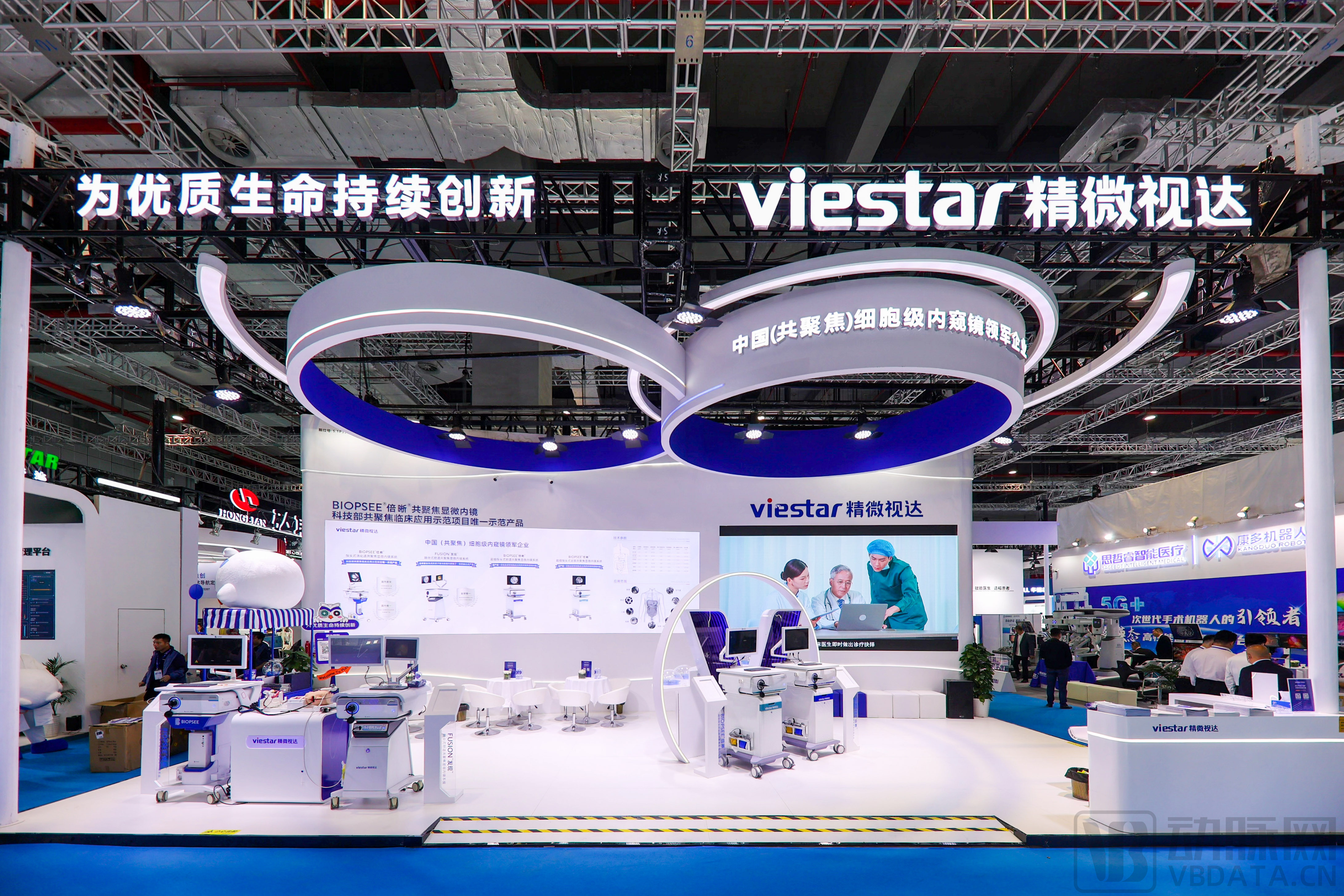
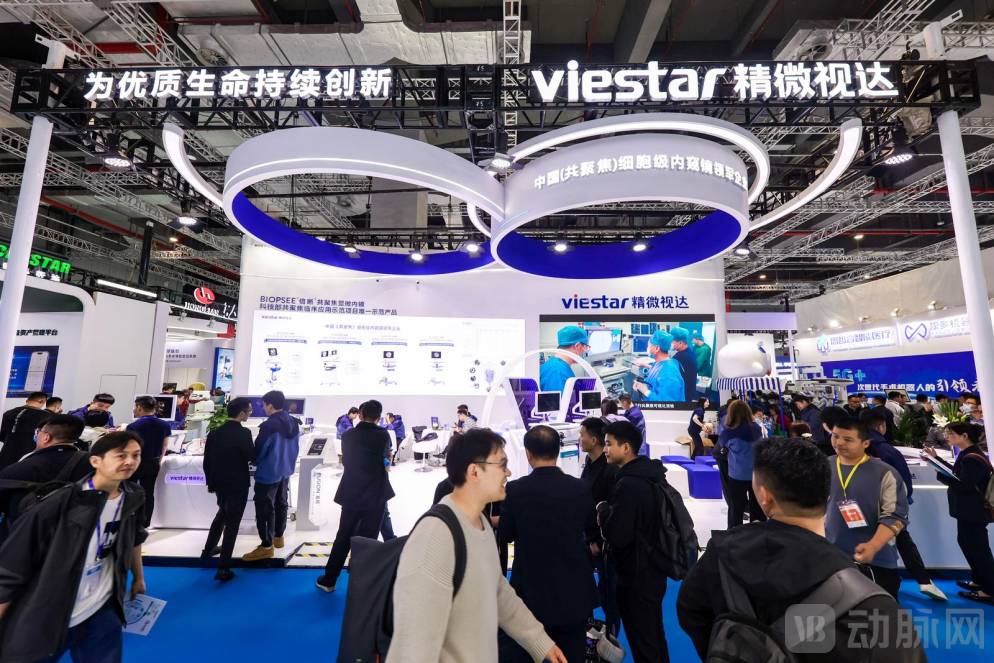
2024 CMEF viestar Booth
Global Leader, Sole Domestic Product
Pioneering the Industrialization of Domestically Produced Confocal Laser Endomicroscopy
Medical endoscopes not only encompass technologies from multiple fields, including optics, ergonomics, precision instrumentation, modern electronics, mathematics, and software, but their manufacturing also involves a wide variety of raw materials and components, making research, development, and production extremely challenging. Due to the high technical barriers and the stringent intellectual property protection maintained by various companies, the global market is highly concentrated. Consequently, it is exceedingly difficult for domestic manufacturers to achieve "overtaking on a bend."
Compared with traditional reusable endoscopes,Composite endoscopes impose even higher demands on enterprises' technological R&D and manufacturing capabilities.
Taking confocal laser endomicroscopy (CLE) as an example, this novel type of endoscope, developed over the past two decades, achieves micron-level resolution and meets the requirements for real-time in vivo cellular imaging. From a technical perspective, the successful development of this product necessitates breakthroughs in optical systems, key components, and proprietary algorithms. These advancements enable the device to deliver ultra-high resolution and an ultra-compact distal tip, ultimately providing clinicians with real-time, in vivo cellular-level pathological morphological images.
Fortunately, as the lead organization for a national-level major science and technology project and a key participant in advancing national medical strategic planning, viestar has deepened industry-academia-research-medical collaboration and strengthened the translation of scientific and technological achievements.
Leveraging its optoelectronic technology and precision manufacturing capabilities, as well as comprehensive control over the supply chain,Viestar pioneered the industrialization of confocal laser endomicroscopy—a technology of significant importance in cancer prevention and treatment—in China, making the country the only one in the world to achieve large-scale production and extensive clinical application of confocal laser endomicroscopes., thereby breaking the monopoly of imported brands on confocal laser endomicroscopy.
Thus, viestar has achieved continuous breakthroughs in the field of confocal laser endomicroscopy, progressing from zero to one and from initial establishment to international leadership, thereby securing a firm foothold in the endoscopy market through independent innovation.
Repeatedly spearheaded the National Key R&D Program,
The product's application areas have expanded from the digestive system to include the respiratory system, urinary system, and more.
However, viestar has not rested on its laurels; instead, it has actively promoted the iterative development of core product technologies through close collaboration with upstream and downstream enterprises. The company has not only undertaken key national R&D programs during the 12th, 13th, and 14th Five-Year Plan periods, but has also been deeply involved in the formulation of industry norms and standards, including clinical guidelines, expert consensus statements, academic discipline development, and atlas compilation. Furthermore, viestar collaborates with multiple hospitals to conduct clinical application research and innovative scientific projects, ensuring that its products meet actual clinical needs.
Completed the all-new generation of Beixi in 2021®Following the market approval of its confocal laser endomicroscopy system, the company successfully secured a National Key R&D Program project under China’s 14th Five-Year Plan in 2022, titled “R&D of Core Components for Fluorescence Confocal Laser Endomicroscopy.” In 2023, it further obtained five medical device registration certificates from the National Medical Products Administration (NMPA).Achieve comprehensive product coverage across all application scenarios in the digestive system (including the esophagus, stomach, small intestine, colon, biliary tract, and pancreatic duct), the urinary system (including the bladder and prostate), and the respiratory system (including the bronchi and lungs).
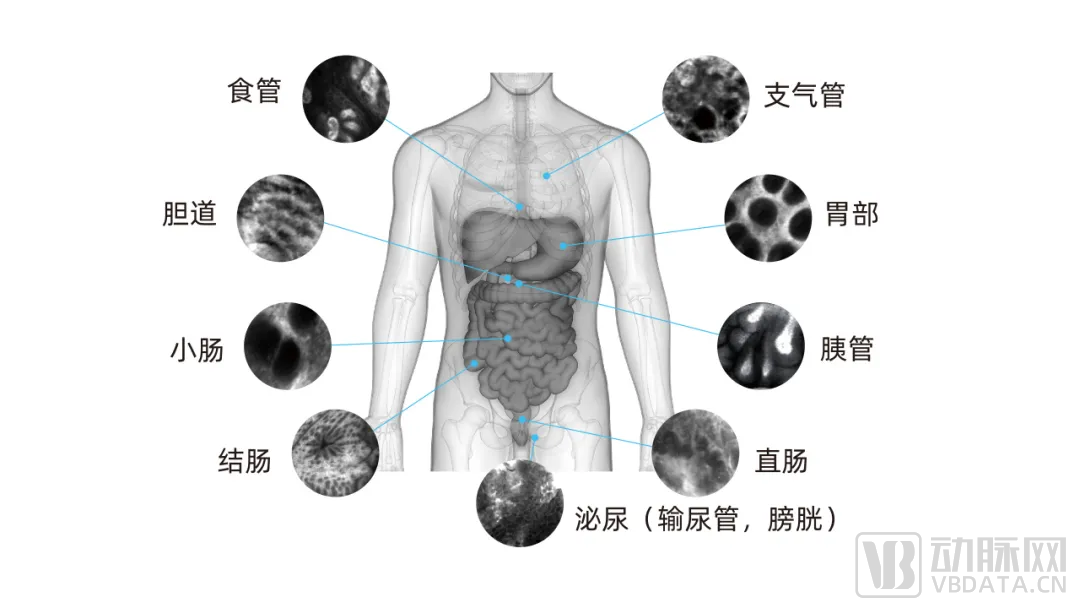
Clinical Application Scenarios of Visualized Biopsy
At this CMEF, the company showcased BIOPSEE, leveraging its R&D capabilities.®Beixi®Ultra-thin Probe-based Biliary Confocal Laser Endomicroscopy System (The Only Domestic Productconfocal products approved with medical device registration certificates in the biliary field), BIOPSEE®Beixi®Ultra-fine Probe-based Urological Confocal Microendoscopy System (The Only Domestic Productconfocal products approved with medical device registration certificates in the urology field), BIOPSEE®Beixi®Probe-based Confocal Laser Endomicroscopy System for the Gastrointestinal Tract (The Sole Demonstrative Product of the Ministry of Science and Technology’s Confocal Clinical Application Demonstration Project)、FUSIONTMFindingsTMIntegrated Biliary Confocal Laser Endomicroscopy System (World's FirstFour integrated products combining confocal technology with electronic endoscopy have garnered significant industry attention.
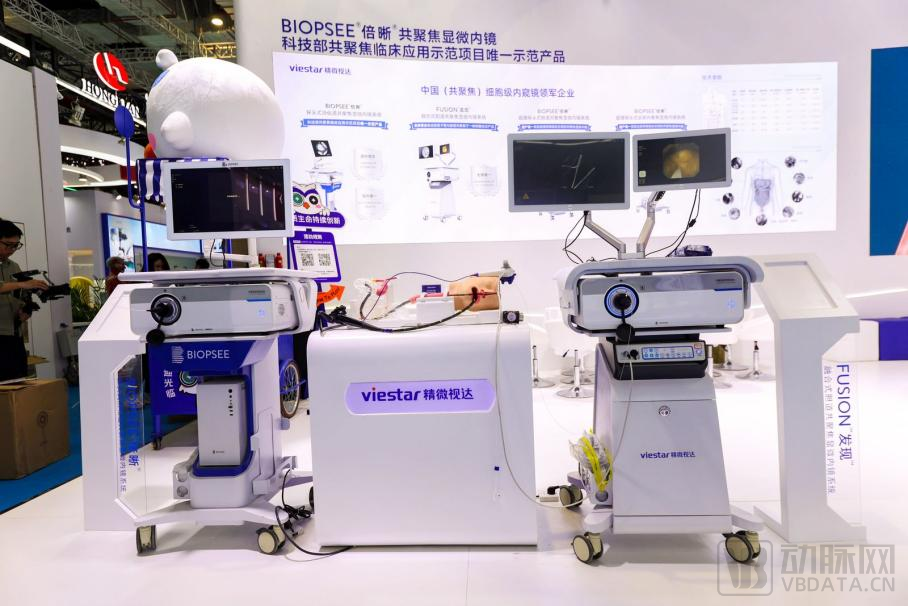
From left to right: BIOPSEE®Beixi®Probe-based Confocal Laser Endomicroscopy System for the Gastrointestinal Tract,FUSIONTMFindingsTMIntegrated Biliary Confocal Laser Endomicroscopy System
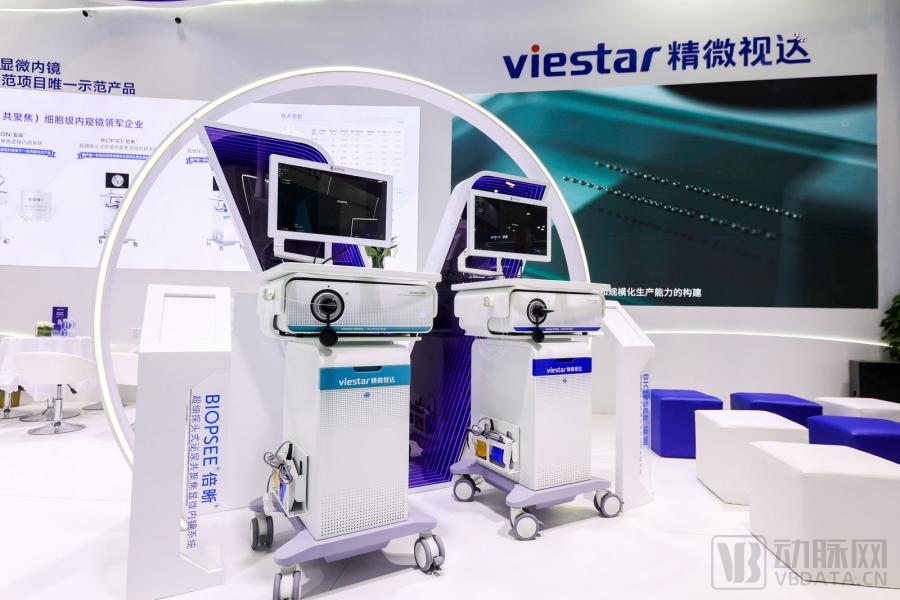
From left to right are the BIOPSEE® Ultrafine Probe Confocal Laser Endomicroscopy System for Urology and the BIOPSEE® Ultrafine ProbeBiliary Confocal Laser Endomicroscopy System
It is worth mentioning that BIOPSEE®Beixi®The ultra-fine probe-based confocal laser endomicroscopy system is equipped with the world’s smallest microscopic imaging probe at the observation end (diameter <1.0mm), with a resolution ofμm, palpableUltra-narrow lumens such as the biliary tract, pancreatic duct, bronchi, ureters, and bladder, horizontally covering the full spectrum of clinical scenarios in gastroenterology, biliary tract, urology, and respiratory applications, thereby achievingReal-time In Vivo Contact-Based Cellular-Level Observation, assisting physicians in efficiently detecting minute lesions.
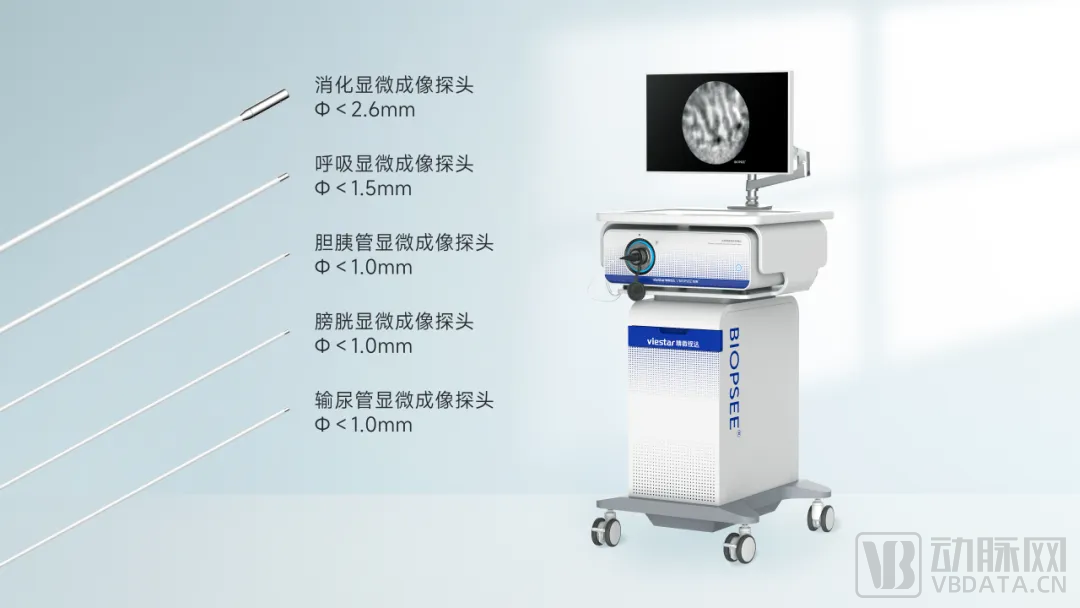
The World’s Smallest Microscopic Imaging Probe
Multiple favorable policies have been implemented,
Viestar Wins the “Only Demonstrative Product” Award in the Confocal Field
Policy serves as another significant driver fueling the rapid development of this sector. In recent years, the Chinese government has intensified its support for the medical device industry, promoting the advancement of medical endoscopes across multiple dimensions, including research and development, regulatory approval, sales, and standardized clinical use.
The National Development and Reform Commission (NDRC) has listed high-tech medical devices, such as electronic medical endoscopes and surgical robots, as key priority areas for development. Meanwhile, the Ministry of Industry and Information Technology (MIIT) has proposed focusing on overcoming technological bottlenecks in upstream core components and equipment, including optical lenses, medical endoscopic fibers, and laparoscopic surgical robots, with the goal of having 6–8 Chinese enterprises rank among the top 50 global medical device companies by 2025. Furthermore, in the “14th Five-Year Plan” for the Development of National Clinical Specialty Capabilities, the National Health Commission (NHC) explicitly stated that it will vigorously support the development of medical endoscopic surgery in China and address major technical bottlenecks.
In the niche field of confocal laser endomicroscopy, viestar’s R&D capabilities have received national recognition. In 2017, the R&D of “confocal endoscopes” was included in the National Key R&D Program of the 13th Five-Year Plan, with viestar serving as the lead organization. In 2022, the project “R&D of Core Components for Fluorescence Confocal Laser Endomicroscopy” was again designated as a key project under the National Key R&D Program of the 14th Five-Year Plan, with viestar continuing to serve as the lead organization. In 2023, viestar not only undertook the project “Demonstration Study on the Application of Ultrasound and Confocal Hybrid Endoscopy,” but also its independently developed Beixi®Confocal laser endomicroscopy has also become the “sole demonstration product” of the Ministry of Science and Technology’s confocal clinical application demonstration project.
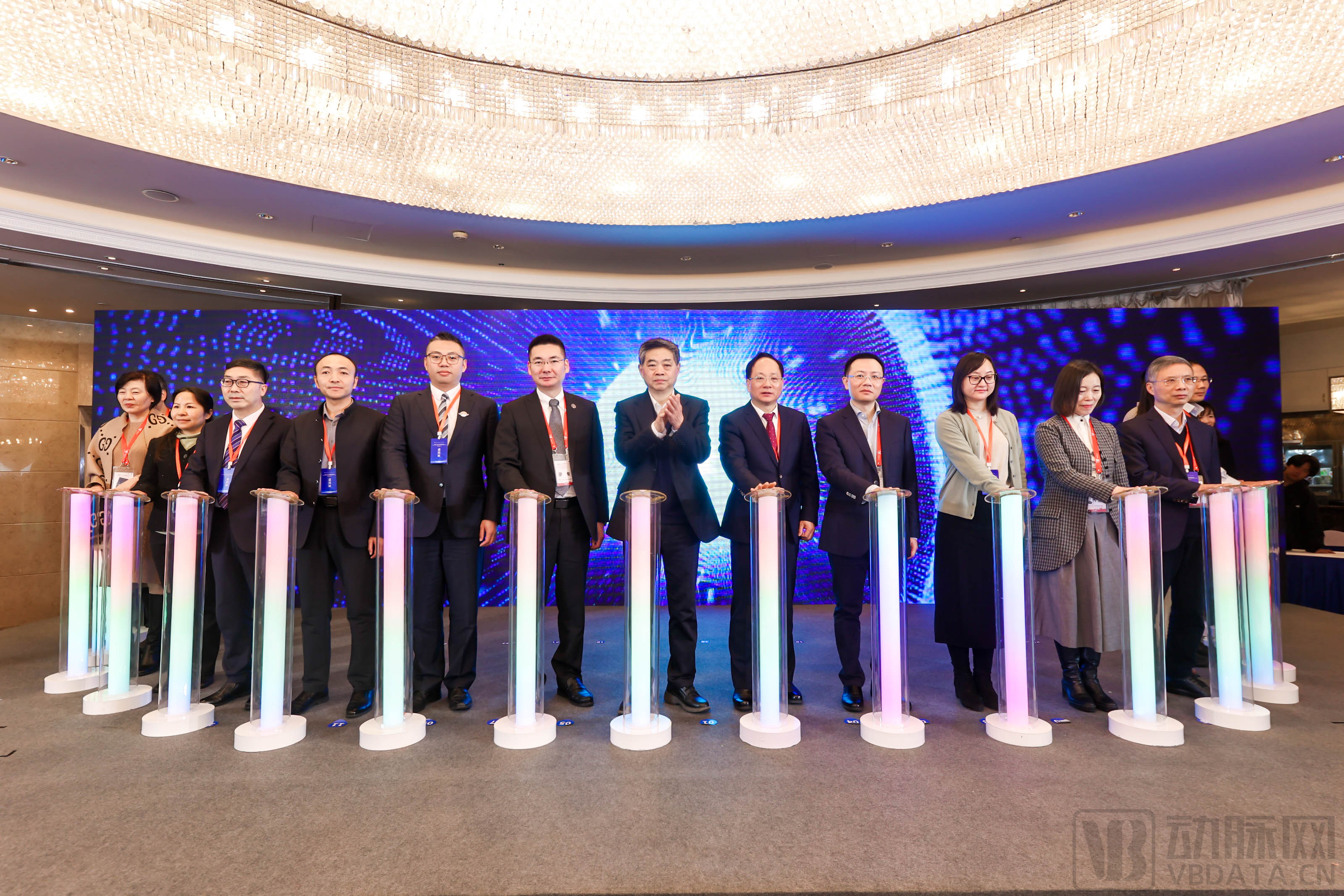
viestar Participates in the Ministry of Science and Technology’s “14th Five-Year Plan” Confocal Clinical Application Demonstration Project, Which Has Been Launched
It is reported that the “Demonstration Study on the Application of Ultrasound and Confocal Composite Endoscopy” project, supported by the National Quality Control Center for Gastroenterology at Changhai Hospital and led by leading experts and scholars in the field of gastroenterology, uses viestar’s Beixi® confocal laser endomicroscope as the demonstration product. The project aims to establish a CLE composite application demonstration and promotion system covering seven major regions across China, comprising more than 20 regional demonstration centers, over 33 primary-care demonstration centers, and more than 400 primary-care demonstration sites.
The journey has not been easy. It is precisely through the team’s continuous innovation and breakthroughs in the field of confocal laser endomicroscopy that viestar has become a leader in the confocal domainUniqueContinuously led two national key R&D projects,UniqueParticipated in the application demonstration projects of the Ministry of Science and Technology, as well asUniqueAn enterprise with application demonstration products from the Ministry of Science and Technology.
It is evident that viestar has closely aligned itself with the accelerating pace of domestic substitution in the endoscopy sector. By continuously strengthening its efforts in this field and actively promoting deep integration among industry, academia, research, and clinical practice, viestar aims to overcome bottlenecks in high-end technologies, standardize and popularize the clinical application of confocal laser endomicroscopy, and ultimately achieve genuine domestic substitution of endoscopic products.
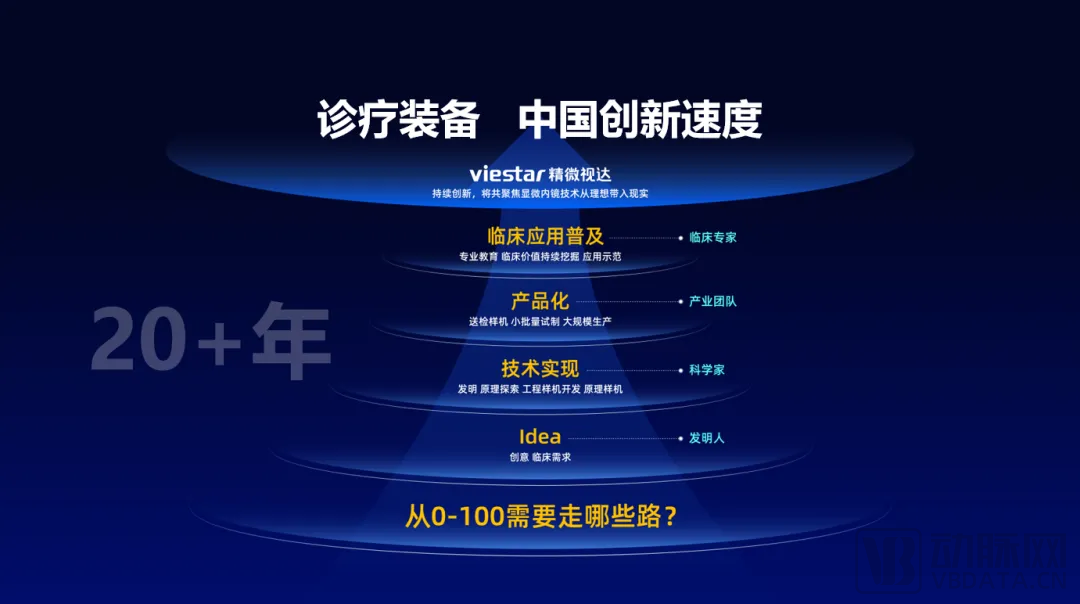
The Pace of Innovation in China’s Domestically Produced Medical Equipment
Upholding the integration of medicine and engineering,
Jointly Promoting the Standardization and Widespread Adoption of Confocal Laser Endomicroscopy in Clinical Practice
The 14th Five-Year Plan period is a critical phase for comprehensively advancing the “Healthy China” initiative, deeply implementing the strategy of building a “manufacturing powerhouse,” and promoting the high-quality development of the biopharmaceutical industry. Against the backdrop of the nation’s accelerated implementation of an innovation-driven development strategy, the integration of medicine and engineering serves as a vital pathway to foster medical technological innovation and the research and development of medical devices, effectively addressing major challenges in the medical field and enhancing the level of health protection.
At this critical juncture, viestar has also actively responded to this development trend by not only focusing on technological breakthroughs but also closely aligning with policy directions and adhering to the integration of medicine and engineering.Jointly promote the standardization and widespread adoption of confocal laser endomicroscopy in clinical practice.
In addition to actively exhibiting at the CMEF and maintaining in-depth exchanges and cooperation with the industry, the company also participated in two major conferences in the field of gastroenterology held concurrently. There, it engaged with peers in discussing the integration of medicine and engineering, exploring technological innovation, and addressing achievement transformation and clinical application.
Among these, the Shanghai Xijiao Conference is a high-end gathering for top digestive disease experts. At this event, more than 30 leading hospitals across China will jointly participate in the official launch of the Confocal Laser Endomicroscopy Training Academy. Meanwhile, a large-scale, standardized, and instructive confocal atlas project is being prepared in parallel. At the 16th China-Japan ESD Forum, an international conference on minimally invasive procedures, viestar will also make its mark, demonstrating the unique influence of China’s cutting-edge endoscopic technologies in the field of minimally invasive medicine.

The 16th China-Japan ESD Forum Held Concurrently
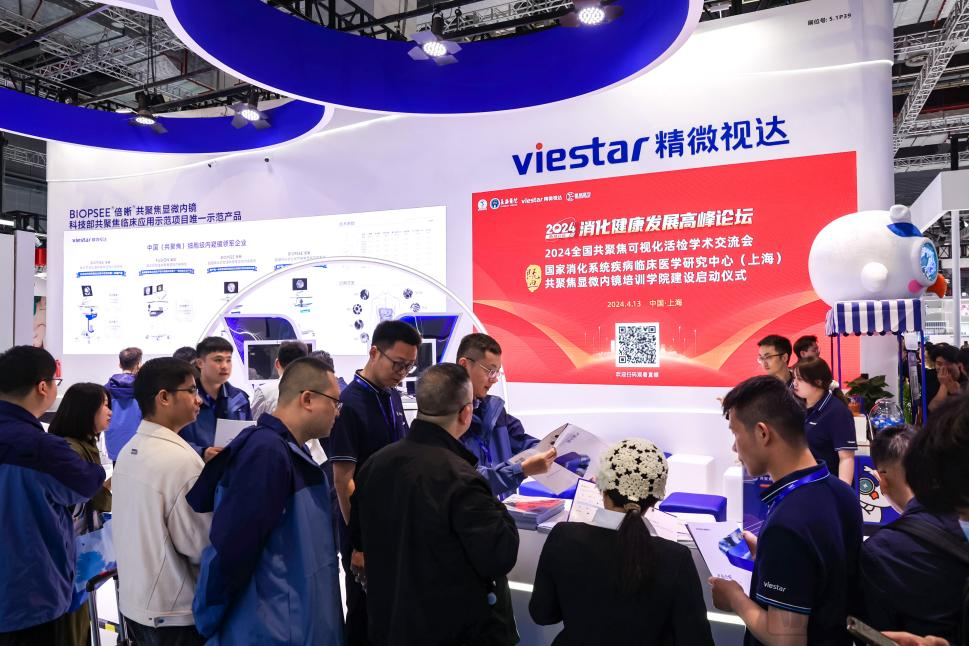
Held Concurrently with the 2024 Shanghai Xijiao Conference
Whether it is the projects already launched under the 14th Five-Year Plan or the training academy to be established at the Shanghai Xijiao Conference, their common goal is to promote the standardization and widespread adoption of confocal clinical applications, thereby accelerating the clinical implementation of confocal laser endomicroscopy. Viestar has undoubtedly played a significant role in this process, making positive contributions to the development and popularization of confocal laser endomicroscopy technology in China. This holds considerable importance for improving the early diagnosis and treatment of cancer in China and driving industry advancement. With frequent collaborations underway, the company is entering a period of rapid growth, while the field of confocal laser endomicroscopy in China is approaching a turning point in market transformation.